Hong Kong Customs Seizes Over HK$51 Million in Ketamine Smuggled from Germany in Elaborate Deception
Hong Kong customs officers, in a significant inter-agency operation with mainland Chinese authorities, have intercepted a substantial consignment of suspected ketamine valued at approximately HK$51 million (US$6.5 million). The drugs, weighing 131 kilograms (289 pounds), were ingeniously concealed within plastic pails declared as containing sugar cubes, arriving in Hong Kong via air cargo from Germany. The sophisticated smuggling operation highlights the evolving tactics employed by drug syndicates seeking to exploit global logistics networks and evade detection.
The Interception: A Collaborative Effort Unravels the Smuggling Scheme
The successful seizure occurred on Tuesday when Hong Kong Customs and Excise Department officers, acting on crucial intelligence shared by their counterparts in mainland China, intercepted a suspicious air cargo shipment. The consignment, originating from Germany, was ostensibly declared as containing sugar cubes. However, the nature of the declared goods and the chosen mode of transport immediately raised red flags for seasoned investigators.
Senior Investigator Chiu Kai-wing of the Customs and Excise Department’s drug investigation bureau elaborated on the syndicate’s intricate methodology during a press briefing on Saturday. "The syndicate exploited convenient logistics in the city, using a complicated and more expensive route to traffic drugs, in a bid to hide the goods’ origins and evade detection," Chiu stated. This strategy, while seemingly counterintuitive for low-cost items like sugar, was precisely what alerted customs officials to the potential for illicit cargo.
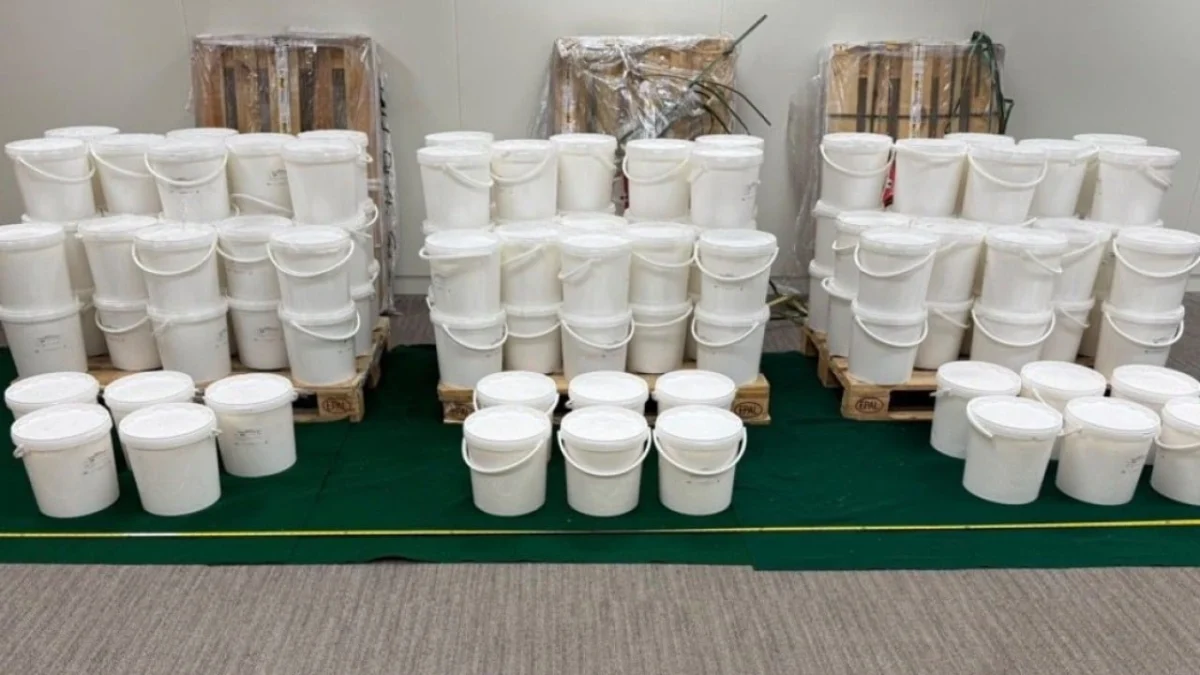
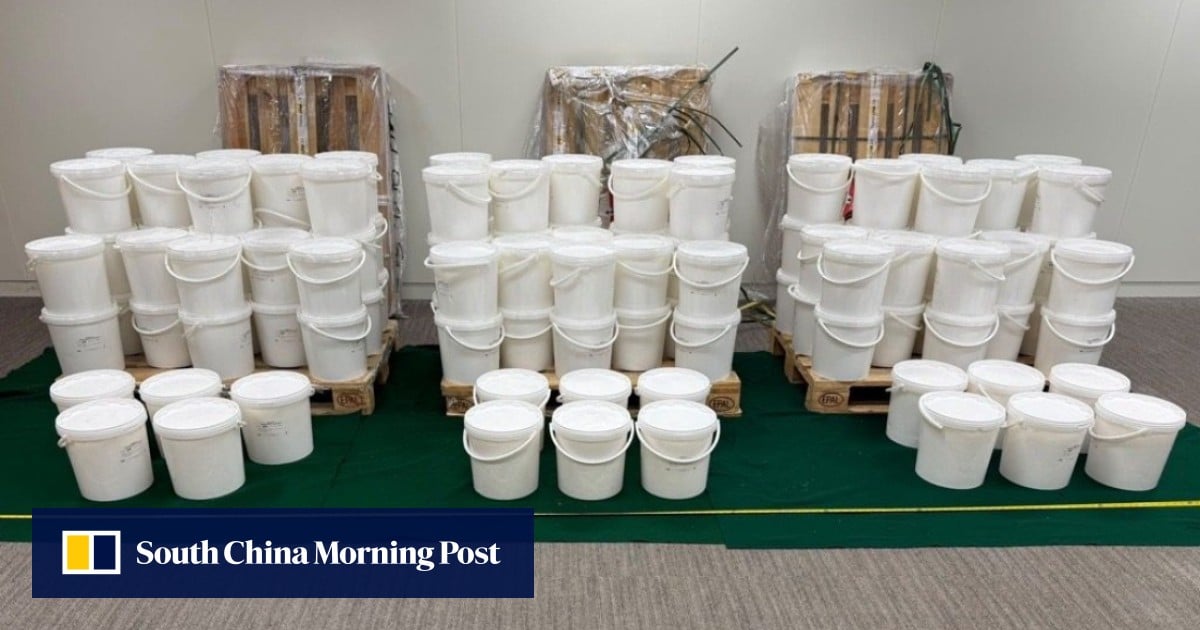
Upon closer examination, customs officers discovered that 17 out of 117 plastic pails within the consignment did not contain sugar. Instead, they held 131 kilograms of suspected ketamine, meticulously processed into white crystalline form. The estimated street value of this illicit haul was pegged at around HK$51.4 million, a figure underscoring the considerable scale of the operation.
Deconstructing the Deception: Tactics and Suspicious Indicators
The modus operandi employed by the drug traffickers was designed to be both elaborate and difficult to unravel. The decision to utilize air transport for a commodity like sugar, which typically has a low profit margin and is more economically shipped via sea or road freight, was a primary indicator of foul play. This elevated cost for seemingly low-value goods immediately piqued the interest of customs authorities, prompting a deeper investigation.
Inspector Tsui Kin-hei, a member of customs’ air cargo group, provided further insights into the discovery process. He explained that the cargo had undergone multiple transfers during its journey, a tactic often used to reduce transport costs and, more critically, to mask the true origin of the goods and circumvent scrutiny at various transit points. This complex routing aimed to create a convoluted trail, making it challenging for law enforcement to trace the illicit shipment back to its source.
The critical moment of detection came when the pails were subjected to X-ray scans. These scans revealed anomalies within the composition of the materials, prompting officers to physically inspect the suspicious pails. The discovery of the crystalline substance, later identified as suspected ketamine, confirmed the suspicions that had been raised by the unusual shipping details.
Background Context: Hong Kong as a Hub and Evolving Drug Trafficking Trends
Hong Kong’s strategic location as a global logistics and financial hub has historically made it a target for illicit activities, including drug trafficking. While the city has robust law enforcement agencies and stringent customs controls, sophisticated international syndicates continuously adapt their methods to circumvent these measures.
The use of air cargo for smuggling has seen a resurgence in recent years, particularly for high-value, low-volume illicit substances. This method offers speed and, when combined with deceptive declarations, can bypass some of the more extensive checks associated with sea freight. However, the sheer volume of goods processed through Hong Kong’s international airport means that intelligence-led operations, like the one that led to this seizure, are crucial for effective interdiction.
The involvement of mainland Chinese authorities in providing intelligence is also a testament to the increasingly collaborative efforts between Hong Kong and mainland law enforcement agencies in combating transnational crime. The shared border and extensive trade links necessitate a coordinated approach to disrupt drug supply chains that often originate or transit through both jurisdictions.
Chronology of the Operation
While specific dates for the entire transit are not provided, the key events leading to the seizure can be reconstructed:
- Intelligence Exchange: Crucial information regarding the suspected illicit cargo was shared between mainland Chinese authorities and Hong Kong Customs. This exchange likely involved details about the shipment’s origin, potential contents, and planned route.
- Cargo Arrival and Interception: The air cargo consignment, originating from Germany and declared as containing sugar cubes, arrived in Hong Kong. Hong Kong Customs officers, acting on the intelligence, intercepted the shipment.
- Suspicion Aroused: The unusual choice of air transport for low-cost goods, coupled with the complex routing, raised suspicion among customs officers.
- X-ray Scans and Anomalies Detected: The cargo underwent X-ray screening, which revealed irregularities within certain pails.
- Physical Inspection and Discovery: Following the scan results, customs officers conducted a physical inspection of the identified pails, uncovering 131 kilograms of suspected ketamine.
- Arrests Made: In connection with the seizure, three men were subsequently arrested. The investigation into their roles and the wider network is ongoing.
- Public Announcement: Hong Kong Customs officials briefed the public on the successful operation and the details of the seizure on Saturday.
Broader Implications and Analysis
The seizure of this significant quantity of ketamine has several implications for law enforcement and the broader fight against drug trafficking.
Evolving Smuggling Tactics: The syndicate’s strategy of using a disguised but more expensive shipping method highlights their willingness to invest in complex schemes to bypass detection. This suggests a high level of organization and financial backing behind the operation. The attempt to obscure the origin through multiple transfers is also a common tactic aimed at frustrating investigations.
Transnational Cooperation: The success of this operation underscores the critical importance of international and inter-agency cooperation. The intelligence provided by mainland Chinese authorities was instrumental in enabling Hong Kong Customs to intercept the shipment effectively. This collaborative approach is essential in dismantling transnational drug networks that operate across multiple jurisdictions.
Impact on the Drug Market: The interdiction of 131 kilograms of ketamine is expected to have a tangible impact on the illicit drug market in Hong Kong and potentially the wider region. Ketamine is a significant drug of abuse, and its availability can fuel addiction and related criminal activities. Disrupting such a large shipment can lead to temporary shortages and increased prices for the drug, potentially deterring some users.
Law Enforcement Challenges: The case also presents ongoing challenges for customs and law enforcement agencies. Drug syndicates are adept at exploiting global trade routes and technological advancements. Continuous investment in intelligence gathering, advanced screening technologies, and robust inter-agency collaboration is necessary to stay ahead of these evolving threats.
Economic and Social Costs: The financial value of the seized drugs, estimated at HK$51 million, represents a significant loss for the traffickers but also a substantial saving in terms of potential societal harm that drug abuse can inflict. The costs associated with drug addiction, crime, and healthcare services are immense, making successful interdictions vital for public safety and well-being.
The investigation into the arrested individuals is ongoing, with authorities seeking to identify the full extent of the network involved in this elaborate smuggling operation. The focus will likely be on tracing the supply chain from Germany, identifying the intended recipients in Hong Kong, and uncovering any accomplices within the logistics sector. The success of this operation serves as a strong deterrent to other potential drug traffickers and reinforces Hong Kong’s commitment to maintaining its status as a safe and secure city.