Defense Technology Firms File Federal Lawsuits Against U.S. Navy Over Exclusion From Medium Unmanned Surface Vessel Acquisition Program
The United States Navy’s ambitious transition toward an autonomous "Ghost Fleet" has encountered a significant legal hurdle as two prominent defense technology companies, Blue Water Autonomy and Saildrone, filed separate lawsuits in federal court on Tuesday. The litigation, submitted to the U.S. Court of Federal Claims, alleges that the Navy improperly excluded the firms from the Medium Unmanned Surface Vessel (MUSV) Family of Systems program, a multibillion-dollar initiative central to the Pentagon’s future maritime strategy. The plaintiffs contend that the Navy’s selection process was marred by "prejudicial errors," a failure to follow established procurement regulations, and a "fundamentally flawed" evaluation of technical proposals.
The lawsuits come at a critical juncture for the Navy, which is racing to integrate unmanned systems into its fleet to counter the growing naval capabilities of near-peer adversaries. The MUSV program is intended to produce a fleet of autonomous ships capable of long-endurance missions, intelligence gathering, and payload delivery. However, Blue Water Autonomy and Saildrone argue that the Navy’s decision-making process was "capricious" and ignored the statutory requirements set forth in the Request for Prototype Proposals (RPP).
The Evolution of the Navy’s Unmanned Ambitions
To understand the current legal dispute, it is necessary to examine the rapid shift in the Navy’s acquisition strategy over the past year. On July 28, 2025, the Navy initially launched the Modular Attack Surface Craft (MASC) program. This initiative was narrowly focused on developing unmanned surface vessels (USVs) capable of carrying large, containerized payloads, specifically the Mark 70 Mod 1 Payload Delivery System—a modular launcher used for anti-ballistic missiles and other long-range strikes.
However, on March 26, 2026, the Navy abruptly terminated the MASC program in favor of the more comprehensive MUSV Family of Systems program. According to Rebecca Gassler, the portfolio acquisition executive for the Navy’s robotic and autonomous systems, the MASC program was deemed too mission-specific. The fleet required a more versatile platform that could address a broader spectrum of requirements, including electronic warfare, distributed sensing, and varied logistics missions.
The MUSV solicitation, which closed on April 17, 2026, required applicants to submit detailed business, manufacturing, and test plans, along with comprehensive technical designs. The Navy’s goal was to select a cohort of companies to participate in on-water testing using surrogate vessels by the end of the fiscal year. On June 1, 2026, the Navy announced its finalists: Sea Machines, Leidos, Saronic Technologies, Galliano Marine Services, PacMar Technologies, Birdon, and Huntington Ingalls Industries. Notably absent from this list were Blue Water Autonomy and Saildrone.
Blue Water Autonomy: Allegations of Irrational Conclusions
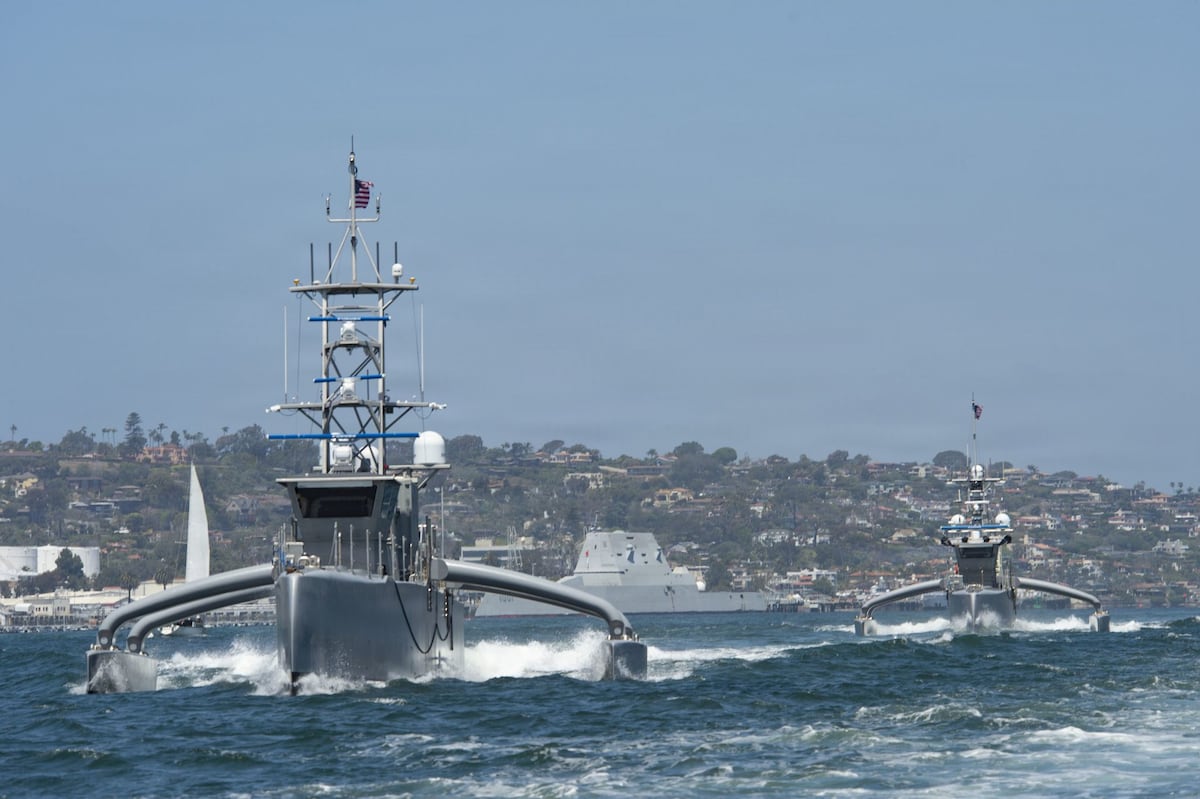
Blue Water Autonomy’s complaint highlights a sense of "bait and switch" regarding the program’s transition. The company had been an early participant in the now-defunct MASC program and had already invested significant capital into the development of its "Liberty" vessel, a prototype specifically designed to meet the Navy’s earlier requirements for heavy-payload autonomous craft.
In its filing, Blue Water Autonomy alleges that the Navy’s evaluation of its MUSV proposal was based on "overly restrictive evaluation criteria" and a "misreading" of the company’s technical specifications. The company asserts that the Navy reached "irrational conclusions" that were inconsistent with the RPP and broader statutory requirements for federal procurement.
Because much of the legal documentation remains redacted due to proprietary technical information and national security concerns, the specific technical deficiencies cited by the Navy remain unclear. However, Blue Water Autonomy’s legal team argues that the company was barred from the on-water testing phase despite having a viable prototype that was already in production. The company is seeking an immediate halt to the MUSV program’s testing and funding until the Navy remedies what it describes as "prejudicial errors" and allows the firm to reenter the competition.
Saildrone: A Proven Track Record Challenged
While Blue Water Autonomy emphasizes its prior investment in the MASC program, Saildrone’s lawsuit focuses on its extensive operational history. Saildrone currently operates the world’s largest fleet of contractor-owned, contractor-operated (COCO) USVs. Since 2012, Saildrone vessels have logged more than 2.5 million nautical miles across the globe, providing data for the U.S. Coast Guard, the National Oceanic and Atmospheric Administration (NOAA), and the Navy itself.
In its complaint, Saildrone expresses shock at its exclusion, noting that it first learned of its disqualification through a news article rather than official government correspondence. When the company sought clarification, it alleges the Navy provided an evaluation that was "fundamentally flawed."
"Our fully compliant MUSV submission to the U.S. Navy should have qualified for advancing to the next round, in which we would participate in sea trials and develop a prototype at our own cost," a Saildrone spokesperson stated. "We support the Navy’s mission and believe there has been a misunderstanding in the evaluation of our bid."
Saildrone’s legal argument hinges on the fact that the next phase of the program—the on-water test event—imposes "no material financial obligation on the government." Because the companies would be demonstrating their technology at their own expense, Saildrone argues that the public interest is best served by including all qualified bidders to ensure the Navy selects the most capable technology.
Financial Stakes and the "One Big Beautiful Bill Act"
The financial implications of the MUSV program are staggering. The initiative is a cornerstone of the Navy’s FY2027 budget, which calls for the procurement of 63 unmanned vessels as part of a broader effort to achieve a 500-ship "hybrid" fleet.
Funding for these vessels is largely tied to the "One Big Beautiful Bill Act," a major legislative package supported by the Trump administration. A Navy official confirmed in March that the act contains approximately $2.1 billion specifically earmarked for the Medium Unmanned Surface Vessel program. For mid-sized defense contractors like Blue Water Autonomy and Saildrone, being excluded from this program represents not just a lost contract, but a potential exclusion from the primary growth sector of naval procurement for the next decade.
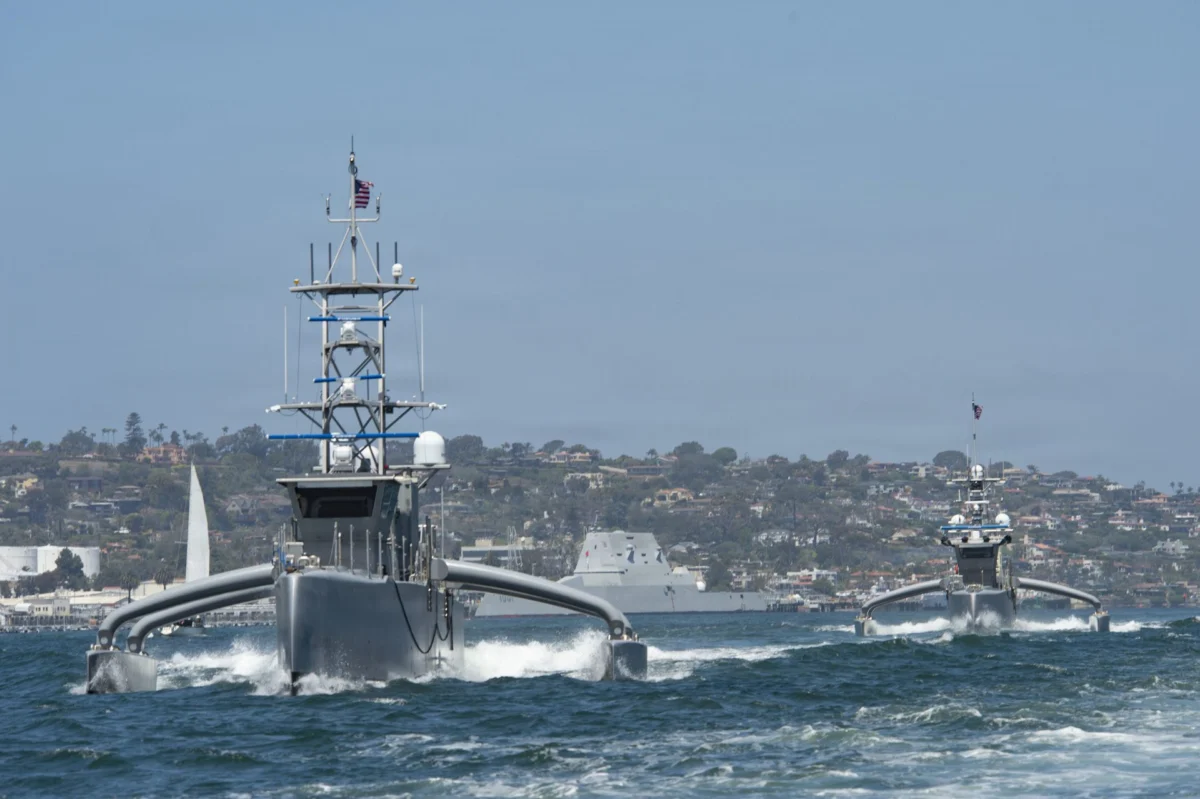
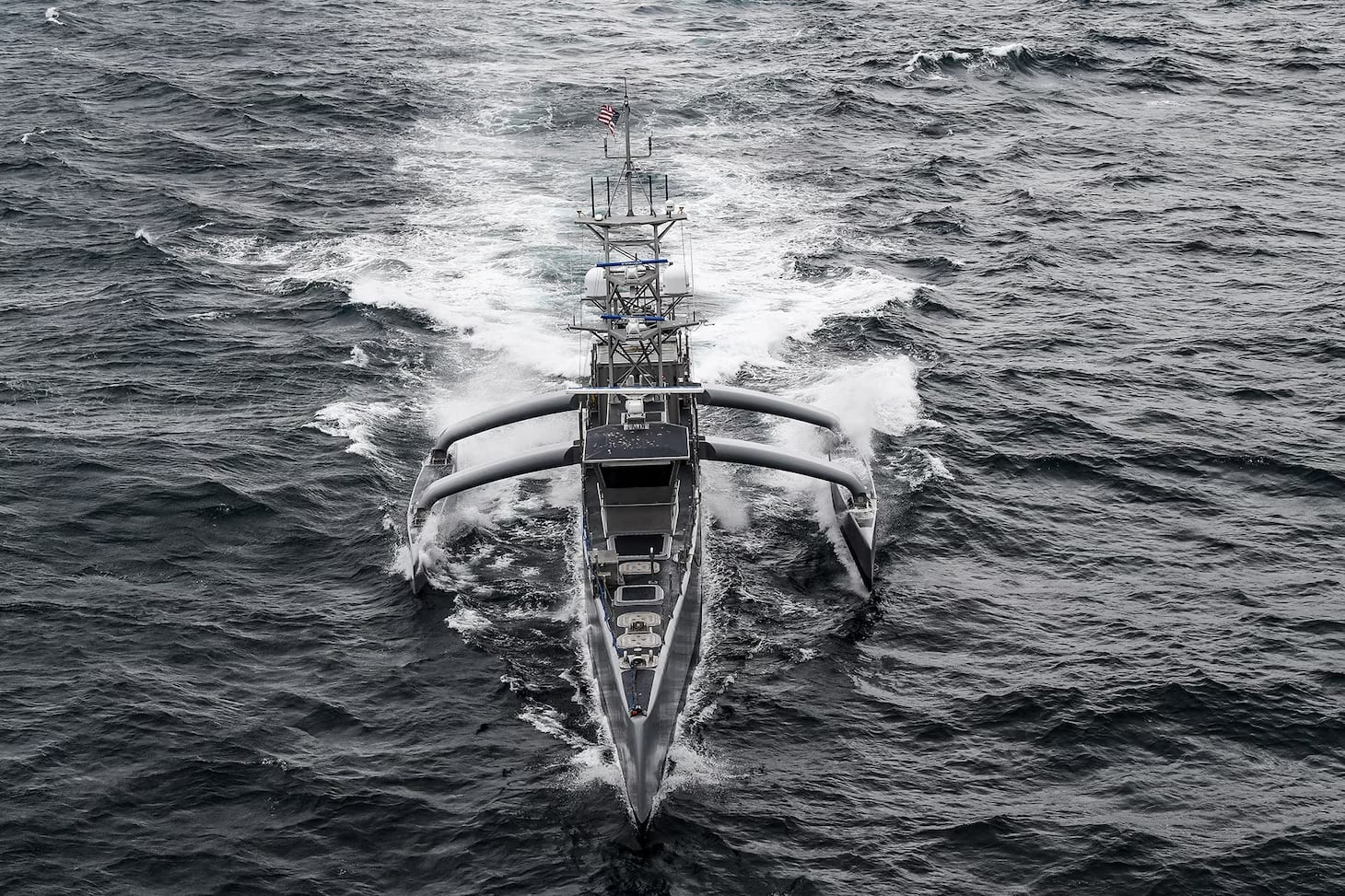
The Navy’s current fleet of MUSVs is headlined by the Sea Hunter and Seahawk prototypes, which were originally developed under the DARPA "Anti-Submarine Warfare Continuous Trail Unmanned Vessel" (ACTUV) program. These vessels have already demonstrated the ability to navigate autonomously for thousands of miles, but the MUSV Family of Systems is intended to scale this capability into a standardized, mass-produced class of ships.
Broader Implications for Naval Modernization
The legal challenge by Blue Water Autonomy and Saildrone reflects a growing tension in the defense industry between established "primes" and agile, tech-focused startups. Among the seven companies selected by the Navy are traditional heavyweights like Leidos and Huntington Ingalls Industries, alongside newer players like Sea Machines and Saronic Technologies. The exclusion of Saildrone—a company with arguably the most "real-world" autonomous mileage in the industry—has raised eyebrows among defense analysts.
If the Court of Federal Claims grants an injunction, it could delay the Navy’s testing schedule, potentially pushing back the deployment of these critical assets. Such a delay would be viewed poorly by Pentagon leadership, which has emphasized that "speed to fleet" is the most important metric in the current era of Great Power Competition.
The Navy has officially declined to comment on the specifics of the lawsuits, citing its policy on pending litigation. However, the service has previously defended its acquisition processes as rigorous and designed to ensure that only the most robust and "warfighter-ready" designs move forward to the expensive prototyping phase.
Conclusion and Chronology of Events
As the federal court prepares to hear arguments, the timeline of the MUSV program highlights the rapid—and sometimes turbulent—nature of modern defense procurement:
- July 28, 2025: Navy announces the Modular Attack Surface Craft (MASC) program.
- March 26, 2026: Navy terminates MASC and launches the MUSV Family of Systems program, citing a need for broader mission requirements.
- April 17, 2026: Solicitation period for MUSV proposals ends.
- June 1, 2026: Navy announces seven companies selected for at-sea testing; Blue Water Autonomy and Saildrone are excluded.
- June 2, 2026: Blue Water Autonomy and Saildrone file lawsuits in the U.S. Court of Federal Claims.
- Late FY2026 (Planned): On-water surrogate testing was scheduled to begin.
The outcome of these lawsuits will likely determine whether the Navy can proceed with its "Golden Fleet" era of unmanned systems on schedule, or if the program must be paused to reevaluate the merits of the Silicon Valley-backed firms that claim they were unfairly left on the pier. For the U.S. Navy, the stakes involve more than just a $2.1 billion budget; they involve the very architecture of the future fleet.

Related Posts
Pentagon Forges Landmark Seven-Year Agreements with Boeing and RTX to Accelerate Standard Missile-3 Production and Stabilize Defense Supply Chains
Boeing Unveils Ultra Low-Cost Seeker to Enhance Missile Inventory and Combat Cost Challenges in Modern Warfare