President Javier Milei Defends Land Law Amidst Senate Delays, Labels Opposition as "Argentine Decadence"
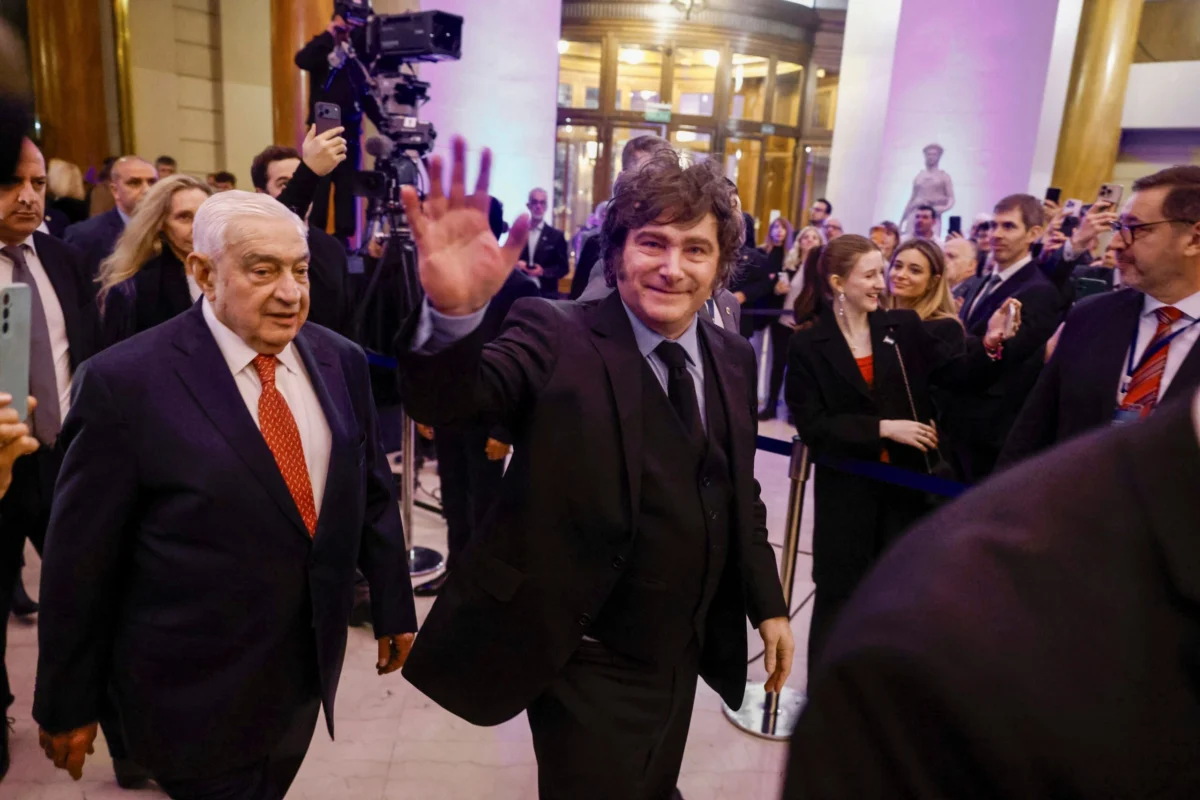
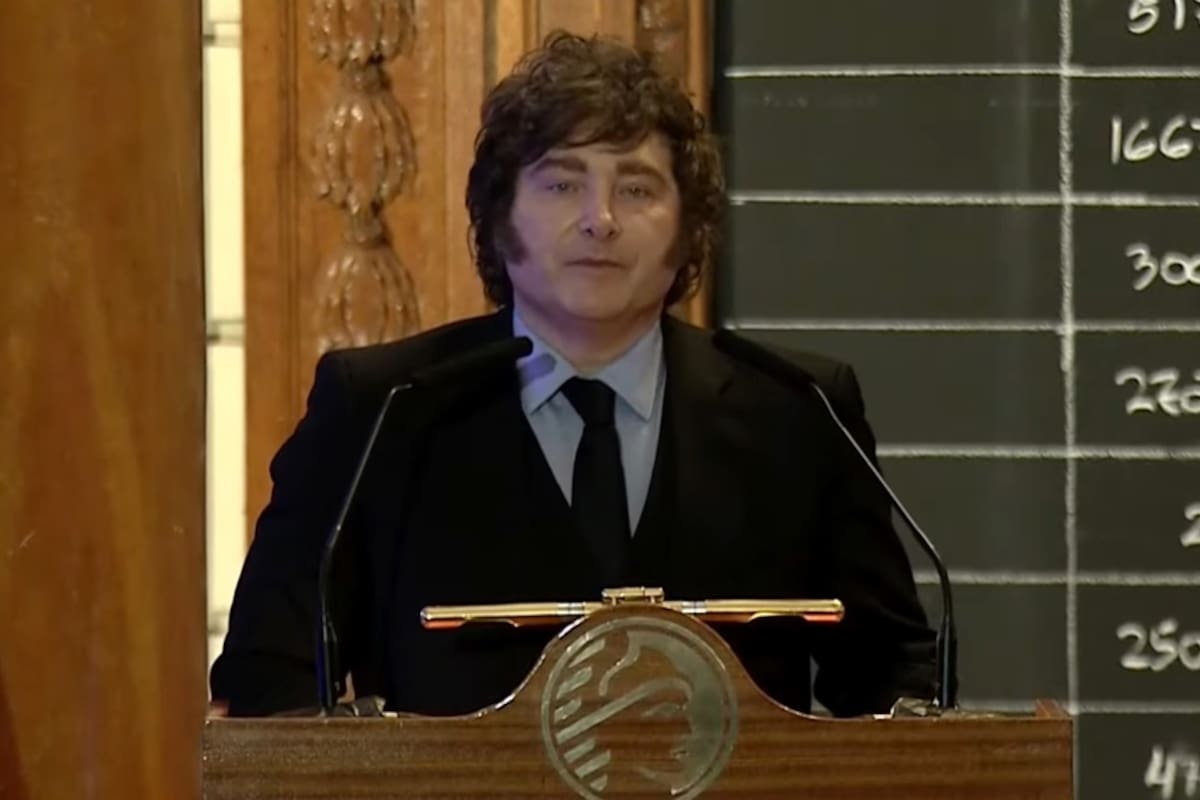
President Javier Milei strongly defended his administration’s proposed land law reforms on Thursday, directly addressing the recent delays in its treatment within the Senate. Speaking at the 172nd anniversary of the Buenos Aires Stock Exchange, Milei sharply criticized the opposition, characterizing their stance as a clear manifestation of "Argentine decadence." The President asserted that any opposition to the robust defense of property rights directly fuels the nation’s decline.
"It is clear that those who oppose the fierce defense of property rights are Argentine decadence," Milei declared during his address. He elaborated on his position by stating, "If we violate property rights, there are no incentives to save. Historically, various governments in Argentina have dedicated themselves to stealing from Argentines and violating this right, but at the same time, they have to finance investment, and those who invest must be able to capture the results of that investment."
The administration had been forced to postpone the debate on the bill, which aims to guarantee the inviolability of private property, due to resistance concerning the chapter on the foreign ownership of land and the absence of key allies. This legislative hurdle underscores the complex political landscape President Milei navigates as he pushes forward his reform agenda.
The Land Law: Core Tenets and Political Stumbling Blocks
The proposed legislation, officially titled the "Law of the Argentine State," seeks to establish the inviolability of private property as a foundational principle for economic development. Proponents argue that a secure and protected right to property is essential for fostering savings, attracting investment, and ultimately driving economic growth. The bill’s architects contend that historical governmental interference and expropriation have stifled Argentina’s potential, leading to persistent economic instability.
The specific provisions that have generated significant opposition include measures that would liberalize restrictions on foreign investment in agricultural land. While the government views this as a critical step to unlock capital and expertise, opponents express concerns about national sovereignty and the potential impact on small landowners and agricultural communities. The debate has thus become a proxy for broader ideological divisions regarding foreign capital and national economic policy.
Milei’s Economic Philosophy and the Right to Property
During his speech at the Bolsa de Comercio, President Milei articulated his core economic philosophy, emphasizing the paramount importance of property rights as a bedrock of prosperity. He linked historical instances of government intervention and wealth redistribution to a decline in savings and investment, arguing that such policies create a disincentive for productive economic activity.
"It is not redundant that we are sending a law to Congress to declare the inviolability, respect, and staunch defense of property rights," Milei explained. "Because respecting it is what will allow us to save, invest, grow, and become a power once again." His remarks were framed against the backdrop of Argentina’s long history of economic volatility, marked by periods of high inflation, currency devaluations, and external debt crises.
The President directly confronted those who he believes obstruct these reforms, stating, "It is clear that those who oppose the fierce defense of property rights are the enemies of progress. Look at them talk and act. They are responsible for Argentine decadence, they are the ones who have violated property rights and have sunk us." This strong rhetoric reflects his conviction that a fundamental shift in economic thinking, centered on free markets and individual property rights, is necessary to reverse Argentina’s fortunes.
Challenges in the Senate: A Tightrope Walk for the Administration
The legislative process for the land law has been fraught with difficulties, highlighting the precarious balance of power in the Argentine Senate. The ruling party, while having a presence, often relies on the support of various political blocs to pass legislation. The resistance encountered on the land law, particularly regarding the foreign ownership clause, indicates a division among senators, even among those who might otherwise be considered allies.
The postponement of the vote was attributed to a combination of factors, including the lack of consensus on specific provisions and the strategic calculations of political actors. The opposition has leveraged these divisions to delay or block legislation they deem detrimental to national interests or their own political agendas. This dynamic underscores the challenges of governing in a fragmented political environment where consensus-building is often more complex than outright majority support.
Economic Context: The Legacy of Past Policies
President Milei’s emphasis on property rights and his critique of "populist" governments are rooted in his diagnosis of Argentina’s chronic economic problems. He frequently points to decades of fiscal deficits, high inflation, and protectionist policies as the primary drivers of the nation’s underdevelopment. The land law, in this context, is presented not merely as a legal reform but as a crucial component of a broader strategy to attract foreign investment, boost agricultural output, and foster a more dynamic and competitive economy.
The economic data often cited by Milei’s administration paints a stark picture of Argentina’s recent past. Before the current government took office, inflation had soared into triple digits, poverty rates were high, and foreign currency reserves were depleted. The formal labor market, as Milei pointed out, struggled to lift individuals out of poverty, with a significant portion of formally employed workers falling below the poverty line. This economic reality serves as the justification for his administration’s assertive reformist stance and its willingness to challenge established economic orthodoxies.
Presidential Address Interrupted: A Test of Resolve
During his address at the Bolsa de Comercio, President Milei faced repeated interruptions from an audience member who vocally criticized his administration’s performance. The exchanges occurred while Milei was discussing the pitfalls of populism and its impact on economic stability. When the President stated that "If you have a populist government, it will crash," the heckler interjected, "like now."
Milei responded firmly, asserting, "No, now we have made the adjustment, because the damn populists left the bomb planted." As the interruptions persisted, with the spectator even shouting "finish it," Milei used the moment to reaffirm his commitment to his mandate and his aspirations for re-election.
"Yes, I will finish this term, be re-elected, and be here for four more years," he declared, drawing applause. He further added, "And I will give you one more piece of bad news. We are laying the foundation for 100 years of liberalism, so if you don’t like it, go to Cuba." This defiant stance highlighted his confidence in his political project and his willingness to confront dissent directly.
Escalating Rhetoric and Defense of Free Markets
The persistent interruptions clearly agitated President Milei, leading him to employ stronger language in his critique of those opposing the land law. He accused opponents of being "parasitic" and never having engaged in productive business, stating, "For almost 100 years, we have systematically shat on private property. But what can we expect from parasitic people who have never done a damn business in their lives? The parasite lives by expropriating." This outburst, though controversial, underscored his deep-seated frustration with what he perceives as an entrenched anti-business sentiment within certain political circles.
In response to further interjections, Milei directly challenged the heckler: "Hey, why don’t you rent a hall and go talk? In the time when I wasn’t president, I gave conferences for a thousand, two thousand, and even 10,000 people. Have a career if you like talking so much, you ‘kuka’." The term "kuka" is a derogatory slang often used in Argentina to refer to supporters of Kirchnerism, a prominent political movement. This exchange revealed the highly charged nature of the political discourse surrounding Milei’s reforms.
Addressing Economic Realities and the Path Forward
The President also addressed the timeline for economic recovery, acknowledging that the process would be lengthy. "Do you think I’m going to reverse 100 years of decadence in two and a half years?" he asked rhetorically. He maintained that while significant challenges remain, the country is "on the right path." He further criticized the notion that Argentina was in a strong economic position prior to his administration, stating, "Those who speak as if we had inherited Switzerland: 30% of formal jobs were below the poverty line. Even being a formal worker was not enough to escape poverty in ‘kuka’ Argentina." This statement aimed to counter narratives that his administration inherited a stable or prosperous economy.
A Presidential Return to the Bolsa de Comercio
President Milei’s appearance at the Bolsa de Comercio marked a significant return to a traditional event that had seen a notable absence of presidential engagement during the previous administration. Former President Alberto Fernández had not attended the event during his term, marking the first time in 40 years of democratic rule that a sitting president had failed to appear. Milei’s presence signals a renewed emphasis on engaging with the business community and signaling his administration’s alignment with economic actors.
Business Community’s Expectations and Concerns
While the business sector generally supports Milei’s reformist agenda, there are also specific expectations and concerns that shape their engagement with the government. While appreciating the focus on fiscal balance and pro-market reforms, various sectors are calling for a quicker implementation of measures aimed at improving production and investment conditions. Issues such as tax burdens, access to credit, and the recovery of consumer spending remain central to their demands.
Prior to President Milei’s address, Adelmo Gabbi, the president of the Bolsa de Comercio, articulated the institution’s core values. He emphasized that progress is built upon the freedom of individuals to undertake, invest, produce, and trade. "Confidence is the true asset of a society," Gabbi stated. "It does not appear on balance sheets, it is not on any screen, nor is it traded. But confidence opens the doors to progress. Institutions endure when they are greater than the people who temporarily constitute them." This sentiment reflects a desire for stable institutional frameworks that foster long-term economic growth and stability.

Related Posts

The Electric Vehicle Battery Health Debate Emerges as Argentina’s EV Market Accelerates
President Donald Trump Confirms Secret Departure from Turkey Amidst Assassination Threat