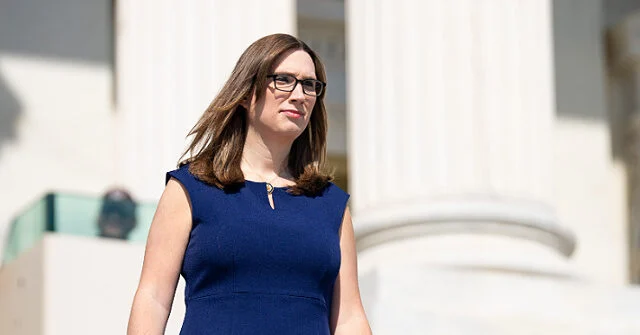
Wisconsin Gubernatorial Candidate Francesca Hong Faces Scrutiny Over Past Comments on Culver’s Experience and Police Abolition as Campaign Heats Up
Wisconsin Democratic gubernatorial candidate Francesca Hong is currently navigating a significant wave of public scrutiny following the resurfacing of several past social media posts, most notably a 2019 comment describing a near "anxiety attack" at a Culver’s restaurant in Black River Falls due to the presence of "too many old white people" and a perception that her group "didn’t think we spoke English." This incident, coupled with her earlier calls to "defund then abolish" police, has ignited a fervent debate across the state, challenging her campaign’s narrative and prompting questions about her political evolution and appeal to a diverse electorate. The comments, originally made on X (formerly Twitter), have been widely circulated in recent weeks, forcing Hong to address them directly and attempt to contextualize her remarks amidst a competitive gubernatorial race. The convergence of these distinct controversies—one touching on cultural sensitivities and personal experience, the other on fundamental public safety policy—presents a complex challenge for a candidate seeking to lead a politically divided state like Wisconsin.
The Culver’s Incident: A Deep Dive into a Social Media Storm
The particular post that garnered recent widespread attention originated on X in 2019. In it, Francesca Hong recounted an experience at a Culver’s location in Black River Falls. She stated, "I ate two bites of my kid’s cheeseburger at a Culver’s in black river falls and told him they ran out of ice cream. Mostly just wanted to leave bc I was on the verge of a anxiety attack." The core of the controversy stemmed from her subsequent explanation for this feeling: the establishment had "to many old white people who didn’t think we spoke english." Hong did not provide further elaboration on the "didn’t think we spoke English" aspect of her comment, leaving much to interpretation and fueling speculation regarding the specific interactions or observations that led to her perception.
Culver’s, a Wisconsin-based fast-food chain renowned for its ButterBurgers and frozen custard, holds a significant cultural footprint in the state. Often seen as an iconic local institution, it is a common gathering place for families and communities across Wisconsin. The company itself embodies a certain Midwestern sensibility, frequently associated with comfort food and a family-friendly atmosphere. Black River Falls, a city nestled in Jackson County, Wisconsin, further underscores the contextual backdrop of Hong’s comments. According to U.S. Census data, Jackson County is predominantly white, with approximately 88% of its population identifying as white alone, non-Hispanic. The city itself reflects similar demographics, making Hong’s observation about "old white people" a direct reflection of the local population composition.
The resurfacing of this post has drawn sharp criticism from various quarters. Political opponents quickly seized upon the remarks, characterizing them as divisive, racially insensitive, and out of touch with the experiences of many Wisconsinites. Critics argued that such language from a gubernatorial candidate fostered animosity and contributed to an environment of identity politics rather than unity. Some commentators suggested that the statement revealed a candidate who might be quick to judge or generalize based on demographic appearances, while others questioned the appropriateness of a candidate expressing such sentiments, particularly regarding a common public establishment. The term "anxiety attack" also became a point of discussion, with some questioning the severity of the situation described versus the language used, though mental health advocates often caution against minimizing personal experiences with anxiety.
In response to the growing wave of criticism, Hong addressed the controversy, not by retracting her initial statement, but by drawing attention to a separate 2020 post where she discussed Culver’s fried cheese curds. In that post, she had declared, "They are the perfect road curd. No other fried curd comes close. Only Culvers curds or fresh curds are appropriate for travel. For in person dining Culver’s curds are indeed, trash." Following the backlash over her 2019 comments, Hong then issued a subsequent statement defending her curd critique, saying, "I see that folks are digging up old tweets in an attempt to shift the narrative in this race. I stand by this statement, unequivocally. Their fries also leave much to be desired. The reuben, however, slaps." This response, while providing a degree of levity and a nuanced take on Culver’s menu items, did not directly address the underlying concerns raised by her "too many old white people" comment, leading many to interpret it as an attempt to deflect or minimize the original controversy.
The strategic implications of this handling are significant. While some supporters might view her steadfastness as authentic, others, particularly undecided voters or those sensitive to racial dynamics, might perceive a lack of direct accountability or an unwillingness to clarify potentially offensive remarks. The episode underscores the challenges modern politicians face with their digital footprints, where past social media activity, regardless of its original context or intent, can be unearthed and scrutinized years later, often with profound consequences for contemporary campaigns.
Chronology of Controversial Statements and Political Evolution
Francesca Hong’s political journey and public statements have been marked by a consistent progressive stance, which has at times placed her at the center of contentious debates. The timeline of her controversial comments reveals a pattern that her critics highlight as indicative of an "extremist" ideology, while her supporters often frame it as a testament to her unwavering commitment to social justice and her capacity for growth.
- 2019: The "Culver’s Incident" post on X regarding her experience in Black River Falls. This pre-dates her state legislative service but has now resurfaced during her gubernatorial campaign.
- 2020: Hong posts her nuanced opinion on Culver’s cheese curds, differentiating between "road curds" and "in-person dining curds." This post, while not controversial at the time, was later leveraged by Hong herself in response to the criticism over her 2019 Culver’s remarks.
- 2021: Hong makes her most widely cited comments on policing, stating unequivocally, "Police exist to uphold white supremacy. Defund then abolish. Reform can’t be an option." This statement was made at a time of heightened national discourse surrounding police brutality, racial injustice, and calls for systemic change in law enforcement, following the murder of George Floyd and widespread protests. Hong, then a State Representative for Madison’s 76th Assembly District, was a vocal proponent of these progressive reforms. Her legislative record and public advocacy during this period aligned with the "defund the police" movement, advocating for redirecting funds from law enforcement agencies to community-based social services, mental health initiatives, and other programs designed to address root causes of crime.
- Late 2023/Early 2024: As Hong actively campaigns for governor of Wisconsin, her past comments, particularly those on policing and the Culver’s incident, begin to resurface through opposition research and media scrutiny.
- Recent Weeks: In response to the resurfacing of the police comments, Hong appears on Fox News to clarify her current position. She explicitly stated, "The governor cannot defund the police, and I won’t defund the police. But I will invest in the things we know prevent crime." She added that "people can evolve," signaling a potential shift or clarification of her stance as she seeks a broader appeal for statewide office.
This chronology highlights a clear evolution in Hong’s public messaging, particularly on the sensitive issue of policing. While her 2021 statements were unyielding in their call for abolition, her recent comments reflect a more pragmatic approach, acknowledging the limitations of the gubernatorial office and pivoting towards a language of "investment" in crime prevention, a stance that often garners broader bipartisan support than "defunding" or "abolishing."
The "Defund the Police" Debate: Context and Evolution
Hong’s 2021 statements on policing were emblematic of a specific moment in American political discourse. The "defund the police" movement gained significant traction in 2020 amid widespread protests against police brutality. Proponents argued that policing in its current form disproportionately harmed communities of color and that resources should be reallocated to social services. Critics, however, viewed the slogan as a radical call for anarchy, leading to concerns about public safety and an increase in crime rates.
Wisconsin itself has been a microcosm of this national debate. Cities like Milwaukee and Madison have grappled with issues of police accountability, racial disparities in arrests, and rising crime rates, particularly gun violence. Public opinion polls conducted in Wisconsin and nationally during and after 2020 consistently showed a complex picture: while there was significant support for police reform and addressing racial bias, outright "defunding" or "abolishing" police rarely garnered majority support, even among Democratic voters. A 2020 Marquette Law School poll, for instance, showed that while a majority of Wisconsin voters supported reforms like requiring body cameras and independent investigations, only a minority supported decreasing police funding.
Hong’s recent pivot on this issue is a strategic move common among progressive politicians seeking higher office in swing states. While her progressive base may appreciate her past radical honesty, a statewide campaign in Wisconsin necessitates appealing to a broader, more moderate electorate that often prioritizes public safety and stability. By asserting that "the governor cannot defund the police, and I won’t defund the police," she is attempting to reassure voters wary of the "defund" label, while simultaneously maintaining a progressive edge by promising to "invest in the things we know prevent crime." This framing allows her to advocate for social programs and community interventions as alternatives or complements to traditional policing, without alienating voters who value a strong law enforcement presence. The question for her campaign will be whether voters perceive this as genuine evolution or a politically convenient shift.
Broader Impact and Implications for the Campaign
The resurfacing of Francesca Hong’s past comments carries significant implications for her gubernatorial campaign in Wisconsin, a state known for its tight electoral contests and often divided electorate.
Political Opponents and Campaign Strategy:
Republican strategists and rival campaigns are expected to relentlessly highlight these comments, framing Hong as an "extremist" or "radical" candidate. The Culver’s comment, in particular, taps into broader cultural anxieties about identity politics and perceived divisiveness, allowing opponents to paint her as out of touch with the values of everyday Wisconsinites, especially in rural and suburban areas. The "defund the police" comments, even with her recent clarification, will be used to raise concerns about public safety and leadership stability. These issues are potent weapons in a state where law and order often feature prominently in political debates.
Voter Perception and Demographics:
- Rural vs. Urban: The Culver’s incident, set in Black River Falls, might resonate more strongly with rural voters who could feel targeted or misunderstood by the comment. Conversely, her progressive stances might energize urban and younger voters.
- Racial Dynamics: As the first Asian American to serve in the Wisconsin State Assembly, Hong’s comments on race and perceived prejudice (e.g., "didn’t think we spoke English") could elicit varied reactions. Some may see it as an honest expression of lived experience, while others may view it as divisive or perpetuating stereotypes.
- Ideological Divide: Progressive voters who supported her earlier, more radical stances might feel a sense of betrayal or disappointment at her moderated position on policing. However, moderate Democrats and independent voters, crucial for a statewide victory, might be more receptive to her evolved stance, viewing it as a sign of pragmatism and electability.
Media Narrative:
The media narrative surrounding Hong’s campaign will likely be dominated by these controversies, potentially overshadowing her policy proposals on issues such as healthcare, education, or economic development. This creates a challenge for her campaign to pivot back to core issues that affect the daily lives of Wisconsinites, rather than constantly defending past statements. Conservative media outlets will undoubtedly amplify the most provocative aspects of her comments, while more centrist or liberal outlets might focus on the context and her explanations.
Fundraising and Endorsements:
The controversies could impact fundraising, potentially alienating some donors wary of backing a candidate perceived as too controversial or unelectable. Conversely, they could galvanize her progressive base, leading to increased grassroots donations. Endorsements from key labor unions, community organizations, or influential political figures might also be influenced by how these controversies are perceived.
Broader Political Climate:
Wisconsin is a perennial swing state, often decided by razor-thin margins. The political climate is highly charged, with deep partisan divisions. Comments that can be framed as divisive or extreme are often amplified by both sides to rally their bases and attack opponents. Hong’s statements fall squarely into this contentious arena, making her campaign a focal point in the ongoing culture wars. Her ability to effectively manage these narratives will be a critical determinant of her success.
In conclusion, Francesca Hong’s past social media activity has presented her gubernatorial campaign with significant hurdles. Her 2019 Culver’s comments and her 2021 "defund then abolish" police stance, despite her recent attempts at clarification and evolution, have become central to the discourse surrounding her candidacy. The challenge for Hong lies in convincing a diverse Wisconsin electorate that her past statements, whether viewed as personal reflections, progressive ideals, or youthful indiscretions, do not define her capacity to lead the entire state. Her campaign must skillfully navigate these controversies, articulate a clear vision for Wisconsin, and demonstrate an ability to unite rather than divide, if she is to overcome the scrutiny and build a winning coalition in a highly competitive political landscape. The coming months will test her resilience and strategic acumen as she vies for one of the state’s most powerful offices.

Related Posts
Democratic Candidates Must Moderate to Win General Elections, Says Rep. Greg Stanton
Lisa Demuth Secures Republican Gubernatorial Nomination in Minnesota, Defeating Trump-Endorsed Mike Lindell