Wildfires Threaten France’s Strategic Defense Industrial Hub Near Bordeaux as Emergency Services Battle Unprecedented Blazes
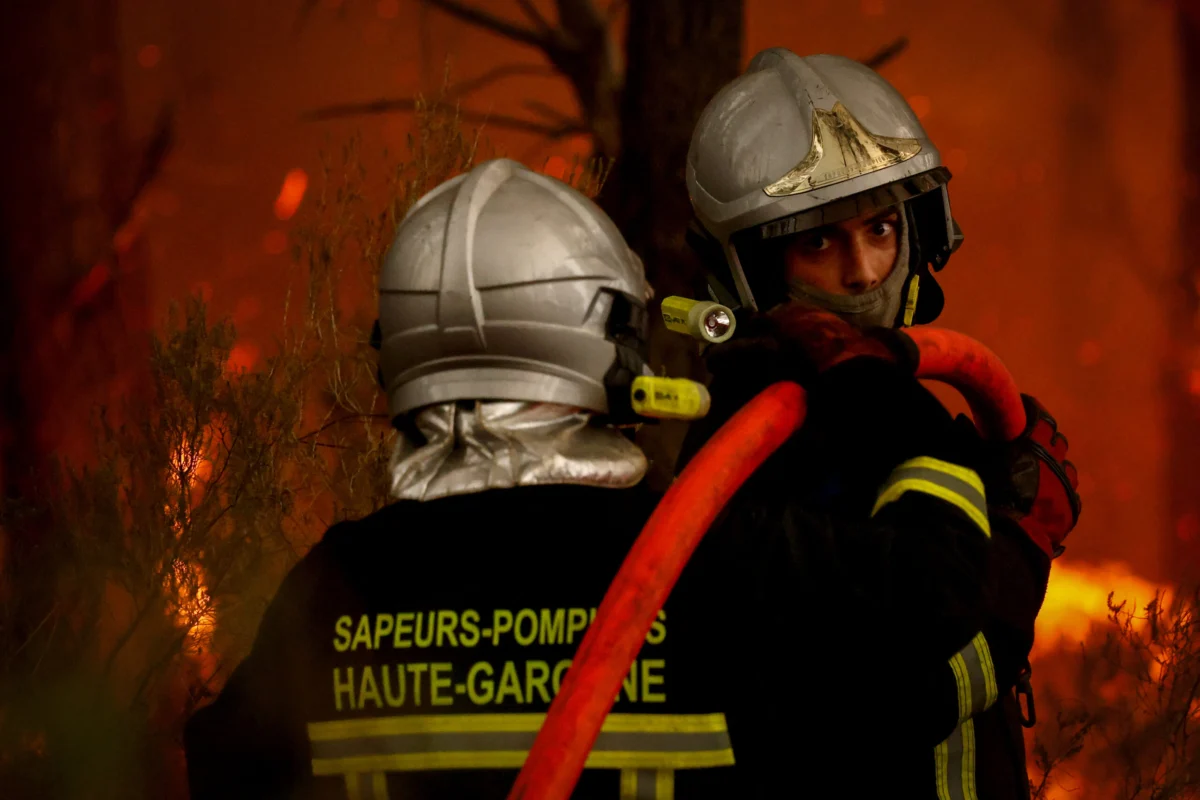
The Gironde department in southwest France is currently the site of a critical confrontation between nature and national security, as massive wildfires continue to encroach upon the country’s most vital defense and aerospace industrial clusters. Located primarily to the west of the city of Bordeaux, these fires are no longer merely an environmental crisis but have evolved into a significant threat to France’s military-industrial complex. Key facilities belonging to Dassault Aviation, ArianeGroup, Thales, and the French Atomic Energy Commission (CEA) find themselves in the path of a blaze that has already consumed more than 100,000 acres of forest—an area roughly four times the size of the city of Paris. The concentration of these sites represents the backbone of French strategic autonomy, housing the production lines for the Rafale fighter jet, the propulsion systems for nuclear-capable ballistic missiles, and advanced laser research essential for maintaining France’s nuclear deterrent.
The scale of the disaster has forced major industrial players to initiate emergency protocols, including the evacuation of personnel and the relocation of sensitive military equipment. As of Tuesday, satellite data indicated that active fire fronts were within nine kilometers of Dassault Aviation’s wing assembly plant in Martignas and as close as four kilometers to the CEA’s military research site at Le Barp over the weekend. While firefighting efforts have managed to slow the advance in some sectors, authorities remain on high alert as a forecasted spike in temperatures, combined with a prolonged drought, threatens to reignite hotspots and push the flames toward high-value infrastructure.
The Strategic Importance of the Bordeaux Defense Cluster
The region west of Bordeaux is often referred to as a "Defense Valley," a hub of high-tech manufacturing that is indispensable to the French Ministry of Armed Forces and its international partners. The facilities currently under threat are not easily replaceable, nor can their operations be easily relocated without significant delays to national defense schedules.
ArianeGroup, a joint venture between Airbus and Safran, operates several sites in the area that are central to France’s nuclear capabilities. The Candale site is responsible for the integration and assembly of the propulsion units for the M51 submarine-launched ballistic missile (SLBM). The M51 is the primary weapon of France’s Strategic Oceanic Force (FOST), and any disruption to its production or maintenance directly impacts the nation’s nuclear readiness. Nearby, the Saint-Médard-en-Jalles facility handles the fueling of these massive solid-fuel rockets, while the Le Haillan site specializes in the development of advanced composite materials and solid-propulsion systems.
Dassault Aviation’s presence in the region is equally critical. The Martignas site serves as the primary assembly plant for the wings of the Rafale fighter jet, France’s flagship combat aircraft. Once assembled, these components are moved to the Mérignac plant for final assembly. With the Rafale seeing a surge in international orders from nations such as the United Arab Emirates, Indonesia, and India, the Mérignac line is under intense pressure to meet delivery deadlines. A prolonged shutdown or physical damage to the facility would have cascading effects on France’s export reputation and its own Air and Space Force modernization plans.
Furthermore, the presence of Roxel—a subsidiary of MBDA—adds another layer of strategic risk. Roxel’s Saint-Médard facility produces the solid rocket motors for a wide array of missiles, including the Aster air-defense interceptors. In an era of heightened European security concerns, the production of interceptor missiles is a top priority for both France and the broader NATO alliance.
Chronology of the Crisis and Emergency Response
The current emergency is the result of a rapidly escalating fire season that has pushed French emergency services to their limits.
On Friday and Saturday, the situation transitioned from a regional environmental concern to a national security priority. As the fire front expanded toward the industrial zones of Saint-Médard-en-Jalles and Martignas, Gironde department Prefect Sophie Brocas coordinated a massive effort involving both civil and private resources. Local construction companies were mobilized to assist firefighters in clearing vast swathes of vegetation to create firebreaks—buffer zones intended to starve the fire of fuel before it reached sensitive perimeter fences.
By Monday, the situation necessitated operational shutdowns. Thales announced the closure of its Mérignac site, which provides essential avionics and electronic warfare systems for the Rafale and various military helicopters. Simultaneously, Dassault Aviation began the delicate process of moving "sensitive equipment" from its Martignas and Cestas locations to safer zones, including Air Base 106, a major French Air Force installation located nearby.
On Tuesday morning, NASA’s Fire Information for Resource Management System (FIRMS) showed that while the number of active hotspots had slightly decreased due to the efforts of over 2,000 firefighters and a fleet of water-bombing aircraft, the danger was far from over. Satellite imagery confirmed that the fires remained active within a 10-to-15-kilometer radius of the ArianeGroup and Roxel complexes.
The French Atomic Energy Commission (CEA) also reported that its Cesta site in Le Barp remained closed. This facility is home to the Megajoule Laser (LMJ), a world-class research instrument that uses 176 laser beams to recreate the extreme conditions of nuclear fusion. The LMJ is vital for France’s "Simulation Program," which allows the country to ensure the reliability and safety of its nuclear warheads without conducting live underground tests, which France permanently ceased in 1996.
Supporting Data and Environmental Context
The 2024 wildfire season in Gironde follows a pattern of increasingly severe climatic events in the region. In 2022, the department suffered through massive fires that burned nearly 30,000 hectares (roughly 74,000 acres). The current fire has already surpassed those figures, reaching the 100,000-acre mark.
Meteorological data from Météo-France highlights the severity of the conditions. The region has experienced a rainfall deficit of nearly 40% compared to historical averages, leading to a "soil moisture drought" that makes the pine forests of the Landes de Gascogne highly flammable. When combined with the "Mistral" and "Tramontane" wind patterns that can shift rapidly, the fire’s behavior becomes unpredictable, jumping firebreaks that would normally be sufficient.
The economic and industrial data also underscore the stakes. The aerospace and defense sector in the Nouvelle-Aquitaine region (where Bordeaux is located) employs over 50,000 people and generates billions of euros in annual revenue. The "Defense Valley" is not just a collection of factories; it is a specialized ecosystem where the loss of a single niche supplier—such as a chemical plant producing specialized propellants—could halt the entire production chain for months.
Official Reactions and Corporate Measures
In official statements, the affected companies have emphasized personnel safety while acknowledging the strategic necessity of their operations.
Dassault Aviation stated that the majority of its workforce in the affected plants has been instructed to stay home, following the guidance of local authorities. "Those still working are the teams necessary for the transfer of equipment and those in charge of protecting the site to help with fire-fighting efforts," a company spokesperson confirmed.
ArianeGroup has been more circumspect regarding its security measures, citing the classified nature of its work on the M51 missile. However, the company confirmed that its sites west of Bordeaux have been evacuated and that "all necessary measures have been taken to secure them" in cooperation with the Directorate General for Armament (DGA).
Etienne Marcuz, an associate fellow at the Fondation pour la Recherche Stratégique, noted the gravity of the situation on social media, describing the fires as a threat to "vital strategic importance to our nuclear deterrent." This sentiment reflects a growing concern among defense analysts that climate-related disasters are becoming a primary threat to national security infrastructure.
The CEA has also highlighted its proactive measures. Following the 2022 fires, the agency invested in its own internal firefighting brigade and expanded the firebreaks surrounding the Megajoule Laser facility. These investments appear to have paid off, as the facility has so far avoided direct flame contact despite the fire front coming within four kilometers.
Analysis of Implications and Future Outlook
The encroachment of wildfires on France’s defense hub raises several long-term questions for the French government and the global defense industry.
First, there is the issue of geographic concentration. The Bordeaux region’s dominance in missile and aerospace production creates a "single point of failure" risk. While the cluster offers benefits in terms of logistics and talent sharing, the current crisis demonstrates how a localized natural disaster can threaten multiple pillars of national defense simultaneously. There may be future discussions within the DGA regarding the diversification of assembly and storage sites to mitigate such risks.
Second, the crisis highlights the intersection of climate change and military readiness. As extreme weather events become more frequent, defense contractors must treat environmental risks with the same level of seriousness as cyber threats or physical sabotage. Hardening facilities against fire, ensuring redundant power supplies, and creating robust equipment-relocation protocols are now essential components of defense industrial strategy.
Finally, the immediate concern remains the weather forecast. With a new wave of heat expected to peak on Wednesday, the battle to protect the Gironde’s defense infrastructure is entering a decisive phase. If the firebreaks hold and the winds remain favorable, the "Defense Valley" may escape physical destruction, but the disruption to production schedules and the cost of emergency measures will be felt for months to come.
As of Tuesday evening, the French government has not ruled out requesting further international assistance through the European Civil Protection Mechanism, as the scale of the Gironde fires continues to challenge even one of the world’s most sophisticated firefighting forces. The eyes of the defense world remain fixed on Bordeaux, where the preservation of France’s strategic sovereignty is currently being fought on the forest floor.

Related Posts
Pentagon Forges Landmark Seven-Year Agreements with Boeing and RTX to Accelerate Standard Missile-3 Production and Stabilize Defense Supply Chains
Boeing Unveils Ultra Low-Cost Seeker to Enhance Missile Inventory and Combat Cost Challenges in Modern Warfare