US Marine Corps Adopts Bullfrog AI-Powered Autonomous Weapon System to Counter Evolving Drone Threats and Reduce Defense Costs
In a significant move toward modernizing its littoral and ground-based defense capabilities, the United States Marine Corps has officially selected the Bullfrog autonomous weapon system, developed by Allen Control Systems (ACS), for integration into its counter-unmanned aircraft system (C-UAS) architecture. The decision, announced on Monday, marks a pivotal shift in how the Department of Defense (DoD) addresses the "cost-per-kill" disparity that has plagued Western militaries during recent conflicts in Ukraine and the Red Sea. The Bullfrog system, an AI-enabled platform designed to transform standard machine guns into precision anti-drone instruments, will be incorporated into the Marine Corps’ Ground Based Air Defense (GBAD) program, specifically targeting integration with the Light Marine Air Defense Integrated System (L-MADIS).
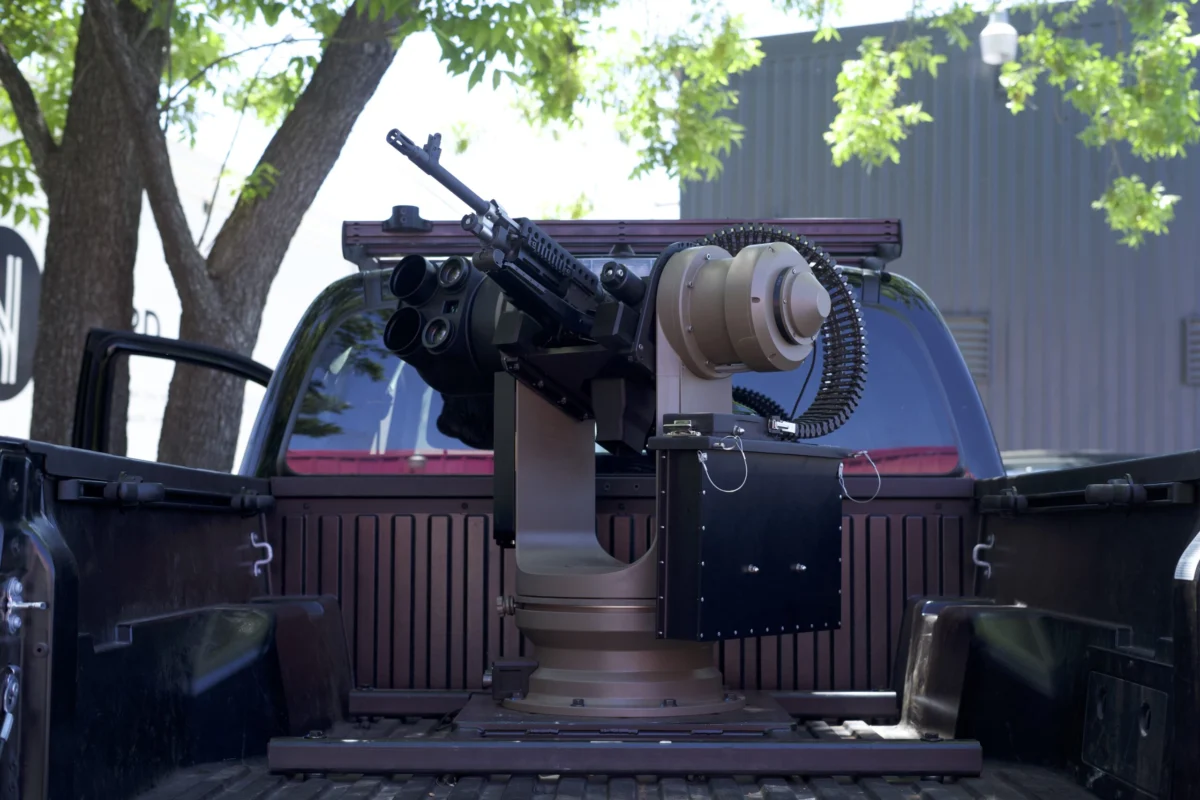
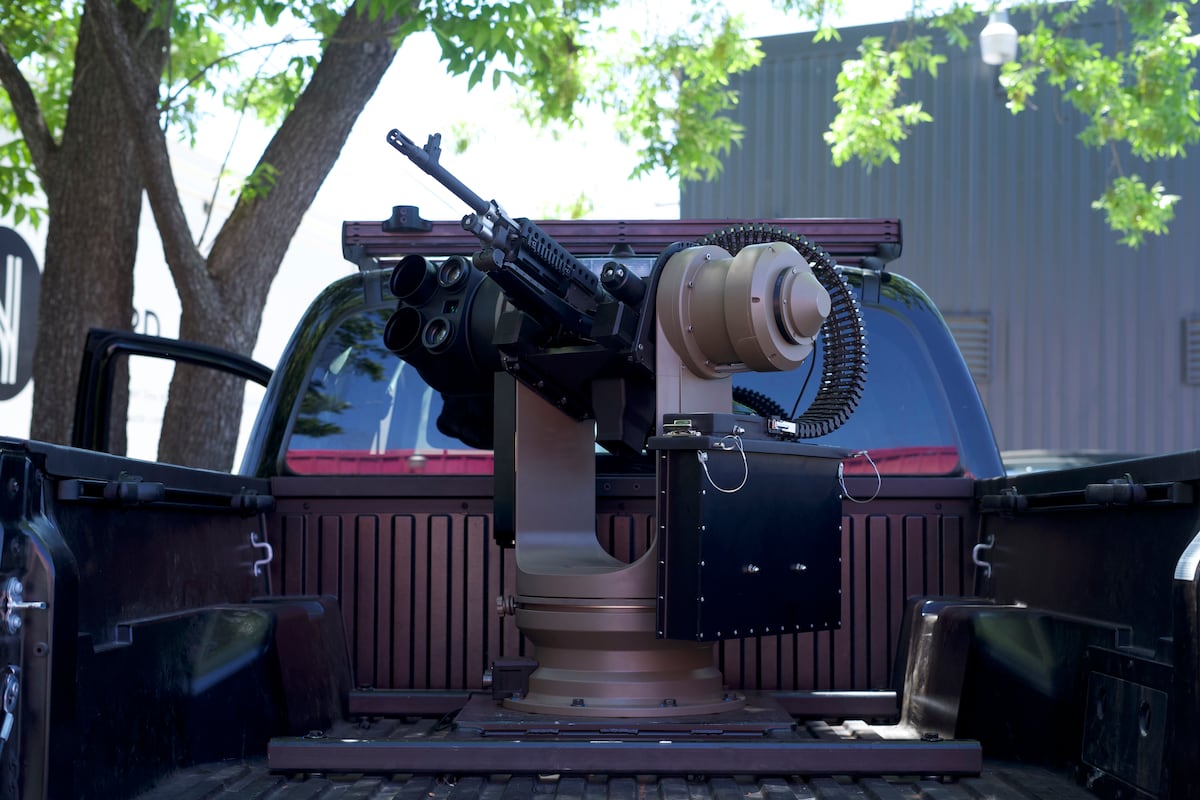
The adoption of the Bullfrog system comes at a time when the Pentagon is aggressively seeking scalable, affordable solutions to the proliferation of low-cost, high-impact loitering munitions and tactical drones. As the barrel of the Bullfrog-mounted M240 machine gun tracks a target across the sky, it relies not on the manual reflexes of a human operator, but on high-speed computer vision and proprietary AI algorithms to calculate lead, windage, and trajectory, ensuring that a single, brief burst of fire is sufficient to neutralize an aerial threat.
Technical Specifications and Capabilities of the Bullfrog System
The Bullfrog system is designed as a modular, "bolt-on" technology that can be adapted to existing hardware. While ACS offers several variants, the Marine Corps’ primary interest lies in the M240-compatible version. The system is engineered to detect, identify, and track drones with a level of precision that exceeds human capability, particularly when dealing with the erratic flight paths of small, agile FPV (First-Person View) drones.
According to technical data released by Allen Control Systems, the Bullfrog M240 system possesses a maximum effective range of approximately 800 meters (roughly half a mile). It is capable of engaging and neutralizing Group 1 and Group 2 unmanned aerial systems (UAS), as well as larger platforms weighing up to 1,320 pounds. The system itself is remarkably lightweight for its capability; without ammunition, the unit weighs approximately 300 pounds, making it suitable for mounting on a variety of tactical vehicles, from the Joint Light Tactical Vehicle (JLTV) to the more compact Polaris MRZR.
The core of the Bullfrog’s innovation is its "software-defined" approach to kinetic interception. While traditional anti-aircraft systems rely on expensive radar-guided missiles or heavy-caliber autocannons, the Bullfrog utilizes standard 7.62mm or .50 caliber ammunition. By automating the aiming process, the system eliminates the "human error" factor that often leads to wasted ammunition and missed targets. ACS officials have noted that the system can achieve a "cost-per-kill" as low as $10, a figure that stands in stark contrast to the multimillion-dollar interceptors currently used by the U.S. Navy and Air Force to down drones in the Middle East.
The Economic Imbalance of Modern Aerial Warfare
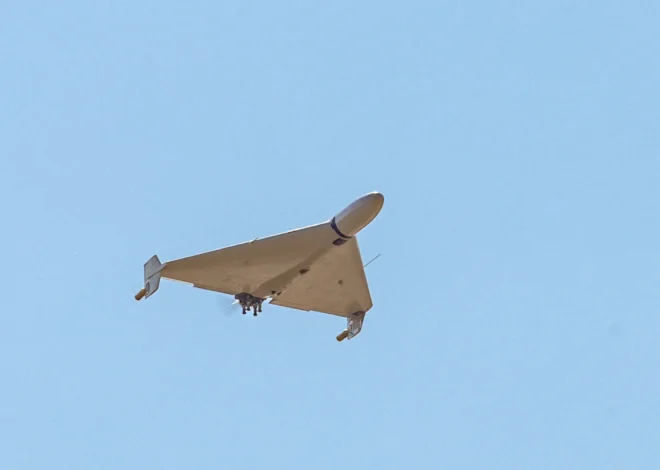
The Marine Corps’ decision to invest in the Bullfrog system is driven by a stark economic reality: the U.S. military is currently on the wrong side of the "attrition curve." In the Red Sea, U.S. Navy destroyers have frequently utilized SM-2 and SM-6 interceptor missiles—which can cost between $2 million and $4 million per shot—to down Houthi-launched Shahed-type drones that cost as little as $20,000 to $35,000 to manufacture.
This financial asymmetry is not merely a budgetary concern but a strategic vulnerability. In a prolonged conflict with a peer or near-peer adversary, the U.S. could find its stockpiles of sophisticated interceptors depleted by waves of cheap, mass-produced drones. The Bullfrog system addresses this by providing a "bottom-tier" defense layer. By using standard infantry weapons to handle smaller, low-altitude threats, the military can preserve its high-end interceptors for more significant threats, such as cruise missiles or manned aircraft.
The Department of Defense has recognized this gap through the establishment of Joint Interagency Task Force 401. This unit was created specifically to bypass traditional, slow-moving acquisition cycles and fast-track the deployment of C-UAS technologies that are both effective and economically sustainable. The Bullfrog’s approval by this task force was a critical precursor to the Marine Corps’ selection.
Integration with L-MADIS and the GBAD Program
The Marine Corps plans to fold the Bullfrog into its existing Light Marine Air Defense Integrated System (L-MADIS). Currently, the L-MADIS is a vehicle-borne system that relies heavily on electronic warfare (EW) to jam the signals of incoming drones. While EW is highly effective, it has limitations, particularly against "dark" drones that operate autonomously without a radio link or against drones hardened against jamming.
By adding the Bullfrog to the L-MADIS suite, the Marine Corps gains a "hard-kill" kinetic capability that complements its "soft-kill" EW tools. This multi-layered approach is central to the Ground Based Air Defense (GBAD) program’s philosophy. The GBAD program aims to provide Marine Expeditionary Units (MEUs) with a mobile, organic defense shield that can protect maneuver elements from the "omnipresent eye" of enemy surveillance drones and the lethal impact of kamikaze UAS.
The integration process will involve mounting the Bullfrog on the rear of tactical vehicles, where it will be networked into the L-MADIS sensor suite. This allows the system to receive target cues from the vehicle’s primary radar or optical sensors, after which the Bullfrog’s internal AI takes over for the final tracking and engagement phase.
Chronology of Development and Adoption
The journey of the Bullfrog from a conceptual prototype to a Marine Corps-selected system reflects the broader trend of rapid prototyping in the defense industry:
- 2021-2022: Allen Control Systems identifies the gap in low-cost kinetic C-UAS solutions as drone warfare escalates in regional conflicts. Development begins on a computer-vision-based aiming platform.
- Early 2023: ACS conducts initial live-fire demonstrations of the Bullfrog system, showcasing its ability to hit moving targets with standard machine guns.
- Late 2023: The U.S. Army and Navy begin testing variants of the system for base defense and maritime security.
- Early 2024: The Pentagon’s Joint Interagency Task Force 401 evaluates the Bullfrog, approving it for streamlined acquisition due to its high performance-to-cost ratio.
- July 2024: The U.S. Marine Corps officially selects the Bullfrog for the L-MADIS program, marking the system’s most significant integration into a frontline maneuver unit to date.
Broader Industry Context and Competitive Landscape
The Marine Corps’ selection of ACS’s Bullfrog occurs within a hyper-competitive landscape of defense tech startups and established giants vying for the C-UAS market. Other major players are also pivoting toward affordability. For instance, Lockheed Martin recently announced the development of a "low-cost" Patriot interceptor variant, intended to cut the price of a single engagement by more than 50%.
Similarly, companies like Anduril Industries have unveiled autonomous attack rotorcraft and the "Roadrunner" interceptor, which are designed to be reusable and software-driven. However, the Bullfrog occupies a unique niche by leveraging existing, ubiquitous infantry weapons like the M240 and the M2 .50 caliber machine gun. This "legacy hardware, modern software" approach simplifies logistics, as units already possess the weapons and ammunition required to operate the system.
Policy and Ethical Considerations of Autonomous Engagement
The deployment of the Bullfrog inevitably raises questions regarding the use of AI in lethal weapon systems. Current Department of Defense policy, governed by Directive 3000.09, "Autonomy in Weapon Systems," requires that autonomous and semi-autonomous systems be designed to allow commanders and operators to exercise appropriate levels of human judgment over the use of force.
In the case of the Bullfrog, ACS and the Marine Corps emphasize that the system remains under human oversight. While the AI handles the micro-adjustments of the barrel and the timing of the trigger pull to ensure accuracy, a human operator typically provides the initial authorization to engage. However, the speed of drone swarms may eventually necessitate "human-on-the-loop" configurations, where the system identifies and engages threats automatically within a pre-defined "kill box," with the human supervisor retaining the ability to override or "veto" any engagement.
Analysis of Strategic Implications
The adoption of the Bullfrog system signals a transition in the Marine Corps’ "Force Design 2030" strategy. As the Corps prepares for distributed operations in contested environments—such as the First Island Chain in the Pacific—the ability to defend small, isolated units from drone observation and attack is paramount.
If the Bullfrog performs as expected in field trials with the L-MADIS, it could set a new standard for the entire U.S. military. The implications reach beyond just anti-drone warfare; the technology could theoretically be applied to counter-rocket, artillery, and mortar (C-RAM) missions or even used for precision ground-to-ground engagements, where AI-assisted aiming could significantly reduce collateral damage and ammunition expenditure.
Ultimately, the Bullfrog represents the democratization of precision fire. By turning a standard 1950s-era machine gun design into a 21st-century robotic sniper, the Marine Corps is effectively neutralizing the economic advantage previously held by drone-wielding insurgents and peer adversaries alike. As the system moves toward full-scale deployment, it will serve as a critical test case for how the U.S. military balances high-tech innovation with the brutal, cost-sensitive realities of modern attrition warfare.

Related Posts
Pentagon Forges Landmark Seven-Year Agreements with Boeing and RTX to Accelerate Standard Missile-3 Production and Stabilize Defense Supply Chains
Boeing Unveils Ultra Low-Cost Seeker to Enhance Missile Inventory and Combat Cost Challenges in Modern Warfare