US and Iran Exchange Threats of Attacks on Civilian Infrastructure Following Breakdown of Ceasefire and Diplomatic Memorandum
President Donald Trump announced on July 24, 2026, that the United States is weighing the possibility of a "massive attack" on the Islamic Republic of Iran, signaling a volatile new chapter in the long-standing friction between the two nations. This announcement follows the collapse of a fragile ceasefire and the failure of the US-Iran Memorandum of Understanding (MOU), which had been signed only weeks earlier in an attempt to de-escalate regional hostilities. The rhetoric from both Washington and Tehran has shifted toward the explicit targeting of civilian infrastructure, a development that international legal experts warn would constitute a direct violation of the laws of war and the Geneva Conventions.
The escalation reached a critical point during an interview with Axios, where President Trump indicated that the breakdown of diplomatic channels had left the United States with few options other than a significant military demonstration. This sentiment was echoed in a series of public statements that outlined a new, aggressive doctrine of "proportional" retaliation against Iranian assets, specifically those categorized as civilian objects.
Escalation of Rhetoric and the "Bridge for a Ship" Policy
On July 23, 2026, President Trump utilized his Truth Social platform to issue a specific warning regarding the security of international shipping lanes. "From this point forward," the President stated, "any time the Islamic Republic of Iran shoots at a ship in the Strait of Hormuz, whether it be by Missile, Rocket, Drone, or any other device or weapon, the United States will bomb and destroy ONE BRIDGE OR POWER PLANT, including those located next to, or in, the Capital City of Tehran."
This policy marks a departure from traditional military engagement strategies, which typically focus on neutralizing the specific source of a threat—such as a missile battery or a naval vessel. By targeting bridges and power plants, the proposed US strategy would directly impact the daily lives of millions of Iranian civilians who rely on this infrastructure for transportation, heating, and healthcare.
Tehran’s response was swift and equally uncompromising. Mohammad Bagher Ghalibaf, the Speaker of the Iranian Parliament, posted on X (formerly Twitter) on July 22, 2026, asserting that Iran would not hesitate to broaden its target list if its national security were compromised. "If our security is not ensured, no infrastructure will be safe," Ghalibaf wrote. This exchange of threats has created a "tit-for-tat" scenario where civilian populations in both the Middle East and potentially beyond are increasingly viewed as collateral in a geopolitical struggle.
A Chronology of Conflict: From Hostilities to the June MOU
The current crisis is the culmination of a series of military engagements and failed diplomatic efforts that have defined the first half of 2026. To understand the gravity of the current situation, it is necessary to examine the timeline of events leading up to the July 24 announcement:
- March 17, 2026: Human Rights Watch and other international monitors reported a series of unlawful strikes across the Gulf region. Iranian forces were accused of targeting commercial ports and desalination plants in neighboring Gulf countries, leading to significant disruption in water supplies.
- March 29, 2026: Tensions spiked further when reports emerged of Iranian forces utilizing cluster munitions in strikes targeting Israeli territory. The use of these weapons, which are widely banned under international treaties due to their indiscriminate nature and long-term risk to civilians, drew international condemnation.
- April 20, 2026: A devastating attack on a primary school in Iran was reported. While the origin of the strike was a subject of intense debate, international observers pointed to the use of precision-guided munitions often associated with Western-aligned forces. This event galvanized public opinion within Iran against the West.
- June 17, 2026: In a moment of brief optimism, the United States and Iran signed a Memorandum of Understanding (MOU) in a neutral third-party location. The document established a temporary ceasefire and a framework for discussing maritime security in the Strait of Hormuz.
- July 15, 2026: Reports of a "breakdown" in the MOU began to surface as both sides accused the other of violating the terms of the agreement. The US cited renewed drone activity near its naval assets, while Iran claimed the US had failed to provide the sanctions relief promised in the memorandum’s annexes.
- July 24, 2026: President Trump officially declares the consideration of a "massive attack" following the total collapse of the ceasefire.
International Humanitarian Law and the Protection of Civilian Objects
The threats issued by both the US and Iranian leadership have raised alarms among legal scholars and human rights organizations. Under International Humanitarian Law (IHL), also known as the laws of war, the principle of distinction is a fundamental requirement. It mandates that parties to a conflict must at all times distinguish between combatants and civilians, and between military objectives and civilian objects.
Civilian objects—such as power plants, bridges, and schools—are protected from attack unless they are being used for military purposes and their destruction offers a definite military advantage. Even in such cases, the principle of proportionality must be observed. This principle prohibits attacks where the expected harm to civilians and civilian property is excessive in relation to the concrete and direct military advantage anticipated.
Balkees Jarrah, the Middle East and North Africa director at Human Rights Watch, emphasized the legal consequences of the current rhetoric. "US and Iranian leaders are threatening deliberate attacks on civilian infrastructure following earlier fighting between the two countries in which their forces unlawfully attacked civilians and civilian objects in Iran, Gulf countries, and Israel," Jarrah stated. "Other countries should make clear to the United States and Iran that those responsible for war crimes will be brought to justice, including through universal jurisdiction."
Universal jurisdiction is a legal principle that allows the national courts of any state to prosecute individuals for serious crimes under international law—such as war crimes, torture, and crimes against humanity—regardless of where the crime was committed or the nationality of the accused.
Strategic Importance of the Strait of Hormuz
At the heart of the current dispute is the Strait of Hormuz, a narrow waterway that serves as the world’s most important oil transit chokepoint. Approximately 20% of the world’s total petroleum consumption passes through the Strait daily.
Data from the US Energy Information Administration (EIA) highlights the vulnerability of global markets to any disruption in this region. In 2025, an average of 21 million barrels of oil per day moved through the Strait. Any sustained military conflict that targets shipping or coastal infrastructure would likely result in a catastrophic spike in global energy prices.
Market analysts have already begun to react to the July 24 announcement. Brent Crude futures rose by 8% in the hours following the President’s statement, as traders factored in the risk of a "massive attack" and the potential for a blockade of the Strait. For the United States, the strategic goal is to ensure the "freedom of navigation," but the threat to destroy Iranian power plants in Tehran represents a significant escalation in the scope of the conflict.
Humanitarian Implications of Infrastructure Targeting
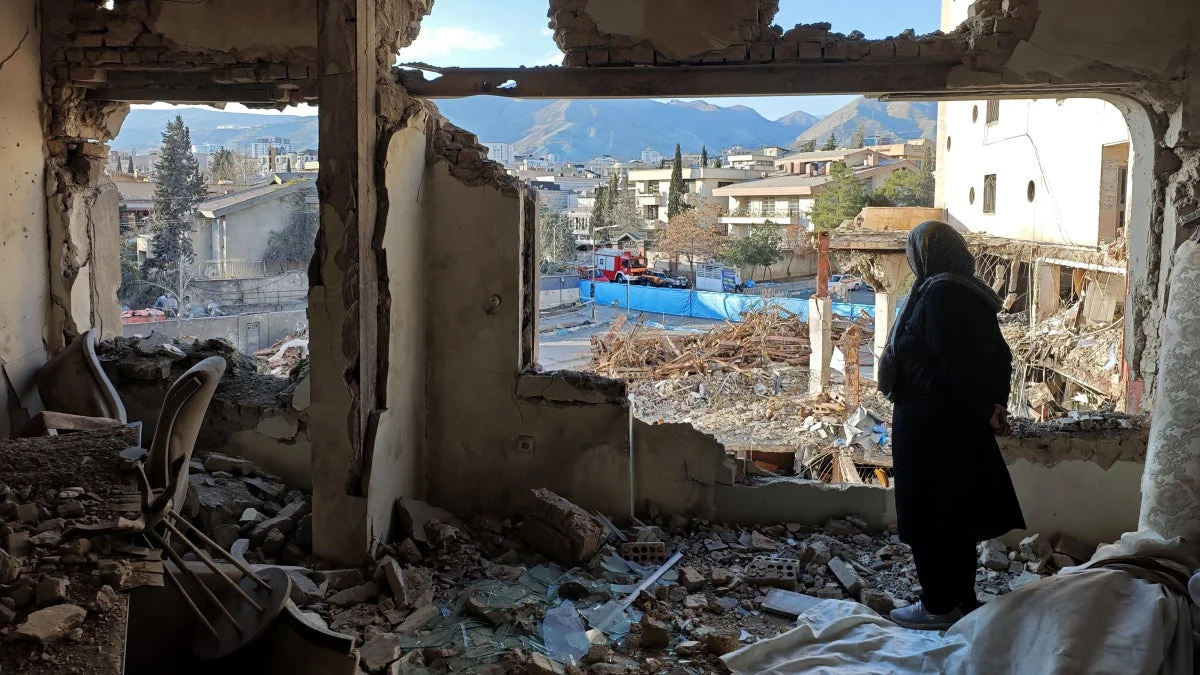
The humanitarian impact of destroying power plants and bridges cannot be overstated. In a modern urban environment like Tehran, which has a population of over 9 million people, the loss of a major power plant would lead to:
- Healthcare Collapse: Hospitals rely on consistent power for life-saving equipment, refrigeration of medicines, and surgical procedures. Backup generators are often insufficient for long-term outages.
- Water Scarcity: Modern water treatment and distribution systems are powered by the electrical grid. A shutdown would likely lead to a surge in waterborne diseases.
- Economic Paralysis: Without electricity or functional bridges, commerce and the distribution of food supplies would come to a standstill, leading to widespread shortages and civil unrest.
By threatening these specific targets, the US administration is effectively proposing the collective punishment of a civilian population as a deterrent against the military actions of their government. Similarly, Iran’s threat to ensure that "no infrastructure will be safe" suggests a willingness to target civilian centers in neighboring countries or against Western interests, further expanding the humanitarian risk.
Global Reactions and Diplomatic Stalled Efforts
The international community has reacted with deep concern to the breakdown of the July ceasefire. The United Nations Secretary-General issued a statement calling for "maximum restraint" and urged both parties to return to the negotiating table.
"The language of war and the targeting of civilian infrastructure are unacceptable under any circumstances," the UN statement read. "The world cannot afford another full-scale conflict in the Middle East, especially one that deliberately targets the foundations of civilian life."
In Europe, leaders have expressed frustration over the rapid collapse of the MOU. Sources within the European Union suggest that several member states are considering the invocation of the "blocking statute" to protect their companies from the fallout of potential new sanctions or military actions, while simultaneously urging Washington to reconsider the "massive attack" strategy.
Analysis: The Prospect of War Crimes and Accountability
The current trajectory suggests a high probability of war crimes being committed should these threats be realized. The "criminal intent" required for a war crime conviction—acting deliberately or recklessly—is increasingly evident in the public declarations of the leaders involved.
Legal experts note that "reprisals" against civilian populations or civilian objects are strictly prohibited under the 1977 Additional Protocol I to the Geneva Conventions. Even if one side commits a violation, the other side is not legally permitted to respond by committing a similar violation against civilians.
As the situation develops, the role of the International Criminal Court (ICC) and other international legal bodies will become paramount. While the United States is not a member of the ICC, American citizens can still be investigated if they commit crimes on the territory of a state that is a member, or if the UN Security Council refers the situation to the court.
The July 24 announcement has placed the world on a knife-edge. With diplomacy currently sidelined and military rhetoric reaching a fever pitch, the focus remains on whether international pressure can divert the two nations from a path that leads to the destruction of civilian infrastructure and the inevitable commission of war crimes. The coming days will be critical in determining whether the "massive attack" remains a rhetorical threat or becomes a devastating reality for the people of the region.

Related Posts
Human Rights Watch Calls for Investigation into Death of Detainee Following Removal from Najaf Hospital by Iraqi Drug Police
Human Rights Watch Urges UN Security Council to Extend Lebanon Peacekeeping Mission Amid Escalating Conflict and Humanitarian Crisis