US and Iran Exchange Threats of Attacks on Civilian Infrastructure Amid Breakdown of Diplomatic Agreements and Ceasefire Protocols
President Donald Trump announced on July 24, 2026, that the United States is considering a massive military strike on the Islamic Republic of Iran, marking a significant escalation in tensions following the collapse of a critical ceasefire and a bilateral Memorandum of Understanding (MOU). The announcement, made during an interview and echoed through social media, suggests a shift in US policy toward direct targeting of Iranian infrastructure. This development follows weeks of deteriorating relations and reciprocal threats from Iranian leadership, raising urgent concerns among international legal experts and human rights organizations regarding the potential for widespread war crimes and the abandonment of the international laws of war.
The current crisis stems from the failure of the US-Iran Memorandum of Understanding, a document signed on June 17, 2026, which was intended to stabilize maritime traffic in the Persian Gulf and establish a framework for de-escalation. The breakdown of this agreement has led to a return to aggressive rhetoric and military posturing. On July 23, President Trump issued a specific ultimatum via Truth Social, stating that any Iranian interference with shipping in the Strait of Hormuz would be met with retaliatory strikes on civilian-adjacent targets. "From this point forward, any time the Islamic Republic of Iran shoots at a ship in the Strait of Hormuz, whether it be by Missile, Rocket, Drone, or any other device or weapon, the United States will bomb and destroy ONE BRIDGE OR POWER PLANT, including those located next to, or in, the Capital City of Tehran," the President declared.
The Breakdown of Diplomatic Frameworks
The July 2026 escalation is the culmination of a fragile diplomatic process that began earlier in the year. The June 17 MOU was initially hailed as a breakthrough that could prevent a full-scale conflict. It included provisions for maritime "safe zones" and a temporary cessation of hostile rhetoric. However, the agreement lacked robust enforcement mechanisms, and both sides accused the other of "bad faith" negotiations almost immediately after the signing.
The ceasefire, which had been tenuously holding since early July, was reportedly breached following a series of naval skirmishes. Iranian officials have maintained that their actions in the Strait of Hormuz—a vital artery for global energy supplies—are necessary for national security. Mohammad Bagher Ghalibaf, the speaker of Iran’s parliament, reinforced this stance on July 22, posting on social media that if Iran’s security is not guaranteed, "no infrastructure will be safe." This statement has been interpreted by the international community as a direct threat to target civilian and commercial infrastructure in the Gulf region and beyond.
The collapse of these agreements has left a diplomatic vacuum, now filled by threats of "massive attacks." Analysts suggest that the shift from targeting military assets to threatening essential civilian services like power plants and bridges represents a dangerous departure from standard rules of engagement.
Chronology of Hostilities Leading to the July Crisis
To understand the severity of the current standoff, it is necessary to examine the timeline of military actions and diplomatic failures that occurred throughout the first half of 2026:
- March 17, 2026: Iranian forces launched a series of strikes across the Gulf, which human rights monitors described as unlawful. These strikes endangered civilian populations in several neighboring Gulf states and signaled a hardening of Tehran’s regional stance.
- March 29, 2026: Reports surfaced of Iran utilizing cluster munitions in strikes directed toward Israel. The use of cluster munitions is widely condemned by the international community due to their indiscriminate nature and the long-term risk they pose to civilians.
- April 20, 2026: An attack on an Iranian primary school drew international condemnation. While the source of the attack was a subject of intense debate, Human Rights Watch investigated the incident as a potential war crime, highlighting the increasing vulnerability of non-combatants in the escalating shadow war.
- June 17, 2026: The US-Iran Memorandum of Understanding was signed, briefly pausing active hostilities and offering a roadmap for a permanent ceasefire.
- July 15–20, 2026: Reports of "shadow" skirmishes in the Strait of Hormuz began to emerge. Each side blamed the other for initiating contact, leading to the formal abandonment of the MOU.
- July 22, 2026: Speaker Mohammad Bagher Ghalibaf issued a public warning that civilian infrastructure is no longer off-limits if Iranian security is compromised.
- July 23, 2026: President Trump specified bridges and power plants in Tehran as primary retaliatory targets.
- July 24, 2026: The US administration officially confirmed it was considering a "massive attack" on Iran.
Legal Implications and the Laws of War
The threats issued by both Washington and Tehran have drawn sharp criticism from legal scholars who point to the "laws of war"—the body of international law that regulates the conduct of armed conflict. Central to these laws, which include the Geneva Conventions of 1949, is the principle of distinction. This principle requires belligerents to distinguish at all times between civilian objects and military objectives.
According to international humanitarian law, deliberate attacks against civilian objects are strictly prohibited. Furthermore, the law forbids attacks where the expected harm to civilians or civilian property is excessive in relation to the concrete and direct military advantage anticipated. Power plants and bridges are often classified as "dual-use" infrastructure; however, targeting them in a way that causes disproportionate suffering to the civilian population—such as cutting off electricity to hospitals or preventing the transport of food and medicine—can be classified as a war crime.
Individuals who commit serious violations of these laws with criminal intent—meaning the actions were carried out deliberately or recklessly—can be held personally responsible. This accountability extends not only to those who pull the trigger but also to the leaders who order, assist, or aid and abet such offenses.
Human Rights Watch and the Call for International Accountability
Balkees Jarrah, the Middle East and North Africa director at Human Rights Watch, issued a stern warning regarding the current trajectory of the conflict. Jarrah noted that both nations have already been implicated in unlawful attacks earlier in the year.
"US and Iranian leaders are threatening deliberate attacks on civilian infrastructure following earlier fighting between the two countries in which their forces unlawfully attacked civilians and civilian objects in Iran, Gulf countries, and Israel," Jarrah stated. She emphasized that the international community must intervene to prevent further escalations that bypass legal protections for non-combatants.
Jarrah further called on other nations to exert pressure on both the US and Iran, stating, "Other countries should make clear to the United States and Iran that those responsible for war crimes will be brought to justice, including through universal jurisdiction." Universal jurisdiction is a legal principle that allows national courts to prosecute individuals for serious crimes against international law, such as war crimes or torture, regardless of where the crime was committed or the nationality of the accused.
Strategic Importance of the Strait of Hormuz
The focus on the Strait of Hormuz in President Trump’s ultimatum underscores the strategic and economic stakes of the conflict. The Strait is the world’s most important oil transit chokepoint. Data from the US Energy Information Administration (EIA) indicates that approximately 20 to 30 percent of the world’s total oil consumption passes through this narrow waterway daily.
Any sustained military action in the Strait would likely lead to:
- Global Energy Shocks: A total or partial blockage could cause a rapid spike in global oil and natural gas prices, impacting economies far beyond the Middle East.
- Insurance and Maritime Costs: Shipping companies have already reported a surge in insurance premiums for vessels operating in the Persian Gulf, a cost that is ultimately passed on to consumers.
- Humanitarian Logistics: The Strait is also a corridor for food and medical supplies into the region. Military escalation threatens the food security of millions of people in the Gulf states and Iran.
By threatening to target Iranian infrastructure in response to maritime incidents, the US administration is linking the security of global energy markets directly to the domestic stability of Iran. Conversely, Iran’s threats to target "all infrastructure" suggest a strategy of total deterrence that places the entire region’s civilian safety at risk.
Potential Humanitarian Impact of Infrastructure Targeting
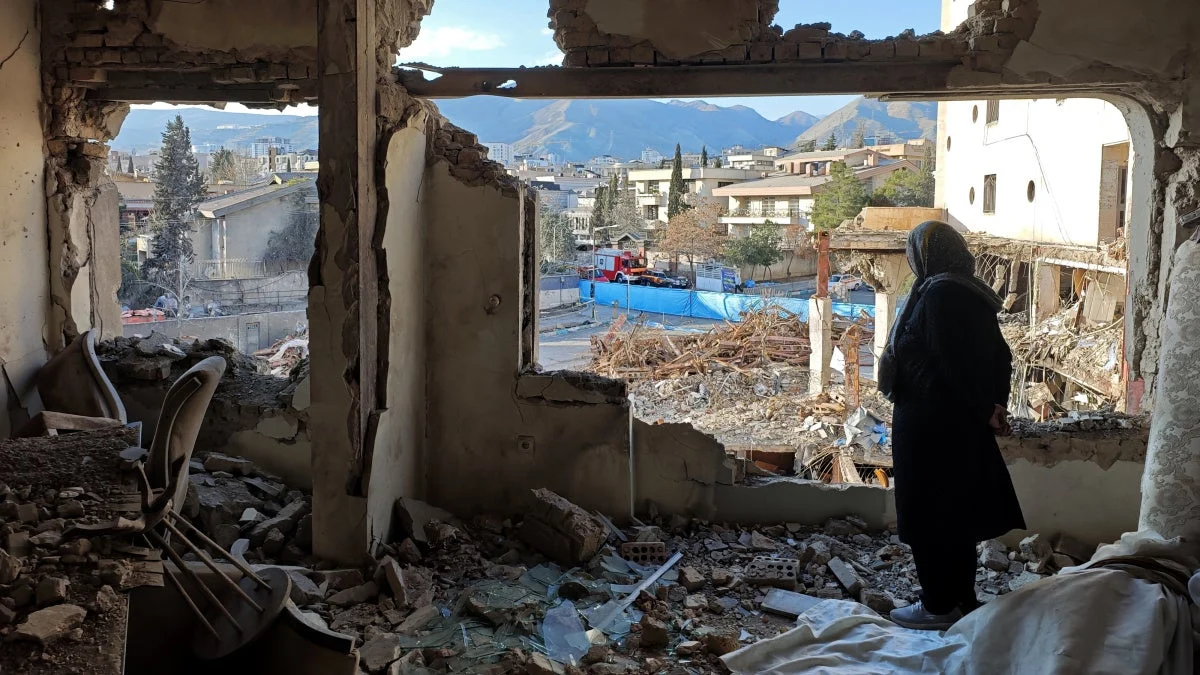
The specific mention of power plants and bridges in Tehran carries profound humanitarian implications. Tehran, a metropolis of nearly 9 million people (with over 15 million in the greater metropolitan area), relies on a centralized power grid for essential services.
An attack on the city’s power plants would likely result in:
- Public Health Crisis: Hospitals rely on consistent power for life-saving equipment, refrigeration for medicines, and surgical procedures. While many have backup generators, these are often insufficient for long-term outages.
- Water and Sanitation Failures: Modern water treatment and pumping stations require significant electrical input. A loss of power often leads to a loss of clean water, increasing the risk of waterborne diseases.
- Economic Paralysis: The destruction of bridges would halt the movement of goods and people, effectively paralyzing the Iranian economy and preventing civilians from fleeing areas of active conflict.
The "reckless" nature of these threats, as described by human rights advocates, suggests a potential for collateral damage that would far outweigh any immediate military gain, potentially meeting the legal threshold for war crimes.
Broader Implications and Future Outlook
The international community remains on high alert as the July 2026 crisis unfolds. The shift from diplomatic engagement to threats of "massive" infrastructure destruction marks one of the most volatile periods in US-Iran relations in decades.
Diplomatic sources suggest that the United Nations Security Council may convene an emergency session to address the threats, though the veto power held by permanent members often complicates direct intervention. Meanwhile, European and Asian allies of the United States are reportedly concerned about the spillover effects of a conflict that targets civilian infrastructure, particularly regarding the precedent it sets for future international conflicts.
As of July 25, military movements in the region have increased, with both the US Navy and the Islamic Revolutionary Guard Corps (IRGC) heightening their readiness levels. The rhetoric from both Washington and Tehran continues to prioritize domestic strength and retaliatory capability over the restoration of the previous ceasefire. Without a renewed diplomatic effort or a significant de-escalation in rhetoric, the risk of a conflict characterized by widespread violations of international humanitarian law remains at its highest point since the start of the year.

Related Posts
Human Rights Watch Calls for Investigation into Death of Detainee Following Removal from Najaf Hospital by Iraqi Drug Police
Human Rights Watch Urges UN Security Council to Extend Lebanon Peacekeeping Mission Amid Escalating Conflict and Humanitarian Crisis