US Air Force Commits 75 Million Dollars to Initial Production of Boeing Jet Powered Long Range JDAM Guided Bombs
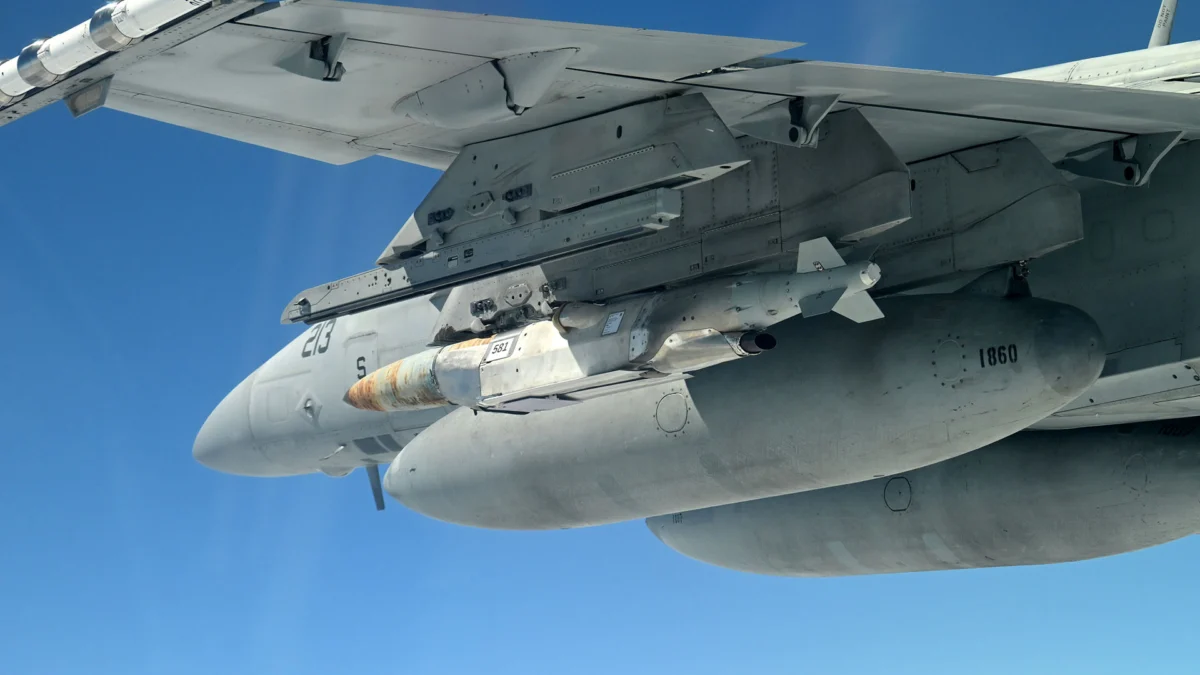
The United States Air Force has officially signaled a major shift in its tactical strike capabilities by committing $75 million toward the initial production of a new, jet-powered variant of the Joint Direct Attack Munition (JDAM). This investment, announced by Boeing on Wednesday, facilitates the transition of the BSU-111/B Payload Delivery Unit from a developmental concept into a frontline asset. By integrating a wing-and-turbojet engine kit onto a standard 500-pound gravity bomb, the military is effectively creating a hybrid weapon: a precision-guided munition with the range and standoff capabilities of a sophisticated cruise missile, but at a fraction of the traditional cost.
The Evolution of the JDAM Family
For decades, the Joint Direct Attack Munition has been the workhorse of American air power. Originally designed as a tail kit that converted unguided "dumb" bombs into all-weather, GPS-guided "smart" weapons, the JDAM has undergone several iterations to meet evolving battlefield requirements. The baseline JDAM, equipped with a steerable tail kit, typically offers a range of approximately 15 nautical miles, depending on the altitude and speed of the launch platform.
As integrated air defense systems (IADS) became more sophisticated, the need for greater standoff range became apparent. This led to the development of the JDAM Extended Range (JDAM-ER), which added a pop-out wing kit. The JDAM-ER pushed the weapon’s reach to approximately 40 nautical miles, allowing pilots to release munitions further away from localized surface-to-air missile (SAM) threats.
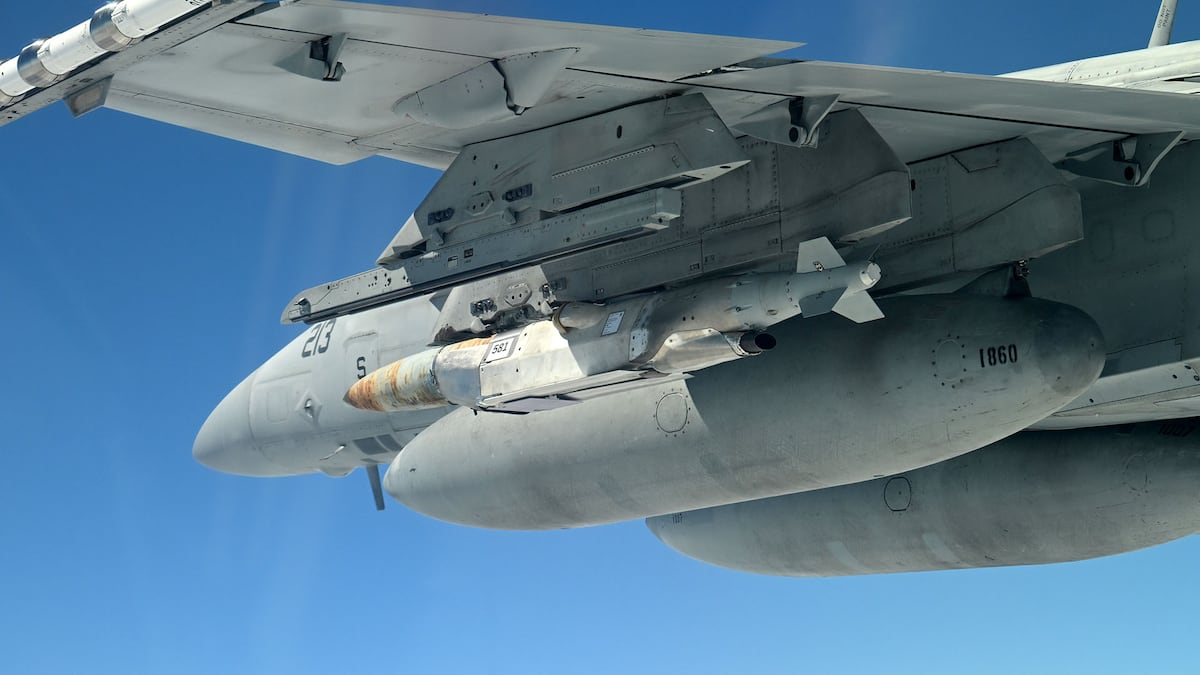
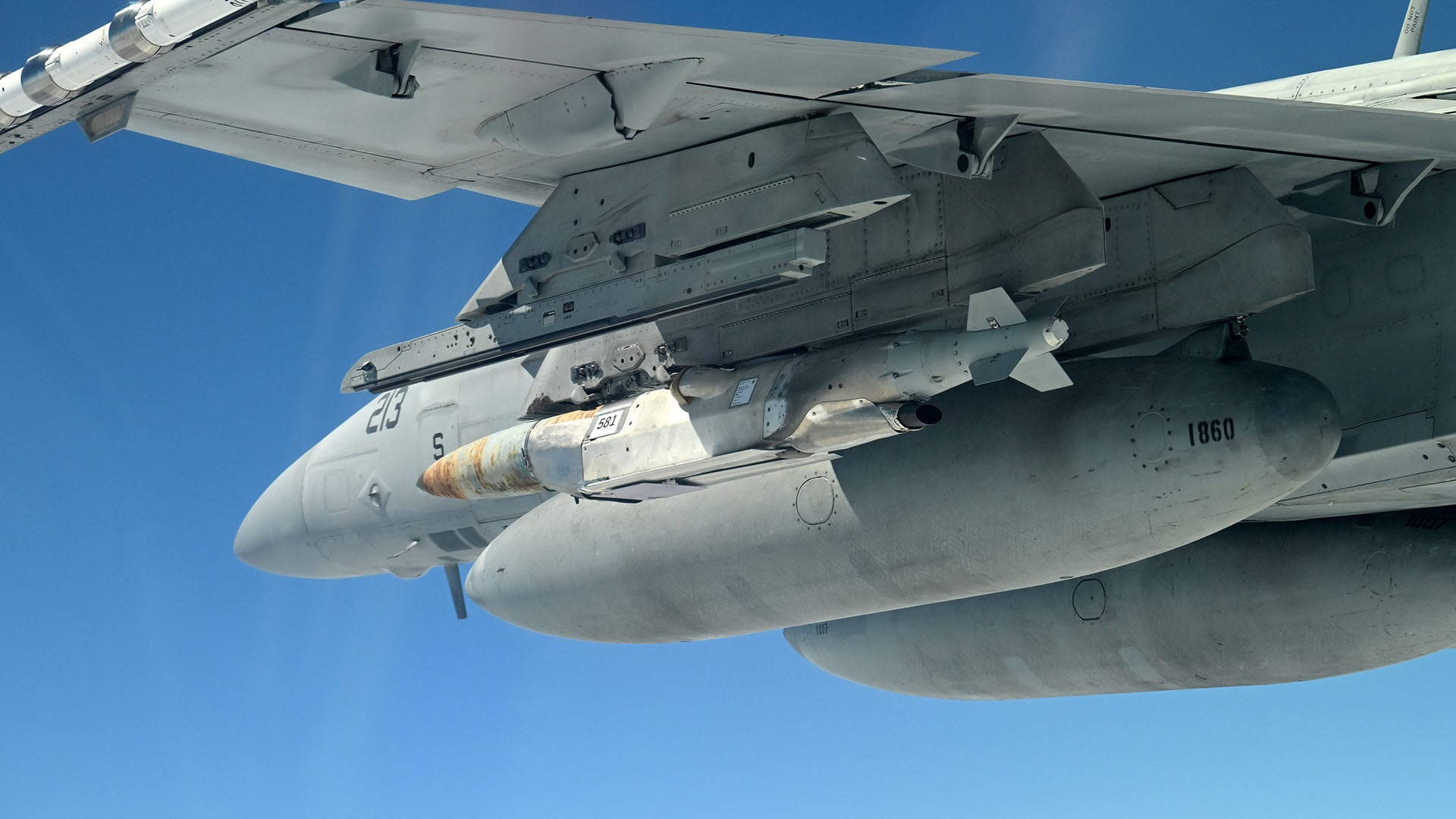
However, the modern "contested environment"—characterized by long-range radar and high-altitude interceptors—demanded an even more radical leap. The JDAM Long Range (JDAM-LR), designated as the GBU-75, represents that leap. By adding a Kratos-designed TDI-J85 turbojet engine to the existing wing kit, Boeing has extended the weapon’s reach to more than 300 nautical miles. This transformation fundamentally changes the utility of the 500-pound class munition, allowing it to strike targets deep within enemy territory while the launch aircraft remains well outside the "ring of fire" of most contemporary air defense umbrellas.
Technical Specifications and Engineering
The core of the GBU-75’s capability lies in the BSU-111/B kit. Unlike traditional glide bombs that rely solely on potential energy and aerodynamic lift, the JDAM-LR utilizes active propulsion. The TDI-J85 engine provides the necessary thrust to maintain cruise speeds over long distances, effectively turning a gravity-fed descent into a sustained horizontal flight path.
Boeing’s commitment to the program has been significant, with the company reporting an internal investment of nearly $100 million to mature the technology before the Air Force’s $75 million production award. This private-sector investment underscores the industry’s confidence in the demand for low-cost, high-volume standoff weapons.
Bob Ciesla, Vice President of Boeing Precision Engagement Systems, emphasized the strategic value of the system during the announcement. "Scaling production of the GBU-75 will provide the fleet with an affordable, sustainable solution designed to eliminate long-range land and sea-based threats to U.S. and international forces," Ciesla stated. The focus on "sustainability" and "affordability" highlights a key advantage of the GBU-75: it utilizes the existing JDAM supply chain and guidance hardware, reducing the need for entirely new logistics networks.
Testing and Validation at Point Mugu
The path to production was paved by successful flight tests conducted by the U.S. Navy in early 2026. On April 1 and April 3, F/A-18 Super Hornets from the Navy’s testing squadrons released JDAM-LR units over the Point Mugu Sea Range off the coast of California. These tests were critical in proving that the turbojet integration did not compromise the weapon’s inherent accuracy.
During the April 1 test, the munition separated cleanly from the Super Hornet, ignited its engine, and conducted a 34-minute sustained flight. It eventually struck within meters of its designated target after traveling roughly 200 nautical miles. The second test, conducted on April 3, was more complex, involving mid-flight altitude changes and aggressive maneuvering to simulate the evasion of enemy defenses and the navigation of complex terrain.
Capt. Sarah Abbott, the Navy’s Precision Strike Weapons program manager, noted that the fleet’s heavy reliance on JDAM systems made the evolution to a long-range variant a "critical need." She explained that the capability allows pilots to engage targets from significantly safer distances, maintaining a tactical advantage in environments where air superiority is not guaranteed.
Maritime Strike and the QuickStrike Variant
One of the most significant implications of the JDAM-LR is its potential for maritime warfare. The U.S. military has been increasingly focused on "distributed lethality" and the ability to counter large naval surface groups in the Indo-Pacific region. To this end, Boeing has developed the QuickStrike Long Range (QS-ER) mining variant of the GBU-75.
This version pairs the long-range engine kit with a bomb carrying a specialized ship-tracking sensor and target detection device. Traditionally, the deployment of naval mines required aircraft to fly directly over or very near the target area, exposing them to ship-borne air defenses. With the JDAM-LR, a B-52 or an F/A-18 can deploy a precision-mapped minefield from 300 miles away. These mines can be programmed to ignore neutral shipping and activate only when a specific acoustic or magnetic signature—such as that of an enemy destroyer—is detected.
The ability to conduct "standoff mining" represents a paradigm shift in sea control. It allows the U.S. and its allies to blockade ports or restrict naval chokepoints without risking high-value manned assets in the process.
Contractual Nuances and Economic Risks
While the $75 million award marks a milestone, the contract itself is categorized as an "undefinitized contract action" (UCA). This means that the Air Force and Boeing have agreed to start production before a final, firm price for each unit has been negotiated.
The Government Accountability Office (GAO) has historically been critical of UCAs, noting that they place more financial risk on the government. Because the contractor is reimbursed for allowable costs incurred during the undefinitized period, there is often less incentive to control expenses compared to a fixed-price contract. However, the Pentagon often uses UCAs when there is an urgent operational need to begin work immediately.
Boeing’s release did not specify the exact number of GBU-75 units covered by the initial $75 million, nor did it provide a specific delivery timeline. However, the involvement of the Air Force Life Cycle Management Center at Hill Air Force Base suggests that the procurement process is being streamlined to get the weapons into the hands of Navy and Air Force squadrons as quickly as possible.
Broader Strategic Implications
The introduction of the GBU-75 comes at a time when the U.S. Department of Defense is grappling with the high cost of precision munitions. Standard cruise missiles, such as the Tomahawk or the Joint Air-to-Surface Standoff Missile (JASSM), can cost between $1 million and $3 million per unit. While highly capable, their cost makes them difficult to use in high-volume "swarming" attacks or against lower-value targets.
The JDAM-LR offers a middle ground. While more expensive than a standard $25,000 JDAM tail kit, it is expected to be significantly cheaper than a dedicated cruise missile. This "middle tier" of weaponry allows commanders to reserve high-end stealthy missiles for the most hardened targets while using the GBU-75 for the bulk of long-range strike missions.
Furthermore, the JDAM-LR’s compatibility with nearly any aircraft currently cleared to carry standard JDAMs—including the F-15, F-16, F-35, and B-1B—means the military can rapidly scale its long-range strike capacity without waiting for new platforms to be developed. Boeing has even showcased concepts involving "arsenal planes"—large cargo aircraft or bombers carrying dozens of GBU-75s on rotary launchers—which could saturate enemy defenses through sheer volume.
Conclusion
The $75 million commitment to the GBU-75 marks the beginning of a new era for the JDAM program. By successfully marrying the reliability of a legacy gravity bomb with the reach of modern turbojet technology, the U.S. Air Force and Navy are addressing a vital gap in their standoff capabilities. As the program moves from initial production into full-scale fleet integration, the JDAM-LR is poised to become a cornerstone of American power projection, offering a versatile, affordable, and lethal solution to the challenges of 21st-century aerial warfare. The successful deployment of this system will likely influence the design of future munitions, favoring modularity and the repurposing of existing stocks to meet the rapid demands of modern conflict.

Related Posts
Pentagon Forges Landmark Seven-Year Agreements with Boeing and RTX to Accelerate Standard Missile-3 Production and Stabilize Defense Supply Chains
Boeing Unveils Ultra Low-Cost Seeker to Enhance Missile Inventory and Combat Cost Challenges in Modern Warfare