UN General Assembly Amends Financial Rules to Combat Escalating Liquidity Crisis Amid Human Rights Funding Shortfalls
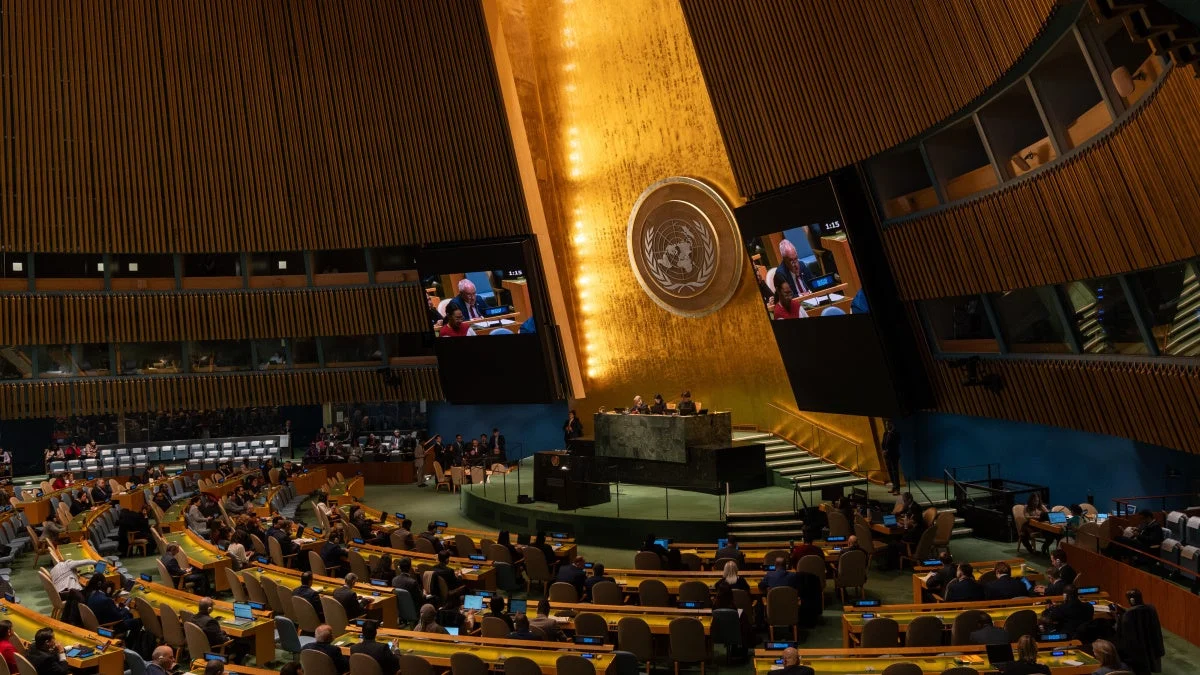
In a decisive move to address a fiscal emergency that has hampered international operations for years, the United Nations General Assembly formally amended its financial regulations on June 30, 2026, aimed at easing a deepening liquidity crisis. The amendment, passed after weeks of closed-door negotiations, seeks to provide the world body with greater flexibility in managing its cash reserves and budget surpluses. However, human rights advocates and international observers warn that while these technical adjustments provide temporary relief, the underlying funding structural problems—driven largely by the failure of major powers to pay their assessed contributions—continue to jeopardize the UN’s core mission.
Human Rights Watch (HRW) released a comprehensive analysis following the General Assembly’s decision, detailing the tangible consequences of the funding vacuum. The report, structured as a questions-and-answers document, highlights how the liquidity crunch has forced the suspension of critical human rights investigations, delayed the deployment of monitors to conflict zones, and led to unprecedented staffing freezes within the Office of the High Commissioner for Human Rights (OHCHR). According to HRW, the crisis is not merely a matter of administrative accounting but a direct threat to the UN’s ability to protect vulnerable populations and uphold international law.
Louis Charbonneau, the UN director at Human Rights Watch, emphasized the political nature of the financial shortfall. He noted that the United States and China, the two largest contributors to the UN budget, are responsible for nearly half of the outstanding debt. Charbonneau stated that these governments, along with dozens of others that are late in their payments, have effectively forced a scale-back of humanitarian and human rights operations worldwide. He urged member states to move beyond temporary rule changes and explore robust mechanisms to hold delinquent countries accountable for defaulting on their legal financial obligations.
The Evolution of a Financial Emergency: A Chronology
The current liquidity crisis is the culmination of several years of escalating fiscal instability within the United Nations system. While the UN has faced periodic cash flow problems since the late 20th century, the period between 2022 and 2026 saw a marked deterioration in the reliability of member state contributions.
In late 2023, the UN Secretary-General issued a "red alert" to the Fifth Committee—the body responsible for administrative and budgetary matters—warning that the organization was running on its lowest cash reserves in a decade. By mid-2024, the situation had worsened to the point where the UN was forced to implement "emergency management measures," which included limits on non-essential travel, a freeze on all new hiring, and the postponement of several high-level conferences.
The crisis reached a tipping point in 2025 when the UN regular budget faced a deficit of over $1.2 billion. This shortfall was primarily attributed to the "wait-and-see" approach adopted by several major economies, which withheld portions of their dues due to domestic political shifts or as leverage in geopolitical disputes. By early 2026, the UN’s Working Capital Fund—the internal reserve meant to cover temporary gaps—was entirely depleted, forcing the organization to borrow from the accounts of closed peacekeeping missions just to cover payroll for its staff in New York, Geneva, and Nairobi.
The June 30, 2026, amendment represents a technical attempt to bypass these bottlenecks. Specifically, the General Assembly voted to allow the UN to retain budget surpluses from previous years rather than returning them to member states, and to increase the ceiling of the Working Capital Fund. While these measures provide a cash cushion, they do not address the $2.5 billion in total arrears currently owed by member states.
Supporting Data: The Mechanics of the Deficit
The UN regular budget, which funds the organization’s core administrative functions, human rights work, and political missions, is determined through a system of "assessed contributions." Each of the 193 member states is required to pay a percentage of the budget based on a formula that accounts for their gross national income and debt burden.
As of June 2026, the data regarding member state obligations reveals a stark disparity:
- The United States: As the largest contributor, the U.S. is assessed at 22% of the regular budget. However, due to its domestic fiscal cycle and congressional delays, the U.S. often pays its dues late in the year, creating a persistent "cash-flow gap" every spring and summer. In 2025, the U.S. arrears reached a record high, with hundreds of millions of dollars remaining unpaid from previous fiscal cycles.
- China: Now the second-largest contributor at approximately 15%, China has historically been a prompt payer. However, in the 2024–2026 period, Beijing began withholding portions of its dues related to specific UN mandates it opposed, particularly those involving human rights monitoring in sensitive regions.
- Broad Non-Compliance: Beyond the major powers, the crisis is exacerbated by a "contagion of non-payment." Currently, more than 60 member states have failed to pay their assessments in full for the current year. This collective delinquency has resulted in a regular budget that is frequently 30% to 40% underfunded at any given time during the fiscal year.
The impact on the human rights pillar is disproportionate. While peacekeeping and development receive significant voluntary contributions (earmarked funds), the UN’s human rights work relies heavily on the regular budget. The OHCHR receives only about 4% of the regular budget, meaning even minor fluctuations in overall liquidity result in immediate and severe operational cuts for human rights officers.
Impact on Global Human Rights and Humanitarian Work
The human cost of the UN’s liquidity crisis is reflected in the forced curtailment of field operations. Human Rights Watch’s recent Q&A document highlights several specific areas where the lack of funding has translated into a lack of protection:
- Fact-Finding Missions: Several UN-mandated commissions of inquiry tasked with investigating war crimes and crimes against humanity have had their budgets slashed. In some instances, investigators have been unable to travel to conflict zones to interview witnesses and document evidence, potentially allowing perpetrators to escape accountability.
- Treaty Body Sessions: The committees of independent experts that monitor the implementation of international human rights treaties (such as the Committee Against Torture) have been forced to cancel or shorten their sessions. This has led to a massive backlog of individual complaints and state reports, effectively denying justice to victims of rights violations.
- Staffing Shortfalls: The hiring freeze implemented in 2024 remains largely in place. Human rights offices in high-risk regions are operating at 60% capacity, leaving staff overwhelmed and unable to respond to emerging crises in real-time.
- Humanitarian Logistics: While humanitarian aid is often funded through separate appeals, the administrative infrastructure that supports the delivery of food and medicine—such as UN security coordination and logistics hubs—is funded through the regular budget. When these services are underfunded, the efficiency of the entire global aid network is compromised.
Official Responses and Diplomatic Friction
The General Assembly’s move on June 30 was met with a mixture of relief and criticism from the diplomatic community. The President of the General Assembly characterized the amendment as a "necessary step toward fiscal responsibility," though he acknowledged that "rules alone cannot fill an empty treasury."
A spokesperson for the UN Secretary-General welcomed the flexibility provided by the new rules but reiterated that the organization’s health depends on the political will of its members. "The United Nations is not a commercial entity; it is a treaty-based organization," the spokesperson said. "Payment of dues is a legal obligation under the UN Charter, not a policy choice."
In Washington, officials from the State Department indicated that while they support UN reform, the timing of payments remains subject to the "complexities of the legislative process." Conversely, representatives from the Chinese mission to the UN argued that the liquidity crisis is a result of "mismanagement and inefficient spending," suggesting that the UN must further streamline its operations before demanding more funds—a stance that many observers see as a pretext for reducing the UN’s oversight capabilities.
Representatives from the "Group of 77" (a coalition of developing nations) expressed concern that the new rules, which allow the UN to retain budget surpluses, effectively increase the financial burden on smaller nations who rely on those surpluses being returned to offset their future assessments. They argued that the burden of the crisis is being shifted from the wealthy delinquent states to the poorer nations that pay their dues on time.
Analysis of Implications: The Sovereignty vs. Accountability Dilemma
The ongoing liquidity crisis reflects a deeper ideological struggle regarding the role of the United Nations in the 21st century. By withholding funds, major powers are increasingly using the "power of the purse" to influence UN mandates. This trend toward "financial vetoes" undermines the principle of sovereign equality and the collective security framework established in 1945.
One of the most concerning implications of the funding gap is the rise of "voluntary earmarking." As regular budget funding dries up, the UN has become more dependent on voluntary contributions from wealthy donors. However, these funds are often "earmarked" for specific projects that align with the donor’s foreign policy goals. This shift threatens to turn the UN into a "pay-to-play" organization, where human rights issues in politically sensitive areas are ignored because no donor is willing to fund them.
Human Rights Watch and other civil rights organizations have proposed that the General Assembly invoke Article 19 of the UN Charter more aggressively. Article 19 stipulates that a member state shall have no vote in the General Assembly if the amount of its arrears equals or exceeds the amount of the contributions due from it for the preceding two full years. Historically, this has been applied to smaller nations, but there is a growing call to apply the same standard to major powers to ensure a baseline of financial accountability.
Conclusion: A Fragile Path Forward
The amendment passed on June 30, 2026, serves as a vital bridge, allowing the United Nations to avoid immediate insolvency and continue its day-to-day operations through the end of the fiscal year. However, the "liquidity crisis" remains a symptom of a broader crisis of multilateralism.
As the Human Rights Watch report concludes, the protection of global human rights cannot be sustained on a "hand-to-mouth" basis. For the UN to fulfill its mandate, member states must move beyond technical fixes and recommit to the financial foundations of the international order. Until the US, China, and other delinquent nations fulfill their legal obligations, the world’s most vulnerable populations will continue to pay the highest price for the organization’s empty coffers. The coming months will be a litmus test for whether the General Assembly’s recent actions are the beginning of a genuine reform or merely a temporary reprieve in a long-term decline.

Related Posts
Human Rights Watch Calls for Investigation into Death of Detainee Following Removal from Najaf Hospital by Iraqi Drug Police
Human Rights Watch Urges UN Security Council to Extend Lebanon Peacekeeping Mission Amid Escalating Conflict and Humanitarian Crisis