Turkish Foreign Minister Hakan Fidan States Saudi-Pakistan Defence Pact Mirrors NATO’s Article 5, Egypt’s Inclusion Pending
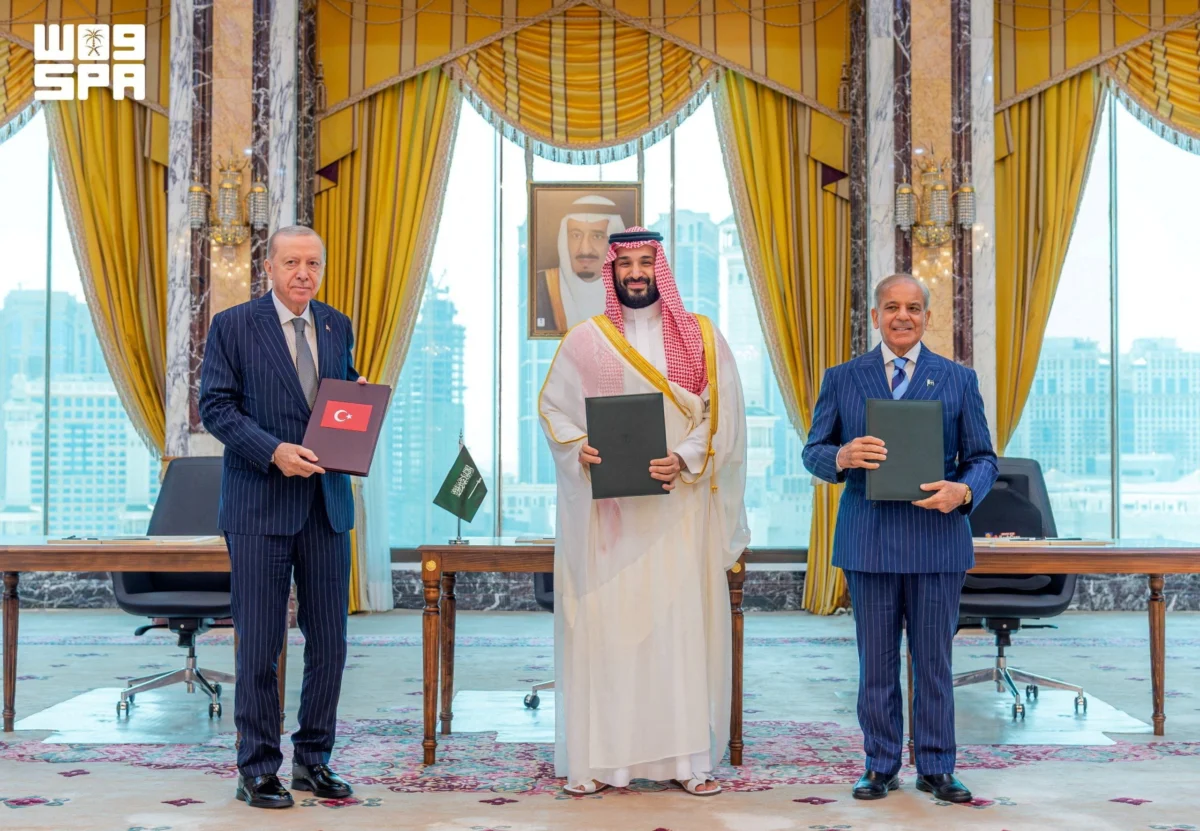
Ankara, Turkey – In a significant development reshaping regional security dynamics, Turkish Foreign Minister Hakan Fidan has announced that a newly formed defence agreement between Turkey, Pakistan, and Saudi Arabia is "technically equivalent" to NATO’s foundational Article 5 mutual defence clause. Speaking to Turkey’s state-run Anadolu news agency, Fidan explicitly stated that the pact, signed on Friday, does not target Iran, aiming instead for broader regional stability and cooperation. The agreement marks a notable stride towards a more formalized security architecture among key Islamic nations, potentially creating a formidable bloc with implications for both Middle Eastern and South Asian geopolitics.
The Genesis of a New Alliance
The trilateral defence agreement, inked by Turkey, Pakistan, and Saudi Arabia, represents the culmination of evolving strategic interests and a shared vision for enhanced security cooperation among these nations. Minister Fidan elaborated that the pact establishes a ministerial committee, mirroring the decision-making structure inherent to NATO, and will be supported by a general secretariat based in Saudi Arabia. This structural blueprint underscores a deliberate effort to create a robust and enduring framework for collective defence, moving beyond ad-hoc military exercises or bilateral agreements.
The motivations behind this alliance are multifaceted. For Turkey, a long-standing NATO member, the agreement aligns with its increasingly multi-vector foreign policy, seeking to expand its influence and strategic partnerships beyond traditional Western alliances. Ankara has, in recent years, demonstrated a proactive approach in various regional conflicts and diplomatic initiatives, positioning itself as a pivotal actor in the Eastern Mediterranean, Black Sea, and parts of Africa. This pact offers Turkey an avenue to deepen ties with powerful Islamic nations, potentially leveraging its advanced defence industry and military expertise.
Saudi Arabia, under its Vision 2030, is actively diversifying its security partnerships and reducing its historical reliance on Western powers, particularly the United States. Riyadh has been keen to build indigenous defence capabilities and foster regional alliances that can address its unique security challenges, including ballistic missile threats and perceived Iranian regional expansionism. This agreement provides Saudi Arabia with access to the military capacities and strategic depth offered by Turkey and Pakistan.
Pakistan, a nation with a rich military history and extensive experience in counter-terrorism and conventional warfare, has long maintained close defence ties with both Saudi Arabia and Turkey. Its participation in this pact reinforces its strategic role in the Islamic world and provides an additional layer of security cooperation beyond its traditional alliances. Pakistan’s military, being one of the largest and most experienced globally, brings significant operational and training capabilities to the nascent alliance.
Anatomy of the Pact: A "Muslim NATO"?
Minister Fidan’s direct comparison of the agreement to NATO’s Article 5 is particularly striking and warrants detailed examination. NATO’s Article 5 states that an armed attack against one member state shall be considered an attack against all, triggering a collective response. This principle of collective defence has been the cornerstone of transatlantic security for over seven decades. While Fidan used the term "technically equivalent," it implies a commitment to mutual defence that goes beyond mere consultation or cooperation.
The establishment of a ministerial committee and a general secretariat headquartered in Saudi Arabia indicates a formal, institutionalized structure designed for coordinated decision-making and operational planning. This setup suggests an intent to develop joint defence doctrines, conduct combined military exercises, facilitate intelligence sharing, and potentially even integrate defence industrial bases. Such an institutional framework would be critical for translating the Article 5-like commitment into actionable defence strategies.
The concept of a "Muslim NATO" has been a recurring theme in various geopolitical discussions, often driven by the desire for Islamic nations to forge their own security architecture independent of Western influence. Previous initiatives, such as the Islamic Military Counter Terrorism Coalition (IMCTC) led by Saudi Arabia, primarily focused on counter-terrorism. This new trilateral pact, however, with its explicit Article 5 equivalence, signals a broader mandate encompassing conventional defence and regional security. It represents a significant upgrade in the ambition and scope of such collaborations.
Strategic Rationale and Regional Geopolitics
The timing of this agreement is crucial, set against a backdrop of escalating regional tensions and shifting global power dynamics. The Middle East and South Asia are complex geopolitical theatres, characterized by proxy conflicts, sectarian divides, and competition for resources and influence.
For Turkey, the pact offers an opportunity to solidify its position as a major player in the Islamic world and project its military and diplomatic power. It also complements Ankara’s efforts to enhance its indigenous defence capabilities and export its defence products, potentially finding new markets within this alliance.
Saudi Arabia is navigating a period of significant regional realignment. While actively pursuing de-escalation with Iran and normalizing relations with Israel, Riyadh also seeks robust defence mechanisms to safeguard its national interests. The pact provides a strong deterrent capability and diversifies its security portfolio, reducing over-reliance on any single external power. It also strengthens Saudi Arabia’s leadership role in the Islamic world.
Pakistan’s participation reinforces its "all-weather" friendship with Saudi Arabia and Turkey. It positions Pakistan as a vital bridge between the Middle East and South Asia, enhancing its strategic relevance. Facing its own security challenges, including border disputes and internal militancy, Pakistan views strong alliances as essential for its national security.
The Question of Iran
A key aspect of Minister Fidan’s statement was the explicit assurance that the alliance "does not target Iran." This declaration is critical for understanding the pact’s intended scope and for managing regional perceptions. Iran has historically viewed any burgeoning Sunni-majority military alliance in its vicinity with suspicion, often interpreting such moves as attempts at containment or direct threats.
While the official stance is non-confrontational towards Iran, the very formation of a robust defence alliance involving Saudi Arabia, a regional rival, and Turkey, which has its own complex relationship with Tehran, inherently carries strategic implications for Iran. The pact could be seen by Iran as a strategic counterbalance to its regional influence, even if not explicitly aimed at military confrontation. Iran’s advanced ballistic missile program and its network of regional proxies remain a primary security concern for Saudi Arabia, and a stronger trilateral defence framework could serve as a deterrent.
The emphasis on not targeting Iran could also be a diplomatic maneuver to prevent immediate escalation and keep channels open for dialogue, especially given recent efforts by Saudi Arabia to de-escalate tensions with Tehran. It suggests a focus on collective defence and regional stability rather than offensive postures.
Egypt’s Potential Entry and Broader Expansion
Minister Fidan further disclosed that Egypt could join the alliance once "outstanding technical issues" are resolved. The inclusion of Egypt, a nation with the largest Arab army and significant strategic importance due to its control over the Suez Canal and its geopolitical position connecting Africa and the Middle East, would significantly bolster the pact’s capabilities and reach.
The "technical issues" could range from political considerations, given the historical complexities in Turkish-Egyptian relations following the 2013 military coup in Egypt, to logistical and doctrinal compatibility. Both nations have recently worked towards normalizing their diplomatic ties, with high-level visits and renewed cooperation. Resolving these issues would pave the way for Egypt to become a pivotal fourth member, further expanding the alliance’s footprint across North Africa and the Eastern Mediterranean.
The potential for expansion beyond these initial members is also noteworthy. Other Gulf Cooperation Council (GCC) states, such as the UAE, Qatar, Kuwait, Bahrain, and Oman, could eventually consider joining, transforming the trilateral pact into a broader regional security framework. Such an expanded alliance would command significant economic, military, and diplomatic power, fundamentally altering the balance of power in the wider Middle East.
International Reactions and Implications
The formation of this alliance will undoubtedly elicit varied reactions from global powers and regional actors.
- United States and NATO: As a NATO member, Turkey’s involvement in a "NATO-equivalent" pact with non-NATO countries will be closely observed by Washington and Brussels. While the US generally encourages regional security cooperation, the implications of an independent, non-Western-led collective defence pact involving a key NATO ally will be scrutinized. It could be seen as complementing regional security, or as potentially complicating NATO’s unified front, depending on its operational scope and alignment.
- Russia and China: Both Russia and China maintain significant economic and strategic interests in the Middle East and South Asia. They would likely view the formation of this new bloc through the lens of regional stability and their own strategic objectives. Russia might see it as a potential challenge to its growing influence, while China might perceive it as an opportunity for deeper economic engagement and a diversified security landscape.
- India: Pakistan’s primary rival, India, would closely monitor the pact, especially given Pakistan’s integral role. Any enhancement of Pakistan’s defence capabilities through this alliance, particularly with advanced military technology from Turkey or Saudi funding, would be a point of concern for New Delhi.
- European Union: European nations, particularly those with strategic interests in the Eastern Mediterranean and North Africa, will be keen observers, assessing the pact’s impact on regional stability, migration routes, and energy security.
Historical Context and Precedents
While the Article 5 comparison is novel, the idea of Islamic or regional defence pacts is not entirely new. Historically, efforts like the Baghdad Pact (later CENTO) during the Cold War aimed to create a security perimeter in the region, albeit with significant Western involvement. More recently, the aforementioned Islamic Military Counter Terrorism Coalition (IMCTC) focused specifically on combating terrorism.
This new trilateral agreement, however, appears to have a broader mandate, emphasizing collective defence against external threats rather than solely internal security or counter-terrorism. It signifies a move towards greater strategic autonomy and self-reliance in regional security matters.
Economic and Military Dimensions
Beyond the military aspect, the alliance holds significant potential for economic and industrial cooperation. Turkey boasts a rapidly growing defence industry, capable of producing drones, warships, armored vehicles, and advanced electronics. Pakistan has a well-established defence production base, and Saudi Arabia is investing heavily in localizing its defence industry. This pact could foster joint defence production, technology transfer, and collaborative research and development, creating a powerful defence industrial complex among the three nations.
Joint military exercises, intelligence sharing, and coordinated diplomatic efforts on regional security issues are also likely to be key components of the alliance’s activities. Such cooperation would enhance interoperability, improve collective response capabilities, and deepen trust among the member states’ armed forces.
Conclusion
The defence agreement between Turkey, Pakistan, and Saudi Arabia, with its "technically equivalent" Article 5 clause, represents a significant recalibration of regional security architecture. It reflects a growing desire among key Islamic nations to forge their own security destiny, diversify alliances, and enhance collective defence capabilities in an increasingly complex global environment. While Minister Fidan’s assurance that the pact does not target Iran aims to mitigate immediate tensions, the strategic implications for all regional actors, including Iran, the GCC, Egypt, and major global powers, are profound. The potential inclusion of Egypt and other states could further solidify this emerging bloc, making it a critical player in shaping the future of security in the wider Middle East and beyond. The coming months will reveal the operational details and the true scope of this ambitious new alliance.

Related Posts
Over 150 Israeli Settlers Storm Al-Aqsa Compound and Perform Prayers, Violating Status Quo Under Police Protection.

UN Report Highlights Over 900 Obstacles Hampering West Bank Aid Amid Escalating Humanitarian Crisis