
Tragic Mid-Air Collision Claims Two Lives Amidst Greece’s Relentless Wildfire Battle, Sparking Urgent Safety Reviews and Deepening National Grief
In a devastating turn of events compounding Greece’s ongoing struggle against rampant wildfires, two crew members were killed following a mid-air collision between two firefighting helicopters near Athens. The tragic incident, which occurred approximately 65 kilometers (42 miles) west of the Greek capital, has cast a pall over the nation’s strenuous efforts to contain a series of blazes that have prompted widespread evacuations and stretched emergency services to their limits. The collision involved two leased Bell helicopters actively engaged in water-bombing operations over a large wildfire burning fiercely along the Attica-Boeotia border, an area perennially vulnerable to summer conflagrations.
The Catastrophic Incident and Immediate Aftermath
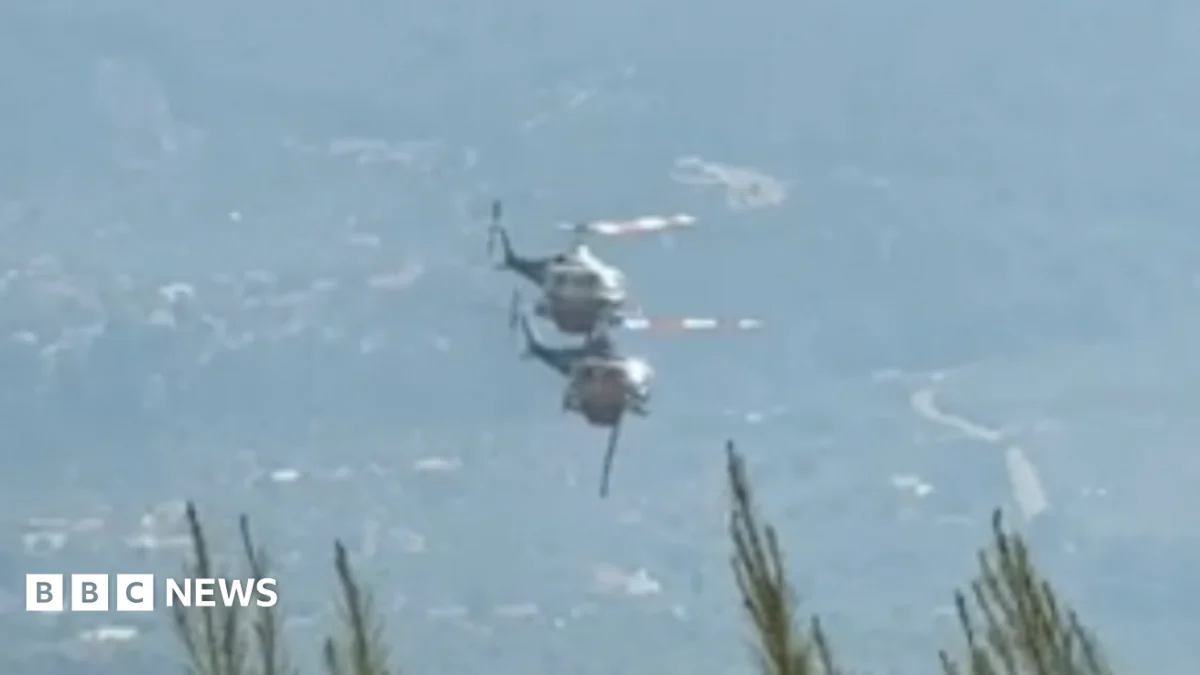
The collision transpired during a critical phase of the firefighting operation, a moment when precision, coordination, and intense focus are paramount. Video footage, later emerging from the scene, captured the harrowing seconds leading up to the disaster, showing one Bell helicopter striking the propellers of the other. The impact was immediate and catastrophic; the second aircraft burst into flames before both helicopters plummeted into a rugged ravine, a testament to the unforgiving terrain that often complicates aerial firefighting efforts.
Emergency response teams were dispatched without delay to the crash site. Of the four individuals aboard the two aircraft, two tragically lost their lives. The fatalities were identified as a Danish pilot and a Greek fire service liaison officer. Their deaths underscore the immense personal risk undertaken by those on the front lines of natural disasters. On the second helicopter, a British pilot and another Greek coordinator miraculously survived the collision. Rescuers were able to extricate the two survivors alive from the wreckage, albeit with injuries. They were subsequently transported to a nearby hospital, where they were admitted for observation, a standard precautionary measure following such high-impact incidents. Sources from the Ministry of Civil Protection confirmed that both survivors remained conscious throughout their rescue and suffered only minor injuries, a small glimmer of relief amidst the profound sorrow.
Victims and Expressions of National Sorrow
The loss of the Danish pilot and the Greek fire service liaison officer has resonated deeply across Greece and beyond. Prime Minister Kyriakos Mitsotakis was quick to express the nation’s "deepest sorrow" over the accident. In a poignant post on the social media platform X (formerly Twitter), he conveyed that the dual loss "fills us all with grief" and extended his heartfelt condolences to the families of the deceased. This sentiment was echoed by numerous government officials, emergency service personnel, and the general public, all grappling with the profound cost of these relentless wildfires.
The Danish Embassy in Athens is understood to be providing support and assistance to the family of the deceased Danish pilot, coordinating with Greek authorities on repatriation and other necessary arrangements. Similarly, the Greek Fire Service and Ministry of Civil Protection are providing comprehensive support to the family of their fallen liaison officer, recognizing the immense sacrifice made in the line of duty. These individuals, whether local or international, embody the spirit of courage and dedication required to confront such formidable environmental challenges.
Official Response and Grounding of Aircraft
In the immediate wake of the collision, the Greek Ministry of Civil Protection initiated an extensive response, prioritizing rescue operations and ensuring the safety of ongoing firefighting efforts. A critical decision was made to ground all Bell helicopters across the country, a standard protocol following aviation incidents to allow for immediate safety checks and a thorough investigation into the cause of the collision. This measure, while necessary for safety, temporarily reduces the aerial assets available for wildfire suppression, presenting an additional challenge to firefighters already stretched thin.
The investigation into the precise circumstances of the collision is expected to be comprehensive and rigorous. Aviation experts from Greece’s Air Accident Investigation and Aviation Safety Board (AAIASB) will work in conjunction with technical advisors from Bell Helicopters and potentially international aviation safety bodies. Key areas of inquiry will include air traffic control communications, flight paths, visibility conditions at the time of the incident, maintenance records of both aircraft, and the training and experience of the pilots. The goal is not only to ascertain the direct cause but also to identify any systemic issues that could prevent similar tragedies in the future. Preliminary findings suggest that the incident occurred in a dynamic and challenging operational environment, typical of large-scale aerial firefighting.
Greece’s Persistent Wildfire Crisis: A Broader Context
The tragic helicopter collision occurred against the backdrop of one of Greece’s most challenging wildfire seasons in recent memory. This week alone, multiple significant fires have erupted across the country, forcing mass evacuations and consuming vast tracts of forest and agricultural land. The Attica-Boeotia border fire, where the collision took place, is just one of several major fronts. Media reports describe "a titanic battle" unfolding across a swathe of territory that includes critical areas like Porto Germeno, Psatha, Fokida, Megara, and the island of Kefalonia.
Over 500 firefighters, supported by ground vehicles and a diverse fleet of aerial assets, have been struggling for more than 72 hours to bring these infernos under control. The terrain in many of these areas is mountainous and densely vegetated, making ground access difficult and increasing reliance on air support. The fires have been fueled by a confluence of adverse conditions: a prolonged succession of intense heatwaves, low humidity, and strong, unpredictable winds, which can rapidly spread flames across vast distances. The Greek Fire Service, an organization with extensive experience in combating these annual threats, has deployed every available resource, often working around the clock.
The Bell helicopters involved in the collision are part of a larger fleet of leased and owned aircraft utilized by Greece for firefighting. This fleet typically includes a mix of heavy-lift helicopters like Erickson Air-Crane (Skycrane) and Chinook, known for their massive water-carrying capacities, as well as fixed-wing Canadair water-bombing aircraft, which can scoop water from lakes or the sea and deliver it with high precision. The grounding of Bell helicopters, while temporary, necessitates a reallocation of resources and potentially greater reliance on other available assets, which themselves are in high demand across the country.
A European Inferno: The Regional Perspective
Greece’s plight is not isolated but mirrors a broader crisis gripping Southern Europe. The Mediterranean basin, a global biodiversity hotspot, has become increasingly vulnerable to extreme weather events, including prolonged heatwaves and droughts, which create tinderbox conditions for wildfires. Early this week, both France and Spain battled immense fires, with two of the most significant blazes occurring near Madrid and Bordeaux, respectively. While these specific fires have now been contained, they are still burning in some areas, and the threat of re-ignition remains. The sheer scale of these events led to the evacuation of some 300,000 people in Spain and France, many of whom have only recently begun to return to their homes, facing the daunting task of rebuilding and recovering.
The European Union’s Copernicus Emergency Management Service (EMS) has been tracking the escalating wildfire risk across the continent, issuing warnings about unprecedented drought levels and soaring temperatures. The EU Civil Protection Mechanism, a framework for international cooperation in disaster response, has been activated multiple times this summer, with member states providing mutual aid in the form of firefighting aircraft, ground crews, and expert assistance. This collective effort underscores the trans-national nature of the climate crisis and the necessity of coordinated responses.
The Human Cost and Challenges of Aerial Firefighting
The mid-air collision starkly highlights the inherent dangers faced by aerial firefighters. These highly skilled professionals operate in some of the most challenging environments imaginable: low-altitude flying, often in mountainous terrain with poor visibility due to smoke, contending with unpredictable wind patterns, and the constant pressure of rapid deployment and water drops. Coordination between multiple aircraft, ground crews, and command centers is extraordinarily complex, requiring meticulous planning and communication.
Fatigue, both physical and mental, is another significant factor, as crews often work extended hours in high-stress situations. The mental toll of witnessing widespread destruction and risking one’s life daily is immense. The loss of colleagues, as experienced in this Greek incident, further compounds the emotional burden on emergency responders, who continue their vital work even as they grieve.
Climate Change: The Underlying Catalyst
While most wildfires are sparked by human activity, whether intentionally or accidentally, the scientific consensus is clear: climate change is significantly exacerbating the conditions that make them more common, intense, and prolonged. The past winter in Greece was characterized by mild temperatures and above-average rainfall, which encouraged vigorous vegetation growth. This lush growth, however, has since dried out rapidly under successive, prolonged heatwaves, transforming into vast quantities of highly flammable fuel.
The Mediterranean region, in particular, is identified as a climate change hotspot, experiencing more frequent and severe heatwaves, reduced rainfall, and extended drought periods. These changes are lengthening the wildfire season, increasing the number of extreme fire days, and making fires more difficult to control once they ignite. The economic and environmental costs are staggering, encompassing loss of life, destruction of homes and infrastructure, devastation of ecosystems, and significant carbon emissions that further contribute to global warming, creating a dangerous feedback loop.
Looking Ahead: Safety, Resilience, and Adaptation
The tragic collision serves as a grim reminder of the sacrifices made in the face of escalating climate-induced disasters. It will undoubtedly prompt a rigorous review of aerial firefighting protocols, particularly regarding multi-aircraft operations in congested airspace and challenging conditions. Enhancing communication systems, refining flight path coordination, and investing in advanced technology for situational awareness will be crucial steps.
Beyond immediate safety measures, the incident underscores the urgent need for long-term strategies to build resilience against wildfires. This includes proactive forest management, such as controlled burns and creation of firebreaks, public awareness campaigns to prevent human-caused ignitions, and continued investment in robust emergency services and equipment. International cooperation, both in terms of mutual aid and collaborative research into climate change adaptation, will remain indispensable. As Greece and its European neighbors confront increasingly volatile wildfire seasons, the lessons learned from this tragedy must inform a renewed commitment to protecting lives, landscapes, and the planet itself.

Related Posts

Zambia on Edge: Opposition Leader Arrested Amid Allegations of Insurrection Plot and Election Tensions
Rescuers search for survivors of powerful Indonesia earthquake

