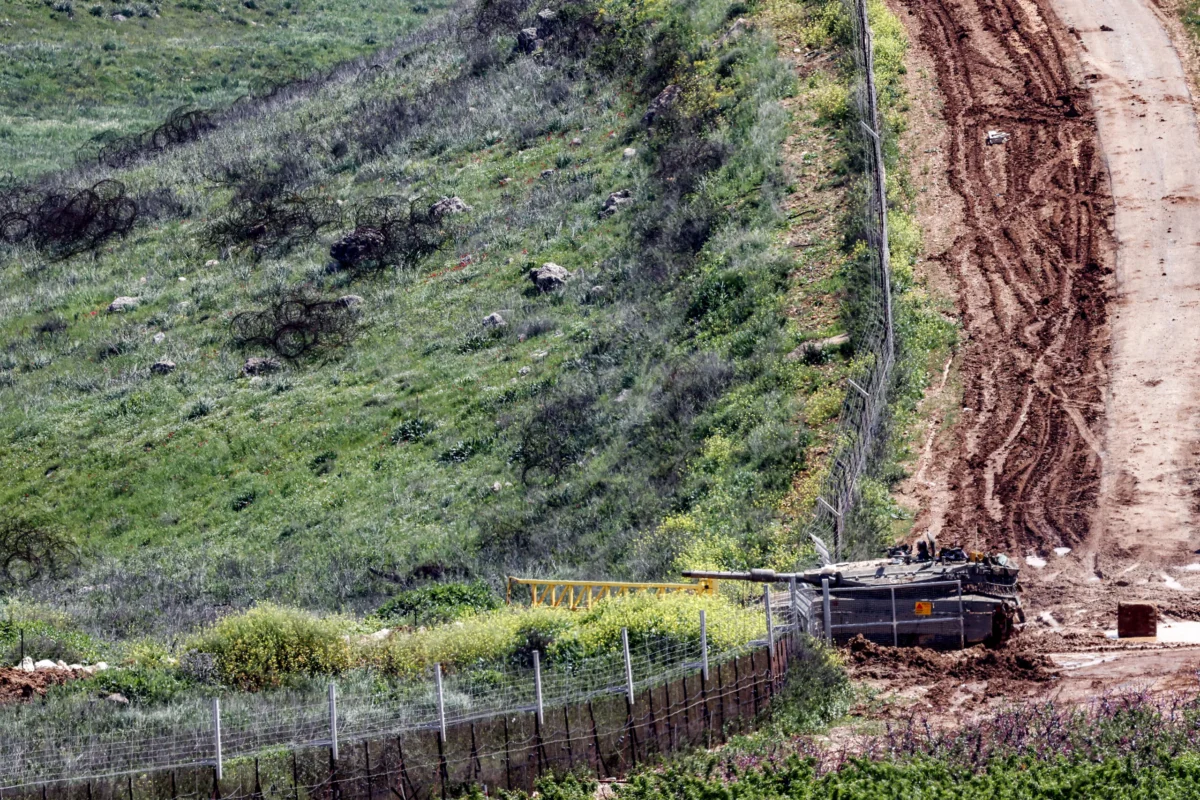
The Uncertain Future of Southern Lebanon Security as UNIFIL Approaches Mandate Expiration Amid Continued Territorial Occupation
The United Nations Interim Force in Lebanon, known globally as UNIFIL, has officially entered the final months of its long-standing mission, operating under increasingly volatile conditions in areas of southern Lebanon that remain under Israeli military occupation. While the mission’s current mandate is set to expire on December 31, 2026, the international community and the Lebanese government face a period of profound uncertainty regarding the future of security arrangements along the "Blue Line." With multiple geopolitical strategies currently under consideration at the United Nations Security Council, the transition from a decades-old peacekeeping model to an undefined security framework has sparked concerns of a potential power vacuum in one of the world’s most sensitive border regions.
The operational environment for UNIFIL shifted dramatically following a significant escalation of conflict that reignited on March 2, 2026. This surge in hostilities led to the strategic evacuation of a portion of UNIFIL’s international civilian staff. However, military personnel representing dozens of troop-contributing nations have remained stationed at their posts, maintaining a presence in southern Lebanon to observe and report on the deteriorating security situation. Kandice Ardiel, a spokesperson for UNIFIL, recently clarified the mission’s immediate status, stating that the mandate remains in effect until the end of the year and that the mission will continue its duties until that date, despite the surrounding chaos.
A History of Peacekeeping: From 1978 to the Present
To understand the weight of UNIFIL’s potential withdrawal, one must look at its historical significance. UNIFIL was originally established by the UN Security Council in March 1978 under Resolutions 425 and 426. Its initial purpose was to confirm the withdrawal of Israeli forces from southern Lebanon, restore international peace and security, and assist the Lebanese government in ensuring the return of its effective authority in the area. Following the 2006 Israel-Hezbollah war, the mission was significantly enhanced under Resolution 1701.
Resolution 1701 expanded UNIFIL’s troop ceiling to 15,000 and gave it a more robust mandate to monitor the cessation of hostilities, accompany and support the Lebanese Armed Forces (LAF) as they deployed throughout the south, and ensure that the area between the Blue Line and the Litani River was free of any armed personnel, assets, and weapons other than those of the Lebanese government and UNIFIL. For nearly two decades, this resolution served as the cornerstone of relative stability, preventing localized skirmishes from spiraling into a total regional conflagration. However, the events of 2026 have challenged the efficacy of this framework, leading to the current debate over whether the mission has outlived its practical utility.
The Three Scenarios: Guterres’ Proposals for Downsizing
On June 2, 2026, UN Secretary-General António Guterres submitted a pivotal report to the UN Security Council outlining three potential paths forward for the international presence in Lebanon. All three options represent a significant departure from the current force structure, which has historically maintained around 10,000 peacekeepers. The proposals suggest a drastic reduction in personnel, reflecting a shift toward a more localized or specialized security model.
The first scenario envisions a "light" presence, consisting of approximately 900 troops. This force would likely be restricted to high-level observation and liaison duties, with minimal field patrolling capabilities. The second option, a "medium" presence, would involve 1,500 personnel, providing a slightly larger footprint for monitoring the Blue Line. The third and most "substantial" option under the new proposal would cap troop numbers at 3,000. This third scenario would include a mix of military observers and reserve forces capable of responding to immediate crises but would still represent a 70% reduction from previous peak deployment levels.
The Security Council has yet to reach a consensus on these options. According to Ardiel, the priority for the mission remains the implementation of the existing mandate while facilitating a "smooth handover" to whatever entity or arrangement follows. The lack of a clear decision as the December 31 deadline approaches has heightened anxieties in Beirut, where officials fear that a reduced UN presence could embolden non-state actors or lead to permanent territorial shifts.
Chronology of the 2026 Transition Crisis
The current crisis is the result of a rapid succession of diplomatic and military events throughout 2026:
- March 2, 2026: A major escalation of hostilities occurs along the southern border, leading to renewed Israeli military operations in Lebanese border villages and the evacuation of UN civilian personnel.
- June 2, 2026: Secretary-General Guterres formally presents the three downsizing options to the UN Security Council.
- Late June 2026: During a bilateral summit in Antibes, France and Italy propose the creation of a post-UNIFIL multinational coalition, signaling a shift toward European-led security initiatives outside the traditional UN framework.
- July 2026: Germany joins the call for an EU-led force to replace UN peacekeepers, while the European External Action Service (EEAS) proposes a three-year mission to bolster the Lebanese Armed Forces.
- August 4, 2026: A high-level meeting is scheduled in Rome between Israeli and Lebanese representatives to discuss the framework agreement and the status of "pilot zones."
- December 31, 2026: UNIFIL’s current mandate is scheduled to expire, marking the end of nearly 50 years of continuous UN peacekeeping operations in the region.
The Pilot Zones and the Washington Framework Agreement
A critical component of the current security transition is the framework agreement signed between Lebanon and Israel in Washington. This agreement, which emerged independently of the now-defunct U.S.-Iran negotiations, outlines a phased withdrawal of Israeli forces. The plan hinges on the creation of "pilot zones" in southern Lebanon.
Under this framework, specific geographical areas are to be placed under the exclusive control of the Lebanese Armed Forces (LAF). The LAF is tasked with clearing these zones of any Hezbollah presence or weaponry. Once this clearance is verified, Israeli forces are committed to withdrawing from the territory. However, the verification process remains a major point of contention. While UNIFIL has traditionally served as the neutral arbiter for such activities, it has largely been excluded from the discussions regarding the Washington framework. As of late 2026, Israel has withdrawn from only one of the two agreed-upon pilot zones, citing security concerns and the need for more stringent verification of Hezbollah’s retreat.
European Interests and the Rise of Multinational Coalitions
As the UN prepares to scale back, several European nations have expressed a desire to maintain a security footprint in the region, albeit through different mechanisms. France and Italy, historically the largest European contributors to UNIFIL, have spearheaded the idea of a multinational coalition. This "post-UNIFIL" force would likely operate under a different legal framework, potentially focusing more on training and technical support for the Lebanese military rather than active border patrolling.
Germany has also signaled its support for an EU-led mission. The European External Action Service has drafted a proposal for a three-year civilian and military mission. Unlike UNIFIL, which operates as a peacekeeping buffer, this proposed EU mission would focus on "capacity building," helping the Lebanese authorities and the LAF enhance territorial control and border security. This shift reflects a broader trend in international relations where regional organizations take on roles previously managed by the United Nations.
Domestic Lebanese Response and the Role of the LAF
The prospect of UNIFIL’s departure has caused significant alarm within Lebanon’s political establishment. Recently, a delegation representing 86 members of the Lebanese Parliament—a significant majority—presented a petition to Jean Arnault, the Officer-in-charge of the United Nations Special Coordinator to Lebanon (UNSCOL). The petition urged the UN Secretary-General to renew UNIFIL’s mandate, citing the mission’s role as a vital stabilizer in an otherwise fractured state.
However, some analysts argue that the perpetual reliance on international peacekeepers has hindered Lebanon’s ability to develop its own sovereign defense capabilities. Paul Salem, a non-resident senior associate at the Center for Strategic and International Studies (CSIS), suggests that the time for international "crutches" has passed. Salem argues that the LAF should be supported in assuming full responsibility for national security, rather than merely replacing one international force with another.
"The time to rely on others is over," Salem noted in a recent assessment. "The LAF should be supported in gradually assuming full responsibility for security. They are certainly not ready yet, but that should be the end goal, rather than perpetuating the current model."
From a realpolitik perspective, Salem points out that UNIFIL’s effectiveness has been hampered by the current occupation. With nearly half of the mission’s positions located in areas currently held by Israeli forces, peacekeepers often face restricted movement and logistical blockades, rendering their monitoring mission increasingly difficult to execute.
Implications of a Security Vacuum
The withdrawal of UNIFIL on December 31, 2026, carries profound implications for regional stability. On a practical level, the end of the mandate means the dismantling of physical bases and the cessation of the "Tripartite" meeting mechanism—the only forum where senior Israeli and Lebanese military officers meet face-to-face under UN mediation.
Without UNIFIL to act as a buffer, the burden of preventing conflict falls entirely on the Lebanese Armed Forces and the implementation of the Washington framework. If the LAF is unable to secure the pilot zones to the satisfaction of the Israeli government, the risk of a permanent Israeli military presence in southern Lebanon increases. Conversely, if the withdrawal of international observers leads to a resurgence of non-state armed activity near the Blue Line, a full-scale military confrontation remains a high probability.
As the international community debates troop numbers and coalition structures, the underlying reality remains: the security architecture that has governed southern Lebanon since 2006 is being dismantled. Whether it is replaced by a robust Lebanese sovereign defense or a patchwork of European-led initiatives will determine the stability of the Levant for the next decade. For now, the world looks toward the August 4 meeting in Rome for any sign of a breakthrough that could prevent a total security vacuum come January 1.

Related Posts
Pentagon Forges Landmark Seven-Year Agreements with Boeing and RTX to Accelerate Standard Missile-3 Production and Stabilize Defense Supply Chains
Boeing Unveils Ultra Low-Cost Seeker to Enhance Missile Inventory and Combat Cost Challenges in Modern Warfare