The Resilient Rise of Scam Compounds in Myanmar Despite International Crackdown Efforts
Recent satellite imagery and investigative analysis have revealed a troubling expansion of criminal infrastructure in war-torn Myanmar, where more than two dozen suspected scam compounds have been constructed or significantly enlarged over the past six months. This surge in development suggests that the high-profile enforcement operations conducted late last year, which were widely publicized as a major blow to the regional cyber-scamming industry, have proven insufficient in dismantling the highly lucrative and adaptable networks that underpin these operations.
The Geography of Exploitation: Myawaddy’s Rapid Transformation
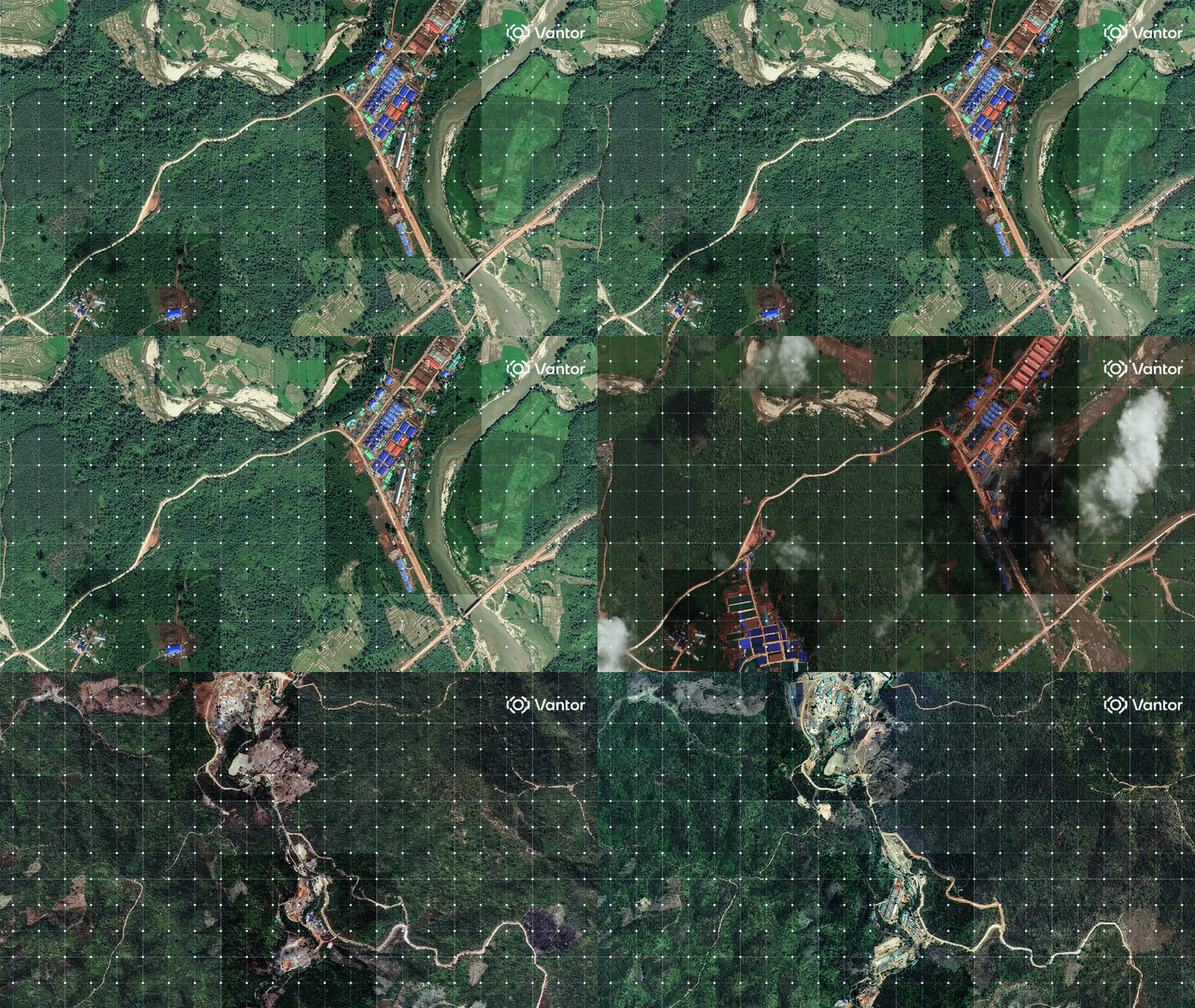
The Myawaddy region, situated along the porous border between Myanmar and Thailand, has become the epicenter of this illicit construction boom. Since the beginning of the year, at least 25 new sites have emerged, identified through rigorous analysis by the International Justice Mission (IJM) and other anti-human-trafficking organizations. These sites represent a significant industrial-scale investment in criminal operations, characterized by the systematic clearing of dense forest land and the rapid deployment of multi-story structures designed to house both the criminal leadership and the thousands of trafficked individuals forced to perform daily scamming tasks.
The transformation of these landscapes is stark. Satellite photography shows plots of land transitioning from undeveloped green space to fortified, high-density hubs within a matter of months. This rapid pace of construction indicates not only a high level of logistical capability but also a degree of confidence among the operators that their activities will face minimal interference from local authorities.
A Chronology of the Scam Epidemic
The proliferation of these compounds did not occur in a vacuum. Over the last decade, Southeast Asia—specifically Myanmar, Cambodia, and Laos—has become a global hub for transnational organized crime syndicates, primarily those of Chinese origin.
- 2014–2020: Initial establishment of small-scale operations, largely focused on regional gambling and localized fraud.
- 2021–2022: A massive pivot toward "pig-butchering" scams—long-term romance and investment fraud involving cryptocurrency—as COVID-19 lockdowns forced the world online.
- October 2023: Ahead of national elections, the Myanmar military junta launched a series of high-profile raids. The government showcased the destruction of buildings and the public destruction of thousands of mobile phones and computers, framing the event as a decisive strike against criminal elements.
- January 2024–Present: Despite the optics of the October raids, satellite imagery confirms that construction of new sites began or accelerated almost immediately, rendering the "crackdown" largely performative in the face of the industry’s rapid scaling.
The Human Cost: A Global Network of Victims
While the financial toll of these compounds is measured in billions of dollars lost by unsuspecting victims in the United States, Europe, and beyond, the human cost is significantly more dire. The workforce within these compounds is composed of hundreds of thousands of individuals from more than 60 countries. Many were lured to the region through deceptive advertisements promising high-paying legitimate employment, only to have their passports confiscated upon arrival.
Once trapped, these individuals are subjected to grueling conditions, often forced to work 24 hours a day. Reports from survivors and anti-trafficking NGOs confirm a pattern of systematic abuse, including physical violence, threats of death, and psychological manipulation. They are tasked with executing sophisticated social engineering campaigns, cold-contacting potential victims on social media to build trust before coercing them into fraudulent cryptocurrency "investments."
Technological Infrastructure and the Role of Satellite Connectivity
A critical component of these operations is the requirement for high-speed, reliable internet connectivity in remote, underdeveloped regions. The investigation into these sites has highlighted the persistent use of Starlink, the satellite internet constellation operated by SpaceX. Despite reports that Starlink has deactivated thousands of devices linked to these compounds, technical indicators and IP address tracking continue to show evidence of these services being utilized at newly constructed sites.
Eric Heintz, a global analyst at the IJM, notes that the combination of remote, non-industrial locations and the presence of foreign internet service providers provides a high-confidence signature for scam-related activity. The inability or unwillingness of service providers to effectively "geofence" or permanently block these connections remains a point of contention among human rights advocates. While SpaceX has stated it has taken steps to cut connections, the continued operational status of these sites suggests that the criminal syndicates have developed robust, redundant communication strategies to circumvent such measures.
Official Responses and the Failure of Enforcement
The failure of the 2023 crackdown to curb the expansion of these compounds has drawn criticism from international observers. Mechelle B. Moore, CEO of Global Alms Incorporated, argues that the lack of accountability for the criminal masterminds is the primary reason for the industry’s continued growth. "When a compound is raided, the bosses simply move their assets and their trafficked workforce to a new location," Moore explains. Her organization has documented that even sites previously thought to be abandoned have been repopulated and are currently running at full capacity.
The Myanmar Embassy in London has remained largely silent on the matter, failing to provide substantial comment on the construction boom. Similarly, international sanctions imposed by various Western governments have struggled to penetrate the opaque power structures of the region, where military junta influence and local warlords often provide a protective layer for these criminal enterprises.
Broader Implications: The Normalization of Cyber-Crime
The continued growth of these compounds signifies a disturbing trend: the normalization of industrial-scale human trafficking as a viable business model for organized crime. The shift from small-scale regional fraud to massive, purpose-built complexes suggests that these groups view themselves as permanent fixtures in the regional economy.
The economic implications are equally grave. These scams drain billions from the global financial system, undermining trust in digital platforms and legitimate cryptocurrency markets. As these operations become more sophisticated, integrating artificial intelligence and automated messaging to increase the volume of their fraud, the burden of protection shifts heavily onto individual consumers and financial institutions.
Conclusion: An Unresolved Crisis
The satellite evidence is irrefutable: the scam compound industry in Myanmar is not only surviving; it is diversifying and expanding. The "destruction" seen last year was, in the words of analysts, a minor disruption that the criminal networks quickly absorbed and overcame. Without a more coordinated, sustained, and multi-faceted international effort that moves beyond symbolic raids to address the underlying networks of power, funding, and connectivity, these compounds will continue to thrive.
The tragedy of the victims—many of whom remain in involuntary servitude—remains the most urgent facet of this crisis. As long as the physical infrastructure remains intact and the connectivity flows, the cycle of exploitation will persist, turning the border regions of Myanmar into a permanent, industrialized zone of human and financial predation. For the international community, the challenge is no longer just about tracking the scams; it is about confronting a sophisticated, borderless criminal enterprise that has successfully weaponized geography and technology against the global public.

Related Posts

The Las Vegas Cybersecurity Summit and the Escalating Threat of Autonomous Digital Exploitation

New York City Council members and privacy advocates launch legislative campaign to ban biometric facial recognition at public entertainment venues