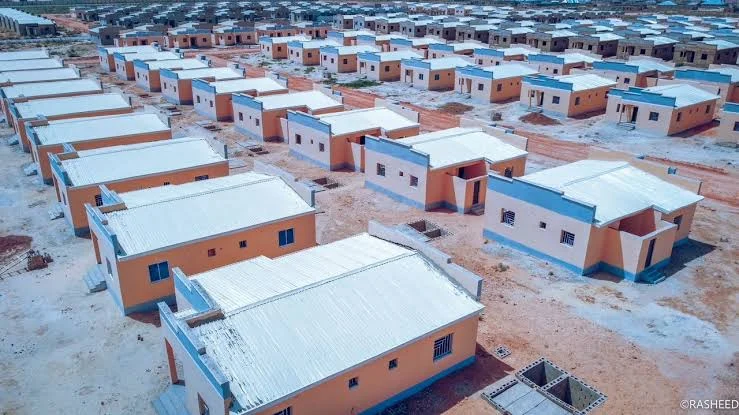
The Impending Housing Crisis: Why Lagos is Facing an Existential Threat to Urban Stability
The Lagos housing market is currently navigating a period of unprecedented volatility, with industry experts warning that the dream of affordable urban living is rapidly eroding. Meckson Okoro, a veteran property consultant, recently articulated a chilling projection: within the next five years, the average resident of Lagos may find the city’s urban centers entirely inaccessible due to skyrocketing rental costs. This assessment, while stark, aligns with a broader macroeconomic trend that positions Nigeria’s housing sector as an emerging social and economic emergency. As the gap between real-time income growth and property appreciation widens, the city’s foundational workforce—the engine of Nigeria’s economy—finds itself increasingly marginalized.
A Market in Disarray: The Mechanics of Exclusion
The current crisis is not a sudden phenomenon but the culmination of years of structural neglect and inflationary pressure. Across the Lagos metropolis, from the commercial hubs of Victoria Island to the formerly accessible suburbs of Ikorodu and Mowe, tenants are reporting rent hikes that bear no correlation to wage growth. The reality for the average worker is a monthly struggle against a cost-of-living crisis defined by a stagnant national minimum wage of N70,000, double-digit inflation, and the soaring costs of fuel and utilities.
For those in the formal employment sector, the math is increasingly untenable. Data indicates that annual rents for a standard two-bedroom apartment in Ikeja now hover around N5.2 million. In more premium districts, the figures are even more daunting: N8.5 million in Lekki Phase I, N12.5 million on Lagos Island, and up to N15 million in the ultra-luxury enclave of Ikoyi. When these figures are weighed against the average household income, it becomes evident that shelter is transitioning from a fundamental human right to a luxury commodity available only to a narrow elite.
Chronology of a Shortfall: How We Got Here
The roots of this crisis can be traced back several decades to a consistent failure to scale infrastructure alongside population growth.
- 1990s–2000s: Rapid, unplanned urbanization began to outpace formal housing development. The reliance on private developers to fill the void led to a focus on high-end luxury estates rather than mass-market, affordable housing.
- 2010–2015: As Lagos asserted itself as a regional economic powerhouse, the influx of migrants from across the country and the West African sub-region created an insatiable demand for space. During this period, the land-to-housing ratio plummeted.
- 2016–2020: Economic recessions and currency devaluations began to affect the price of imported construction materials. The cost of cement, steel, and finishing components saw a steady uptick, which developers transferred directly to the end-users.
- 2021–Present: The post-pandemic era, coupled with aggressive inflation and the removal of fuel subsidies, has caused building costs to skyrocket. Simultaneously, the lack of a functional mortgage system has left the majority of Nigerians unable to finance home ownership, forcing them into a perpetual cycle of renting.
The Statistical Reality of the Housing Deficit
According to estimates from the Federal Ministry of Housing and Urban Development, Nigeria faces a staggering housing shortfall of 22 million units. Lagos state is the epicenter of this deficit, requiring an estimated three million additional homes to meet the existing demand of its teeming population.
Industry reports suggest that over 70 percent of Lagos residents live in rented accommodation, with many households allocating between 40 and 60 percent of their monthly earnings to rent. This far exceeds the United Nations’ recommended affordability benchmark, which stipulates that housing costs should not consume more than 30 percent of a household’s income. When families spend half their income on shelter, they effectively starve other sectors of the economy—healthcare, education, and nutrition—leading to a net decline in the quality of life and human capital development.
Structural Bottlenecks and Economic Impediments
The crisis is exacerbated by several structural factors that inflate the cost of development. The cost of raw materials—cement, reinforcing rods, timber, and roofing—has been hit hard by exchange rate volatility. Because a significant portion of these materials is either imported or dependent on imported machinery, domestic developers have little recourse but to pass the burden to tenants.
Furthermore, the bureaucratic landscape of land acquisition remains a significant barrier. Obtaining a Certificate of Occupancy (C of O) can cost between N3 million and N4 million, excluding the myriad of statutory charges and "unofficial" administrative bottlenecks that define the property sector. These upfront costs act as a deterrent to small-scale developers and ensure that only large-scale investors—who prioritize high-margin luxury projects—can afford to participate in the market.
Socio-Economic Implications: The Productivity Trap
The impact of this housing emergency extends far beyond the inability to pay rent. Economists argue that the crisis is a significant drag on national productivity. When the workforce is burdened by long, exhausting daily commutes from distant, low-cost suburbs, the resultant fatigue diminishes professional output.
Young Nigerians are the most affected demographic. Graduates and young professionals, unable to secure affordable housing near their places of employment, are forced to remain in overcrowded family homes or settle for substandard living conditions. This delay in "life milestones"—such as marriage and childbearing—has long-term demographic implications. Moreover, the uncertainty of tenure, where landlords frequently serve quit notices to favor higher-paying tenants, creates a state of perpetual anxiety that undermines the stability required for economic investment and entrepreneurship.
Global Models and Potential Policy Interventions
Addressing this crisis requires a radical shift from the current "laissez-faire" approach to housing. Experts frequently point to successful models from global cities that have navigated similar growth pains.
In Singapore, the Housing and Development Board (HDB) provides public housing that serves as the backbone of the city-state’s social stability, with over 80 percent of the population residing in government-supported units. Similarly, Vienna, Austria, is world-renowned for its social housing sector, where city-owned and non-profit housing developments keep the market competitive and rents stable.
The path forward for Lagos, as suggested by analysts like Okoro, involves a shift toward "growth corridors." By acquiring land in areas such as Epe, Badagry, and Ikorodu, and prioritizing the development of infrastructure—roads, electricity, and drainage—the government could decentralize the population. However, this strategy is only viable if paired with an efficient, mass-transit rail and bus system that links these satellite towns to the central business districts of the Island and Ikeja.
The Imperative for Reform
Without aggressive state intervention, the housing sector in Lagos risks a total collapse of affordability. Necessary reforms must include:
- Land Administration Reform: Streamlining the documentation process to reduce the cost of obtaining titles and building permits.
- Incentivizing Mass Housing: Providing tax breaks and subsidies for developers who focus on low-to-middle-income housing rather than luxury high-rises.
- Mortgage Expansion: Establishing a robust, low-interest mortgage market that allows the average worker to amortize the cost of a home over 20 to 30 years.
- Public-Private Partnerships (PPP): Leveraging private sector capital to build basic, functional infrastructure in new residential clusters.
As the population of Lagos continues to swell, the government’s ability to manage the housing sector will serve as a primary indicator of its administrative efficacy. If the current trajectory of rising costs and shrinking supply remains unchecked, the social and economic consequences will be severe, potentially stifling the growth of Nigeria’s most vital commercial hub. The challenge is immense, but it is not insurmountable—provided there is the political will to treat housing as a priority rather than a luxury.