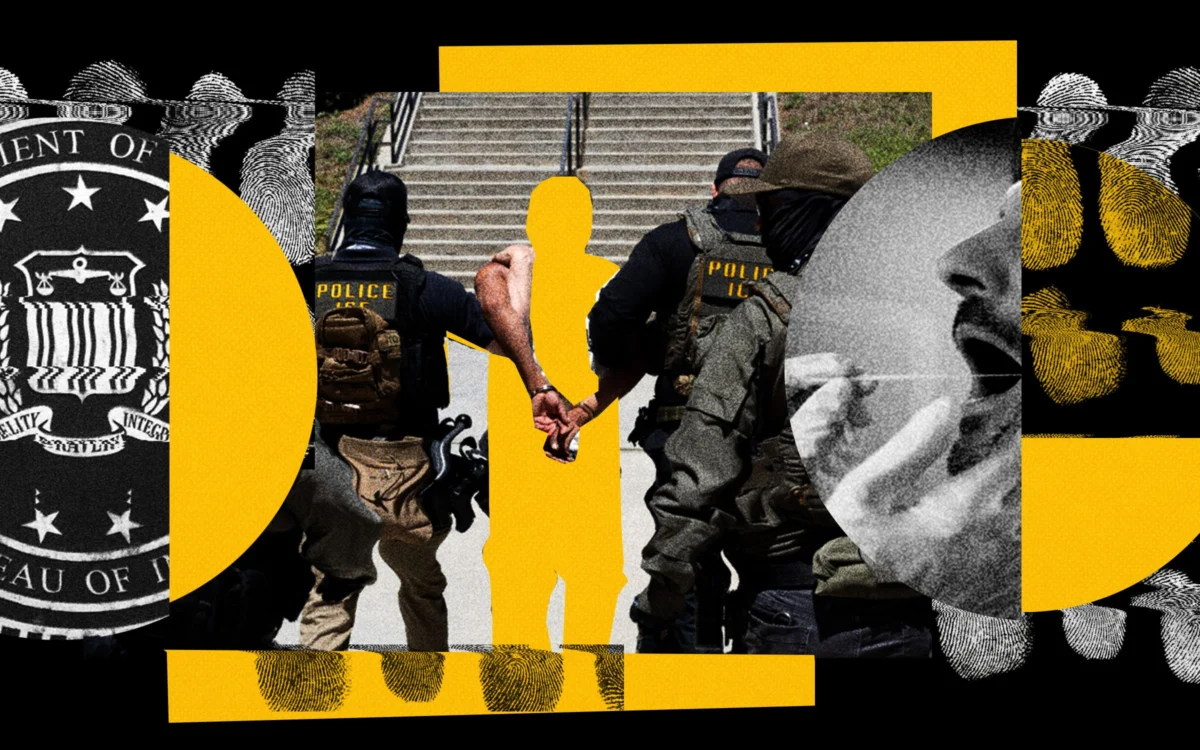
The Federal Government’s Massive Expansion of DNA Collection from Civil Immigration Detainees
On March 13, 2025, Hugo Moreno-Mendez arrived at the McLennan County Probation Department in Waco, Texas, for what he believed would be a routine check-in. The appointment, however, was a trap. Waiting for him were officers from Immigration and Customs Enforcement (ICE), who promptly took him into custody. What followed was a legal standoff that highlights a significant, often overlooked, shift in federal law enforcement: the transformation of immigration detention into a primary engine for the nation’s criminal DNA database.
According to a criminal complaint reviewed by WIRED, Moreno-Mendez was transported to an ICE field office, where officers repeatedly demanded that he submit to a buccal swab for DNA collection. Despite his persistent refusals, the pressure remained constant. Four days later, he was formally charged with two counts: failing to register as a noncitizen and refusing to provide DNA while in federal custody. The latter charge is a misdemeanor that, as of 2021, was considered so obscure that ICE leadership reportedly expressed surprise that it had ever been utilized for prosecution. On August 18, 2025, a magistrate judge in Waco found Moreno-Mendez guilty on both counts, sentencing him to time served.
The Mechanism of Mass Collection
The case of Moreno-Mendez is not an anomaly but a data point in a sweeping, systemic expansion of the Department of Homeland Security’s (DHS) genetic surveillance program. By leveraging the threat of criminal prosecution, federal authorities are funneling the genetic profiles of thousands of individuals held for civil immigration violations into the FBI’s Combined DNA Index System (CODIS), a database originally designed for criminal investigations.
Research from the Center on Privacy and Technology at Georgetown Law indicates that the Department of Homeland Security has ascended to become the largest single source of new genetic profiles within the national criminal DNA system. Projections suggest that in 2025 alone, ICE was on track to add approximately 920,000 profiles to the system. This influx represents a fundamental change in the purpose of CODIS, which now stores the biological blueprints of individuals who have not been convicted of—and in many cases, not even charged with—a crime.
A Chronology of Escalation
The integration of migrant DNA into federal databases has evolved rapidly over the past five years. Initially, the program was primarily a border-security measure, with Customs and Border Protection (CBP) performing the bulk of the swabbing.
- 2020–2021: Internal training documents obtained through Freedom of Information Act (FOIA) requests reveal that ICE’s contribution to the DNA program was relatively marginal during this period. In fiscal year 2020, ICE collected 3,609 samples, followed by 16,392 samples through mid-May of 2021.
- 2020–2024: During this same window, CBP operated on a much larger scale. Agency spreadsheets analyzed by Georgetown researchers show that CBP submitted the DNA of at least 1.36 million people to the FBI, a rate more than 12 times higher than that of ICE.
- 2025: The program entered a new, more aggressive phase. FBI records indicate that the "detainee" index of CODIS reached 3,345,692 profiles by December 2025. This reflects a single-year growth of roughly 995,000 profiles, averaging more than 2,700 new entries per day.
The Legal and Ethical Controversy
The core of the controversy lies in the status of those being swabbed. The vast majority of individuals held in ICE custody have no criminal convictions, and residing in the United States without authorization is a civil, rather than a criminal, violation. Privacy advocates argue that the indefinite storage of these genetic profiles—which contain an individual’s entire genome—violates constitutional protections and risks mission creep.
Once a profile enters CODIS, it is not merely checked against current evidence; it remains in the system indefinitely, available for comparison against cold cases, future crime scene evidence, and long-term investigations. This permanent retention transforms a temporary detention into a lifelong digital surveillance anchor.
The program has faced intense scrutiny, including lawsuits and legislative pushback. In Texas, the practice even extended to families held in detention centers. Congressional representatives, including Joaquin Castro, Greg Stanton, and Nanette Barragán, have publicly condemned the practice, particularly regarding the swabbing of minors. "None of the families at Dilley have been convicted of a crime," the lawmakers stated in a joint message. "They do not belong in a database meant for violent criminals, especially children."
DHS Defense and Official Responses
In response to inquiries regarding the scale and necessity of this data collection, a spokesperson for the Department of Homeland Security maintained that the program is a vital tool for border security and identity verification. According to DHS, CBP personnel are authorized to collect samples from individuals arrested on federal charges as well as from detained noncitizens who are subject to mandatory fingerprinting and do not fall under specific exemption categories.
When pressed on the inclusion of children’s genetic profiles in CODIS, DHS distinguished between the mass collection program and a separate DNA-testing initiative used to verify familial relationships in cases of human trafficking or suspected fraud. The department did not, however, offer a formal comment on the Georgetown Law findings, which suggest that ICE’s contributions have reached nearly a million profiles annually.
Broader Implications for Privacy and Law Enforcement
The shift toward mass genetic surveillance of the migrant population carries significant implications for the future of civil liberties. Critics point out that because the DNA is collected under the color of federal authority, the threshold for who qualifies as a "detainee" has become increasingly fluid. As more agencies gain access to the CODIS database, the potential for using this data for purposes beyond its original scope grows.
Furthermore, the logistical burden of this program is immense. The rapid expansion to 2,700 samples per day requires a massive administrative apparatus to ensure that the chain of custody for biological samples is maintained, that testing is conducted at federal laboratories, and that the resulting data is properly indexed. This infrastructure diverts resources that might otherwise be allocated to standard immigration processing or humanitarian assistance.
The case of Moreno-Mendez serves as a cautionary tale of how quickly procedural norms can be superseded by administrative imperatives. By criminalizing the refusal to provide a DNA sample—a decision that was once a matter of individual autonomy—the government has effectively created a binary choice for detainees: forfeit their genetic privacy or face federal prosecution.
Analyzing the Long-Term Impact
The integration of such a large volume of DNA data into a single federal system creates a permanent record for millions of individuals who were never part of the criminal justice system. From a law enforcement perspective, this provides a powerful tool for solving cold cases and identifying suspects. However, from a human rights perspective, it represents a profound encroachment on bodily autonomy and privacy.
The lack of legislative oversight on the retention policies of CODIS, combined with the opaque nature of how these profiles are utilized across different jurisdictions, leaves many legal experts concerned. If the current trajectory continues, the federal government will possess the genetic information of a significant portion of the non-citizen population within the United States. This repository, once established, is unlikely to be dismantled, creating a permanent, searchable archive that will outlive the current administration and its specific immigration policies.
As researchers continue to monitor the growth of the CODIS detainee index, the primary question remains whether the government’s stated goals of identification and security outweigh the long-term privacy concerns of those who have yet to be convicted of any crime. For now, the swabbing of detainees continues, and the database grows by thousands of entries every day, marking a quiet but historic transformation of the American security state.

Related Posts

The Las Vegas Cybersecurity Summit and the Escalating Threat of Autonomous Digital Exploitation

New York City Council members and privacy advocates launch legislative campaign to ban biometric facial recognition at public entertainment venues