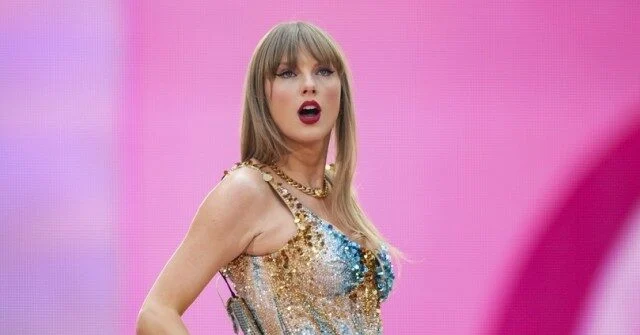
Taylor Swift’s "August" Removed from Team Trump TikTok, Igniting Digital Copyright and Political Clash.
The digital battleground of the 2024 U.S. presidential election witnessed a new skirmish on Friday when Taylor Swift’s popular song "August" was conspicuously stripped of its audio from a video posted by the official Team Trump TikTok account. This removal occurred just days after the account controversially featured the track in a celebratory clip for President Donald Trump, directly taunting the pop superstar in its accompanying caption. The incident not only highlights the ongoing tension between political campaigns and intellectual property rights but also underscores the strategic attempts by political entities to leverage or antagonize cultural icons in the highly charged electoral landscape.
The Initial Provocation: "August" on Team Trump TikTok
The sequence of events began earlier in the week when the @TeamTrump account, a significant digital presence boasting over 14 million followers and a key component of the campaign’s 2024 outreach strategy, uploaded a video featuring Swift’s 2020 hit "August" from her critically acclaimed album "Folklore." The video itself depicted a scene of President Trump and former First Lady Melania Trump on a balcony, observing fireworks, overlaid with text that read, "Mood because it’s August and Donald Trump is your president." This seemingly innocuous visual was immediately juxtaposed with a provocative caption that directly addressed Swift, stating, "I’m sure @Taylor Swift is going to be super excited we used her song! #taylorswift #maga #august." This caption was widely interpreted as a deliberate taunt, given Swift’s well-documented public political leanings, which largely diverge from the Republican platform.
The choice of "August" was particularly ironic, as the song is a melancholic narrative of a summer romance from the perspective of a character grappling with unrequited love and regret. Its use in a celebratory political context, coupled with the sarcastic caption, signaled a clear intention to provoke a reaction from Swift or her devoted fanbase, known as "Swifties," who represent a formidable demographic force.
The Disappearance and the Copyright Conundrum
By Friday evening, U.S. users attempting to view the original @TeamTrump video noticed that the audio had been silently removed. In its place, a message appeared, stating that "the copyright owner has not made the sound available." This immediate and unequivocal action sparked intense speculation regarding the source of the removal. Neither representatives for Taylor Swift nor the Trump campaign offered immediate public statements clarifying who initiated the action. The ambiguity left open several possibilities: whether Swift herself, her record label (Republic Records, under Universal Music Group), her music publisher (Universal Music Publishing Group), or another rights holder explicitly requested TikTok to remove the audio due to unauthorized use.
Music copyright in the digital age, particularly for political campaigns, is a complex legal area. Campaigns often operate under a grey area, sometimes assuming "fair use" for short clips or parody, but commercial platforms like TikTok have robust content moderation policies tied to intellectual property. Typically, for a political campaign to legally use a copyrighted song in an advertisement or promotional video, they would need to secure synchronization licenses (for pairing music with visuals) and public performance licenses. Given Swift’s past political endorsements and public disavowal of Trump, it is highly improbable that her team would have granted such licenses to the Trump campaign. The swiftness of the audio removal suggests a direct notification and enforcement by the rights holder to TikTok, which, as a platform, is obligated to comply with copyright infringement claims under the Digital Millennium Copyright Act (DMCA).
Taylor Swift’s Political Influence and the "Swiftie" Factor
Taylor Swift’s political engagement has significantly escalated in recent years, transforming her from a politically reticent artist into a powerful voice for civic participation and progressive causes. Her endorsements, particularly for Democratic candidates, have demonstrated a tangible impact on voter registration and engagement. For instance, her 2020 endorsement of Joe Biden and Kamala Harris for president was a stark departure from her earlier neutrality. In 2023, a single Instagram post from Swift encouraging voter registration led to over 35,000 new registrations on National Voter Registration Day, according to Vote.org. Studies and analyses have consistently highlighted the disproportionate influence of her fanbase, a significant portion of whom are young, politically active, and often first-time voters.
The "Swiftie" demographic is vast and diverse, spanning various age groups but with a strong concentration among millennials and Gen Z. These demographics are crucial swing voter groups in many elections. Swift’s economic impact, generating billions through her "Eras Tour" and album re-releases, further solidifies her status not just as a cultural icon but as an economic and political force. Her public critiques of policies, advocacy for LGBTQ+ rights, and outspoken stance against political figures she disagrees with have made her a target for some conservatives, while simultaneously galvanizing her liberal base. This background context makes the Trump campaign’s use of her music, and the subsequent taunt, a calculated move to either appropriate her cultural cachet or to provoke her and her followers, potentially hoping to solidify their own base through opposition.
Team Trump’s Escalation: "Red (Trump’s Version)"
Rather than retreating after the audio removal, the Team Trump account doubled down on its strategy of provocation and appropriation. In a follow-up TikTok post, the campaign uploaded a video featuring a live version of Swift’s 2012 track "Red." This time, the visual accompaniment was a mocked-up album artwork featuring Donald Trump’s face prominently displayed, along with a fake "Red (Trump’s Version)" playlist. The new post explicitly stated, "Did you know Taylor Swift wrote a whole album about the color of the Republican Party?" This direct assertion twisted Swift’s highly personal album about the tumultuous emotions of love and heartbreak into a partisan political statement.
The campaign did not stop there; it proceeded to creatively, and controversially, rewrite several of Swift’s iconic song titles from the "Red" album to fit Republican messaging. "Everything Has Changed" was transformed into "Everything Has Changed (At Our Southern Border)," reflecting a key Republican talking point on immigration. "The Last Time" became "The Last Time (An Autopen Runs the Country)," a thinly veiled jab at President Biden. This strategic move by the Trump campaign demonstrated a clear intent to engage in a culture war, directly challenging Swift’s influence and attempting to reframe her artistic output through a conservative lens. The use of "Red (Trump’s Version)" also implicitly mocked Swift’s ongoing project of re-recording her early albums to regain ownership of her masters, a move celebrated by her fans as a reclaiming of artistic control.
Broader Audio Removals and Inconsistencies
The "August" incident was not isolated. Several other videos on the Team Trump account that had utilized Swift’s music also saw their audio scrubbed. Reports indicated that videos featuring Swift’s tracks "Father Figure" and "Opalite" (likely misidentified or unreleased songs, as Swift’s known discography does not include these titles, suggesting potential use of unverified fan-made tracks or misremembered titles) also lost their soundtracks. However, a curious inconsistency emerged: a clip on the official White House TikTok account, which featured Swift’s song "The Fate of Ophelia" (again, likely a misidentified or fan-created title, as this is not a known Swift song), remained available with its audio intact. This discrepancy further complicated the narrative, raising questions about the scope of the copyright enforcement and whether it was targeted specifically at the Trump campaign or a broader sweep. It could also suggest different rights holders or different levels of scrutiny for official government accounts versus campaign accounts.
Donald Trump’s History with Taylor Swift
The animosity between Donald Trump and Taylor Swift is not new. In 2024, Trump publicly declared "I HATE TAYLOR SWIFT!" on his Truth Social platform, a statement that quickly went viral. He later disparaged her appearance, remarking that the pop star was "no longer hot," following her endorsement of Kamala Harris for president ahead of the 2024 election. This public antagonism escalated even earlier when, a month prior to Swift’s official endorsement, Trump shared AI-generated images falsely suggesting Swift had backed his campaign. One such doctored image controversially portrayed her as Uncle Sam, an attempt to co-opt her image for his political narrative. These past interactions set a clear precedent for the current digital skirmishes, illustrating a pattern of the Trump campaign attempting to either claim Swift’s endorsement or diminish her influence when that endorsement proved elusive or went to his political rivals.
Analysis of Implications: Culture War and Digital Strategy
This ongoing saga between Taylor Swift’s music and the Trump campaign’s TikTok presence carries significant implications for the intersection of pop culture, politics, and digital strategy in the 2024 election cycle.
1. The Weaponization of Culture: The Trump campaign’s actions exemplify a broader strategy of weaponizing popular culture. By using Swift’s music and then publicly taunting her, they aim to either neutralize her influence among her vast fanbase or to provoke a reaction that can be used to rally their own base, framing it as a battle against "woke" celebrity culture. This tactic seeks to draw clear lines in the sand, forcing individuals to pick sides in a highly polarized environment.
2. Intellectual Property in the Digital Age: The incident highlights the persistent challenges of intellectual property rights in the age of social media. While platforms like TikTok have mechanisms for copyright enforcement, the sheer volume of content and the speed at which it spreads make comprehensive policing difficult. Political campaigns often operate with a degree of impunity, testing the boundaries of fair use or simply daring rights holders to act. This situation serves as a powerful reminder that artists, even those as globally recognized as Swift, must actively defend their creative output against unauthorized political appropriation. The swift removal of audio suggests a more aggressive stance from rights holders, potentially setting a precedent for future political campaigns.
3. The Power of Celebrity Endorsements: Swift’s ability to drive voter registration and engagement has elevated her status to a formidable political force. The campaign’s attempts to mock or co-opt her influence underscore the perceived threat or opportunity she represents. In an era where traditional media consumption is fragmented, celebrity endorsements can cut through the noise, directly reaching and mobilizing specific demographics.
4. TikTok’s Role in Election Cycles: TikTok has emerged as an indispensable platform for political campaigning, particularly for reaching younger voters. Its algorithm-driven feed and short-form video format allow for rapid dissemination of messages, both official and unofficial. However, the platform also presents challenges in content moderation, misinformation, and copyright enforcement. The Team Trump incident illustrates the platform’s dual role as a powerful campaigning tool and a battleground for cultural and legal disputes.
5. Strategic Provocation: The Trump campaign’s follow-up posts using "Red (Trump’s Version)" indicate a deliberate strategy of provocation rather than retraction. This approach aligns with Trump’s established political style of engaging in direct confrontation, often using controversy to generate media attention and rally supporters. By attempting to rebrand Swift’s music, they are not only trolling her but also trying to establish a counter-narrative that appeals to their base, suggesting that even popular culture can be reinterpreted to fit their political agenda.
Conclusion: An Ongoing Digital Culture War
The removal of Taylor Swift’s music from Team Trump’s TikTok videos and the subsequent escalation by the campaign represent more than just a copyright dispute; they are facets of an ongoing digital culture war preceding the 2024 election. This skirmish underscores the complex interplay between celebrity influence, intellectual property law, and political campaigning in the modern era. As campaigns increasingly leverage social media platforms for outreach and engagement, the boundaries of legal and ethical content usage will continue to be tested. The incident involving Swift’s music is a potent reminder of how cultural icons can inadvertently become central figures in political battles, forcing rights holders to actively defend their work and highlighting the strategic calculations campaigns make in their relentless pursuit of votes and cultural resonance. The outcome of these digital confrontations, both legally and electorally, remains a significant, evolving narrative in the lead-up to the next presidential election.

Related Posts
Democratic Candidates Must Moderate to Win General Elections, Says Rep. Greg Stanton
Lisa Demuth Secures Republican Gubernatorial Nomination in Minnesota, Defeating Trump-Endorsed Mike Lindell