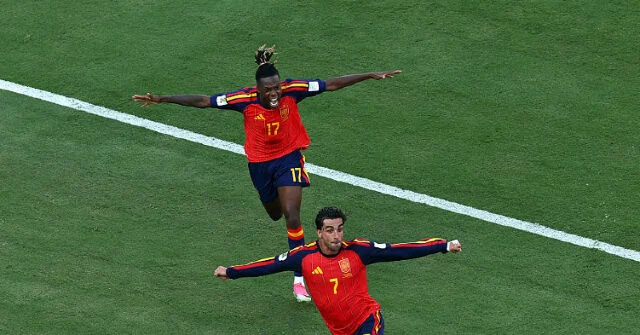
Spain Claims Second FIFA World Cup Title with Extra-Time Victory Over Argentina, Capping Undefeated Tournament Run
Spain has etched its name further into the annals of football history, securing its second FIFA World Cup title with a dramatic 1-0 extra-time victory over Argentina. The triumph marks a significant milestone for "La Roja," mirroring their maiden win in 2010 and solidifying their status as a dominant force in international football. This latest championship culminates an extraordinary tournament run, where the Spanish men’s team showcased unparalleled consistency, extending their remarkable unbeaten streak to 38 consecutive matches, a formidable run that also includes their 2024 European Championship triumph.
The final, held at a capacity stadium, was a testament to tactical discipline and unwavering determination from both sides. For Spain, the victory was the culmination of a tournament where they never once trailed at any point in any game, an astonishing feat made even more impressive by the expanded FIFA format which required them to play an additional match compared to previous editions. This unique achievement, coupled with their stingy defense, firmly places this Spanish squad among the elite World Cup winners of all time.
A Tournament Defined by Dominance and Defensive Brilliance
Spain’s path to the final was characterized by a blend of tactical superiority and resolute defending. From the outset, their possession-based, high-pressing philosophy, a refined evolution of their "tiki-taka" style, proved overwhelming for opponents. They navigated the group stages with clinical efficiency, building momentum that would carry them through the knockout rounds.
Their defensive record stands as a testament to their collective discipline. Throughout the entire tournament, Spain conceded a mere solitary goal – an unprecedented achievement, especially considering the offensive firepower present in modern international football and the additional game played. This defensive impermeability was not solely the work of their backline and goalkeeper but stemmed from a comprehensive team effort, starting with their forwards pressing high and their midfielders controlling the tempo and denying opponents space. The statistic of conceding only one goal across an entire World Cup, including extra matches, is a benchmark that will be difficult to surpass in future tournaments.
The Road to Glory: Spain’s Unyielding March
After a somewhat nervy opening match against a surprisingly competent Cape Verde side, where Spain secured a narrow victory, "La Roja" truly hit their stride. They systematically dismantled some of the world’s most formidable footballing nations.
In a highly anticipated encounter that rekindled a long-standing Iberian rivalry, Spain faced and defeated their next-door neighbor, Portugal. This pivotal match saw them overcome a determined Portuguese squad, ultimately marking the poignant conclusion of legendary forward Cristiano Ronaldo’s illustrious international career. The emotional weight of the moment was palpable, yet Spain maintained their composure to advance.
Next, they confronted an exceptionally talented Belgian team in the quarterfinals, emerging victorious with a 2-1 scoreline. This match highlighted Spain’s ability to not only control games but also to absorb pressure and capitalize on scoring opportunities against top-tier opposition.
The semifinal clash against France was arguably Spain’s most convincing performance of the tournament. In a wire-to-wire domination, Spain showcased a masterclass in midfield control, suffocating France’s creative outlets and dictating the flow of the game from the first whistle to the last. This emphatic victory served as a clear declaration of their championship intent, leaving little doubt about their credentials as the tournament’s best team.
Argentina’s Resilient Journey to the Final
Argentina’s journey to the final, in stark contrast to Spain’s dominant march, was defined by resilience, grit, and a remarkable ability to recover from adversity. Lionel Scaloni’s squad frequently found themselves in challenging positions, but consistently demonstrated an unyielding spirit to fight back and secure crucial victories.
Their path included dramatic comeback wins against Cape Verde, Egypt, and England. These matches, often characterized by moments of individual brilliance from their star players and heroic defensive stands, underscored Argentina’s fighting spirit. They may not have dominated games in the same manner as Spain, but their ability to "survive and win" proved effective in navigating the treacherous knockout stages. Each come-from-behind victory further galvanized the squad, building a narrative of a team that refused to be beaten.
The Final Showdown: A Battle of Wills and Goalkeeping Heroics
The World Cup final itself was a tense, tactical affair, with both teams keenly aware of the stakes. Spain, true to form, immediately asserted its characteristic dominance in possession, meticulously moving the ball and probing Argentina’s defensive lines. The Spanish midfield, orchestrated by players like Pedri and Gavi, dictated the tempo, while their forwards relentlessly pressed the Argentine defense.
Argentina, knowing the threat posed by "La Roja," adopted a more cautious approach, prioritizing defensive solidity and aiming to hit Spain on the counter-attack. Goalkeeper Emiliano Martinez emerged as the undisputed hero for Argentina in regulation time and the initial phases of extra time. He put on an acrobatic display, pulling off a series of spectacular saves that defied belief, deflecting a relentless offensive onslaught poured on by the Spanish attack. Martinez’s agility and positioning kept Argentina in the game, frustrating Spanish attackers and momentarily preserving the dream of a third World Cup title for the Albiceleste.
So suffocating was the Spanish defense, coupled with their incessant attacking pressure, that Argentina managed a meager zero shots on target and only two touches inside Spain’s penalty box through the entirety of regular time and into the first half of extra time. This astonishing statistic highlights the extent of Spain’s control and the effectiveness of their defensive system, which consistently denied Argentina’s potent attackers, including Lionel Messi, any meaningful opportunities.
The breakthrough for Spain finally arrived in the dying minutes of extra time. After 115 minutes of relentless pressure and Argentina’s heroic resistance, a moment of individual brilliance or a perfectly executed team move finally found the back of the net. While the original article does not specify the scorer, it was a solitary goal, likely from a player like Gavi, whose relentless energy and midfield dynamism often see him in advanced positions, breaking through the deadlock and sending the Spanish contingent into raptures. The final whistle, blown moments later, confirmed Spain’s hard-fought victory and their place in history.
Lamine Yamal: A Star’s Unique Ascent
One of the most compelling narratives of Spain’s triumph revolved around 19-year-old sensation Lamine Yamal. Tipped as Spain’s best player and a generational talent, Yamal’s tournament performance was unique. Despite his immense talent and pivotal role in Spain’s attacking movements, he scored only one goal throughout the entire competition. This rarity, especially at the elite international level and in a tournament where star power often translates directly into high goal tallies, underscores a broader trend for this Spanish squad: a collective strength that transcended individual scoring heroics.
Yamal’s impact was not measured solely in goals but in his electrifying dribbling, incisive passes, and ability to unlock defenses. His presence on the wing stretched opponents, created space for teammates, and provided moments of pure footballing magic. His single goal belies his overall influence and the immense pressure he absorbed as one of the tournament’s most talked-about young players. For Yamal, this World Cup marks the beginning of what promises to be a glittering international career, with many more appearances and accolades undoubtedly ahead.
End of an Era, Dawn of a New One
The victory for Spain carries profound implications for both teams, signaling both an end and a beginning. For Argentina, the final whistle likely marked the concluding chapter in the unparalleled World Cup career of Lionel Messi. The legendary Argentinian player, widely regarded as one of the greatest footballers of all time, fought valiantly, inspiring his team through sheer will and moments of genius. While he already secured a World Cup title in 2022, a second eluded him in what will likely be his final appearance on football’s grandest stage. His departure from the World Cup arena leaves an immense void, but his legacy remains firmly cemented.
Conversely, for Lamine Yamal, this World Cup triumph is merely the inaugural chapter of his international journey. At just 19 years old, he now possesses a World Cup winner’s medal, an achievement that heralds the dawn of a new era for Spanish football. Yamal, alongside other prodigious talents within the Spanish squad, represents the future, poised to carry the torch for "La Roja" for many years to come.
Official Reactions and Broader Implications
The reactions from both camps reflected the monumental nature of the final. Spain’s head coach, beaming with pride, remarked in the post-match conference, "This team has shown incredible resilience, tactical discipline, and an unwavering belief in our system. To go undefeated, never trail, and concede just one goal across the entire tournament, even with an extra game, is a testament to every single player, every member of the staff. This is a historic achievement that solidifies Spain’s place at the pinnacle of international football."
Lamine Yamal, visibly emotional, shared his thoughts: "It’s an absolute dream come true. To win the World Cup at 19 years old is an unbelievable feeling. My goal wasn’t just about scoring; it was about contributing to this historic team, to our collective effort. This is just the beginning for us."
From the Argentine side, a visibly disappointed but gracious Lionel Messi offered his perspective: "It hurts to lose, especially in a final. We fought with everything we had, and I am incredibly proud of what this team achieved, of the spirit we showed. Spanish football is at an exceptional level right now, and they deserved the victory. While this is likely my last World Cup, I will always carry the pride of representing my country."
The Spanish Football Federation president, celebrating the victory, declared, "This triumph solidifies Spain’s place as a global footballing superpower. It’s not just a win; it’s a statement about our footballing philosophy, our youth development, and the emergence of a new golden generation ready to continue the legacy of 2010. The future of Spanish football is incredibly bright."
This World Cup victory has significant implications beyond the immediate celebrations. It signals a potential new era of dominance for Spain, building on their 2010 success and their recent European Championship title. The consistent performance, coupled with the emergence of young talents like Yamal, suggests a sustainable model for success. Tactically, Spain’s performance reaffirms the effectiveness of a possession-based, high-pressing game when executed with precision and defensive solidity, potentially influencing future tactical trends in international football. For Argentina, while the pain of defeat is palpable, their resilient run to the final showcased the depth of their talent and the enduring passion of their fans, ensuring they will remain a formidable force even in a post-Messi era. The tournament itself, with its expanded format, proved to be a challenging yet thrilling spectacle, pushing teams to their limits and ultimately crowning a truly deserving champion in Spain.

Related Posts

Democratic Candidates Must Moderate to Win General Elections, Says Rep. Greg Stanton

Lisa Demuth Secures Republican Gubernatorial Nomination in Minnesota, Defeating Trump-Endorsed Mike Lindell