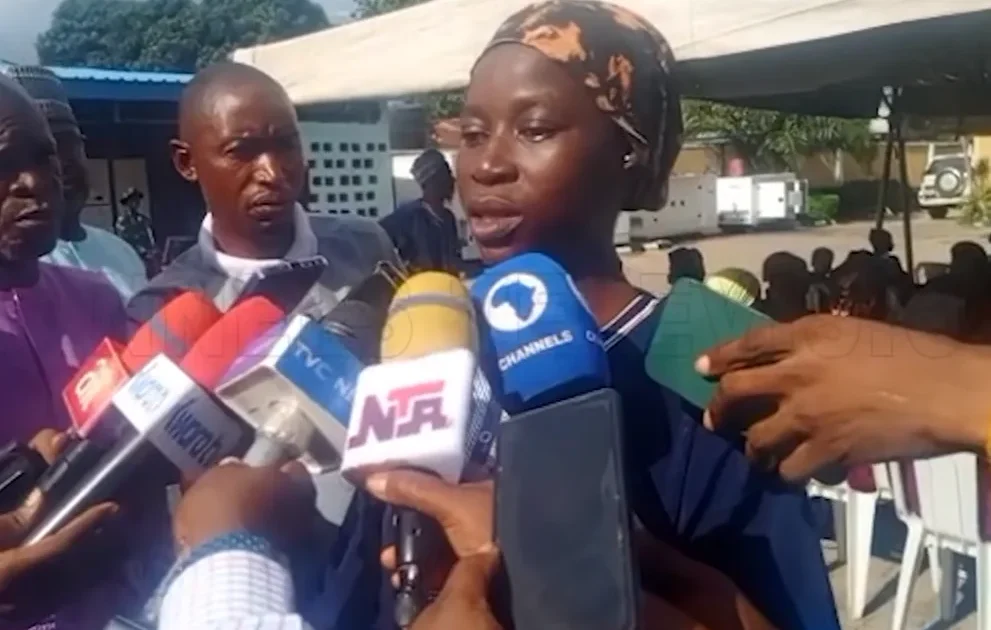
Six Months of Terror: Nurse Recounts Ordeal Following Abduction of 176 Residents in Kwara State
The harrowing saga of the 176 women and children abducted from the Woro and Nuku communities in the Kaiama Local Government Area of Kwara State reached a somber conclusion this week, as survivors returned to tell stories of extreme deprivation, psychological trauma, and miraculous survival. Among those rescued is Amirah Salihu, a nurse and daughter of the traditional ruler of Woro, whose firsthand account provides a chilling look into the operations of the extremist cell that held them captive for nearly half a year. Following their release on Wednesday, the survivors have begun the arduous process of reintegration, while state officials and security analysts grapple with the implications of an insurgency that has reached deep into the heart of Nigeria’s Middle Belt.
The February 3 Incursion: A Calculated Strike
The crisis began on February 3, when armed militants descended upon the peaceful communities of Woro and Nuku. According to residents and local authorities, the attack was not merely a random act of banditry but a targeted operation. The militants reportedly sought to dismantle the local leadership structures that had actively resisted their influence. Amirah Salihu, in a recent interview with Channels Television, confirmed that her father, the village chief, had been a primary target due to his proactive stance in security matters.
"They killed my brothers—my senior brother and my junior brother," Salihu stated. "They said it was because of my dad, because my dad did not allow them to come to our village." The chief had previously collaborated with military authorities to station soldiers in the area to deter extremist infiltration. However, the tragedy struck during a window of vulnerability when the military detachment had been redeployed, leaving the community defenseless against the well-armed insurgents who, according to witnesses, operated with the distinct tactical dress and ideology of Boko Haram-aligned groups.
Life in Captivity: A Narrative of Deprivation
For the 176 captives, the six months that followed were defined by systemic neglect and physical hardship. The captives were held in forest camps, often kept in close proximity to riverbanks. Salihu described the conditions as inhumane, noting that the abductees were forced to sleep in the open, exposed to the elements, including heavy seasonal rains.
The dietary conditions were equally dire. Captives were sustained on a minimal, unvarying ration of corn, often served without oil, spices, or nutritional variety. "The day that we got there, they just dropped guinea corn for us with salt and Maggi," Salihu recounted. "Every day after, they gave us one bag of corn without oil, pepper, nothing." The absence of basic sanitation and adequate shelter contributed to a rapid deterioration in the health of the captives, particularly the children and the elderly.
Despite the severe conditions, Salihu’s professional training became a lifeline for many. Upon discovering her identity as a nurse, the captors tasked her with assisting in medical emergencies. In a display of extreme resilience, Salihu performed 10 successful deliveries for pregnant women who went into labor while in captivity. She operated without basic medical supplies, including gloves, utilizing only her bare hands to ensure the safety of both mothers and newborns in an environment devoid of sterile conditions.
The Ideological Underpinnings of the Conflict
The motives cited by the abductors provide insight into the changing nature of insecurity in the Kaiama region. Salihu reported that the militants frequently invoked religious extremism to justify their violence, labeling the Nigerian democratic system and constitutional governance as inherently un-Islamic. This rhetoric aligns with the stated objectives of various splinter groups operating under the broader umbrella of insurgency in Northern Nigeria. By targeting the families of community leaders who support state institutions, these groups aim to establish "governance by terror," forcing local populations to abandon traditional administrative systems in favor of their radical interpretations of Sharia law.
Statistical Toll and Rescue Operations
The human cost of this six-month ordeal has been significant. While the return of the survivors is a cause for celebration, the statistics released by the Kwara State government paint a grim picture of the survival rate within the camps. Out of the 176 individuals abducted, 13 children tragically lost their lives due to the harsh conditions, disease, and lack of medical care. Furthermore, 12 individuals remain in captivity, their status and location currently subject to ongoing intelligence efforts.
Upon their release, the rescued victims were transported to Ilorin, where they were met by Kwara State Governor AbdulRahman AbdulRazaq. The government has prioritized the medical rehabilitation of the returnees, with 14 individuals currently receiving intensive care at a general hospital in the state capital. This group includes three women who gave birth while in the forest, all of whom are being monitored for complications arising from the lack of prenatal and postnatal care.
Government Response and Strategic Implications
Governor AbdulRazaq expressed his gratitude to President Bola Tinubu and the Nigerian military leadership for their roles in the high-stakes rescue mission. The successful extraction of the captives, though delayed by months of negotiation and tactical planning, represents a rare victory in the ongoing struggle against non-state armed groups in the region.
However, the event has triggered a broader debate regarding the security architecture of the Middle Belt. Analysts suggest that the ability of an extremist group to abduct such a large number of people from a community in Kwara State indicates a significant expansion of the insurgency’s geographic reach. Previously, such large-scale mass abductions were largely confined to the North-East and North-West zones. The infiltration of Kaiama suggests that these groups are increasingly moving south, seeking to exploit porous borders and rural areas with limited security presence.
The implications are twofold:
- Community Protection: The attack on the village chief’s family highlights the danger faced by local leaders who resist extremist encroachment. There is an urgent need for the federal government to provide sustained, rather than intermittent, security support to rural communities.
- Intelligence-Led Security: The successful release of the victims demonstrates the necessity of high-level intelligence and inter-agency coordination. Moving forward, the government must enhance its human intelligence networks to preempt such mass abductions before they occur, rather than relying solely on reactive rescue missions.
The Path Toward Recovery
For Amirah Salihu and the other survivors, the road to recovery will be long. The trauma of losing loved ones, witnessing the death of children, and enduring months of sub-human conditions requires more than just physical medical care. Mental health professionals and community support programs are essential to help these survivors reintegrate into society.
As the state government continues to provide aid to the families affected by the February 3 attack, the national conversation remains focused on the safety of rural populations. The story of the Woro and Nuku communities serves as a stark reminder of the resilience of the Nigerian people, but also as a clarion call for a more robust, consistent, and proactive security strategy to ensure that no other community is left vulnerable to such systemic violence. The tragedy in Kaiama is not merely a local issue; it is a critical indicator of the evolving security landscape in Nigeria that demands immediate and comprehensive policy reform.