
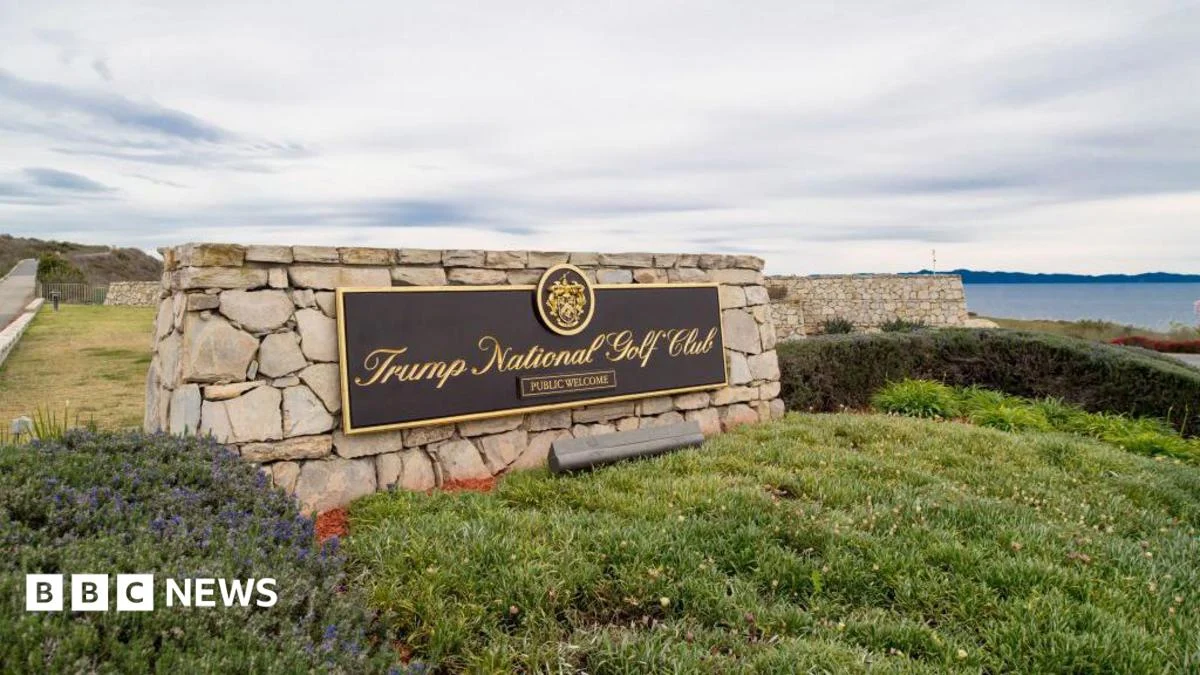
Security Forces Thwart Potential Threat Near Trump Golf Course Ahead of Presidential Visit, Man Arrested with Illicit Weapons and Ammunition
Authorities in California have apprehended a man who was observed acting suspiciously near a golf course owned by former President Donald Trump in the affluent Los Angeles area, just prior to a scheduled fundraising dinner that Trump was set to attend. Jeanine John Taele, 38, was taken into custody after being found in possession of a pistol and illegal ammunition at the Trump National Golf Course in Rancho Palos Verdes, according to investigators. The incident triggered a multi-agency response, culminating in a raid on Taele’s home where an extensive cache of illicit firearms, body armor, and "concerning statements" were discovered, underscoring the vigilance required in protecting high-profile figures and maintaining public safety.
A Tense Chronology Unfolds
The sequence of events began on Sunday afternoon, April 14, 2024, around 3:30 PM ET (12:30 PM PT), when plainclothes federal agents, likely part of a presidential advance security detail, reported a suspicious individual to local authorities. These agents, part of a larger security contingent preparing for the former president’s visit, observed Taele "walking throughout the golf course grounds taking photographs and videos and appearing to monitor security-planning activities." Such behavior is a significant red flag in security protocols, especially around venues hosting protected individuals.
Upon receiving the report, officers from the Los Angeles County Sheriff’s Department (LASD) swiftly responded to the Trump National Golf Course, a sprawling 18-hole property perched on the scenic cliffs of Rancho Palos Verdes, a wealthy coastal enclave renowned for its picturesque views and tranquil environment. When law enforcement personnel confronted Taele, a routine identification check revealed a critical piece of information: he was being sought in connection with a robbery investigation by the El Segundo Police Department, a city located approximately 15 miles (25 kilometers) north of Rancho Palos Verdes. This discovery immediately elevated the seriousness of the encounter, shifting it from a mere trespass or suspicious activity report to an active apprehension of a wanted individual.
A subsequent search of Taele yielded alarming findings. He was found to be carrying a concealed firearm, specifically a 16-round magazine loaded with hollow-point ammunition. Further investigation led authorities to his vehicle, which was parked on the golf course premises. Inside, they discovered another loaded pistol, accompanied by a loaded magazine also containing hollow-point ammunition. These initial discoveries immediately led to Taele’s arrest on charges of carrying a concealed firearm and possession of armor-piercing/prohibited ammunition, both serious offenses under California law.
The investigation rapidly escalated the following day. On Monday, agents from the Federal Bureau of Investigation’s (FBI) Joint Terrorism Task Force (JTTF) and the LASD’s Major Crimes Bureau executed a search warrant at Taele’s residence in Downey, another city within the expansive Los Angeles metropolitan area. This raid was initiated due to the "potential security implications surrounding the incident," as stated by the sheriff’s department, acknowledging the gravity of a suspect with illegal weaponry found near a presidential visit. The search of Taele’s home uncovered a much more extensive and disturbing arsenal: an "illegally modified AR platform rifle," a .45 caliber pistol, multiple high-capacity magazines, a significant quantity of ammunition for both pistols and rifles, and crucially, body armor. Perhaps most concerning were "multiple notebooks containing concerning statements," the specific nature of which has not been publicly disclosed but undoubtedly prompted the involvement of federal agencies like the FBI JTTF, which specializes in investigating threats to national security.
The Arsenal Uncovered: A Breach of California’s Strict Gun Laws
The weapons and ammunition found in Taele’s possession represent multiple serious violations of California’s stringent gun control laws, which are among the strictest in the United States. The state has implemented a comprehensive set of regulations aimed at curbing gun violence, including restrictions on certain types of firearms and ammunition.
Firstly, the discovery of a concealed firearm without a permit is a direct violation of California Penal Code Section 25400. While permits for concealed carry exist, they are often difficult to obtain in the state and require extensive background checks and training. The fact that Taele was carrying one illegally, especially near a high-security event, adds to the gravity of the offense.
Secondly, the possession of high-capacity magazines is largely prohibited in California. State law generally bans magazines capable of holding more than 10 rounds of ammunition. The 16-round magazine found on Taele, and likely others in his home, directly contravene these regulations. This ban is intended to limit the number of rounds a shooter can fire without reloading, thereby potentially reducing casualties in mass shootings.
Thirdly, the presence of hollow-point ammunition, while not entirely banned for all uses in California, is subject to significant restrictions. These bullets are designed to expand and flatten upon impact, creating a larger wound cavity and causing maximum damage to vital organs. Their use is particularly scrutinized, and their possession in conjunction with other illegal weapons and suspicious activity raises serious concerns about intent.
Perhaps most alarming was the "illegally modified AR platform rifle" found during the home raid. California has a strict assault weapons ban, prohibiting the sale and possession of many semi-automatic rifles with certain features, often requiring specific modifications or registration. An "illegally modified" rifle suggests an attempt to circumvent these laws, potentially by altering a legally purchased firearm or by possessing a banned configuration. The combination of an assault-style rifle, high-capacity magazines, body armor, and hollow-point ammunition paints a picture of a suspect prepared for a confrontation, which further justified the intense scrutiny from law enforcement.
Presidential Visit Amidst Heightened Security
The incident unfolded during a relatively rare visit by Donald Trump to California, a state known for its predominantly Democratic political landscape. The former president was scheduled to attend a Republican party fundraising dinner at his golf course, a typical event in his post-presidency political activities. Such visits inherently trigger a significant deployment of security resources, spearheaded by the U.S. Secret Service, which is responsible for the protection of current and former presidents, their families, and other high-ranking officials.
Presidential visits involve meticulous planning and coordination among numerous federal, state, and local law enforcement agencies. This includes advance teams surveying locations, establishing secure perimeters, coordinating transportation routes, and monitoring potential threats. The presence of plainclothes federal agents at the Trump National Golf Course hours before the president’s arrival is standard protocol, designed to detect and neutralize any potential security risks proactively. The rapid response and inter-agency cooperation witnessed in this case highlight the effectiveness of these established security frameworks.
According to the White House, Trump was also expected to deliver a speech critical of California Governor Gavin Newsom during his visit. Newsom is widely perceived as a potential contender for the presidency in the 2028 election, following the conclusion of Trump’s second potential term. This political dimension adds another layer of context to Trump’s engagements, as his appearances often serve dual purposes: fundraising for the Republican party and campaigning, directly or indirectly, for his own political future or that of his allies. Trump was also scheduled to travel to Las Vegas, Nevada, to deliver a speech at a casino on Wednesday, further emphasizing the ramping up of his campaign activity ahead of the upcoming midterm elections in November, when the balance of power in Congress will be contested.
The history of presidential security is fraught with challenges, and presidential figures often face various threats. Donald Trump himself has reportedly been the target of multiple assassination attempts in recent years. Following one of the more recent incidents, where a gunman reportedly stormed a hotel in Washington during a White House dinner, Trump’s security team reportedly reviewed and updated their protective protocols. While officials have explicitly stated that they have not identified any "credible threat to our communities" from Taele and he is not facing charges directly related to attempting to harm Trump, the context of past threats undoubtedly elevates the level of caution and investigative thoroughness in any incident involving suspicious activity near a protected person.
The Man Behind the Arrest: Jeanine John Taele
Beyond the immediate circumstances of the arrest, details about Jeanine John Taele began to emerge, painting a picture that led authorities to take extensive measures. While initially apprehended for suspicious activity and illegal weapon possession, the discovery that he was wanted by the El Segundo Police Department for a robbery charge added another layer of concern. This indicates a prior criminal history or ongoing legal issues, suggesting a pattern of behavior that warranted further scrutiny.
His residence in Downey, a city in the southeastern part of Los Angeles County, became the focal point of the subsequent investigation. The sheer volume and nature of items found during the home raid – an illegally modified AR platform rifle, a .45 pistol, body armor, multiple high-capacity magazines, and a plethora of ammunition – suggest a preparedness for potentially violent encounters. The discovery of "multiple notebooks containing concerning statements" is particularly significant. While the content remains undisclosed, such findings often indicate a suspect’s mindset, motivations, or even potential plans, which are crucial for investigators to assess the full scope of any threat. This type of evidence is routinely analyzed by behavioral analysis units and counter-terrorism experts to understand intent and determine if there are broader connections or ideologies at play.
Inter-Agency Collaboration and Ongoing Investigation
The swift and coordinated response to this incident serves as a prime example of effective inter-agency collaboration in national security and law enforcement. The initial report from plainclothes federal agents, likely from the Secret Service, demonstrates the proactive intelligence gathering and vigilance crucial for presidential protection. The immediate response from the Los Angeles County Sheriff’s Department highlights the vital role of local law enforcement in supporting federal operations and maintaining public safety within their jurisdictions.
The subsequent involvement of the FBI’s Joint Terrorism Task Force and the LASD’s Major Crimes Bureau underscores the serious nature of the investigation. The FBI JTTF brings federal resources and expertise to cases that may have national security implications, even if a direct terrorism link is not immediately apparent. Their involvement, alongside the Secret Service, confirms that the incident is being treated with the highest level of scrutiny, given the proximity to a former president and the cache of weapons found.
The investigation is continuing, with ongoing assistance from the U.S. Secret Service, and officials have indicated that more charges may be filed later. This suggests that the initial charges for concealed firearm and ammunition possession are likely just the beginning, with potential federal charges related to the modified rifle, body armor, and any insights gained from the "concerning statements" in the notebooks. The thoroughness of the ongoing investigation aims to ascertain Taele’s motives, whether he acted alone, and if there was any specific intent related to the presidential visit or any other targets.
Broader Implications for Security and Public Safety
While the sheriff’s statement reassuringly added that they have not identified any "credible threat to our communities," the incident serves as a stark reminder of the persistent challenges in maintaining security for high-profile individuals and the public at large. The successful apprehension of Taele before any potential harm could be inflicted underscores the importance of vigilance, strong partnerships between local, state, and federal law enforcement agencies, and the proactive steps taken to identify and investigate suspicious activity before it can escalate into a crisis.
The incident highlights several critical implications:
- Effectiveness of Security Protocols: The detection of Taele by plainclothes agents confirms the efficacy of multi-layered security protocols surrounding presidential movements. These measures are designed to identify anomalies and potential threats early, allowing for timely intervention.
- The Persistent Threat Landscape: Even without a "credible threat" identified, the presence of an individual with an illegal arsenal and "concerning statements" near a presidential event underscores the diverse and unpredictable nature of potential threats, ranging from individuals with personal grievances to those with broader ideological motivations.
- Challenges of Gun Control: The discovery of numerous illegal weapons, including a modified assault-style rifle and high-capacity magazines, within a state with strict gun laws, illustrates the ongoing challenges law enforcement faces in preventing illegal arms from falling into the wrong hands or being illegally modified.
- Importance of Public and Law Enforcement Vigilance: The case reinforces the message that public vigilance and robust inter-agency communication are paramount in preventing potential tragedies. "See something, say something" combined with coordinated law enforcement action remains a cornerstone of security strategy.
Political Context and Future Engagements
The incident, while distinct from the political purpose of Trump’s visit, inevitably intersects with the broader political climate. Trump’s visits to states like California, even those where he is not widely popular, are crucial for fundraising and maintaining his influence within the Republican party ahead of critical election cycles. His planned speech criticizing Governor Newsom reflects the ongoing political sparring that characterizes the current American political landscape, especially as the 2024 presidential election looms and discussions about future contests, like 2028, begin to take shape.
As campaign activity intensifies across the nation in the lead-up to the November midterm elections, security concerns will remain a top priority for all political figures. The incident in Rancho Palos Verdes serves as a potent reminder that the protection of public officials is a complex, continuous, and collaborative effort. While the immediate danger was neutralized, the underlying reasons for Taele’s actions and the implications of his extensive arsenal will continue to be thoroughly investigated, ensuring that lessons learned are integrated into future security strategies. The swift resolution of this event stands as a testament to the dedication and preparedness of law enforcement agencies tasked with safeguarding both prominent individuals and the wider community.

Related Posts
Zambia on Edge: Opposition Leader Arrested Amid Allegations of Insurrection Plot and Election Tensions
Rescuers search for survivors of powerful Indonesia earthquake

