
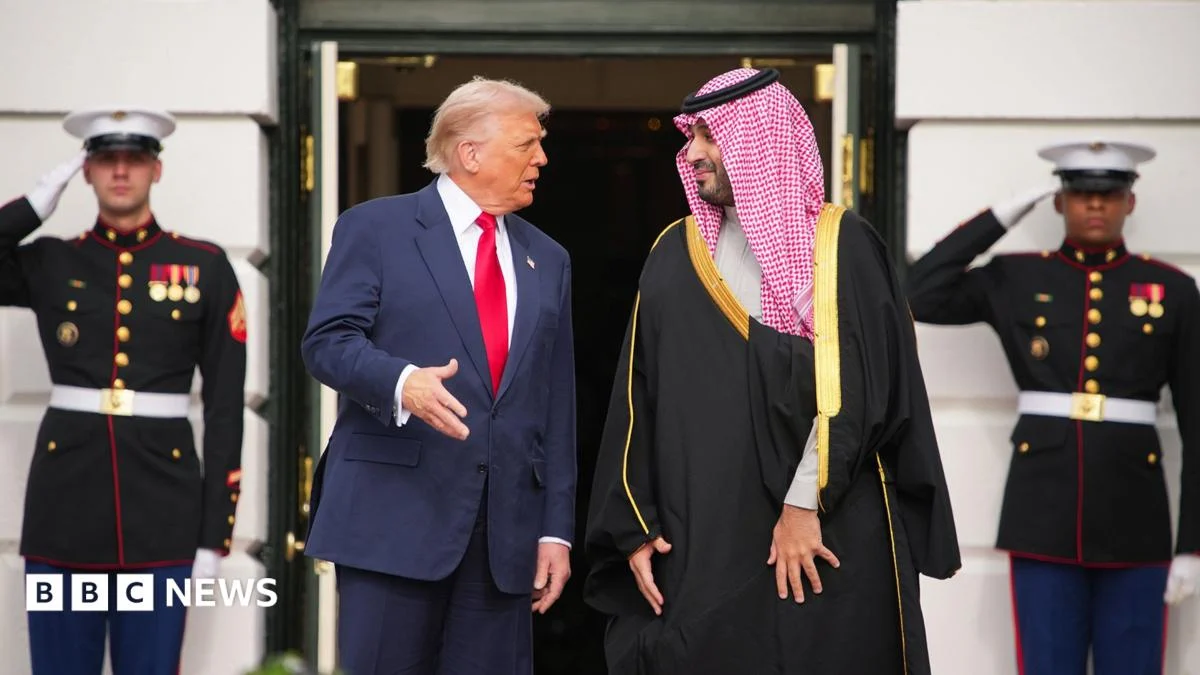
Saudis must recognise Israel for nuclear deal, says Trump
The revelation, made by Trump on his Truth Social platform, underscores the complex interplay of nuclear non-proliferation efforts, regional diplomacy, and the broader strategic interests in the Middle East. While the specifics of the nuclear accord remain undisclosed, the former president’s statement adds a significant condition that could reshape the geopolitical landscape of the region, particularly concerning the Israeli-Palestinian conflict and Saudi Arabia’s long-standing position.
The Core of the Proposed Deal and Trump’s Stance
According to former President Trump, the "Civil Nuclear Deal," which he emphasized is solely for "non-military use," would be approved only if Saudi Arabia becomes a signatory to the Abraham Accords. He further stipulated, "There will be no enrichment of material!" – a crucial detail in non-proliferation discussions, as uranium enrichment capabilities are dual-use, serving both peaceful power generation and potential weapons development.
The condition of joining the Abraham Accords was not immediately clear from any publicly released text of the nuclear deal, nor has Saudi Arabia officially confirmed its agreement to this specific linkage. However, White House press secretary Karoline Leavitt affirmed on Thursday that Trump had engaged in numerous discussions with Saudi leaders regarding this precondition during his administration. "He has said if they don’t join the Abraham Accords, the deal is off," Leavitt stated, indicating an ongoing diplomatic posture.
The US Department of Energy characterized the agreement as a "peaceful nuclear co-operation agreement" coupled with a "bilateral safeguards agreement." These foundational documents are intended to pave the way for a multi-billion-dollar partnership spanning decades, designed to advance both economic and strategic objectives, with nuclear non-proliferation cited as a primary goal. The agreement is slated for review by the US Congress, a process that typically involves scrutiny over non-proliferation commitments and geopolitical implications.
The International Atomic Energy Agency (IAEA), the global nuclear watchdog, acknowledged its awareness of the US and Saudi plans for a "bilateral civil nuclear cooperation agreement and the plan to ask the IAEA to implement verification measures in relation to this." The IAEA expressed its anticipation of receiving a formal request for such verification and its readiness to collaborate with both the United States and the Kingdom of Saudi Arabia to ensure the effective implementation of these measures.
Background: Saudi Arabia’s Nuclear Ambitions and US Engagement
Saudi Arabia, a major oil producer and a significant player in the Middle East, has long expressed interest in developing a civilian nuclear energy program as part of its ambitious Vision 2030 economic diversification plan. The kingdom aims to reduce its reliance on fossil fuels for domestic electricity generation, freeing up more oil for export and contributing to its sustainability goals. Estimates suggest Saudi Arabia could build up to 16 nuclear power reactors over the next two decades, requiring substantial international cooperation and technology transfer.
Crown Prince Mohammed bin Salman, the de facto ruler of Saudi Arabia, has been vocal about the kingdom’s nuclear aspirations, particularly in the context of regional security. In a notable 2018 interview with CBS News, he stated unequivocally that while Saudi Arabia was not planning to acquire a nuclear weapon, "without a doubt if Iran developed a nuclear bomb, we will follow suit as soon as possible." This statement highlighted Saudi Arabia’s strategic calculations and its potential response to a nuclear-armed Iran, adding a layer of urgency and complexity to any international nuclear cooperation.
The US has historically engaged in "123 Agreements" – named after Section 123 of the Atomic Energy Act of 1954 – which provide the legal framework for significant nuclear cooperation with other countries. These agreements typically include non-proliferation commitments, such as pledges not to pursue nuclear weapons and to place facilities under IAEA safeguards. A key feature often sought by the US in such agreements, particularly after the precedent set with the UAE, is a "gold standard" clause that prohibits the recipient country from enriching uranium or reprocessing spent nuclear fuel on its own soil. These activities are considered proliferation-sensitive because they produce fissile material that could be diverted for weapons purposes.
Earlier US media reports had suggested that any potential deal might allow Saudi Arabia some flexibility on uranium enrichment in the future, which had been a point of contention and concern among non-proliferation experts and some US lawmakers. However, Trump’s explicit denial of enrichment capabilities under the current proposed deal aims to address these fears, aligning with the "gold standard" approach.
The Abraham Accords: A Shifting Regional Landscape
The Abraham Accords, brokered by the Trump administration in 2020, marked a historic breakthrough in Middle East diplomacy. These agreements normalized relations between Israel and several Arab nations, fundamentally altering decades of regional policy that largely conditioned Arab recognition of Israel on the establishment of an independent Palestinian state.
The initial signatories were the United Arab Emirates (UAE) and Bahrain, followed by Sudan and Morocco. Kazakhstan also later joined. These accords were lauded by proponents as a significant step towards regional peace and cooperation, fostering economic ties, security partnerships, and diplomatic exchanges that had previously been unthinkable. Critics, however, argued that the accords sidelined the Palestinian issue and weakened their leverage for statehood.
Saudi Arabia, a deeply influential Arab and Muslim nation, has historically maintained that normalization with Israel would only occur after the establishment of a sovereign Palestinian state with East Jerusalem as its capital, based on the 1967 borders. This position has been a cornerstone of the Arab Peace Initiative, proposed by Saudi Arabia in 2002. Trump’s current condition directly challenges this long-standing Saudi policy, placing a high-stakes diplomatic dilemma before Riyadh.
The potential accession of Saudi Arabia to the Abraham Accords would represent an unprecedented shift, given its status as the guardian of Islam’s holiest sites and its historical leadership role in the Arab world. Such a move would significantly expand the scope and impact of the accords, potentially drawing other Arab and Muslim-majority nations into closer ties with Israel.
Reactions and Concerns from Key Stakeholders
Israel’s Stance:
Israel has warmly welcomed Trump’s statement linking the nuclear deal to Saudi recognition. Prime Minister Benjamin Netanyahu’s office posted on X (formerly Twitter) that Saudi Arabia joining the accords "would be an historic leap forward for peace in the Middle East." This reflects Israel’s long-term strategic goal of expanding its diplomatic and security partnerships in the region, particularly with powerful Gulf states, as a bulwark against Iran.
While the official statement did not directly mention the nuclear deal, Israeli Economy Minister Nir Barkat had previously indicated a pragmatic approach, stating that Israel "can manage it" if Saudi Arabia pursued nuclear power for peaceful means, provided robust safeguards were in place. However, not all Israeli officials share this view. Former Israeli defense minister Avigdor Lieberman reportedly expressed caution, stating, "Every military nuclear program begins with a civilian one," echoing broader non-proliferation concerns. Israel itself is widely believed to possess nuclear weapons, maintaining a policy of deliberate ambiguity regarding its nuclear capabilities.
US Congressional and Expert Concerns:
The proposed deal has generated bipartisan concerns within the US Congress and among non-proliferation experts. Lawmakers from both Republican and Democratic parties have expressed reservations about the potential for nuclear proliferation in an already volatile region. While the Republican Party, under Trump’s previous administration, had seen some support for such deals, the current political landscape suggests any agreement would face intense scrutiny.
Rosemary Kelanic, director of the Middle East program at the US-based Defense Priorities think tank, highlighted the extraordinary nature of the "no enrichment" clause if it were to be strictly enforced. She described it as "quite shocking" if the US were to allow Saudi Arabia uranium enrichment facilities. "The US has never done that before. We have never helped another country enrich on their own soil," Kelanic explained, emphasizing that the ability to produce one’s own nuclear fuel significantly elevates the risk of nuclear weapons development. This stance reflects a fundamental tenet of non-proliferation: controlling access to the most sensitive parts of the nuclear fuel cycle.
Saudi Arabia’s Silence:
As of the time of reporting, Saudi Arabia has not issued an official response to Trump’s remarks or the specific condition linking the nuclear deal to the Abraham Accords. This silence could be interpreted in several ways: ongoing internal deliberations, strategic diplomatic calculation, or awaiting further clarification on the US position. The decision to formally recognize Israel would be a monumental one for the Kingdom, requiring careful consideration of its regional standing, its relationship with the Palestinian Authority, and domestic sentiment.
Broader Implications and Geopolitical Analysis
The convergence of a civilian nuclear deal with a demand for diplomatic normalization with Israel creates a complex web of implications for regional stability, non-proliferation efforts, and global power dynamics.
Non-Proliferation Landscape:
The Middle East is already a region fraught with nuclear anxieties, primarily centered on Iran’s nuclear program. Iran has consistently denied Western accusations that it aims to acquire nuclear weapons, insisting its program is for peaceful purposes. However, its enrichment activities and growing stockpiles of enriched uranium have fueled regional and international concern. A Saudi nuclear program, even if ostensibly peaceful and under strict safeguards, introduces a new dimension to this regional arms race, potentially encouraging other states to pursue similar capabilities. The "no enrichment" clause, if strictly maintained and verified, is crucial to mitigating these proliferation risks. The IAEA’s role in implementing robust verification measures will be paramount.
Regional Realignments:
A Saudi accession to the Abraham Accords would solidify a powerful anti-Iran bloc comprising Israel and key Gulf Arab states. This alignment could significantly alter the balance of power in the Middle East, potentially leading to increased cooperation on security and intelligence matters. However, it could also exacerbate tensions with Iran and its allies, potentially leading to a more polarized region. The impact on the Palestinian cause would be profound, as Saudi Arabia’s historical leverage and support for Palestinian statehood would be re-evaluated.
Economic and Strategic Benefits for the US:
The US Department of Energy highlighted "great access for American companies in the Saudi nuclear energy programme" as a key benefit of the deal. This indicates significant economic opportunities for US nuclear technology firms, bolstering American competitiveness in the global nuclear energy market. Strategically, strengthening ties with Saudi Arabia through such a significant partnership reaffirms US influence in the Middle East and provides a counterweight to growing Chinese and Russian engagement in the region.
Challenges and the Path Forward:
The deal faces a multi-faceted approval process. In the US, it must undergo congressional review, where bipartisan concerns over proliferation and the terms of the Abraham Accords linkage will be thoroughly debated. The political climate, especially with an upcoming presidential election, could further complicate its passage. For Saudi Arabia, the decision to join the Abraham Accords would entail a significant shift in foreign policy, requiring careful management of domestic and regional reactions.
The future of this proposed US-Saudi nuclear deal, intrinsically linked to the Abraham Accords, remains subject to intense diplomatic maneuvering, congressional approval, and Saudi Arabia’s ultimate strategic calculations. It represents a potential watershed moment, offering both the promise of regional integration and economic opportunity, alongside the enduring challenge of nuclear non-proliferation in one of the world’s most complex geopolitical arenas. The international community will be closely watching how these intricate threads unfold, shaping the future of energy, security, and diplomacy in the Middle East.

Related Posts
Zambia on Edge: Opposition Leader Arrested Amid Allegations of Insurrection Plot and Election Tensions

Rescuers search for survivors of powerful Indonesia earthquake

