
Saudi Arabia, Turkey, and Pakistan Forge Landmark Trilateral Defense Pact Amid Escalating Regional Tensions
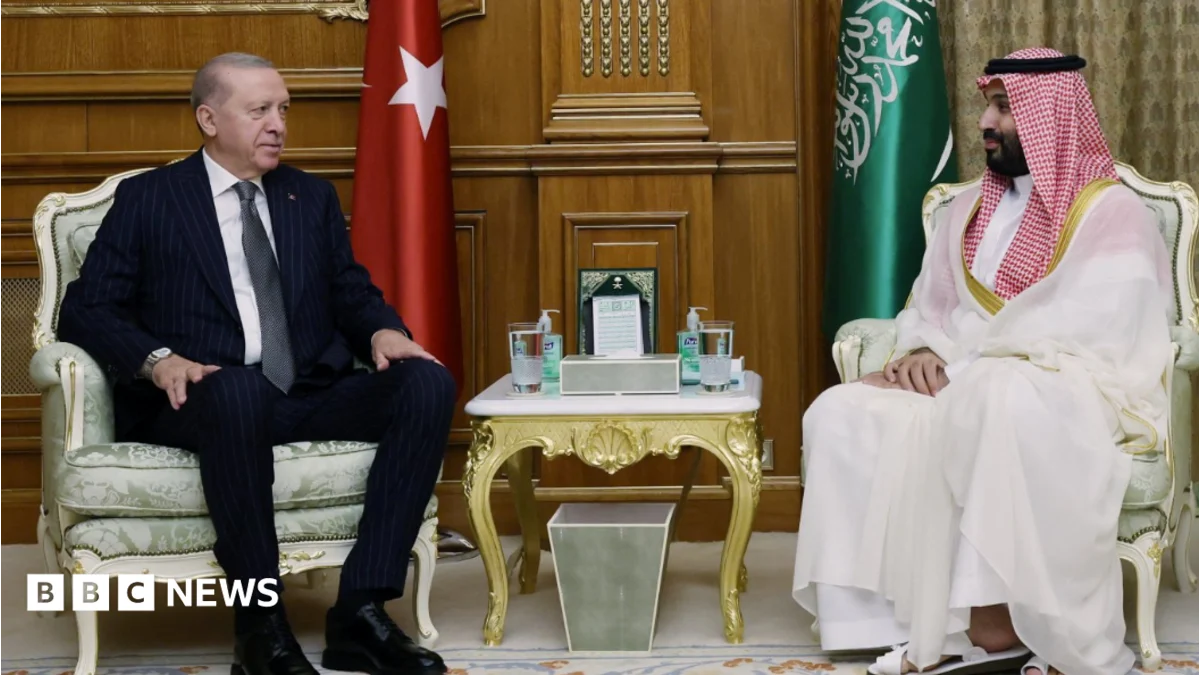
In a significant realignment of geopolitical forces in the Middle East and South Asia, Saudi Arabia, Turkey, and Pakistan have formally entered into a joint defense agreement, stipulating that an attack on any one of the three signatory nations would be considered an attack against all. This pivotal declaration, unveiled during a high-profile meeting in the Saudi holy city of Mecca, saw Saudi Crown Prince Mohammed bin Salman, Turkish President Recep Tayyip Erdogan, and Pakistani Prime Minister Shehbaz Sharif cement a pact that observers suggest could reshape regional security architectures. The "Mecca Joint Defence Agreement," while described by a Turkish official as "purely defensive in nature," comes at a time of heightened volatility, particularly in the Arabian Gulf and the Red Sea, where the escalating conflict between the United States and Iran has drawn in regional powers and severely disrupted vital shipping lanes.
The newly formed alliance underscores a growing imperative among these nations to bolster their collective security capabilities in response to what they perceive as increasingly complex and interconnected threats. The agreement follows a previous bilateral defense pact between Saudi Arabia and Pakistan announced just last year, indicating a progressive deepening of security cooperation. The broader context for this trilateral move is the persistent and intensifying conflict involving Iran and its proxies, which has seen attacks on Saudi Arabian and other Gulf states’ targets, alongside blockades affecting crucial maritime transit points. These actions, as outlined by the involved parties, are understood to be in retaliation for a reported attack on Iran by the United States and Israel on February 28.
Chronology of Escalation and Alliance Formation
The seeds of the current regional instability have been sown over years of geopolitical friction, but recent events have accelerated the pace of alliance building. The long-standing rivalry between the United States and Iran, often characterized by a "shadow war" involving sanctions, cyberattacks, and proxy confrontations, intensified significantly in recent times. The Strait of Hormuz, a critical chokepoint for global oil supplies, and the Red Sea, vital for international trade, have frequently been theatres of tension, with disruptions impacting global commerce and energy markets.
Last year, Saudi Arabia and Pakistan formalized their bilateral defense cooperation, a move that built upon decades of robust military and strategic ties between the two Sunni-majority nations. This foundational agreement laid the groundwork for expanded security dialogue and joint military exercises, reflecting shared concerns over regional stability and external threats.
The catalyst for the current trilateral pact appears to be a specific escalation event: the reported attack on Iran by the United States and Israel on February 28. While specific details of this event remain subject to varying interpretations and official denials, its reported occurrence triggered a swift and severe response from Iran and its allied forces. In the aftermath, targets in Saudi Arabia and other Gulf states experienced a surge in attacks, and vital shipping routes through the Strait of Hormuz and the Red Sea faced renewed threats and blockades.
A particularly acute manifestation of this regional conflict has been the protracted civil war in Yemen. Here, Iran-backed Houthi rebels, who control significant swathes of northern Yemen, have been engaged in a brutal conflict with government forces, which are staunchly supported by a Saudi-led military coalition. The Houthis have increasingly extended their operational reach beyond Yemen’s borders, targeting Saudi Arabian infrastructure and maritime assets. Just last month, the Houthi movement declared a "maritime embargo" against Saudi Arabia, subsequently launching attacks on Saudi airports, oil facilities, and tankers navigating the Red Sea.
In response to these escalating threats, Saudi Arabia has not only intensified its retaliatory strikes against Houthi positions within Yemen but also moved proactively to bolster maritime security. This included the formation of a new naval coalition specifically tasked with protecting shipping interests in the Red Sea and the Gulf of Aden, underscoring the severe economic and security implications of continued disruptions. It is against this backdrop of rapidly intensifying regional conflict and the imperative to secure vital strategic interests that the Mecca Joint Defence Agreement was forged.
The Pillars of the Alliance: Military, Economic, and Strategic Depth
The trilateral defense pact unites three nations with diverse yet complementary strengths, forming a formidable bloc in the heart of Eurasia. The "Mecca Joint Defence Agreement" explicitly pledges mutual support, although precise details regarding the obligations of each signatory remain to be fully articulated. This ambiguity, common in initial defense treaties, allows for flexibility while signaling a strong commitment to collective security.
Saudi Arabia brings unparalleled financial power to the alliance. As one of the world’s largest oil producers and a major global economy, its defense budget is substantial, enabling it to be one of the largest purchasers of advanced weaponry globally. In 2023, Saudi Arabia’s defense spending was estimated to be around $75 billion, making it one of the top spenders worldwide. Its military, equipped with advanced Western systems, includes approximately 225,000 active personnel. The Kingdom’s strategic importance stems from its vast energy reserves, its role as a custodian of Islam’s holiest sites, and its pivotal position in regional politics. Its investment capacity also offers potential for joint defense industrial projects and infrastructure development.
Turkey contributes the second-largest military force within NATO by personnel count, boasting a highly trained and professional army of approximately 425,000 active personnel, backed by an extensive reserve force. With an annual defense budget exceeding $15 billion, Turkey has also developed a sophisticated and increasingly autonomous defense production capacity, particularly in areas like drone technology, naval vessels, and armored vehicles. Its geographical location at the crossroads of Europe, Asia, and Africa provides significant strategic depth, while its NATO membership offers an interesting dynamic, potentially linking the alliance indirectly to broader Western security frameworks, even as Turkey increasingly pursues an independent foreign policy.
Pakistan offers a critical strategic dimension through its nuclear weapons capability, making it the only declared nuclear power within the alliance. This nuclear deterrent adds a layer of strategic stability that could significantly alter regional power calculations. Pakistan maintains one of the world’s largest standing armies, with approximately 650,000 active personnel, and possesses considerable conventional military experience, honed through decades of defending its borders and participating in UN peacekeeping missions. Its defense budget hovers around $6-7 billion annually. Pakistan’s strategic location bordering Iran and Afghanistan, its deep-water port at Gwadar, and its extensive military industrial complex further enhance the alliance’s collective capabilities.
The combined military might, strategic depth, and economic resources of these three nations represent a significant new force in international relations. Their collective GDP exceeds $2 trillion, and their combined populations are over 350 million, providing a substantial demographic and economic base for sustained cooperation.
Official and Inferred Responses to the Pact
The immediate official statements from the signatory nations emphasized the defensive nature of the pact, aimed at safeguarding their sovereignty and promoting regional stability. Pakistan’s foreign ministry reiterated on Friday that an attack on any of the three states "shall be regarded as an attack against them all," underscoring the commitment to collective defense. A Turkish official, speaking to Reuters, affirmed the pact’s "purely defensive" character, seeking to allay concerns about aggressive intent.
However, the formation of such a powerful new bloc inevitably draws reactions and scrutiny from other regional and international actors.
Iran, directly implicated in the regional tensions that precipitated this alliance, is highly likely to view the "Mecca Joint Defence Agreement" with deep suspicion, if not outright alarm. From Tehran’s perspective, this trilateral pact could be interpreted as an attempt at strategic encirclement and a consolidation of rival Sunni powers against its regional influence. Iran might perceive this as a direct challenge to its security interests and could potentially respond by further strengthening its own alliances, particularly with non-state actors, or by escalating its military readiness in the Gulf and Red Sea. The pact could harden Iran’s stance, making de-escalation more challenging.
The United States, a traditional ally of Saudi Arabia and a NATO partner of Turkey, faces a complex calculus. On one hand, Washington might welcome a strengthened security framework among key regional partners that could contribute to countering Iranian aggression and ensuring maritime security, aligning with US strategic objectives. On the other hand, the emergence of a powerful, potentially more independent bloc could complicate US foreign policy, potentially reducing its leverage or requiring a re-evaluation of existing security commitments. Concerns might also arise regarding Turkey’s increasingly independent foreign policy within NATO and the nuclear dimension introduced by Pakistan.
Israel, currently engaged in its own intense conflict with Iran, would likely view this pact with cautious interest. While a stronger front against Iran might be seen as beneficial, the involvement of Turkey, whose relations with Israel have been volatile, and Pakistan, which has historically supported the Palestinian cause, introduces complexities. Israel would likely monitor the pact’s implications for regional power balances and its own security interests.
Other Gulf Cooperation Council (GCC) states might react with a mix of support and apprehension. Some, particularly those sharing Saudi Arabia’s concerns about Iran, might welcome the enhanced security architecture. Others might view the emergence of such a dominant trilateral bloc with caution, concerned about potential shifts in regional leadership dynamics or feeling excluded from a major security initiative.
Russia and China, both significant players in the broader Eurasian geopolitical landscape, would likely observe the development closely. Russia might see opportunities to deepen its own defense ties with some of these nations, particularly in areas where Western influence might wane. China, with its Belt and Road Initiative and significant energy interests in the region, would likely prioritize stability and unimpeded trade routes, carefully assessing how this new alliance impacts its economic and strategic investments.
Broader Impact and Implications
The "Mecca Joint Defence Agreement" represents more than just a security pact; it signifies a potential tectonic shift in regional geopolitics, with profound implications across military, economic, and diplomatic spheres.
Geopolitical Reordering: The most immediate implication is the emergence of a powerful new security bloc. This alliance of three strategically vital nations could act as a significant counterweight to existing regional power structures and alliances, potentially altering the balance of power in the Middle East, South Asia, and even parts of the Mediterranean. It signals a move towards greater self-reliance in security matters among these nations, possibly leading to a more multipolar regional order.
Enhanced Military Deterrence: The combined military capabilities, particularly with Pakistan’s nuclear umbrella, could offer a substantial deterrent against external aggression. This collective strength could reduce the vulnerability of individual states to threats, particularly those emanating from state-sponsored proxies or direct military action. The potential for joint military exercises, intelligence sharing, and coordinated defense strategies would significantly enhance their collective security posture.
Economic Ramifications: Beyond defense, the pact could foster deeper economic cooperation among the three nations. This could manifest in increased trade, joint infrastructure projects, and defense industrial collaboration. Saudi Arabia’s financial muscle, Turkey’s advanced manufacturing capabilities, and Pakistan’s strategic location and workforce could create synergistic economic opportunities, potentially reducing their reliance on traditional Western partners for certain goods and services. However, increased defense spending could also divert resources from other critical sectors.
Regional Stability and Instability: The pact’s impact on regional stability is a double-edged sword. Proponents would argue that it enhances stability by creating a stronger deterrent against aggression and providing a framework for collective response to threats. Critics, however, might contend that it could exacerbate existing tensions by hardening rivalries and prompting counter-alliances, potentially leading to an arms race or increased proxy conflicts. The lack of specific obligations within the pact, while offering flexibility, also leaves room for ambiguity regarding the threshold and nature of collective response, which could either contribute to de-escalation or miscalculation.
Impact on Existing Alliances: Turkey’s membership in NATO adds a unique dimension. While the pact is "purely defensive," any conflict involving Turkey could have indirect implications for NATO, even if the alliance itself is not directly involved. Similarly, Saudi Arabia’s role in the GCC and its close ties with the US, along with Pakistan’s historical alignment with various blocs, will require careful navigation to ensure that this new trilateral arrangement complements rather than complicates existing strategic partnerships.
Nuclear Proliferation Concerns: Pakistan’s nuclear status introduces a unique layer of deterrence but also raises concerns among non-proliferation advocates. While the pact is conventionally defensive, the involvement of a nuclear power in a new security alliance in such a volatile region will undoubtedly be a point of discussion and concern for the international community.
As the conflict between Israel and Iran shows no sign of abating, and their common ally, the United States, grapples with containing regional repercussions, the "Mecca Joint Defence Agreement" signals a proactive step by Saudi Arabia, Turkey, and Pakistan to assert their collective security interests. Its long-term impact on the intricate tapestry of Middle Eastern and South Asian geopolitics will be closely watched by capitals around the world, as a new chapter in regional alliance building begins to unfold.

Related Posts
Zambia on Edge: Opposition Leader Arrested Amid Allegations of Insurrection Plot and Election Tensions

Rescuers search for survivors of powerful Indonesia earthquake

