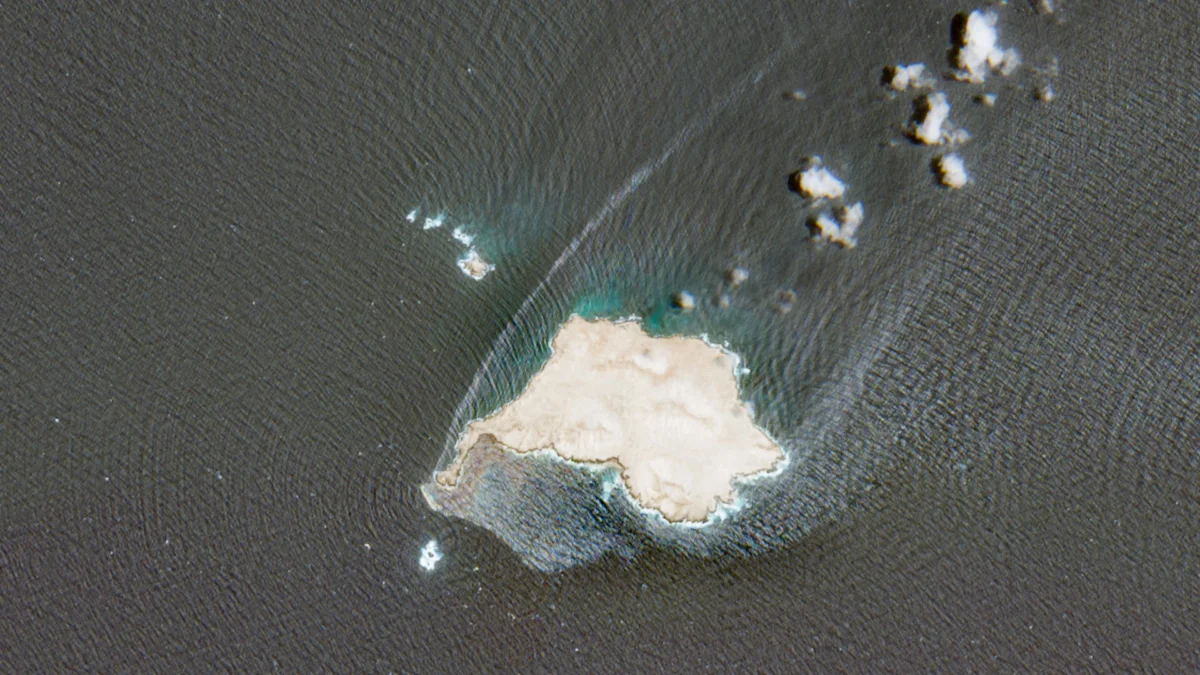
Satellite image reveals oil spill off Oman’s coast
Muscat, Oman – August 5, 2026 – A significant oil slick, visibly emanating from a vessel belonging to Russia’s sanctioned "shadow fleet," has been confirmed off the coast of Oman, according to satellite imagery released on August 5, 2026, by Copernicus Sentinel Data 2026. The revelation has ignited grave concerns among environmental groups and maritime security experts, who warn of an impending ecological catastrophe in the strategically vital Arabian Sea, already fraught with geopolitical instability, including the ongoing "War on Iran" as indicated by regional reports. The tanker, which has been stranded for over a month, reportedly suffered multiple explosions, the cause of which remains officially unclear, further complicating salvage and containment efforts.
The incident underscores long-standing warnings regarding the environmental and safety risks posed by Russia’s fleet of aging and often uninsured tankers, deployed to circumvent Western sanctions following the 2022 invasion of Ukraine. Experts have consistently highlighted the potential for such vessels, operating outside conventional regulatory frameworks, to precipitate maritime disasters. Greenpeace has vociferously condemned the situation, labelling it an "impending environmental catastrophe" and calling for immediate, concerted international action.
Chronology of a Crisis: From Stranding to Spill
The unfolding crisis traces its roots back over a month, when the unidentified tanker, reportedly part of Russia’s illicit oil transport network, became stranded off the Omani coastline. While the precise date and initial cause of the stranding have not been publicly detailed, its prolonged immobility in a critical shipping lane raised early, albeit unheeded, alarms within maritime surveillance circles.
- Late June/Early July 2026: The Russian-linked tanker becomes stranded in Omani waters, its movements ceasing for reasons undisclosed at the time. Its presence and lack of progress are likely noted by various maritime tracking agencies, though public awareness remains low.
- Late July 2026: A maritime security firm reports a series of explosions aboard the stranded vessel. The nature and origin of these explosions are not clarified, fueling speculation ranging from mechanical failure to possible external interference in the highly volatile region. The explosions significantly compromise the vessel’s integrity, likely exacerbating any existing structural weaknesses.
- July 28, 2026: Copernicus Sentinel Data 2026 captures satellite imagery revealing a distinct oil slick consistent with a leak from a ship in the vicinity of the stranded tanker. This imagery provides the first definitive visual evidence of a major environmental incident.
- August 4, 2026: The satellite imagery and accompanying analysis are made public, drawing immediate attention from environmental watchdogs and news outlets.
- August 5, 2026: International media outlets begin to widely report on the confirmed oil spill, amplifying the urgency and prompting calls for action from various stakeholders. The date of the live blog update signifies the escalation of the incident into a prominent global news story.
The delay between the initial stranding, reported explosions, and the public confirmation of a significant oil spill highlights potential challenges in monitoring and responding to incidents involving vessels that operate under a veil of secrecy to evade international oversight.
The "Shadow Fleet": A Looming Threat Unveiled
The incident serves as a stark validation of the grave warnings issued by maritime safety organizations and environmental advocates regarding Russia’s "shadow fleet." Following the comprehensive sanctions imposed by Western nations – including the G7 price cap on Russian oil and restrictions on insurance and maritime services – Russia resorted to assembling a vast fleet of often decrepit, aging tankers. These vessels, frequently operating under flags of convenience, with obscured ownership structures, and lacking adequate insurance from reputable providers, navigate international waters with significantly heightened risks.

This shadow fleet, estimated to comprise hundreds of vessels, often bypasses standard safety inspections, operates with minimal maintenance, and utilizes ship-to-ship transfers in open seas to further obscure the origin and destination of its cargo. The average age of these tankers far exceeds industry standards, with many being decades old and well past their typical operational lifespan. The lack of proper classification society oversight and the absence of robust P&I (Protection and Indemnity) insurance – which typically covers environmental damage and third-party liabilities – mean that in the event of an accident, the financial responsibility for cleanup and compensation becomes a complex, often intractable, international problem.
Experts at Lloyd’s List Intelligence and other maritime analytics firms have repeatedly cautioned that it was not a matter of if but when a major environmental disaster would occur involving one of these high-risk vessels. The Omani spill appears to be that catastrophic realization, bringing into sharp focus the precariousness of global energy supply chains and the environmental cost of circumventing international norms.
Geopolitical Backdrop: The Volatile Arabian Sea and "War on Iran"
The oil spill unfolds against a backdrop of severe geopolitical instability in the Middle East. The reference in the original article’s headline to a "War on Iran" suggests a heightened state of conflict and tension across the region, further complicating any coordinated response to the environmental disaster. The Strait of Hormuz, adjacent to Oman’s coast, is one of the world’s most critical maritime chokepoints, through which approximately 20-30% of the world’s seaborne oil passes daily. Any disruption or environmental contamination in this area has far-reaching economic and strategic implications.
In a climate of regional conflict, military operations, heightened security alerts, and potential retaliatory actions, the presence of a crippled, leaking oil tanker adds another layer of complexity and danger. Resources that might otherwise be allocated to environmental response could be diverted to security concerns. Furthermore, the political sensitivities surrounding a sanctioned Russian vessel in the territorial waters of a non-aligned nation like Oman, within a conflict zone, could hinder international efforts to provide assistance or enforce accountability. The incident thus transcends a mere environmental problem, evolving into a multifaceted geopolitical challenge.
Environmental Catastrophe: A Looming Threat to Marine Ecosystems
Greenpeace’s grim assessment of an "impending environmental catastrophe" is rooted in the severe and long-lasting damage oil spills inflict on delicate marine ecosystems. The Arabian Sea is home to a rich biodiversity, including endangered species of whales, dolphins, sea turtles, and numerous migratory bird species. Its coastal areas feature vital habitats such as coral reefs, mangrove forests, and extensive seagrass beds, all highly vulnerable to oil contamination.
- Immediate Impact: Crude oil, particularly heavier varieties, can suffocate marine life, coat birds’ feathers, impair their ability to fly and regulate body temperature, and poison organisms through ingestion or direct contact. Fish larvae and plankton are especially susceptible, disrupting the base of the food chain.
- Long-Term Consequences: Oil components can persist in the environment for decades, accumulating in sediments and biomagnifying through the food web. This can lead to chronic health problems in marine populations, reduced reproductive success, and long-term ecosystem degradation.
- Coastal Vulnerabilities: Oman’s coastline boasts pristine beaches and supports local fishing communities and a burgeoning tourism industry. An oil slick reaching these shores would devastate livelihoods, contaminate desalination plants (a critical source of fresh water for the region), and require immensely costly and prolonged cleanup operations. The specific characteristics of the oil – its viscosity, toxicity, and how it weathers in the warm waters – will determine the extent and nature of the damage.
The sheer volume of potential leakage from a large tanker, combined with the challenging conditions of open-sea containment and the sensitive ecology of the region, amplify the urgency of the situation. Previous major spills, such as the Exxon Valdez in Alaska (1989) or the Deepwater Horizon in the Gulf of Mexico (2010), serve as stark reminders of the scale of environmental devastation and the decades-long recovery efforts required.

Responses and Calls to Action
The confirmed oil spill has triggered a cascade of anticipated reactions from various international and regional stakeholders:
- Omani Authorities: Muscat is expected to activate emergency response protocols, mobilizing its coast guard, navy, and environmental agencies for containment and cleanup. Given the scale, Oman will likely seek international assistance, potentially from regional partners or global organizations like the International Maritime Organization (IMO) and the UN Environment Programme. Their immediate priorities would be to assess the full extent of the leak, deploy booms and dispersants, and prepare coastal areas for potential impact.
- International Maritime Organization (IMO): The IMO, responsible for the safety and security of shipping and the prevention of marine and atmospheric pollution by ships, will face pressure to investigate the incident thoroughly. This incident highlights critical gaps in international maritime law enforcement when dealing with sanctioned vessels operating outside conventional regulatory frameworks. The IMO may consider enhanced monitoring measures or stronger enforcement mechanisms, though enforcing rules on a shadow fleet remains a significant challenge.
- Greenpeace and Other Environmental NGOs: Beyond their initial outcry, these organizations will likely maintain pressure on governments and international bodies for transparency, immediate and effective cleanup, and accountability for those responsible. They will also likely advocate for stronger regulations against shadow fleets and a more robust international framework for environmental protection in maritime trade.
- Russia: The Russian government’s response is likely to be one of denial, downplaying the severity of the incident, or attributing it to external factors. They may offer technical assistance to Oman, though the political implications of accepting aid from a sanctioned nation, particularly for a vessel operating to circumvent those very sanctions, could be complex.
- Western Nations and Sanctioning Bodies: The incident will undoubtedly prompt renewed scrutiny of the effectiveness and loopholes within existing sanctions regimes. Discussions may arise regarding potential secondary sanctions on entities facilitating the shadow fleet, or stricter enforcement measures to prevent future such incidents. The dilemma of how to respond to an environmental disaster caused by a sanctioned entity, where intervention might inadvertently provide financial or logistical relief to the sanctioned party, will be a critical point of debate.
Economic and Shipping Implications
Beyond the immediate environmental disaster, the oil spill carries significant economic repercussions for Oman and potentially the wider region.
- Fishing and Aquaculture: Local fishing communities, a cornerstone of Oman’s coastal economy, face immediate and long-term threats to their livelihoods. Contaminated waters and depleted fish stocks could lead to severe economic hardship.
- Tourism: Oman has been investing heavily in its tourism sector, particularly eco-tourism. An oil-slicked coastline would be a devastating blow, deterring visitors and impacting revenue streams for years.
- Shipping and Trade: While the Strait of Hormuz itself may not be immediately blocked, the incident could lead to increased insurance premiums for vessels traversing the region, particularly those deemed high-risk. It could also lead to delays and disruptions if salvage operations require exclusion zones. The lack of proper insurance on the shadow fleet vessels means that the costs of cleanup and compensation, which could run into hundreds of millions or even billions of dollars, will be difficult to recover, likely falling on national governments or international aid.
Long-Term Outlook and Regulatory Challenges
The Omani oil spill represents a critical juncture for international maritime governance. The immediate priority remains containment and cleanup, a task made immensely difficult by the nature of the stranded vessel and the volatile regional context. Salvage operations for a potentially unstable, explosion-damaged tanker carrying a large volume of crude oil are inherently hazardous and complex.
In the long term, the incident demands a re-evaluation of how the international community addresses the risks posed by illicit shipping operations. There is an urgent need for:
- Enhanced Surveillance and Intelligence Sharing: More robust international cooperation in tracking and identifying high-risk vessels, especially those operating outside conventional oversight.
- Strengthened Enforcement Mechanisms: Exploring legal avenues to interdict or detain vessels that pose clear environmental or safety threats, regardless of their flag state or ownership structure.
- Clarification of Liability: Establishing clearer frameworks for financial liability and compensation in cases involving sanctioned or illicit vessels, ensuring that the burden of environmental cleanup does not fall solely on affected nations.
- Technological Solutions: Investing in advanced technologies for rapid spill detection, prediction, and response, particularly in critical maritime chokepoints.
The oil spill off Oman’s coast is more than just an environmental incident; it is a potent symbol of the cascading risks generated by geopolitical tensions, economic sanctions, and the deliberate erosion of international maritime safety standards. As the world watches the unfolding ecological damage, the imperative for a coordinated, decisive, and globally accountable response has never been clearer, lest this catastrophe be a precursor to many more.

Related Posts
Over 150 Israeli Settlers Storm Al-Aqsa Compound and Perform Prayers, Violating Status Quo Under Police Protection.
UN Report Highlights Over 900 Obstacles Hampering West Bank Aid Amid Escalating Humanitarian Crisis