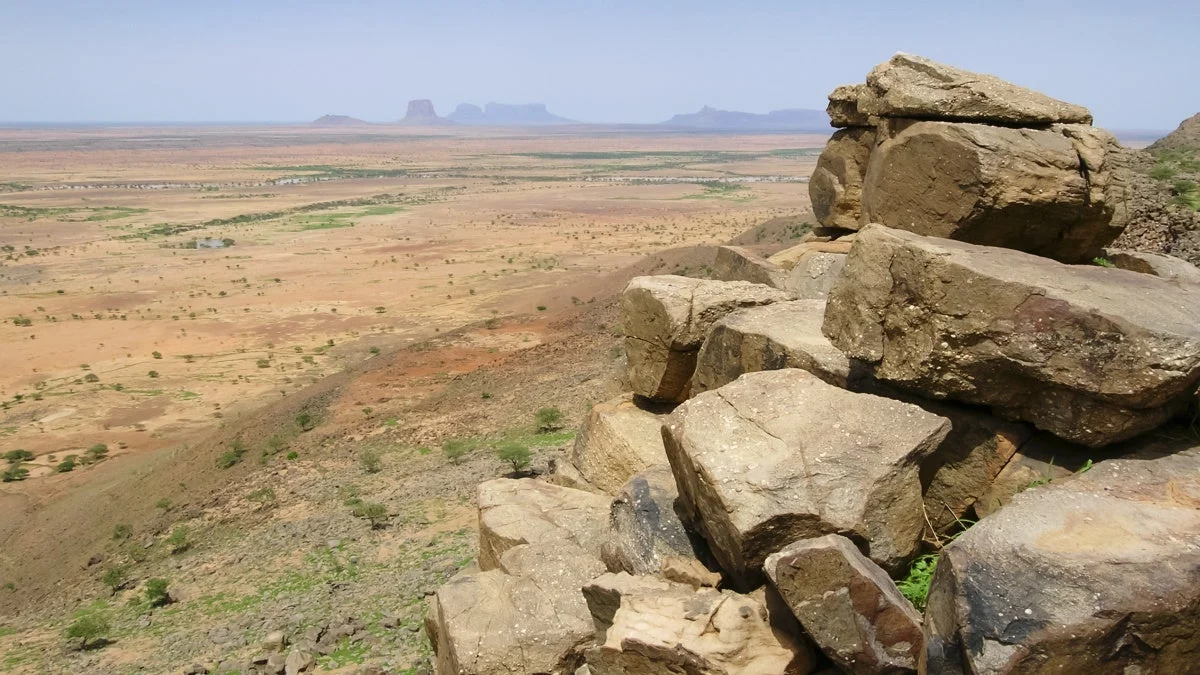
Russian Africa Corps Airstrikes in Central Mali Result in Civilian Deaths and Allegations of War Crimes
Human Rights Watch issued a comprehensive report on July 31, 2026, detailing a series of airstrikes conducted by the Russian government-controlled Africa Corps in central Mali that resulted in the deaths of eight civilians. The incident, which took place on June 15, 2026, in the village of Kyrnia within the Mopti region, has been characterized by international observers as an apparently unlawful attack that showed a blatant disregard for the international laws of war. Among the deceased were three children, the youngest being only one year old, and a woman, highlighting the severe humanitarian toll of the ongoing military partnership between the Malian military junta and Russian paramilitary forces.
The strikes were carried out by a Sukhoi Su-24, a supersonic attack aircraft, which military sources confirmed has been part of the Africa Corps’ arsenal in the region since early 2025. According to eyewitness accounts and technical analysis, at least two large munitions were dropped on the village during the morning hours. The first explosion occurred near the residence of the village chief, killing his wife and two of his children, along with another child nearby. The second munition struck a local cattle market, a central economic hub for the community, killing four men and causing extensive damage to livestock and infrastructure. Despite claims from the Africa Corps that the operation targeted "terrorist groups," no fighters from the Al-Qaeda-linked Group for the Support of Islam and Muslims (JNIM) were reported among the casualties.
Detailed Chronology of the Kyrnia Airstrikes
The events leading up to and following the June 15 attack suggest a period of surveillance followed by a rapid, high-impact aerial bombardment. Residents reported seeing a drone, likely operated by either the Malian armed forces or their Russian allies, circling the village on the afternoon of June 14. This indicates that the village was under active observation for at least 24 hours prior to the strike, raising questions about the intelligence used to authorize the use of heavy munitions in a populated civilian area.
On the morning of June 15, at approximately the time when the village market was most crowded with traders and buyers, a fighter jet was observed flying at low altitude. Witnesses described a deafening noise followed by the sight of "fireballs" falling from the sky. The first strike hit the southern edge of the village near the chief’s home. The blast was powerful enough to cause the collapse of several mud-brick structures and created a crater approximately 12 meters in diameter.
Minutes later, a second strike hit the cattle market, located roughly 20 meters from the first impact site. At the time, the market was filled with merchants selling dates and livestock. The explosion decimated at least nine market stalls and killed dozens of animals. Rescue efforts were immediate but chaotic; residents and JNIM fighters, who have controlled the village for six years, worked to clear rubble to retrieve the bodies of victims, many of whom had been dismembered by the force of the blast.
Military Context: The Rise of the Africa Corps in Mali
The presence of Russian forces in Mali marks a significant shift in the geopolitical landscape of the Sahel. Since the military coups in 2020 and 2021, the Malian junta, led by General Assimi Goïta, has systematically distanced itself from traditional Western allies. The expulsion of French "Barkhane" forces and the withdrawal of the United Nations Multidimensional Integrated Stabilization Mission in Mali (MINUSMA) left a security vacuum that the Russian government was quick to fill.
Initially, the junta relied on the Wagner Group, a private military company founded by the late Yevgeny Prigozhin. However, following Prigozhin’s death in 2023, the Russian Ministry of Defense reorganized these mercenary assets into the "Africa Corps," bringing them under the direct command and control of Moscow. This transition has resulted in the deployment of more sophisticated Russian military hardware, including the Su-24 bombers.
The Russian Foreign Ministry confirmed in June 2026 that its military personnel are actively engaged in operations to help the Malian state regain control over territories held by Islamist insurgents. While the Russian government maintains that its intervention is focused on counter-terrorism, the Kyrnia incident reflects a growing pattern of high-altitude and indiscriminate attacks that fail to distinguish between combatants and the civilian populations living under insurgent control.
Investigative Methodology and Evidence
The findings presented by Human Rights Watch are the result of a multi-faceted investigation conducted between June 24 and July 14, 2026. Due to the security risks associated with the JNIM presence and the Malian military’s hostility toward independent monitors, researchers conducted remote interviews with 19 individuals. These included six direct witnesses, community leaders, local journalists, and Malian military sources who requested anonymity.
The investigation was further bolstered by the analysis of satellite imagery and digital forensics. Satellite photos taken on June 25 confirmed the presence of two massive craters in the southern part of Kyrnia, matching the descriptions provided by witnesses. Furthermore, the Africa Corps unwittingly provided evidence against itself by posting a video of the strikes on social media platforms, including Facebook and X (formerly Twitter). The video, which the Africa Corps claimed showed a successful strike on "field commanders," was geolocated by HRW researchers to the exact coordinates of the civilian residences and market in Kyrnia.
Despite the Africa Corps’ claims of killing terrorists, the list of victims verified by HRW paints a different picture. The deceased included:
- A 24-year-old woman (the village chief’s wife).
- Three children, ages 1, 3, and 10.
- Four male merchants and residents, ages 30 to 40.
Legal Framework and the Question of Accountability
Under International Humanitarian Law (IHL), or the "laws of war," all parties to an internal armed conflict are required to distinguish between combatants and civilians at all times. Attacks must be directed only at military objectives. Even if military targets are present—as in the case of the 100 JNIM fighters reported to be near the village mosque—the principle of proportionality prohibits attacks where the expected harm to civilians is excessive in relation to the anticipated military advantage.
The Kyrnia strikes appear to have violated these principles on several fronts. First, the use of large-scale munitions in a crowded market and residential area is inherently indiscriminate. Second, the village chief’s residence and his commercial shop were not legitimate military targets, regardless of whether the chief conducted business with JNIM or whether his sons were members of the group. Under the laws of war, a civilian object does not become a military target simply because of the political or familial affiliations of its owner.
Ilaria Allegrozzi, a senior Sahel researcher, emphasized that the Malian government holds ultimate responsibility for the actions of its allies. By providing the Africa Corps with a "blank check" to operate on its soil, the Malian junta is legally complicit in any war crimes committed by Russian forces. To date, however, the Malian government has shown no inclination to investigate the incident, and the Russian Ministry of Defense has ignored formal inquiries regarding the Kyrnia strikes.
Broader Implications for Regional Stability
The Kyrnia incident is emblematic of the deteriorating human rights situation in the Sahel. As the Malian state increasingly relies on scorched-earth tactics and foreign paramilitary support, the civilian population is caught between the brutality of Islamist insurgents and the indiscriminate fire of the state’s allies.
There is a growing concern among regional analysts that such atrocities serve as a powerful recruitment tool for groups like JNIM. When civilian families are decimated by state-sanctioned airstrikes, the resulting grievances often drive survivors toward extremist organizations for protection or revenge. This cycle of violence undermines the very security the Malian junta claims to be establishing.
Furthermore, the lack of transparency regarding the transfer and operation of Su-24 aircraft in Mali sets a dangerous precedent for international arms monitoring. With no public record of these jets being transferred to the Malian Air Force, the Africa Corps operates with a level of deniability that complicates efforts to seek justice for victims through international legal channels.
As the conflict in Mali enters a more aggressive phase, the international community faces a challenge in how to respond to the "Russian model" of counter-insurgency in Africa—one that prioritizes state survival and tactical gains over the preservation of human life and adherence to international law. The events in Kyrnia on June 15, 2026, remain a stark reminder of the costs of this shift, leaving a community in mourning and a nation further fractured by the shadows of its own defense.

Related Posts
Human Rights Watch Calls for Investigation into Death of Detainee Following Removal from Najaf Hospital by Iraqi Drug Police
Human Rights Watch Urges UN Security Council to Extend Lebanon Peacekeeping Mission Amid Escalating Conflict and Humanitarian Crisis