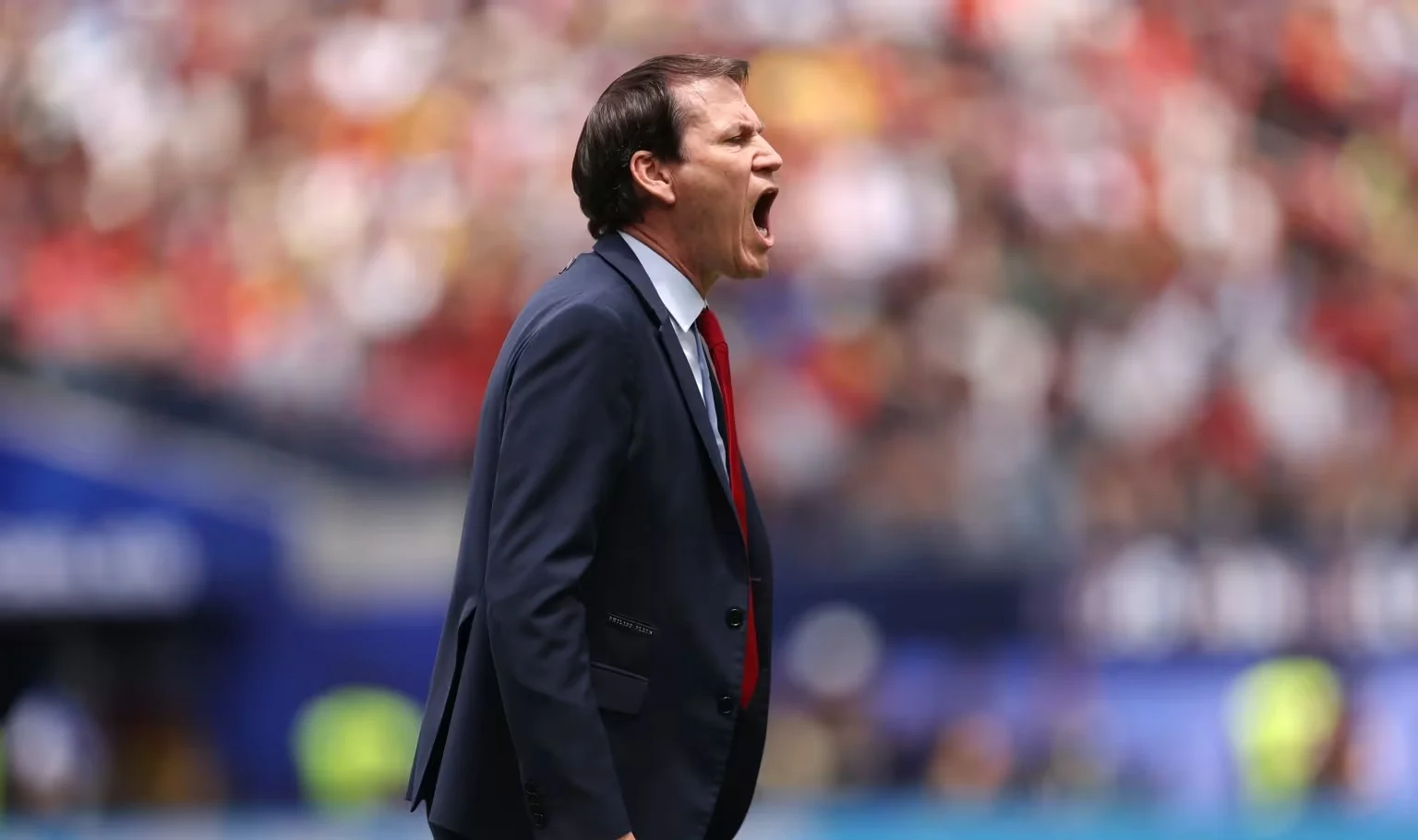
Rudi Garcia to step down as Belgium coach after World Cup quarter-final run
The tenure of Rudi Garcia as the head coach of the Belgium national football team has officially concluded, following a mutual agreement between the Frenchman and the Royal Belgian Football Association (RBFA) not to extend his contract beyond its July 31 expiration date. This decision marks the end of an 18-month chapter that saw the "Red Devils" navigate a period of significant generational transition and maintain a competitive standing among the world’s footballing elite.
The conclusion of Garcia’s mandate arrives in the immediate aftermath of Belgium’s commendable performance at the 2026 FIFA World Cup. While the campaign ended at the quarter-final stage, the team’s exit was delivered by Spain, the eventual tournament winners, in a narrow 2-1 defeat. Despite the disappointment of failing to reach the semi-finals, the RBFA has acknowledged the stability Garcia brought to the squad during a volatile period of rejuvenation for the Belgian national program.
A Tenure Defined by Stability and Transition
Rudi Garcia was appointed in early 2025, stepping into a role previously occupied by high-profile managers who had struggled to capture silverware with the heralded "Golden Generation." His appointment was viewed as a pragmatic move by the RBFA, aimed at blending veteran leadership with emerging talent. Over his 20-match tenure, Garcia presided over a commendable record: 12 victories, six draws, and only two defeats.
His tactical approach often emphasized defensive solidity without sacrificing the creative flair historically associated with Belgian football. This balance proved effective in the UEFA Nations League, where Belgium successfully retained its status in League A—a tier reserved for the continent’s most formidable sides. By maintaining this rank, Garcia ensured that his successor would inherit a team that remains integrated into the highest tier of international competition.
Chronology of the 2026 World Cup Campaign
The 2026 World Cup served as the definitive litmus test for Garcia’s project. Belgium entered the tournament with lowered expectations compared to previous cycles, as the squad underwent a deliberate "generational transition."
- Group Stage Performance: Belgium navigated a challenging group, demonstrating tactical discipline and securing passage to the knockout stages with two wins and one draw.
- The Round of 16: The team showed resilience in the first knockout round, overcoming a tactical test against a high-pressing opponent to secure their place in the final eight.
- The Quarter-Final Exit: On the grand stage of the quarter-finals, Belgium faced Spain. In a match that many pundits cited as one of the most technical of the tournament, the Red Devils pushed the eventual champions to the limit. Charles De Ketelaere provided a moment of individual brilliance, netting the only goal Spain conceded throughout their entire championship run. While the 2-1 loss signaled the end of the tournament for Belgium, the performance was widely regarded as a respectable exit against the world’s most dominant side.
Official Statements and Parting Reflections
In a formal communication released by the RBFA on Monday, both parties emphasized the professional and amicable nature of their separation. Garcia, reflecting on his time in Brussels, expressed pride in the foundation he established.
"After discussions with the Belgian Federation, we decided not to extend the excellent run of the past 18 months," Garcia stated. "I leave Belgium in League A of the Nations League and among the world’s top eight teams. I would like to thank my fantastic group of players, sporting director Vincent Mannaert, and the fans who supported us throughout the World Cup. I wish Belgium all the best as they continue the generational transition I enjoyed initiating."
Sporting Director Vincent Mannaert, who was instrumental in bringing Garcia to the role, has yet to announce a formal shortlist for the successor. However, sources close to the federation suggest that the board is looking for a candidate capable of continuing the tactical evolution of the squad while fostering the development of the youth pipeline that flourished under Garcia’s watch.

Analytical Overview: The Garcia Legacy
To understand the impact of Garcia’s 18-month tenure, one must look at the context in which he arrived. The Belgian national team was reeling from early exits in major tournaments and the retirement of several iconic players who had defined the nation’s football identity for over a decade.
Garcia’s most significant contribution was perhaps the psychological stabilization of the dressing room. By integrating young stars like De Ketelaere and trusting a younger core, he prevented the "rebuilding year" from turning into a slump. Statistically, his win rate of 60% is a testament to the consistency he demanded from his players. While he did not secure a major trophy, he achieved the primary objective set by the RBFA: ensuring that Belgium remained a relevant force in world football while blooding a new generation of talent.
The Road Ahead: Future Fixtures and Challenges
The immediate future for the Belgian national team remains busy, with the UEFA Nations League schedule requiring a quick transition to a new managerial regime. The RBFA faces a tight deadline to appoint a new head coach, as the team is scheduled to travel to Italy on September 25 for a pivotal Nations League clash. This will be followed by a high-profile home match against France on September 28.
These fixtures will serve as the first major test for the new manager. The squad’s ability to adapt to a new tactical philosophy in such a short window will be closely scrutinized by fans and the European footballing community. The match against France, in particular, will be a homecoming of sorts, as France has historically remained a primary rival for the Red Devils.
Broader Implications for the Belgian FA
The departure of Garcia leaves the RBFA at a crossroads. While the team remains a top-tier European side, the pressure to replicate the heights of the 2018 World Cup semi-final appearance remains a constant background hum for any manager of the Red Devils. The federation’s decision to transition away from Garcia, despite his respectable record, suggests a desire for a long-term tactical vision that perhaps leans toward a more expansive or possession-heavy style of play.
Furthermore, the "generational transition" is far from complete. The next manager will be tasked with identifying the next tier of talent to support the core established by Garcia. The success of this transition will determine whether Belgium remains a contender for the 2028 European Championship and the 2030 World Cup.
As for Rudi Garcia, his departure from the international stage is expected to spark interest from several European club sides. His experience with Lille, Marseille, Lyon, and AS Roma, combined with his recent success at the international level, positions him as a high-value candidate in the managerial market. His tenure in Belgium, while brief, will likely be remembered as a bridge between two distinct eras of Belgian football—a period of quiet competence during a time of necessary change.
The Belgian football community now waits to see who will step into the void, with the September international break looming as the true start of the post-Garcia era. For now, the files are closed, the records are set, and the search for a new architect for the Red Devils has officially begun.