Pentagon Launches SWAP-USV Program to Counter Asymmetric Maritime Threats with Drone-Launching Robot Boats
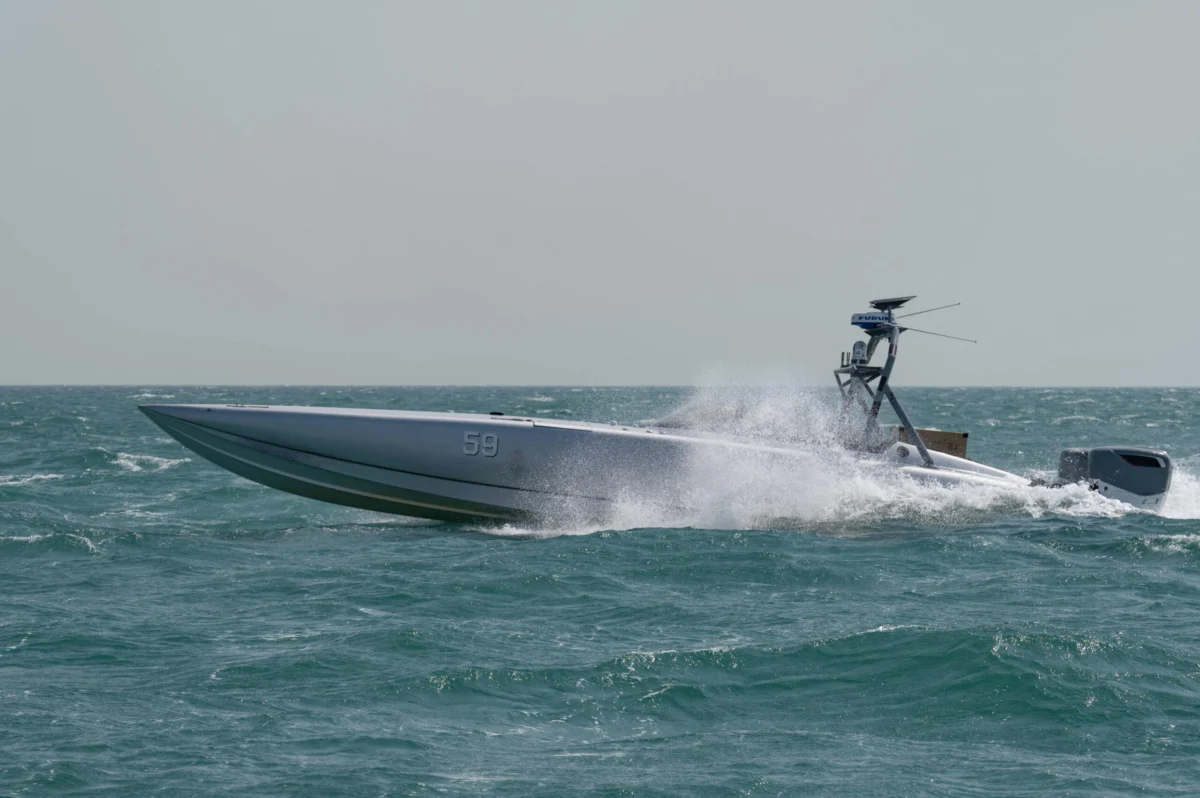
The Department of Defense has initiated a rapid-acquisition program to address the growing vulnerability of multi-billion-dollar naval assets to low-cost, unmanned threats. Through the Defense Innovation Unit (DIU), the Pentagon has issued a formal solicitation for the Suitable Warfighting Adaptive Payloads (SWAP-USV) project. This initiative seeks to procure "mature, market-ready" unmanned surface vessels (USVs) capable of launching and controlling at least two aerial drones to detect, track, and neutralize hostile targets. Driven by the urgent need to rebalance the "cost-exchange ratio" in contested waters like the Persian Gulf and the Red Sea, the program aims to field operational systems within a 120-day window, signaling a significant shift in how the United States military approaches asymmetric maritime warfare.
The Economic Necessity of Asymmetric Defense
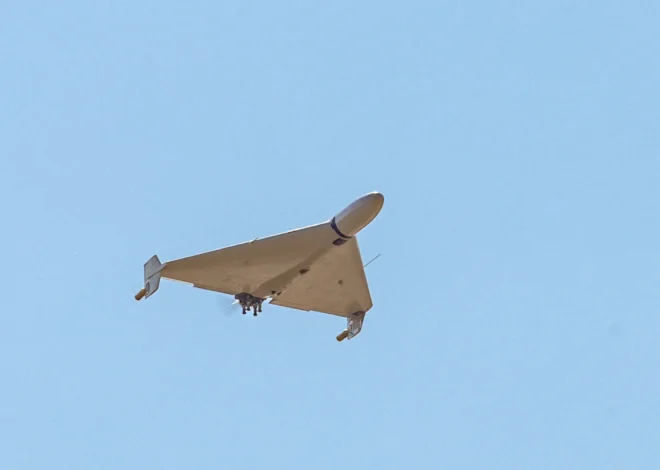
The primary catalyst for the SWAP-USV project is a stark economic reality: the U.S. military is currently spending millions of dollars to intercept threats that cost only a fraction of that amount. In recent engagements in the Middle East, U.S. Navy destroyers have frequently utilized high-end interceptor missiles, such as the RIM-162 Evolved SeaSparrow Missile (ESSM) or the Standard Missile-2 (SM-2), to down Houthi-launched "suicide" drones and anti-ship cruise missiles. While these defense systems are highly effective, a single interceptor can cost between $2 million and $5 million, whereas the attacking drones often cost less than $30,000.
The DIU solicitation explicitly identifies this imbalance as a strategic vulnerability. "The cost-exchange ratio for detecting and neutralizing asymmetric maritime threats in contested environments is heavily skewed in favor of the adversary," the document states. The Pentagon can no longer rely exclusively on "exquisite, multi-million-dollar naval and aviation assets" to manage these inexpensive, high-volume targets. By pivoting toward autonomous, low-cost platforms that utilize their own swarms of drones, the Department of Defense hopes to flip the script on the economics of attrition.
Technical Specifications and Operational Requirements
The SWAP-USV project is not looking for long-term research and development; it is seeking technology that is already proven and ready for mass production. The solicitation outlines a specific vision for a "drone boat" that acts as a mobile, autonomous mothership.
Integrated Aerial Capabilities
The core requirement is a USV fully integrated with at least two small unmanned aerial systems (sUAS). These drones must be capable of carrying a combined kinetic payload of at least 2 kilograms (approximately 4.4 pounds). This payload is intended for precision engagement of moving or stationary targets. The DIU is interested in a "mix" of drone types:
- Recoverable Drones: Used for Intelligence, Surveillance, and Reconnaissance (ISR), communications relay, and electronic warfare. These units must be able to return to the USV and land autonomously.
- One-Way Attack (OWA) Drones: Often referred to as "loitering munitions," these drones are designed to strike a target directly, effectively acting as a low-cost guided missile.
Autonomy and Surveillance
While human-in-the-loop control remains a requirement for the engagement of targets ("under operator command"), the vessels must possess high levels of autonomy for navigation and tracking. The solicitation specifies that the USVs should be able to "autonomously follow or shadow a vessel of interest" and "intercept a noncooperative, maneuvering vessel." The goal is to maximize the "probability of detection" and "time on station" while minimizing the number of personnel required to operate the system.
Portability and Logistics
Reflecting the need for rapid global deployment, the Pentagon requires the entire system—the boat, the drones, and the control station—to be highly mobile. The hardware must be capable of fitting into standard ISO cargo containers or being transported via road trailers. Furthermore, the systems must be compatible with the cargo holds of C-17 Globemaster III and C-130 Hercules transport aircraft. The DIU noted that solutions capable of launching from "unimproved locations," such as beaches or remote piers, would be viewed favorably.
Chronology of the SWAP-USV Challenge
To accelerate the development and procurement process, the DIU has structured the project as a multi-phase "Prize Challenge" backed by $100 million in prize money and an additional $200 million earmarked for eventual procurement contracts. The timeline is exceptionally aggressive, reflecting the urgency of the current maritime threat environment.
Phase 1: Sprint 1 (Late 2026)
The first phase focuses on immediate deployment. Companies selected for Sprint 1 must provide a mission-ready USV with integrated drone capabilities for testing and evaluation within 29 days of their selection. In-water testing is scheduled for the fall of 2026, with the ultimate goal of having the system deployed in a theater of operations within 120 days of the contract award. This phase carries a $40 million prize pool.
Phase 2: Sprint 2 (Early 2027)
Sprint 2 will build upon the successes of the first phase, focusing on "expanded payloads, upgraded autonomy, and multi-vendor integrations." This phase is designed to ensure that the systems can be scaled and that different manufacturers’ technologies can work together seamlessly. Testing for this phase is slated for early 2027, also backed by $40 million in prize money.
Phase 3: Sprint 3 (Summer 2027)
The final scheduled phase, Sprint 3, will take place in the summer of 2027 with a $20 million prize pool. While the specific objectives for this phase are to be announced later, they are expected to involve high-end swarming capabilities and complex multi-domain operations involving dozens of autonomous units working in concert.
Addressing the Threat Landscape: From State Actors to Cartels
The solicitation identifies a broad spectrum of threats that the SWAP-USV system is intended to counter. While the primary military concern is "asymmetric maritime threats" in contested waters—likely a reference to Iranian and Houthi capabilities—the Pentagon also highlighted civilian and paramilitary threats.
Specifically, the DIU cites "go-fast" smuggling boats and semi-submersibles as targets for the system. Drug cartels in South and Central America have increasingly relied on "narco-submarines"—low-profile vessels that sit just below the water line—to transport tons of cocaine and other contraband. These vessels are notoriously difficult to detect with traditional radar and satellite imagery. A fleet of autonomous USVs equipped with loitering aerial drones could provide a persistent, low-cost surveillance net capable of intercepting these vessels in the open ocean or coastal riverine environments.
Analysis: The Shift to "Replicator" Style Warfare
The SWAP-USV project aligns closely with the Pentagon’s broader "Replicator" initiative, announced by Deputy Secretary of Defense Kathleen Hicks. Replicator aims to field thousands of "attritable" (low-cost and replaceable) autonomous systems across multiple domains to counter China’s advantage in military mass.
By utilizing the DIU’s Prize Challenge model, the Pentagon is bypassing the traditional, decade-long acquisition cycles that often result in "exquisite" platforms that are too expensive to lose in combat. Instead, the SWAP-USV project leverages the commercial drone and boating industries, where innovation happens at a much faster pace than in the traditional defense sector.
Implications for Naval Doctrine
The deployment of drone-launching robot boats marks a departure from traditional "Blue Water" naval doctrine, which focuses on carrier strike groups and large surface combatants. The SWAP-USV suggests a future of "distributed lethality," where a single destroyer or a shore-based container could deploy dozens of small, autonomous "sensors and shooters." This makes the U.S. fleet harder to target and ensures that the loss of a single platform does not result in a catastrophic loss of capability.
Industry and Global Reactions
While major defense contractors like General Dynamics and Huntington Ingalls Industries are likely to take interest, the 120-day deployment goal favors agile, tech-first companies like Anduril, Shield AI, and various maritime autonomy startups.
Globally, allies and adversaries alike are watching the U.S. move toward autonomous systems. Ukraine’s successful use of Magura V5 sea drones to devastate the Russian Black Sea Fleet has already proven the concept of USV warfare. The SWAP-USV project represents the U.S. military’s formal effort to codify and scale these lessons for its own global requirements.
Conclusion and Future Outlook
The SWAP-USV project represents a pivotal moment in naval procurement. By prioritizing speed, cost-efficiency, and autonomy, the Pentagon is acknowledging that the future of maritime security will be defined by small, smart, and numerous systems rather than just large and expensive ones. As the August 10 deadline for submissions passes, the defense industry moves into a high-stakes "Sprint" that could redefine the front lines of the Persian Gulf, the South China Sea, and the Caribbean. If successful, the project will provide the U.S. Navy with a flexible, low-cost tool to protect global shipping lanes and counter the evolving tactics of both state and non-state actors.

Related Posts
Pentagon Forges Landmark Seven-Year Agreements with Boeing and RTX to Accelerate Standard Missile-3 Production and Stabilize Defense Supply Chains
Boeing Unveils Ultra Low-Cost Seeker to Enhance Missile Inventory and Combat Cost Challenges in Modern Warfare