Pentagon Launches Ground-Based Affordable Mass Program to Replenish Munition Stocks Amid Regional Conflict
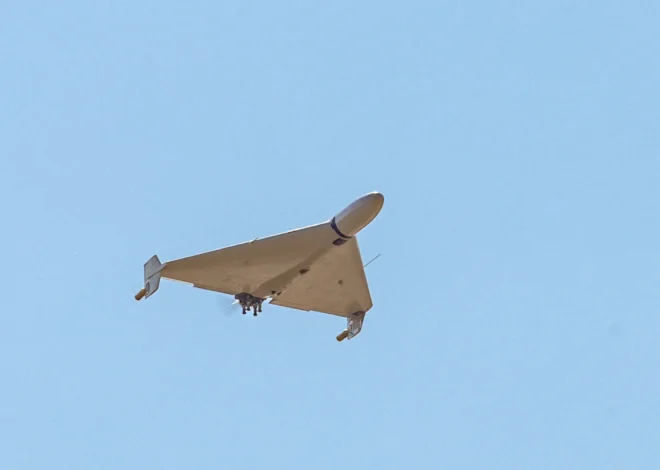
The United States Department of Defense has initiated an emergency procurement and development drive to bridge a critical gap in its long-range strike capabilities, following a sustained period of high-intensity operations that has depleted the nation’s inventory of precision-guided munitions. This new initiative, titled Ground-Based Affordable Mass (GBAM), represents a fundamental shift in American defense acquisition strategy, moving away from a reliance on "exquisite," multi-million-dollar weapon systems toward a high-volume, low-cost model capable of sustaining prolonged regional conflicts.
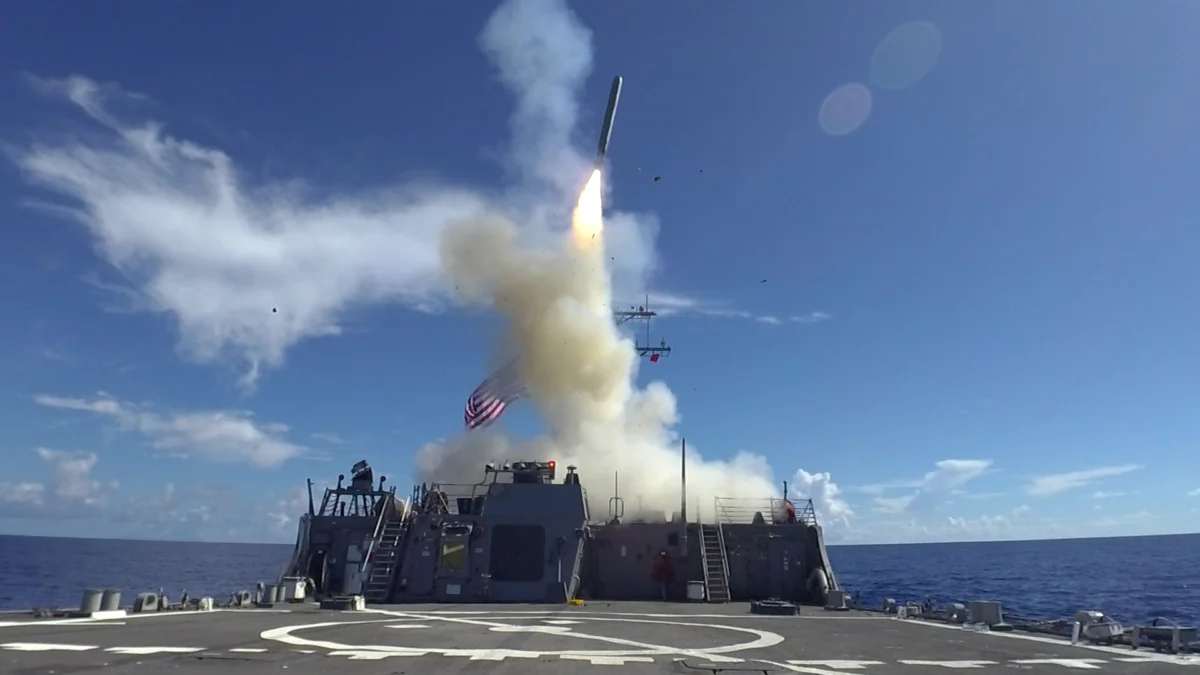
The impetus for the GBAM program is the ongoing conflict in Iran, which has placed an unprecedented strain on the Pentagon’s stockpile of sophisticated weapons. With the cost of the war estimated to have risen to $375 billion, and the Pentagon requesting an additional $671 billion in supplemental funding, military planners have recognized that the current rate of expenditure—both in terms of financial capital and physical inventory—is unsustainable. The Tomahawk Land Attack Missile (TLAM), a staple of U.S. power projection for decades, costs approximately $2 million per unit. While effective, the sheer volume of targets encountered in modern peer and near-peer theaters has made the use of such expensive munitions for every engagement a strategic liability.
The Strategic Shift Toward Affordable Mass
For years, the U.S. military has prioritized quality over quantity, investing in highly advanced, stealthy, and multi-functional platforms. However, the realities of the 2026 operational environment have forced a reassessment. The GBAM initiative, managed by the Defense Innovation Unit (DIU), seeks to provide commanders with a "favorable cost-per-effect." The objective is to supplement the existing inventory of high-end missiles with a new class of weapons that are "good enough" to achieve mission objectives at a fraction of the price.
The GBAM program sets a strict price ceiling of $250,000 per unit for all-up flyaway costs at scale. This is roughly one-eighth the cost of a Tomahawk. By lowering the price point, the Pentagon aims to enable "mass," allowing units to saturate enemy defenses and strike a broader array of targets without exhausting the supply of "exquisite" munitions reserved for the most hardened or high-value objectives.
Technical Requirements and Operational Parameters
The DIU has outlined rigorous specifications for the GBAM system, reflecting the needs of modern maritime and continental theaters. Unlike traditional short-range artillery or tactical drones, the GBAM munition must possess "operationally relevant ranges," defined as a minimum of 600 nautical miles. This range is critical for maintaining standoff distances from enemy anti-access/area-denial (A2/AD) bubbles, particularly in feature-poor environments such as the Persian Gulf or the Indo-Pacific.
Key technical requirements for the GBAM include:
- Payload Capacity: A minimum lethal payload of 35 pounds, with a preferred capacity of up to 100 pounds. This allows for modularity in warhead design, including high-explosive, fragmentation, or specialized electronic warfare payloads.
- Autonomous Guidance: The system must feature automatic target recognition (ATR) and autonomous terminal guidance. This reduces the need for constant human-in-the-loop intervention, which is often impossible in contested electromagnetic environments.
- Navigation in Contested Environments: A primary requirement is the ability to operate in GPS-denied or jammed environments. The Pentagon is seeking "Alternative Position, Navigation, and Timing" (PNT) solutions, such as celestial navigation, terrain contour matching, or advanced inertial navigation systems that do not rely on satellite signals.
- Low Launch Signature: To ensure the survivability of the ground-based crews, the weapon should utilize remote and low-signature launch methods. The goal is to make the launch platforms difficult to detect and target by enemy counter-battery or aerial surveillance assets.
- Launch Versatility: The weapon must not require proprietary or specialized launch equipment, favoring containerized or rail-launched systems that can be integrated onto standard military transport vehicles.
Chronology of the GBAM Initiative
The timeline for the GBAM program is exceptionally compressed, reflecting the urgency of the current munitions shortage. While traditional defense programs often take a decade to move from concept to production, the DIU is demanding results in months.
- July 27, 2026: The Pentagon officially announces the GBAM Challenge, inviting industry partners to submit proposals.
- August 5, 2026: Deadline for initial "pitch deck" or white paper submissions.
- September 2026: Selection of Phase I participants who will receive initial funding to prepare for physical demonstrations.
- November 2026: Phase II flight demonstrations at a government-designated test site. Selected teams will perform a live flight test and a 30-minute technical presentation. Winning teams at this stage will receive a $250,000 cash prize.
- Early 2027: Top contenders may receive up to $5 million for the delivery of operational test quantities to active-duty units.
- Late 2027 (18-month goal): Full-scale production is expected to begin, with a target output of at least 100 systems per month.
Industrial Capacity and Scalability
A central pillar of the GBAM program is the requirement for "credible paths to mass production." The Department of Defense is no longer interested in boutique technologies that cannot be manufactured in bulk. Applicants must demonstrate that they have the existing infrastructure or a viable plan to produce 1,200 or more systems annually.

To support this, the government has budgeted up to $250 million for prize execution and follow-on transition activities. This funding is intended to help non-traditional defense contractors and small businesses scale their operations. By utilizing Prototype Other Transaction (OT) agreements and Small Business Innovation Research (SBIR) awards, the Pentagon is attempting to bypass the slow, bureaucratic hurdles of the standard Federal Acquisition Regulation (FAR) process.
Context: The Burden of Modern Warfare
The move toward GBAM is a direct response to the "attrition reality" observed in 2025 and 2026. Military analysts have noted that in high-intensity conflicts, the side that can sustain its "magazine depth" often holds the strategic advantage. The U.S. Navy and Air Force have expended significant numbers of missiles intercepting low-cost drones and striking dispersed ground targets in the Middle East.
Recent audits and reports from the Army have exposed flaws in the logistical chain, citing "too many trucks and too many zeros"—a reference to the logistical bloat and high costs associated with current munitions. The Iran war has seen the first operational use of several new platforms, including the F-15EX dropping bombs from operational units, but it has also highlighted the danger of "emptying the racks" of high-end interceptors like the SM-6 or strike missiles like the Tomahawk.
Related Initiatives: FAMM-BAR and LCCM
GBAM does not exist in a vacuum. It is part of a broader "family" of affordable strike initiatives. One such program is the Family of Affordable Mass Missiles (FAMM-BAR), which explores launching cruise missiles from palletized systems aboard cargo aircraft like the C-130 or C-17. Another is the Low-Cost Containerized Missiles (LCCM) program, which focuses on hypersonic weapons that can be hidden in standard shipping containers to complicate enemy targeting.
These programs collectively represent a "Replicator" mindset—a term coined by Deputy Secretary of Defense Kathleen Hicks to describe the fielding of thousands of autonomous systems across multiple domains to counter the mass of adversaries like China or regional powers like Iran.
Implications for Future Conflict
The successful implementation of GBAM would fundamentally alter the tactical landscape. By providing ground-based units with 600-mile-range "affordable mass," the U.S. can distribute its lethality across a wider area. Smaller, more mobile teams can pose a significant threat to enemy naval vessels and land installations without requiring the presence of a carrier strike group or a major air wing.
Furthermore, the requirement for GPS-independent navigation signals a preparation for a "dark" battlefield where satellite communications and positioning are compromised. This focus on "feature-poor" maritime environments suggests that while the current conflict is in the Middle East, the technology is being developed with an eye toward the Western Pacific.
The GBAM program is a recognition that in the wars of the mid-21st century, the winner may not be the side with the most advanced technology, but the side that can most efficiently and affordably produce and deploy precision effects at scale. As the August 5 deadline approaches, the defense industry is racing to prove that it can meet the Pentagon’s demand for "cheap, fast, and lethal" weaponry. The transition from the era of the $2 million missile to the $250,000 autonomous strike drone marks a turning point in the history of American military procurement, driven by the hard-learned lessons of the 2026 Iran war.

Related Posts
Pentagon Forges Landmark Seven-Year Agreements with Boeing and RTX to Accelerate Standard Missile-3 Production and Stabilize Defense Supply Chains
Boeing Unveils Ultra Low-Cost Seeker to Enhance Missile Inventory and Combat Cost Challenges in Modern Warfare