Niger Military Junta Entrenches Authoritarian Rule and Intensifies Repression Three Years After Seizing Power
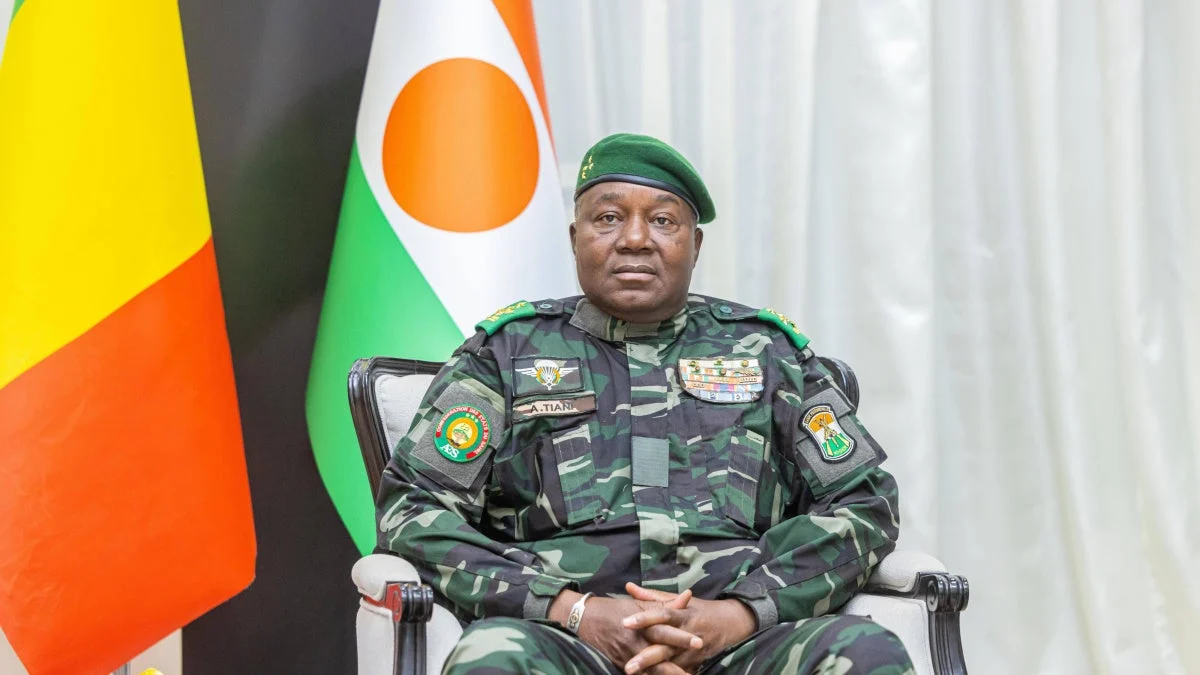
Three years after the military coup that destabilized one of the Sahel’s last standing democracies, Niger’s ruling junta has effectively entrenched an authoritarian regime, dismantled the country’s democratic framework, and escalated a campaign of state-sponsored repression. According to a comprehensive report released by Human Rights Watch, the military leadership under General Abdourahamane Tiani has spent the last 36 months consolidating unchecked executive power while systematically neutralizing any institutions capable of providing oversight or ensuring accountability.
The transition from a civilian-led government to a military autocracy began on July 26, 2023, when officers of the Nigerien presidential guard overthrew President Mohamed Bazoum. Since that pivotal moment, the junta—operating as the National Council for the Safeguard of the Homeland (CNSP)—has overseen a rapid deterioration of civil liberties. In the past year alone, the military authorities have dissolved all political parties, banned several independent labor unions, and suspended dozens of civil society organizations. This crackdown has been accompanied by the targeted detention of journalists, the stripping of nationality from political dissidents, and the criminalization of same-sex relations, signaling a profound shift away from international human rights standards.
A Chronology of Institutional Erosion
The timeline of Niger’s descent into authoritarianism is marked by a series of calculated legal and administrative maneuvers designed to insulate the military from domestic and international pressure.
- July 2023: General Abdourahamane Tiani leads the coup against President Mohamed Bazoum, citing deteriorating security and poor governance. International bodies, including ECOWAS and the African Union, immediately condemn the move and impose sanctions.
- Late 2023 – Early 2024: The junta begins the process of purging the previous administration’s influence. High-ranking officials are detained, and the military announces a three-year transition period to "restore order."
- Mid-2024: The authorities amend the country’s cybercrime legislation, reintroducing prison sentences for broadly defined "public order" offenses. This becomes the primary tool for silencing independent media.
- Early 2025: The military authorities formally dissolve all political parties and several influential justice sector unions. This move effectively ends organized political opposition within the country.
- March 2025: A new criminal procedure code is adopted, significantly extending the limits of pretrial detention for those accused of terrorism-related offenses.
- June 2026: In a major break from international justice frameworks, the junta announces Niger’s withdrawal from the International Criminal Court (ICC), following its earlier withdrawal from the Economic Community of West African States (ECOWAS) in 2025.
- July 2026: The three-year anniversary of the coup passes without a roadmap for democratic elections, as the junta further tightens its grip on the judiciary and media.
The Weaponization of the Legal System
A central pillar of the junta’s strategy has been the manipulation of the judicial system to target dissenters. Human Rights Watch highlights the case of Moussa Tiangari, a prominent human rights defender who has been held in detention since December 2024 on terrorism-related charges. Tiangari’s case exemplifies the junta’s "rule by law" approach. When his lawyers applied for his release in June 2026, citing the expiration of his legal pretrial detention period, the authorities responded by amending the law within a week to extend the maximum detention period to four years, renewable once.
This retroactive application of legal changes has drawn sharp criticism from legal experts. Hamid Amadou Ngadé, a former adviser to the ousted President Bazoum, remarked on social media that the coincidence was "too serious to be ignored," stating that a legitimate justice system does not change rules mid-stream to keep citizens imprisoned.
The detention of political figures remains a primary concern for the international community. Former President Mohamed Bazoum and his wife remain under house arrest in Niamey, despite multiple rulings from the United Nations Working Group on Arbitrary Detention declaring their captivity a violation of international law. Former Interior Minister Hama Amadou Souley also remains in custody, further highlighting the junta’s refusal to engage in political reconciliation.
Suppression of Media Freedom and Civic Space
The media landscape in Niger, once relatively diverse, has been decimated by the application of the amended cybercrime law. In October 2025, a wave of arrests targeted six prominent journalists—Moussa Kaka, Abdoul Aziz Idé, Ibro Chaibou, Souleymane Brah, Youssouf Seriba, and Oumarou Kané—after they shared information regarding a solidarity fund for state security forces. The state charged them with "complicity in distributing documents likely to disturb public order."
While some of these journalists were eventually released on bail or after serving months in custody, the message to the press was clear: any reporting on security or state finances that deviates from the official narrative will result in criminal prosecution. The chilling effect extends beyond the borders of Niger. In late 2024 and throughout 2025, the junta began stripping exiled opposition figures of their citizenship. Mariama Djibrine, leader of a diaspora coalition advocating for a return to constitutional rule, had her nationality revoked in June 2026. This was followed by an official directive from the Ministry of Foreign Affairs instructing diplomatic missions to monitor and report on online criticism from Nigeriens living abroad.
Criminalization of Vulnerable Groups
In a move that mirrors recent legislative trends in other parts of the continent, the Nigerien junta adopted a new penal code in March 2026 that specifically targets the LGBT community. The law imposes prison sentences of five to ten years for consensual same-sex relations and up to twenty years for same-sex marriage. Furthermore, the legislation criminalizes anyone who "supports, finances, or organizes" events for LGBT people.
The impact of this law has been immediate and devastating. In June 2026, security forces arrested at least 16 individuals under the new provisions. Beyond the arrests, the law has crippled public health initiatives. Community health workers informed Human Rights Watch that they have been forced to suspend outreach programs for HIV prevention and support among marginalized groups, fearing that their work could be interpreted as "facilitating" prohibited conduct. This legislative shift not only violates international human rights treaties ratified by Niger in 1986 but also exacerbates the social stigma and physical danger faced by vulnerable populations.
Security Failures and Military Abuses
The CNSP justified its seizure of power by promising to solve the security crisis that has plagued Niger for over a decade. However, data suggests that the security situation has continued to deteriorate. Islamist armed groups affiliated with Al-Qaeda and the Islamic State continue to launch deadly incursions, particularly in the western Tillabéri region.
The military’s response to these threats has often resulted in civilian casualties. In January 2026, a military drone strike targeting a market in western Niger killed at least 17 civilians. Human Rights Watch categorized the strike as a violation of the laws of war, specifically the prohibition against indiscriminate attacks. The lack of independent oversight means that such incidents are rarely investigated, and victims have no domestic avenue for seeking justice.
The Geopolitical Pivot and International Implications
Niger’s foreign policy has undergone a radical transformation under General Tiani. The junta has severed long-standing security ties with France and the United States, instead pivoting toward Russia, Türkiye, and Italy. These new partnerships are often characterized by a "security-first" approach that ignores human rights benchmarks.
Russia, through its military presence (formerly associated with the Wagner Group and now the Africa Corps), has provided the junta with tactical support and political cover. Similarly, Türkiye has formalized military training and logistics agreements. Critics argue that these nations are prioritizing access to Niger’s strategic resources—including uranium and oil—over the protection of its citizens’ fundamental rights.
The withdrawal from regional and international bodies like ECOWAS and the ICC represents a deliberate attempt to evade accountability. By removing itself from the jurisdiction of the ICC, the junta has effectively closed the door on international prosecutions for war crimes or crimes against humanity, leaving victims of both insurgent and state violence without recourse.
Conclusion and Recommendations
The three-year mark of military rule in Niger serves as a grim milestone for the Sahel. The consolidation of power by the CNSP has replaced a nascent democracy with a regime that views dissent as a threat to national security and human rights as an obstacle to "sovereignty."
"Niger’s international partners need to reengage to address the junta’s escalating repression," said Ilaria Allegrozzi, senior Sahel researcher at Human Rights Watch. The organization is calling for a coordinated international effort to press the military authorities to:
- Immediately and unconditionally release all persons arbitrarily detained, including former President Mohamed Bazoum and human rights defender Moussa Tiangari.
- Repeal the repressive amendments to the cybercrime law and the penal code that criminalize freedom of expression and same-sex conduct.
- Establish a clear and credible timeline for a transition to civilian rule and the holding of free and fair elections.
- Rejoin international accountability frameworks, including the ICC, to ensure justice for victims of atrocities.
As the United Nations reviews its strategy for the Sahel through the UN Office for West Africa and the Sahel (UNOWAS), the global community faces a choice: continue a security-centric engagement that emboldens autocrats, or prioritize the human rights and democratic aspirations of the Nigerien people. Without a significant shift in internal policy and international pressure, the future of democracy in Niger remains bleak.

Related Posts
Human Rights Watch Calls for Investigation into Death of Detainee Following Removal from Najaf Hospital by Iraqi Drug Police
Human Rights Watch Urges UN Security Council to Extend Lebanon Peacekeeping Mission Amid Escalating Conflict and Humanitarian Crisis