Mecca Joint Defence Agreement: A New Axis Reshapes Middle East Security Dynamics
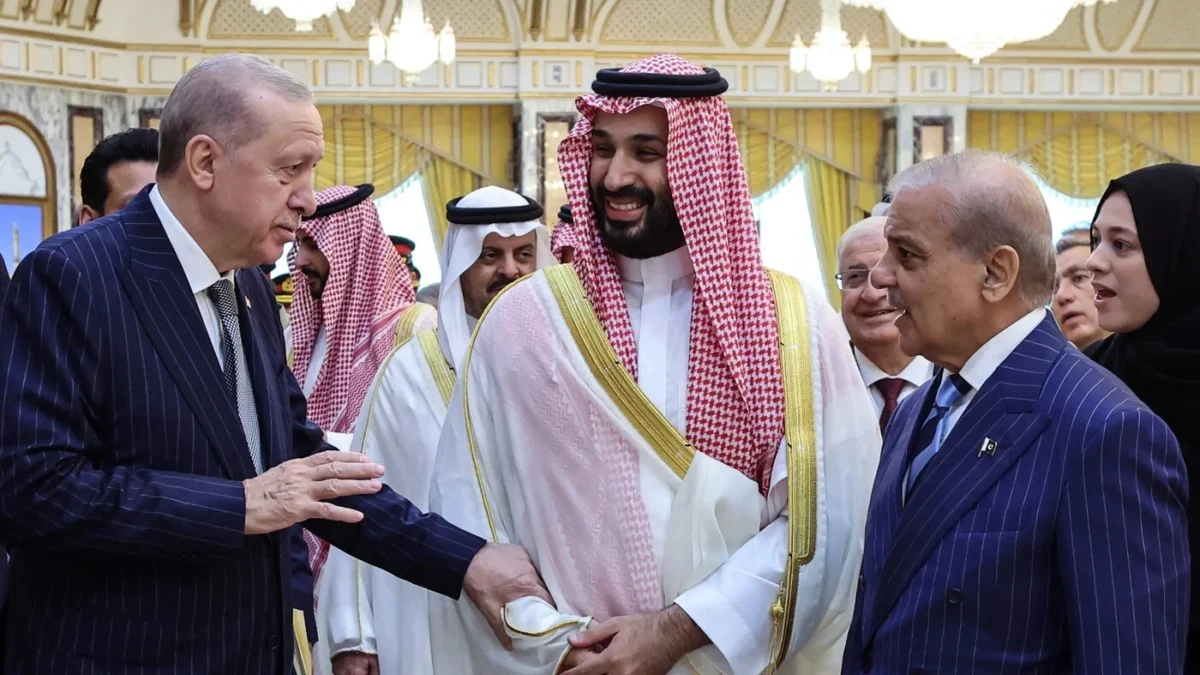
A groundbreaking security pact, the Mecca Joint Defence Agreement, has been formally inked between Pakistan, Saudi Arabia, and Turkey, fundamentally altering the strategic landscape of the Middle East. Signed in the holy city of Mecca, this accord unites three of the Muslim world’s most influential powers under a collective defence framework, signalling a profound shift in regional alliances and security paradigms. The agreement, announced on Friday, explicitly stipulates that an attack against one member is to be considered an attack against all three, a clause that immediately draws parallels with NATO’s Article 5 and underscores its immediate geopolitical significance, despite a joint statement leaving specific military commitments largely undefined.
For Pakistan, the world’s sole nuclear-armed Muslim-majority state, this agreement represents a significant departure from its historically cautious posture as a regional mediator. By aligning itself with Saudi Crown Prince Mohammed bin Salman and Turkish President Recep Tayyip Erdogan, Islamabad is strategically positioning its formidable armed forces as a potential security guarantor at the heart of an emerging axis that spans from South Asia to the Gulf. This move reflects a broader trend where Middle Eastern powers are increasingly seeking to exert greater control over their own security, as the long-standing regional order, traditionally anchored by Washington, faces unprecedented strain amidst ongoing conflicts and shifting global priorities. Pakistan’s considerable nuclear and conventional military capabilities are now poised to provide a new anchor in this evolving security architecture.
Shifting Sands of Regional Security
The timing of the Mecca Joint Defence Agreement is critical, coming as the Middle East’s traditional security order experiences unparalleled stress. The region has been grappling with a complex web of conflicts and proxy confrontations, often described in parts of the media as a "war on Iran," referring to the broader regional contest involving the United States, Israel, and Iran and its network of allied non-state actors. This volatile environment has profoundly reshaped the strategic landscape, leading to direct strikes reaching Saudi territory and severe disruptions to commercial shipping across vital waterways such as the Strait of Hormuz and the Red Sea.
These maritime disruptions have sent shockwaves through the global economy, affecting supplies of Saudi energy and fertilisers. Import-dependent nations like Pakistan and Turkey have been particularly exposed to the economic fallout, underscoring the interconnectedness of security and economic stability. A Pakistani security official, speaking to Middle East Eye on condition of anonymity, highlighted this convergence: "All three countries have a shared economic and security interest in preventing further escalation, which ultimately compelled them to sign the pact."
Beyond economic concerns, the security calculus is even more profound. Both Saudi Arabia and Turkey have endured attacks linked to the wider regional conflict. Riyadh has faced escalated drone and missile attacks from Houthi rebels in Yemen, while Ankara has dealt with cross-border threats from Kurdish militant groups and spillover from conflicts in Syria and Iraq. Islamabad and Ankara share deep concerns about instability from their respective borders, particularly those adjacent to Iran, potentially spilling over. Turkey, in particular, faces the additional security dilemma posed by the prospect of external powers arming Iranian Kurdish militias, which could unravel its fragile peace process with the Kurdistan Workers’ Party (PKK).
The perceived failure of traditional US security guarantees to deter such persistent attacks has prompted Gulf leaders to question Washington’s reliability as a security partner. This growing apprehension has spurred regional heavyweights to proactively construct defence arrangements that are less reliant on external assurances and more on indigenous capabilities and regional cooperation.
Building Blocks of an Alliance: A Chronology of Cooperation
The Mecca Joint Defence Agreement is not an isolated event but rather the culmination of a deliberate and intensifying trilateral cooperation among Pakistan, Saudi Arabia, and Turkey. Over recent years, these nations have steadily deepened their military, economic, and diplomatic ties, laying the groundwork for this formal alliance.
Early 2010s: While formal security cooperation has roots further back, the early 2010s saw renewed diplomatic engagements. Pakistan and Turkey, both members of the Organization of Islamic Cooperation (OIC), often found common ground on various regional and international issues. Saudi Arabia, a key player in the Muslim world, also maintained robust bilateral ties with both nations.
2015: The formation of the Islamic Military Counter Terrorism Coalition (IMCTC), spearheaded by Saudi Arabia, provided an early, albeit broader, framework for Muslim nations to address security threats. While Pakistan initially expressed reservations about its direct involvement in specific military operations like Yemen, it committed to providing training and advisory support, indicating a willingness for security collaboration in principle.

Late 2010s onwards: Bilateral defence cooperation accelerated significantly. Riyadh and Islamabad, for instance, have deepened their mutual defence relationship in recent years. This has included reports of significant Pakistani military deployments to the Kingdom, encompassing thousands of troops, fighter jets, and air defence systems, showcasing a practical commitment to Saudi Arabia’s security. Similarly, Turkey has emerged as a major defence supplier to both Saudi Arabia and Pakistan, leveraging its rapidly advancing indigenous defence industry, particularly in unmanned aerial vehicles (UAVs) and electronic warfare systems. Joint military exercises and training programs have also become more frequent, fostering interoperability and mutual understanding between their armed forces.
2020s: Diplomatic engagements at the highest levels intensified, with frequent visits between heads of state and foreign ministers. Discussions increasingly focused on shared security challenges, economic partnerships, and the need for greater regional autonomy in defence matters. These dialogues paved the way for the formalization of the collective defence framework.
Michael Kugelman, a senior fellow for South Asia at the Atlantic Council, aptly described the pact as "a logical outgrowth of deepening security ties" among the three countries in recent months. This consistent trajectory of collaboration underscores the strategic foresight and sustained efforts that preceded the Mecca Agreement.
The Pillars of Power: Saudi Money, Turkish Technology, Pakistani Military Might
The emerging partnership is underpinned by the complementary strengths each nation brings to the table, creating a formidable combination of strategic power. Sheharyar Khan, a political analyst and senior adviser at Pakistan’s Ministry of Law and Justice, articulated this synergy: Saudi Arabia provides the financial power, Turkey contributes technological innovation, and Pakistan supplies core military capability. "Together, the three countries could form a security partnership whose capabilities extend far beyond traditional troop deployments," Khan observed.
Saudi Arabia: As the custodian of Islam’s holiest sites, Saudi Arabia wields immense religious and diplomatic influence across the Muslim world. Crucially, it brings vast financial capital derived from its position as a global energy superpower, enabling significant investments in defence infrastructure, joint projects, and economic aid to partners. Its energy market dominance also grants it considerable geopolitical leverage.
Turkey: Possessing NATO’s second-largest military, Turkey commands a highly professional and experienced armed force. Its advanced and increasingly self-reliant defence industry is a significant asset, boasting expertise in cutting-edge areas such as unmanned aerial systems, electronic warfare, and precision-guided munitions. This technological prowess reduces reliance on foreign suppliers and offers valuable capabilities for the alliance.
Pakistan: Pakistan contributes a massive, combat-hardened army with decades of experience in conventional warfare and counterinsurgency operations. Crucially, it is the Muslim world’s sole nuclear deterrent, a factor that profoundly alters strategic calculations and provides an unparalleled layer of deterrence to the alliance.
For Pakistan, the pact transcends pure geopolitics; it is deeply intertwined with its persistent economic vulnerabilities. While Islamabad had recently positioned itself as a diplomatic bridge between Washington and Tehran, persistent inflation and fiscal distress have compelled it to integrate strategic defence policy with financial necessity. Historically, Pakistan has leveraged its military strength to secure economic backing, particularly from the US and Saudi Arabia. This collective defence framework institutionalizes that model, allowing Islamabad to monetize its operational capabilities – from joint training and troop deployments to arms exports – in exchange for vital Gulf investments, energy concessions, and crucial diplomatic support. As the security official noted, "In this sense, Pakistan’s military strength is becoming an economic asset as well as a strategic one." For Riyadh, Pakistan offers access to a large, experienced military; for Islamabad, closer security cooperation with Saudi Arabia promises investment, financial assistance, and a stronger economic relationship with one of the region’s most powerful states.
Geopolitical Implications and Reactions
The Mecca Joint Defence Agreement carries far-reaching geopolitical implications, sparking a range of reactions from regional and global actors.
Impact on Regional Dynamics: The formation of this trilateral alliance represents a significant reordering of power dynamics in the Middle East. It creates a new axis of influence, potentially challenging existing blocs and traditional security arrangements. This move towards greater regional ownership of security, as described by former Pakistani ambassador Asif Durrani as the "first concrete building block of an emerging regional security architecture," could even open doors to addressing long-standing conflicts, including the Palestinian issue, through a more regionally driven approach.

Iran’s Stance: Predictably, Iran’s response to the pact has been swift and critical. Ebrahim Rezaei, a member of Iran’s parliamentary National Security and Foreign Policy Commission, dismissed the arrangement, stating on X: "The Saudis should know that a paper agreement with Turkey and Pakistan does not bring them security, just as years of unilateral milking of the Americans did not bring them security." This reaction underscores Tehran’s apprehension towards what it perceives as an emerging Sunni-led alliance potentially directed against its regional influence. Historically, Iran and Pakistan have maintained a delicate relationship, balancing cooperation on certain issues with underlying tensions and differing geopolitical alignments.
US Perspective: For Washington, the pact could be viewed with mixed sentiments. While it signifies a reduction in direct US security burden in the region, aligning with the desire for "burden-sharing from top allies" as noted by Michael Kugelman, it also indicates a growing autonomy among key regional partners. This shift, while potentially welcomed for its deterrence focus on Iran, also implies a diminishing reliance on direct American guarantees, suggesting a more multipolar security environment.
India’s Reaction: The implications extend significantly beyond the Middle East, particularly for India. For Pakistan, closer ties with Saudi Arabia and Turkey provide a strategic counterweight to its long-standing rival. Despite Saudi Arabia’s extensive economic and trade ties with New Delhi, this collective defence framework strengthens Pakistan’s role as a security partner for key Gulf powers. India’s Ministry of External Affairs responded cautiously, stating it was "closely following developments." However, Indian national security analysts have expressed growing concern. Kabir Taneja, executive director of the Middle East program at the Observer Research Foundation, noted on X that while the pact is viewed through a Middle East lens, "it impacts other theatres as well. Pakistan’s conflict-laden relationship with India [is] at the top of that list." Former Foreign Secretary Kanwal Sibal described the pact as "a very negative development for Indian interests," suggesting India expand its strategic options with countries like the United Arab Emirates, Israel, Greece, Cyprus, and Afghanistan.
Israel’s Concerns: The prospect of a more cohesive security grouping has also attracted attention in Israel. In February, former Israeli Prime Minister Naftali Bennett explicitly warned against Turkey seeking a "hostile axis" with Pakistan’s nuclear capabilities "to surround Israel." This highlights the broader regional anxieties and the strategic impact of Pakistan’s nuclear status, which inevitably alters the calculations surrounding any new alliance involving it. For Saudi Arabia, closer defence ties with Islamabad could provide an additional layer of deterrence against perceived threats from Iran, especially as the Kingdom navigates its evolving relationship with Israel.
Risks and Challenges for the Alliance
Despite its potential, the Mecca Joint Defence Agreement also carries significant risks and challenges for its members, particularly for Pakistan.
The Risk of Entrapment: Analysts warn of "entrapment," the danger of Pakistan being drawn into foreign confrontations that may not align with its national interests. Historically, Pakistan has largely avoided direct entanglements in Middle Eastern power struggles. A notable example was its parliament’s decision in 2015 to decline joining the Saudi-led coalition in Yemen, largely due to domestic political and sectarian concerns. The new Article 5-like clause significantly raises the stakes, potentially obligating Islamabad to military action in conflicts it might otherwise prefer to avoid.
Fragile Relationship with Iran: Deepening involvement in a Gulf defence architecture, particularly one perceived by Tehran as anti-Iranian, risks fracturing Pakistan’s delicate and traditionally cautious relationship with Iran. Islamabad must navigate this carefully, as it shares a lengthy and often porous border with Iran. Furthermore, Pakistan is home to a significant Shia minority, some of whom identify with Iranian clergy as political and religious guides. Ensuring that closer alignment with Saudi Arabia and Turkey is not perceived domestically as an anti-Iranian stance is crucial to prevent inflaming internal sectarian fault lines.
Sustaining the Alliance: The long-term success of the alliance hinges on overcoming potential differences in strategic priorities, internal political changes within member states, and the consistent fulfilment of financial and military commitments. The vagueness of "specific military commitments" in the joint statement will need to be clarified and agreed upon for the pact to translate into concrete, actionable defence strategies. The diverse national interests and historical contexts of the three nations present complex challenges to maintaining a unified front.
Prospect of a Broader Muslim Security Bloc: The agreement has ignited debate over its potential evolution into a broader, multi-nation security bloc across the Muslim world. Retired senior Pakistani military official Muhammad Saeed suggested that additional Muslim countries from the region, and potentially beyond, could eventually join the framework. However, he cautioned that military power alone would not guarantee success. "For Muslim states, the real and collective strength will not come only through military capabilities but primarily through long-term investments and collaboration in knowledge, innovation, discipline, character, and tolerant interpretation of sectarian sentiment," he wrote on X. This highlights the complex ideological, political, and socio-economic hurdles that would need to be overcome for such a broad alliance to materialize and sustain itself.
In conclusion, the Mecca Joint Defence Agreement marks a pivotal moment in Middle Eastern security. It signifies a decisive move by key regional powers to redefine their defence paradigms, leveraging their collective strengths to forge a new path in a volatile geopolitical landscape. While promising enhanced security and economic benefits for its members, particularly Pakistan, it also presents substantial risks and challenges, necessitating careful diplomatic navigation and strategic foresight to ensure its long-term stability and effectiveness amidst a complex web of regional rivalries and global interests.

Related Posts
Over 150 Israeli Settlers Storm Al-Aqsa Compound and Perform Prayers, Violating Status Quo Under Police Protection.
UN Report Highlights Over 900 Obstacles Hampering West Bank Aid Amid Escalating Humanitarian Crisis