Israeli Road Closures in the West Bank Delay Emergency Medical Care Leading to Death of Fetus and Endangerment of Palestinian Mother
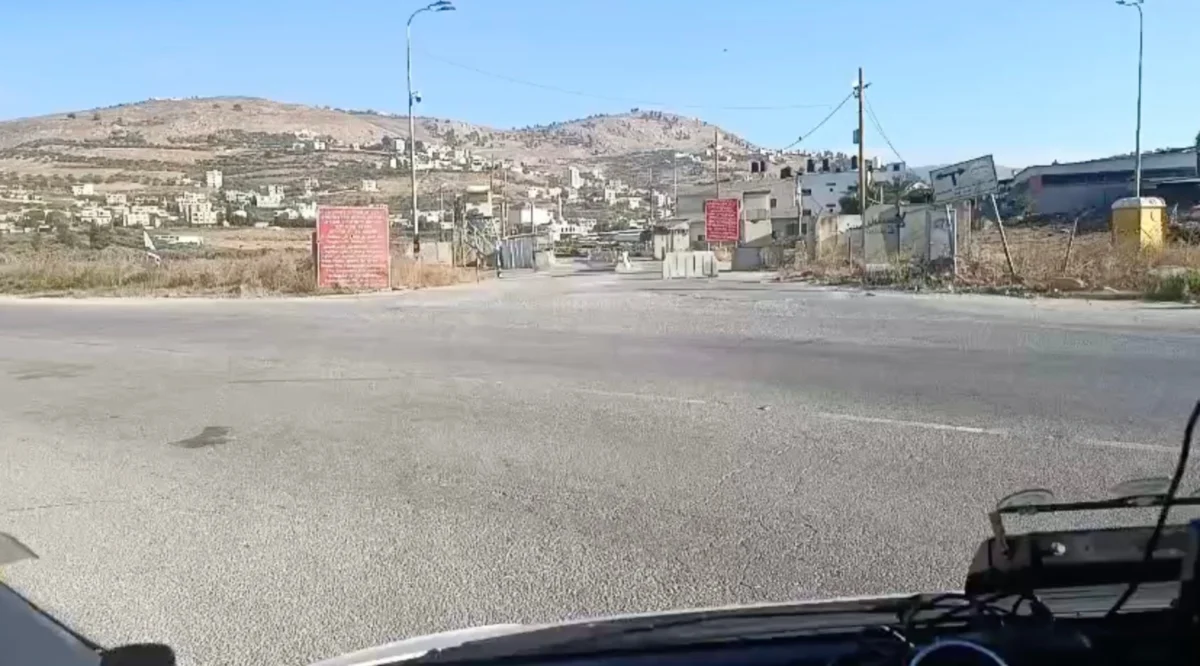
The imposition of extensive road closures and military checkpoints by Israeli forces in the West Bank resulted in a catastrophic delay for a Palestinian woman in critical medical distress on July 27, 2026, according to a detailed investigative report released by Human Rights Watch. The delay, which occurred at the Awarta checkpoint near Nablus, led to the death of the woman’s fetus following an emergency delivery inside an ambulance and left the mother in a life-threatening condition. Human Rights Watch documented that Israeli soldiers exacerbated the crisis by forcing the ambulance crew to deactivate their engine and medical equipment for a period of at least 20 minutes while the patient was hemorrhaging and drifting out of consciousness.
The incident is part of a broader pattern of systemic medical obstructions documented throughout the first half of 2026. From January to June, the World Health Organization (WHO) recorded 50 specific instances where medical care for Palestinians in the West Bank was significantly delayed or denied due to military interference. These restrictions intensified following a surge in settler violence on July 24, 2026, which claimed the lives of two Israelis and four Palestinians. In the aftermath, the Israeli military implemented "significantly impeded" access to healthcare across the Nablus governorate, a move the United Nations Office for the Coordination of Humanitarian Affairs (OCHA) identified as a primary factor in the degradation of emergency services.
Chronology of the July 27 Emergency
The crisis began at approximately 6:30 a.m. in the village of Qaryut. The patient, a woman six months pregnant, began experiencing premature active labor accompanied by severe hemorrhaging. Bashar al-Qaryuti, a veteran paramedic, and Sabreen Atallah, a nurse and midwife, responded to the call. Upon arrival, they found the woman in a state of shock, losing consciousness due to blood loss. With the assistance of the woman’s husband, the medical team stabilized her on oxygen and initiated the journey toward Rafidia Hospital in Nablus, the nearest facility equipped to handle such a high-risk obstetric emergency.
Under normal circumstances, the journey from Qaryut to Nablus along the primary north-south highway, Route 60, covers roughly 30 kilometers and takes approximately 25 minutes. However, Palestinian vehicles are frequently barred from this main artery by a network of roadblocks and checkpoints. On the morning of July 27, the primary access road out of the village was blocked by a closed military gate. Al-Qaryuti attempted to bypass the obstruction via an unpaved agricultural road, only to encounter a second locked gate. These obstacles forced the ambulance into a series of long detours through secondary routes, significantly extending the transit time.
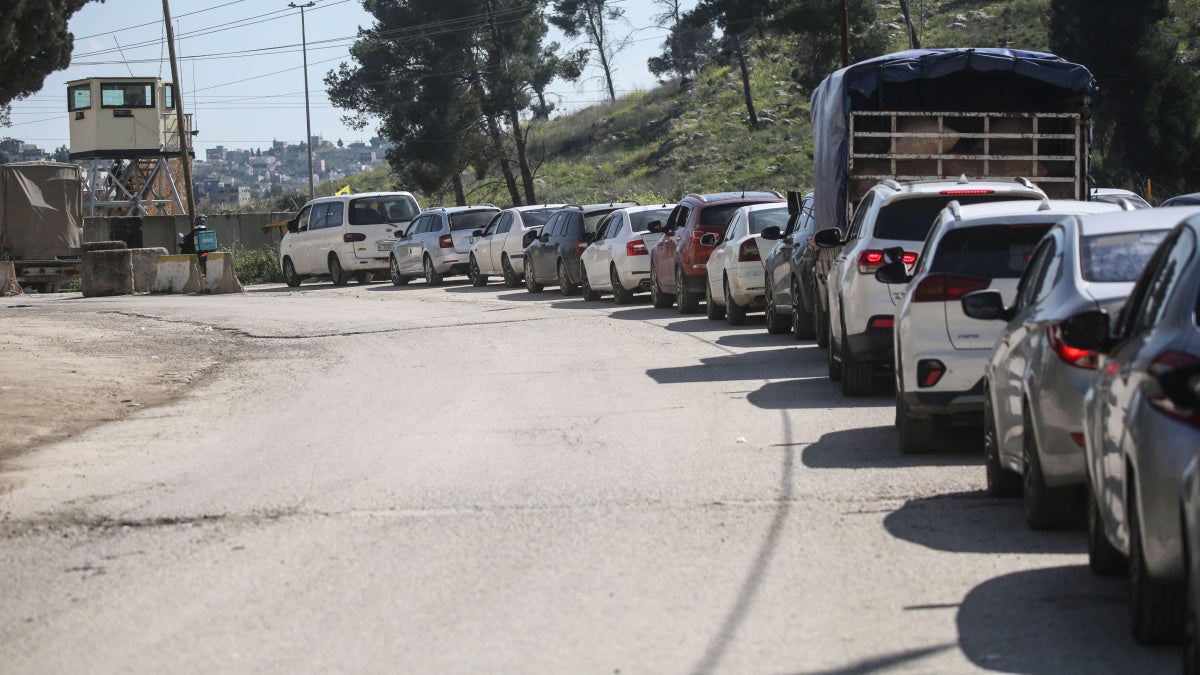
By 7:33 a.m., more than an hour after the initial emergency call, the ambulance reached the Awarta checkpoint. By this stage, the patient’s condition had deteriorated to a critical level. Sabreen Atallah, who has served as a midwife since 2014, described the scene as the most severe case of hemorrhaging she had encountered in her professional career. Faced with the impossibility of reaching the hospital in time, Atallah was forced to deliver the baby inside the stationary ambulance as it sat in the queue at the checkpoint. The infant, born prematurely and under extreme physiological stress, survived for only a few moments.
Confrontation at the Awarta Checkpoint
Upon reaching the head of the line at the checkpoint, al-Qaryuti attempted to signal the urgency of the situation to the Israeli soldiers on duty. He recorded a video—later verified and timestamped by Human Rights Watch—stating that the checkpoint was closed and that he was transporting a critical case to Rafidia Hospital.
According to the testimony provided to Human Rights Watch, two Israeli soldiers approached the vehicle and ordered al-Qaryuti to shut off the engine. The paramedic explained in Hebrew that the ambulance’s life-support systems, including the oxygen concentrator and vital sign monitors, relied on the engine for power. He informed the soldiers that the patient’s life depended on the continuous operation of this equipment. The soldiers reportedly responded with hostility, shouting for the crew to "shut up" and refusing to listen to the medical explanation.
When the engine was killed, the oxygen supply failed. The ambulance lacked pressurized oxygen cylinders, a common deficiency resulting from chronic medical supply shortages in the West Bank. The electronic monitors tracking the patient’s blood pressure and oxygen saturation—which had dropped to a dangerously low 84 percent—went dark. The soldiers then pointed their weapons at the crew and ordered the back doors of the ambulance to be opened. Despite Atallah’s pleas in English that the patient was "bleeding and might die," the soldiers proceeded to seize the identification cards of the medical staff, the patient, and her husband.
The ambulance was held for approximately 30 minutes. During this period, soldiers reportedly checked the IDs of passengers in another medical vehicle—a transport for kidney dialysis patients—before eventually returning the documents to al-Qaryuti and allowing both vehicles to pass.
Medical Outcomes and Official Denials
The ambulance finally arrived at the Obstetrics and Gynecology Department of Rafidia Hospital at 8:16 a.m. The total transit time for a 25-minute route had exceeded 90 minutes. Medical records indicate that the patient required three units of blood and immediate emergency surgery to address the hemorrhage. While the mother survived the ordeal, she remained in hospital recovery for several days, grappling with the physical and psychological trauma of the loss of her child.
In response to inquiries regarding the incident, the Israeli military spokesperson’s office issued a statement asserting that the claims were false. The military maintained that no report of such an incident had been received and denied that soldiers had delayed an ambulance at the Awarta checkpoint on that date. This denial stands in direct contradiction to the timestamped video evidence and the detailed testimonies of the medical personnel involved.
Context of Movement Restrictions and Settler Violence
The incident on July 27 is not an isolated event but a symptom of a tightening "closure policy" in the West Bank. In 2025 alone, Israel installed 120 new road gates, adding to a complex infrastructure of hundreds of checkpoints, mounds of earth, and concrete barriers that restrict Palestinian movement while allowing Israeli settlers relatively unimpeded travel.
Bill Van Esveld, associate children’s rights director at Human Rights Watch, characterized the situation as a recurring failure of the Israeli state to meet its obligations under international law. "Israel is forcing long detours or waits for patients with medical emergencies with appalling regularity, as the precious minutes needed to save their lives tick by," Van Esveld stated.
The recent spike in settler violence has served as a catalyst for even more restrictive measures. Following the July 24 attack, the military’s "collective punishment" style closures in the Nablus area have made it nearly impossible for ambulances to operate with the predictability required for emergency medicine. Sabreen Atallah reported that the July 27 delivery was her third time delivering a baby in an ambulance in 2026 due to road closures. Al-Qaryuti also noted that his ambulance had been targeted by settlers multiple times, recalling a 2024 incident where a volunteer driver was killed.
Legal Framework and International Obligations
Under international humanitarian law, specifically the Fourth Geneva Convention, Israel—as the occupying power—is legally obligated to ensure that the civilian population has access to medical care. This includes the duty to respect and protect medical transports and to ensure that expectant mothers and children receive the necessary care and protection.
Human Rights Watch and other international organizations have argued that the severe and discriminatory nature of these movement restrictions, which target Palestinians while exempting Israeli settlers living in the same territory, constitutes an inhumane act that contributes to the crime of apartheid. The systematic delay of ambulances and the harassment of medical personnel are cited as evidence of a policy that prioritizes military and settler control over the fundamental right to life and health.
The World Health Organization’s data underscores the scale of the crisis. Between October 7, 2023, and May 31, 2026, the WHO documented 987 attacks on or delays to healthcare services in the West Bank. These incidents affected 673 ambulances and were linked to at least 39 deaths. By mid-June 2026, the Israeli military was actively restricting ambulance movement in five of the West Bank’s 11 governorates.
Analysis of Implications and International Response
The death of the fetus on July 27 highlights the lethal consequences of infrastructure-based warfare. When roads are transformed into barriers, the healthcare system effectively collapses for those living in isolated villages like Qaryut. The incident also points to a deepening crisis in the "dual-use" nature of West Bank roads, where the safety and convenience of one population (settlers) are prioritized over the survival of another (Palestinians).
Human Rights Watch has called on the international community to move beyond rhetorical condemnation. The organization suggests that governments should impose targeted sanctions on individuals responsible for these abuses, suspend arms transfers to Israel, and ban trade with illegal settlements. Furthermore, the report emphasizes the need for international legal bodies, including the International Criminal Court (ICC), to investigate these incidents as potential war crimes.
"Amid rampant attacks on civilians and mass forced displacement in the West Bank, Israeli forces are delaying Palestinians from reaching hospitals, including even infants and pregnant women experiencing dangerous labor," Van Esveld concluded. The tragedy of July 27 serves as a stark reminder that in the West Bank, the geography of occupation is often a matter of life and death. For the mother in Qaryut, the loss of her child is an irreversible consequence of a system where a 25-minute drive can become a 90-minute struggle for survival.

Related Posts
Human Rights Watch Calls for Investigation into Death of Detainee Following Removal from Najaf Hospital by Iraqi Drug Police
Human Rights Watch Urges UN Security Council to Extend Lebanon Peacekeeping Mission Amid Escalating Conflict and Humanitarian Crisis