Israeli Officials and Settler Groups Call for ‘Revenge’ and ‘Erasure’ of Palestinian Villages Amid Escalating West Bank Violence
High-ranking Israeli political leaders and prominent settler organizations have openly called for "revenge" against Palestinians, expressing desires to "see blood" and "erase the village of Tell" following a deadly incident in the occupied West Bank. This inflammatory rhetoric, directly from figures within the governing coalition, has been swiftly followed by an intensification of both Israeli military operations and widespread settler attacks across Palestinian communities, signaling a dangerous escalation in an already volatile region.
The Incident in Tell: A Catalyst for Calls for Violence
The immediate trigger for these calls was a violent raid by armed Israeli settlers, reportedly escorted by Israeli military forces, on the Palestinian village of Tell. This assault, which occurred amid a surge in settler violence across the occupied West Bank, led to a tragic loss of life. Four members of the Saifi family were killed by Israeli fire during the incident. The Israeli military claimed that one of the Palestinians seized a weapon from a settler and subsequently shot the settler to death, an account that has been disputed by Palestinian sources and remains a point of contention. The settler killed was identified as a member of the Hilltop Youth, a radical settler militia known for its aggressive expansionist agenda and frequent confrontations with Palestinians. This single, bloody encounter ignited a torrent of retaliatory demands from various Israeli factions, setting the stage for the current crisis.
Incendiary Rhetoric from High-Ranking Israeli Officials
The calls for vengeance were not confined to extremist settler circles; they emanated directly from the highest echelons of Israel’s government. Bezalel Smotrich, Israel’s finance minister and a leader of the Religious Zionism party, on a Friday, explicitly demanded the destruction of the Palestinian villages of Tell, Iraq Burin, and Beit Furik. His chilling statement asserted that these communities "should look exactly like the refugee camps in Nablus and Tulkarm," drawing a direct parallel to areas that have witnessed extensive destruction at the hands of the Israeli military. Smotrich further advocated for the "evacuation" of the population from these areas and urged Prime Minister Benjamin Netanyahu to strip the Palestinian Authority of its administrative responsibility over them, effectively calling for their annexation and ethnic cleansing.
Echoing Smotrich’s hardline stance, Israel’s national security minister, Itamar Ben Gvir, a prominent figure known for his ultranationalist views, declared that "for every Jew killed, the enemy must bear the loss of land and homes." Ben Gvir unequivocally called for the adoption of Israel’s strategy of razing entire cities in the Gaza Strip to be implemented in the West Bank as well, suggesting a policy of collective punishment and large-scale devastation.
Zvi Sukkot, another member of Smotrich’s Religious Zionism party, amplified these destructive calls. Speaking to Channel 14 News on Friday, Sukkot stated that the village of Tell "needs to become ruins." On the same day, he posted a black screen on his Facebook page with the stark, one-word caption: "Revenge." These statements from elected officials, holding significant portfolios in the Israeli government, represent an unprecedented level of official endorsement for actions that could constitute war crimes under international law, particularly concerning collective punishment and forced displacement. Their words send a clear signal of impunity to radical settler elements, further exacerbating tensions.

Echoes from Settler Groups: Calls for ‘Blood’ and ‘Erasure’
The rhetoric from political leaders found a fervent echo within settler communities, particularly among the extremist Hilltop Youth. Messages reviewed by Middle East Eye from a settler group chat revealed explicit appeals to "erase the village of Tell" shortly after news of the killings emerged. These messages were chillingly direct: "We want revenge. Not settlements, not promises of more housing units," one read. Another message declared, "We want to see blood. There is no comfort without revenge," accompanied by a graphic image depicting a river of blood.
Elchanan Groner, a prominent Hilltop settler, publicly stated that "the village of murderers, Tell, must be erased now." In a tribute to the deceased settler, Groner expressed a desire "to avenge your pure blood," further fueling the vengeful sentiment. These declarations from settler groups, often operating with tacit or overt support from elements within the Israeli military and government, underscore the profound radicalization within certain segments of the settler movement and their readiness to engage in extreme acts of violence. The calls for "erasure" and "blood" are not mere rhetorical flourishes but reflect a dangerous ideology that seeks to dismantle Palestinian presence in the West Bank.
Government Response: Netanyahu’s Directives and Military Mobilization
In response to the escalating situation, Prime Minister Benjamin Netanyahu weighed in, stating on his X account that "we will pursue terror everywhere" and that Israel "will settle accounts with them." Netanyahu confirmed that he had instructed the Israeli military to demolish the family home of the Palestinian man accused of killing the settler and to act swiftly and powerfully against other villages in the area. This directive aligns with Israel’s controversial policy of punitive home demolitions, a practice widely condemned by human rights organizations as a form of collective punishment that targets innocent family members.
Furthermore, Netanyahu announced an acceleration of the "regularization" and establishment of more settler outposts. This move is particularly significant and provocative, as many settler attacks, including the one in Tell, are known to originate from these unauthorized outposts, which are illegal even under Israeli law but frequently receive state support. By legitimizing and expanding these outposts, Netanyahu’s government is effectively rewarding the very elements responsible for the violence and creating conditions for further escalation.
In the wake of these pronouncements, which Israel categorized as a response to a "terror attack," the Israeli army mobilized troops in the West Bank for a large-scale operation around Nablus in the northern part of the Palestinian territory, as reported by Haaretz. This military surge saw the arrest of 66 Palestinians across the West Bank, including 30 civilians detained in Tell, according to the Palestinian news agency Wafa. The military also imposed closures on the entrances to Tell and the nearby Burin village, while fully encircling the city of Nablus. Raids on Palestinian homes, detention of civilians, and reports of military vandalism were widespread, with the Israeli army even raiding a hospital in Nablus to arrest two Palestinians allegedly involved in the clashes in Tell. These operations, framed as security measures, are viewed by Palestinians as collective punishment and further encroachment on their freedom of movement and daily life.
Escalating Settler Violence Across the West Bank

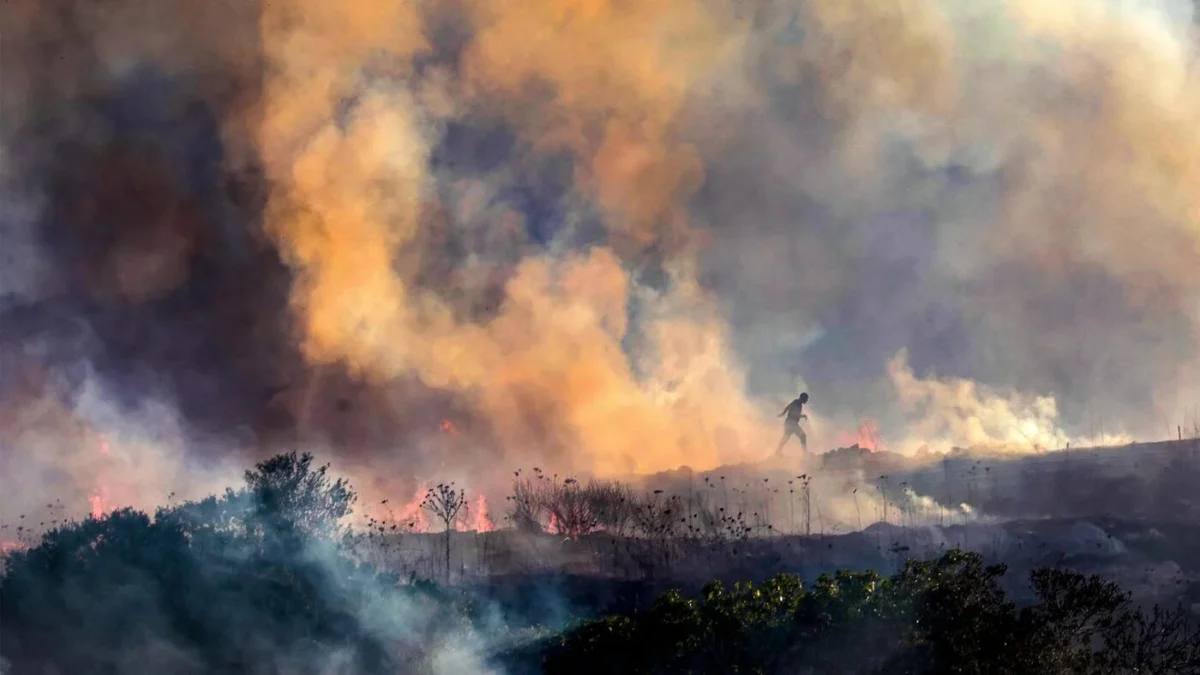
The calls for revenge from Israeli leaders and settler organizers were immediately translated into widespread settler attacks on Palestinian communities across the West Bank. The Palestine Red Crescent Society (PRCS) reported that at least eight Palestinians were injured, one critically, during a settler attack on the village of Far’ata near Qalqilya. Witnesses reported that settlers set homes on fire and threw stones, causing significant damage and terrorizing residents.
In the town of Sarra, near Nablus, three more Palestinians were injured during a settler raid, with reports indicating homes were set ablaze and Palestinian property damaged. Quds News Network documented violent settler attacks in numerous other locations, including Masafer Yatta, south of Hebron, and in the villages of Awarta and Urif near Nablus, where settlers reportedly torched property and uprooted hundreds of olive trees—a vital source of income for many Palestinian families. In Qarawat Bani Hassan, near Salfit, settlers seized a home and defiantly raised the Israeli flag over it, a symbolic act of dispossession.
Similar attacks were reported by Wafa news agency in the village of Birin, east of Hebron, Abu Njeim southeast of Bethlehem, and against Kafr Malik’s water infrastructure in the Ramallah governorate, highlighting the systematic nature of these assaults. Haaretz also reported on further settler attacks in the villages of Jit, Iraq Burin, and Tell in the Nablus area, alongside a particularly egregious incident where settlers reportedly stabbed and injured a Palestinian man in Wadi al-Mu’arrajat in the Jordan Valley. These coordinated and widespread attacks demonstrate a clear pattern of collective punishment and ethnic cleansing, carried out by settlers often with the protection or complicity of the Israeli military.
Broader Context: A History of Occupation and Settler Expansion
These recent events unfold against a backdrop of nearly six decades of Israeli occupation of the West Bank, East Jerusalem, and Gaza, territories captured in the 1967 Six-Day War. International law, including the Fourth Geneva Convention, deems Israeli settlements in these territories illegal, as it prohibits an occupying power from transferring its own population into occupied land. Despite this, successive Israeli governments have actively supported and expanded settlements, which now house over 700,000 Israeli settlers across the West Bank and East Jerusalem. This expansion has led to the fragmentation of Palestinian land, increased restrictions on Palestinian movement, and frequent clashes.
The year 2026 has already witnessed a grim toll, with the Palestinian health ministry reporting at least 87 Palestinians killed in the territory by Israeli fire, including 21 fatalities attributed directly to settler violence. This data underscores a worrying trend of escalating violence, particularly from settlers who often act with a sense of impunity, frequently unprosecuted or receiving lenient sentences for attacks against Palestinians. The presence of radical settler elements, such as the Hilltop Youth, who openly advocate for the displacement and subjugation of Palestinians, further destabilizes the region. These groups often establish unauthorized outposts, which then serve as staging grounds for attacks on neighboring Palestinian communities, creating a cycle of violence and dispossession.
Implications and International Law Concerns
The explicit calls for "revenge," "blood," and the "erasure" of Palestinian villages from high-ranking Israeli ministers carry profound implications for regional stability, the rule of law, and prospects for a peaceful resolution to the Israeli-Palestinian conflict. Such rhetoric, particularly when accompanied by direct orders for home demolitions and accelerated settlement expansion, could be interpreted as incitement to violence and potentially as calls for ethnic cleansing, actions that are in clear violation of international humanitarian law.

The international community generally condemns collective punishment and the destruction of civilian property, which are prohibited under the Fourth Geneva Convention. When these actions are openly advocated by government ministers, it raises serious questions about Israel’s adherence to international legal norms and its commitments as an occupying power. The active involvement of the Israeli military in escorting settlers during raids and then launching large-scale operations in response to settler-related incidents blurs the lines between security forces and settler militias, further eroding trust and accountability.
The expansion of settler outposts, a policy advocated by Netanyahu, not only contravenes international law but also entrenches the occupation, making a future contiguous Palestinian state increasingly difficult to achieve. This policy effectively rewards illegal actions and legitimizes further land confiscation, exacerbating the humanitarian crisis faced by Palestinians.
Palestinian Response and Humanitarian Impact
For Palestinian communities, the immediate impact of these events is severe. Families mourn their dead, homes are demolished, properties are destroyed, and the constant threat of violence from both settlers and the military creates an environment of fear and insecurity. The encirclement of cities like Nablus and the closure of village entrances severely restrict movement, impacting access to work, education, and essential services. The reported military vandalism during home raids adds to the psychological and economic burden on already struggling communities.
Palestinian officials and human rights organizations have consistently condemned these actions, calling for international protection for Palestinians and demanding accountability for both settler violence and Israeli military actions. They highlight the systematic nature of the violence and the need for the international community to intervene to uphold international law and protect civilian lives. The targeting of water infrastructure, as reported in Kafr Malik, is particularly alarming, as it directly impacts basic human rights and livelihoods.
Looking Ahead: Prospects for De-escalation and Accountability
The current trajectory in the West Bank points towards a further escalation of conflict and violence. The emboldened rhetoric from Israeli leadership, coupled with increased military operations and settler attacks, creates a dangerous environment that threatens to unravel any semblance of stability. Without a robust international response condemning such actions and demanding adherence to international law, the cycle of violence is likely to intensify.
The absence of accountability for settler violence and the continuous expansion of settlements perpetuate a system that disenfranchises Palestinians and undermines the prospects for a just and lasting peace. The international community faces a critical challenge to uphold its commitments to international law and human rights, to protect civilian populations, and to ensure that calls for "revenge" and "erasure" are met with unequivocal condemnation and concrete actions to prevent further bloodshed and dispossession. The events in Tell and the subsequent widespread violence serve as a stark reminder of the urgent need for intervention to prevent the situation from deteriorating into a wider regional catastrophe.

Related Posts

Over 150 Israeli Settlers Storm Al-Aqsa Compound and Perform Prayers, Violating Status Quo Under Police Protection.
UN Report Highlights Over 900 Obstacles Hampering West Bank Aid Amid Escalating Humanitarian Crisis