Israel Announces Major Expansion of Illegal Eli Settlement Amidst Escalating West Bank Tensions
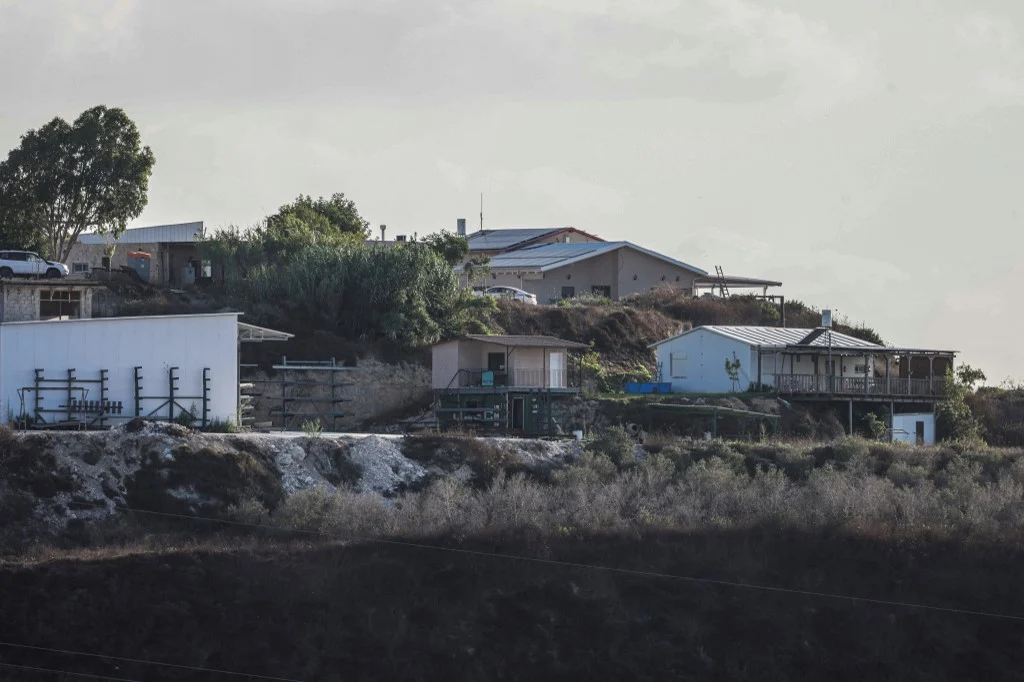
Israeli Finance Minister Bezalel Smotrich has officially unveiled plans for the construction of 763 new housing units within the illegal Eli settlement, situated south of Nablus in the occupied West Bank. The announcement, reported by Anadolu and subsequently cited by Al Jazeera, signifies a substantial expansion that, according to Anadolu, is projected to triple the physical size of the Eli settlement over the coming years. This declaration, made by Smotrich during an interview with Israel’s Channel 14, reiterated the Israeli government’s steadfast commitment to continuously building settlement farms and communities across the territory. The timing of this latest settlement expansion plan is particularly salient, coming just one day after a violent confrontation near the Palestinian village of Tal, southwest of Nablus, resulted in the deaths of four Palestinians during an incident involving Israeli settlers and military forces.
The Immediate Context: Escalating Violence in the West Bank
The announcement regarding the Eli settlement expansion did not occur in a vacuum but followed closely on the heels of a particularly volatile period in the occupied West Bank. On the day prior to Smotrich’s declaration, the area near Tal village, in close proximity to Nablus, became the scene of deadly violence. Reports indicate that four Palestinians were shot and killed while attempting to repel an incursion by Israeli settlers, who were reportedly accompanied by elements of the Israeli army. Such incidents of violence, often involving armed settlers and frequently leading to confrontations with Palestinian residents and Israeli security forces, have become a disturbingly regular feature of life in the West Bank. These clashes typically revolve around land disputes, access to resources, and the presence of settlements and outposts near Palestinian communities, fueling a cycle of retaliation and further entrenching animosity. The immediate backdrop of these fatalities underscores the heightened tensions and precarious security situation prevalent in the occupied territories, suggesting that further settlement expansion could exacerbate an already fragile environment.
A Broader Policy of Expansion: Smotrich’s Vision for the West Bank
The plan for Eli is not an isolated decision but rather appears to be part of a broader, more assertive strategy being pursued by key figures within the current Israeli government, particularly those from the religious-nationalist faction. Earlier this month, Finance Minister Smotrich, who also holds significant authority over civilian administration in the West Bank, confirmed that Israel’s security cabinet had approved a substantial budget allocation of $434 million. This considerable sum is earmarked for the establishment and development of 34 new settlements and outposts across the occupied West Bank. This dual focus – expanding existing settlements like Eli and initiating new ones – signals a comprehensive policy aimed at cementing Israel’s presence and control over the territory. Smotrich, a prominent figure in the Religious Zionism party, is a vocal proponent of Israeli sovereignty over the entire West Bank, which he refers to by its biblical names of Judea and Samaria. His statements and actions consistently reflect an ideological commitment to strengthening and expanding the settler movement, viewing it as a fulfillment of religious and national destiny rather than an obstacle to peace. This approach stands in stark contrast to the international consensus regarding the status of the West Bank and the legality of settlements.
The Legal and Historical Framework of Israeli Settlements
Israeli settlements in the West Bank are permanent civilian communities established by Israel on land occupied during the 1967 Six-Day War. From an international legal perspective, these settlements are widely considered illegal. The Fourth Geneva Convention, which prohibits an occupying power from transferring parts of its own civilian population into the territory it occupies, is the cornerstone of this legal assessment. Numerous United Nations Security Council resolutions, including Resolution 2334 passed in 2016, have unequivocally affirmed that the establishment of settlements by Israel in the Palestinian territory occupied since 1967, including East Jerusalem, has "no legal validity" and constitutes a "flagrant violation under international law."
Despite this overwhelming international consensus, Israel disputes this interpretation, asserting that the West Bank is not "occupied" but rather "disputed" territory and that the Geneva Convention does not apply. Israel also cites historical and biblical ties to the land as justification for its presence. The settlement enterprise began almost immediately after the 1967 war, initially with a security rationale, but quickly evolving into a demographic and ideological project. Over decades, successive Israeli governments, to varying degrees, have supported and facilitated the expansion of these communities, providing infrastructure, security, and economic incentives for Israelis to reside there. The current government, featuring strong pro-settlement factions, has accelerated this trend, with a declared policy of prioritizing settlement growth.
Statistical Overview of Settlement Growth and Its Impact
The growth of Israeli settlements in the West Bank has been a consistent feature of the Israeli-Palestinian conflict for over five decades. According to data from various Israeli and international monitoring groups, the number of Israeli settlers in the West Bank (excluding East Jerusalem) has surged dramatically. In 1972, the settler population stood at approximately 10,000. By the time of the Oslo Accords in the early 1990s, this number had grown to around 110,000. As of 2023, estimates place the settler population in the West Bank at over 490,000, residing in more than 140 officially recognized settlements and approximately 130 unauthorized outposts. When including East Jerusalem, the total number of Israeli settlers living beyond the 1967 Green Line exceeds 700,000.

These settlements occupy a significant and ever-expanding footprint. While the built-up areas of settlements directly cover only a few percentage points of the West Bank, their municipal boundaries, security zones, and associated infrastructure – including settler-only bypass roads, checkpoints, and military zones – effectively control over 40% of the West Bank’s land area. This territorial control fragments Palestinian land, restricts Palestinian development, and severely curtails the contiguity necessary for a viable Palestinian state. The expansion of settlements often involves the confiscation of private Palestinian land, the destruction of olive groves, and the displacement of Palestinian families, leading to widespread international condemnation and exacerbating humanitarian concerns. The Eli settlement, specifically, has grown significantly since its establishment, and the planned 763 new units would represent a substantial physical and demographic expansion into a critical area south of Nablus.
International Reactions and Condemnations
The international community’s response to Israeli settlement expansion has been largely consistent, albeit often limited in practical enforcement.
- Palestinian Authority (PA): The PA, headquartered in Ramallah, routinely condemns all settlement activities as a direct violation of international law and a deliberate act to undermine the prospects for a two-state solution. PA officials frequently call upon the international community, particularly the United Nations and the European Union, to take concrete measures to halt settlement expansion and protect Palestinian land and rights. They argue that such actions pre-empt any potential peace negotiations by unilaterally altering the facts on the ground.
- United Nations: The UN has consistently reaffirmed the illegality of Israeli settlements under international law. The Secretary-General and various UN bodies frequently issue statements expressing "grave concern" over settlement expansions, reiterating that they are a major obstacle to achieving a just, lasting, and comprehensive peace between Israelis and Palestinians. UN Security Council Resolution 2334 (2016) specifically called on Israel to "immediately and completely cease all settlement activities in the occupied Palestinian territory, including East Jerusalem."
- European Union (EU): The EU maintains a firm position that Israeli settlements are illegal under international law, constitute an obstacle to peace, and threaten to make a two-state solution impossible. EU spokespersons regularly issue condemnations of new settlement announcements, urging Israel to reverse such decisions. While the EU’s statements are strong, its collective action against Israel has typically been limited to diplomatic pressure and financial aid to Palestinians, rather than imposing sanctions.
- United States: The U.S. position on settlements has varied across administrations. While generally affirming its commitment to a two-state solution, American policy has historically been nuanced. The Biden administration has expressed its "strong opposition" to settlement expansion, stating that such actions are "inconsistent with efforts to achieve a two-state solution." However, the U.S. has refrained from taking punitive measures against Israel, often balancing its concerns with its strategic alliance. Under the Trump administration, the U.S. broke with decades of policy by declaring that it no longer viewed Israeli settlements as inconsistent with international law, a stance that drew widespread international criticism.
- Human Rights Organizations: Groups like B’Tselem, Human Rights Watch, and Amnesty International consistently highlight how settlement expansion leads to human rights abuses against Palestinians, including land confiscation, forced displacement, movement restrictions, and increased settler violence. They frequently publish detailed reports documenting these violations and call for international accountability.
Implications for the Two-State Solution and Regional Stability
The continuous expansion of Israeli settlements, particularly large-scale projects like the one announced for Eli, carries profound implications for the prospects of a two-state solution and for broader regional stability.
Firstly, settlement growth directly undermines the territorial contiguity and viability of a future Palestinian state. As settlements expand, they create a patchwork of Israeli-controlled areas interspersed with fragmented Palestinian enclaves, making it increasingly difficult to establish a cohesive and independent Palestinian entity with defensible borders and a functioning economy. The very concept of a two-state solution, predicated on the establishment of a Palestinian state alongside Israel based on the 1967 borders with mutually agreed land swaps, becomes geographically and demographically untenable with each new settlement unit.
Secondly, the ongoing expansion exacerbates tensions and fuels the cycle of violence. The presence of settlements, often accompanied by military checkpoints, settler-only roads, and restrictions on Palestinian movement, generates daily friction between settlers, Israeli security forces, and Palestinians. Incidents of settler violence against Palestinians, and vice versa, frequently escalate into broader confrontations, making de-escalation and peacebuilding efforts significantly more challenging. The recent violence near Tal village serves as a stark reminder of this volatile dynamic.
Thirdly, settlement expansion erodes trust and diminishes the possibility of meaningful peace negotiations. When one party to a conflict continues to unilaterally alter the facts on the ground in a manner that pre-empts the outcome of negotiations, it signals a lack of genuine commitment to a negotiated settlement. Palestinian leaders consistently argue that there is no point in negotiating while Israel continues to build on land intended for a future Palestinian state. This perception of bad faith makes it exceedingly difficult to bring both sides back to the negotiating table with any hope of success.
Finally, the international community’s inability or unwillingness to effectively halt settlement expansion risks further delegitimizing international law and institutions. If widely condemned actions continue without significant consequence, it undermines the credibility of international legal frameworks and the resolve of global powers to uphold them, potentially setting dangerous precedents for other protracted conflicts. The current trajectory of settlement expansion, championed by influential figures like Bezalel Smotrich, suggests a deliberate strategy to preclude the possibility of a two-state solution, thereby reshaping the geopolitical landscape of the region for generations to come.
In conclusion, the Israeli Finance Minister’s announcement of 763 new housing units in the Eli settlement marks another significant step in the ongoing expansion of Israeli settlements in the occupied West Bank. This move, situated amidst a backdrop of escalating violence and a broader policy of settlement growth, stands in direct opposition to international law and the prevailing international consensus on a two-state solution. Its implications are far-reaching, threatening to further fragment Palestinian territory, intensify conflict, and render any future peace agreement increasingly elusive, thereby perpetuating instability in an already volatile region.

Related Posts
Over 150 Israeli Settlers Storm Al-Aqsa Compound and Perform Prayers, Violating Status Quo Under Police Protection.
UN Report Highlights Over 900 Obstacles Hampering West Bank Aid Amid Escalating Humanitarian Crisis