Iranian President Pezeshkian Affirms Defensive Stance Amidst Escalating Regional Tensions, Declaring No Intent for Broader Conflict
Tehran, Iran – 4 August 2026, 07:11 BST – Iranian President Masoud Pezeshkian today delivered a crucial statement reaffirming the nation’s commitment to defending its borders while unequivocally declaring that Tehran is not seeking an expansion of the ongoing regional conflict. Speaking at the launch of a new medical program, an event often used by Iranian leaders to address national concerns, President Pezeshkian’s remarks come at a highly volatile juncture in what has been termed the "War on Iran," a protracted period of escalating military and geopolitical tensions.
"We defend our borders, but we do not seek to expand the war," President Pezeshkian stated, emphasizing a defensive posture that has characterized much of Iran’s public rhetoric amidst the conflict. The declaration was made against a backdrop of heightened military activity in the Persian Gulf and along Iran’s western frontiers, following several months of intermittent clashes and strategic maneuvers. His comments underscore a delicate balance between asserting national sovereignty and signaling a desire to prevent a full-scale regional conflagration that could have devastating global consequences.
The President further articulated a vision for internal resilience, urging the nation to unite against external pressures. "We must try to build a society in these circumstances that the enemy will not covet, will not enter, and will not be able to tear this social complex apart and destroy it," he added. This appeal to national unity and internal strength is a recurring theme in Iranian leadership’s addresses, particularly during periods of external threat, aiming to galvanize public support and project an image of steadfastness.
The Evolving Landscape of the "War on Iran"
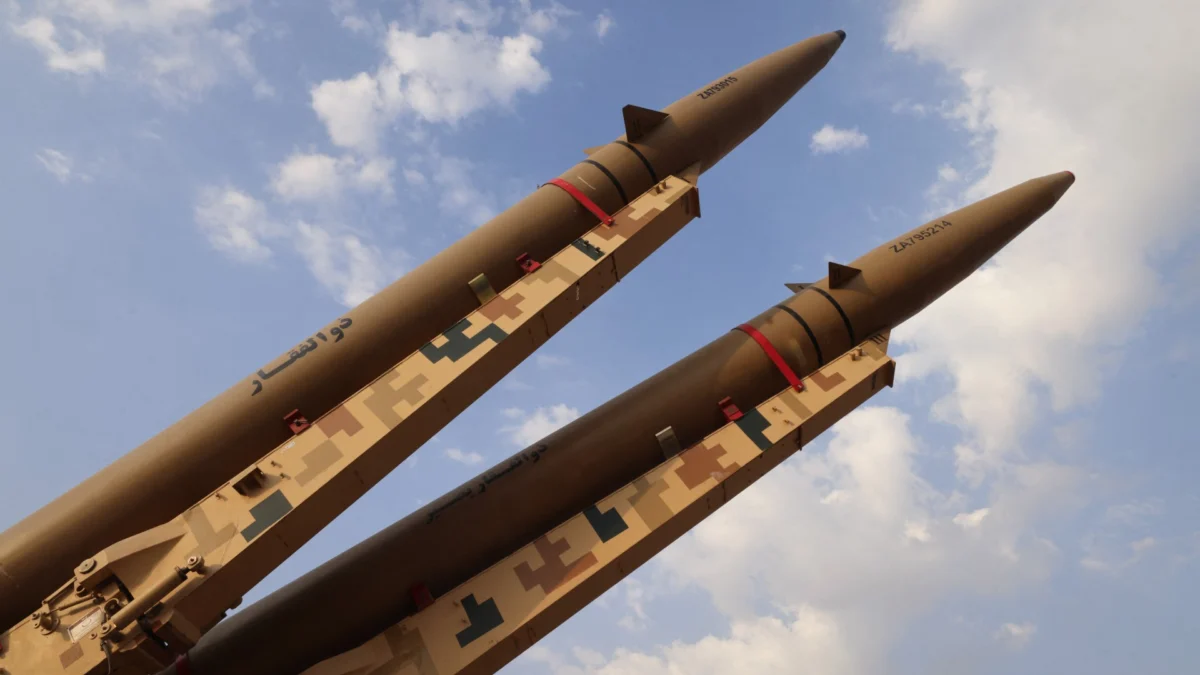
The phrase "War on Iran" has become a colloquial descriptor for a complex and multifaceted regional conflict that began escalating significantly in late 2024 and intensified throughout 2025 and early 2026. Unlike conventional warfare, this conflict has largely been characterized by a series of targeted strikes, proxy engagements in neighboring states, cyber warfare, maritime incidents in crucial shipping lanes, and an unrelenting campaign of economic sanctions. It involves Iran and a loose coalition of regional adversaries, often backed by Western powers, primarily over issues concerning Iran’s nuclear program, its regional influence, its ballistic missile capabilities, and support for various non-state actors.
The conflict has seen critical infrastructure targeted, including oil installations and communication networks, alongside sporadic but deadly exchanges along disputed borders. The Strait of Hormuz, a vital chokepoint for global oil supplies, has been the scene of numerous close encounters and minor skirmishes involving naval vessels, leading to significant disruptions in international shipping and causing ripples in global energy markets.
Analysts from the International Crisis Group noted in a recent report that the current phase of the conflict is particularly dangerous due to the absence of clear communication channels between the primary belligerents and the high risk of miscalculation. "Each side interprets the other’s defensive moves as aggressive provocations, creating a feedback loop that continually pushes the region closer to direct, large-scale confrontation," the report highlighted.
Chronology of Escalation: A Precarious Path to August 2026
The path to President Pezeshkian’s statement on August 4, 2026, is marked by a series of escalating incidents that have steadily ratcheted up tensions:
- October 2024: A major cyberattack, attributed by Tehran to foreign state actors, significantly disrupts Iran’s national banking system and critical infrastructure. Iran vows retaliation.
- January 2025: Naval confrontations intensify in the Persian Gulf after a series of alleged Iranian drone incursions into the airspace of a neighboring state. A joint statement from a regional security alliance condemns Iran’s actions.
- March 2025: Tensions flare along Iran’s western border with a neighboring country following cross-border shelling incidents. Both sides accuse the other of initiating hostilities. Civilian casualties are reported.
- June 2025: The International Atomic Energy Agency (IAEA) reports new concerns regarding Iran’s nuclear enrichment activities, prompting a fresh round of international sanctions and heightened rhetoric from Western capitals. Tehran dismisses the concerns as politically motivated.
- September 2025: A suspected missile strike targets a major oil processing facility in a regional adversary nation. While no definitive attribution is made, intelligence reports heavily implicate Iranian-backed proxies, leading to calls for a more robust military response.
- December 2025: Significant drone and rocket exchanges occur between Iranian forces and allied militias and coalition forces in a disputed border region. Casualties on both sides are reported, marking a sharp increase in direct military engagement.
- February 2026: A series of naval drills by a coalition of forces in the Gulf is met with a simultaneous large-scale Iranian military exercise, raising fears of an accidental clash.
- April 2026: An alleged sabotage attempt at an Iranian nuclear site is reported by Tehran, which warns of "decisive retaliation" against any aggressor.
- July 2026: Just weeks before Pezeshkian’s statement, a major rocket attack, attributed to Iranian-backed groups, targets a coalition military base in the region. The retaliation is swift, involving targeted airstrikes deep within areas controlled by these groups, further raising the stakes and prompting widespread international condemnation and calls for restraint.
This relentless sequence of events has pushed the region to the brink, making President Pezeshkian’s call for de-escalation, even while affirming a defensive posture, a critical moment.
International and Regional Reactions: A Divided Response
President Pezeshkian’s statement has elicited a varied response from the international community and regional actors, reflecting the deep divisions and vested interests surrounding the conflict.

The United Nations Secretary-General immediately issued a statement through a spokesperson, welcoming any indication from a principal party to the conflict that they are not seeking an expansion of hostilities. "The Secretary-General reiterates his call for all parties to exercise maximum restraint, adhere to international law, and prioritize diplomatic solutions to avert a wider catastrophe," the statement read, emphasizing the urgent need for a cessation of hostilities and protection of civilians. The UN Security Council is expected to convene an emergency session later this week to discuss the escalating situation.
From Western capitals, particularly Washington and Brussels, the reaction was cautious skepticism. A spokesperson for the U.S. State Department noted, "While we take note of President Pezeshkian’s words, actions speak louder than declarations. We urge Iran to demonstrate its commitment to de-escalation through concrete steps, including ceasing support for destabilizing proxy groups and fully cooperating with international nuclear inspectors." Similar sentiments were echoed by European Union officials, who stressed the importance of verifiable commitments to regional stability.
Regional adversaries of Iran, forming a loose alliance that has been actively involved in containing Iran’s influence, expressed outright distrust. A high-ranking official from a neighboring Gulf state, speaking anonymously, remarked, "Tehran’s rhetoric has often been at odds with its actions on the ground. Until we see a genuine pullback of their forces and proxies, and a cessation of their aggressive regional policies, such statements will be viewed with extreme caution." They emphasized that their defensive measures would continue as long as perceived threats from Iran persisted.
Conversely, Iran’s few remaining regional allies and partners lauded President Pezeshkian’s statement as a responsible and measured approach. A representative from a state in the Levant praised Iran’s "steadfast defense of its sovereignty" while commending its "commitment to peace and avoiding unnecessary escalation."
Socio-Economic and Humanitarian Implications
The prolonged "War on Iran" has exacted a heavy toll on the Iranian populace and the broader region. Economically, the conflict, coupled with stringent international sanctions, has crippled Iran’s oil exports, inflated domestic prices, and led to significant unemployment. The rial has plummeted to historic lows, and inflation is reportedly soaring above 60%, according to independent economic analyses. The costs of maintaining military readiness and engaging in proxy conflicts have further strained the national budget, diverting resources from essential public services. Across the region, the conflict has disrupted vital trade routes, particularly maritime shipping, impacting global supply chains and contributing to higher energy prices worldwide. The International Monetary Fund (IMF) recently revised down its global growth forecasts, citing geopolitical tensions in the Middle East as a primary factor.
Humanitarian organizations have voiced grave concerns over the mounting civilian casualties and displacement. Reports from various non-governmental organizations indicate that over 50,000 people have been internally displaced within Iran and neighboring countries due to the conflict’s ripple effects, particularly from border skirmishes and targeted strikes. Access to medical care, food, and clean water has become increasingly challenging in affected areas. The medical program launched by President Pezeshkian, while a positive step, is seen by many as a symbolic gesture against a backdrop of overwhelmed healthcare systems struggling with shortages of essential medicines and equipment, largely due to sanctions and the economic strain of the conflict.
Broader Impact and Future Implications
President Pezeshkian’s statement, while offering a glimmer of hope for de-escalation, underscores the precarious geopolitical landscape. The "War on Iran" has fundamentally reshaped regional alliances, deepened sectarian divides, and intensified the global competition for influence.
Geopolitically, the conflict has strengthened the resolve of various regional blocs, making a comprehensive peace agreement increasingly difficult to achieve. It has also tested the limits of international diplomacy, with numerous mediation efforts failing to yield significant breakthroughs. The potential for the conflict to draw in additional global powers remains a constant threat, given the strategic importance of the region and the intertwined interests of major international players.
Looking ahead, the critical question remains whether President Pezeshkian’s words will be matched by tangible actions on the ground. A genuine commitment to de-escalation would require a verifiable reduction in military activities, a cessation of support for proxy forces, and a willingness to engage in direct, substantive negotiations. Without such steps, analysts warn, the region risks sliding further into a protracted and devastating conflict, with profound and unpredictable consequences for global stability and human welfare. The international community, therefore, remains on high alert, watching for any concrete signals that could either avert a wider war or confirm the region’s deepening plunge into chaos.

Related Posts
Over 150 Israeli Settlers Storm Al-Aqsa Compound and Perform Prayers, Violating Status Quo Under Police Protection.
UN Report Highlights Over 900 Obstacles Hampering West Bank Aid Amid Escalating Humanitarian Crisis