ICE Agency Internal Watchdog Pivots to Monitoring American Civilians and Online Speech
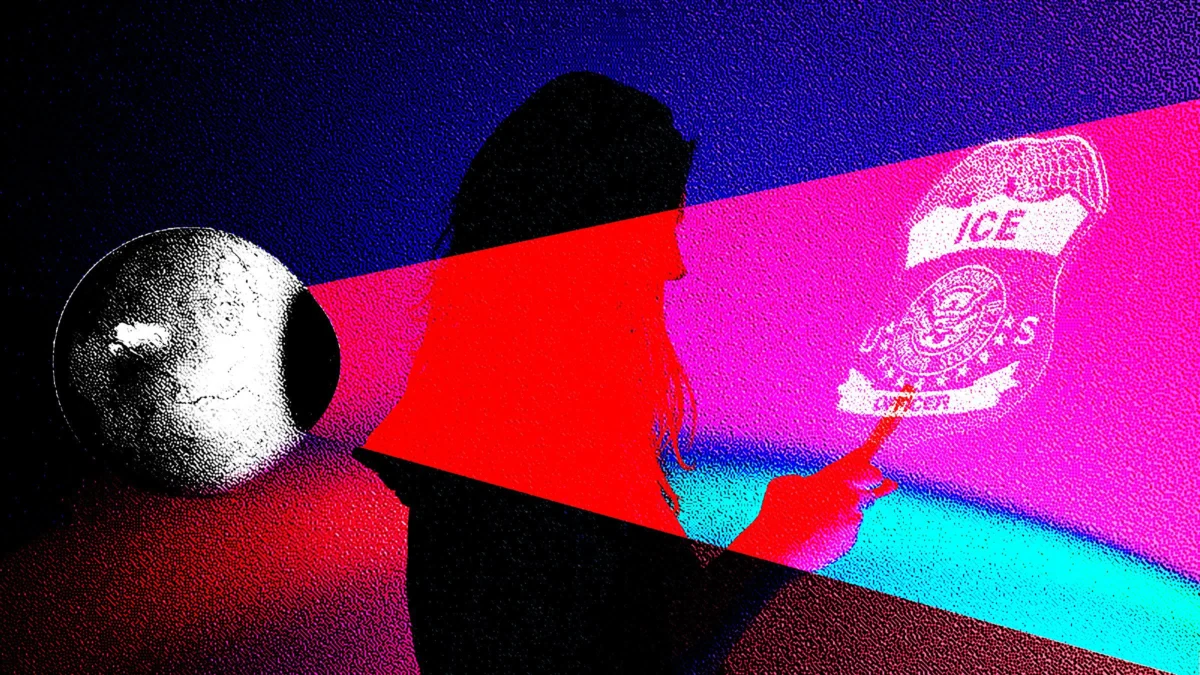
The intersection of federal authority and protected First Amendment activity has reached a new, contentious frontier as Immigration and Customs Enforcement (ICE) agents increasingly utilize the agency’s internal disciplinary arm to target private citizens for their online commentary. During the June primary elections in Syracuse, New York, federal agents approached poll worker Paigelynne Gonyea at her place of employment, presenting her with a formal warning notice regarding an Instagram post she had authored earlier in the year. The agents alleged that the post constituted “doxing” of an ICE official. Gonyea, however, maintains that the post was merely a citation of a public report from the Minnesota Star Tribune regarding an officer involved in a lethal shooting in Minneapolis.
The confrontation in Syracuse represents a growing pattern of federal agencies expanding their investigative scope. By leveraging the Office of Professional Responsibility (OPR)—a division traditionally tasked with auditing detention facilities and policing internal employee misconduct—the government has begun to treat public criticism as a matter of federal security. This shift has prompted alarm among civil liberties advocates, who argue that the deployment of an internal watchdog against non-government employees represents a dangerous expansion of executive power and a chilling effect on political discourse.
A Chronology of Surveillance and Confrontation
The events in Syracuse were not an isolated incident but rather a symptom of an evolving strategy within the Department of Homeland Security (DHS). The pressure exerted on Gonyea followed a specific administrative playbook. When confronted at the polling station, agents demanded that she sign a document warning her that it is unlawful to “threaten to assault, kidnap and/or murder” federal officials. The notice further requested that she delete the post and cease her online behavior.
Gonyea’s refusal to sign the document was grounded in a concern that doing so would constitute an admission of criminal intent. “My signature would have been an admission of guilt,” Gonyea stated. “I refused to sign it.” This encounter highlights the intimidation tactics that experts suggest are being used to stifle dissent before it reaches a legal threshold.
The timeline of this aggressive posturing coincides with internal policy shifts initiated by the administration. Court documents filed in April 2026 reveal that between January 2025 and March 2026, OPR opened 131 investigations specifically categorized as “incidents of doxing and threats directed towards ICE employees nationwide.” While the agency characterizes these efforts as necessary protective measures, the actual number of criminal charges resulting from these investigations remains remarkably low. In fact, only one clear instance has been identified where the Department of Justice (DOJ) successfully prosecuted a case linked to OPR’s investigative work—a case involving a California man who had a personal history with an ICE attorney, predating the current administration’s focus on social media monitoring.
Broadening the Definition of Doxing
Central to the controversy is the agency’s attempt to redefine “doxing.” Historically, doxing involves the malicious publication of private, sensitive information—such as home addresses, personal phone numbers, or social security numbers—with the intent to facilitate harassment. However, recent DHS and ICE actions suggest an effort to broaden this definition to include the recording of public officials in the performance of their duties.
Legal experts argue that filming or photographing federal agents in public spaces is a constitutionally protected activity. By labeling such documentation as “doxing,” the agency risks criminalizing the observation of government power. This tactical shift is reinforced by a July 2025 privacy notice update for the ICE Intelligence Records Systems, which explicitly stated that the agency would begin collecting social media posts and location-related data on individuals deemed to have made “credible threats.”
The, at times, arbitrary nature of these definitions has led to a flurry of administrative subpoenas issued to technology companies. In several instances, these subpoenas were withdrawn after the targets—often anonymous online commentators—retained legal counsel and challenged the government’s overreach. The government’s decision to retreat rather than litigate these matters suggests a recognition that the legal standing for such subpoenas is tenuous at best.
The Erosion of Internal Oversight
While the OPR has pivoted its resources toward monitoring online speech, there is mounting evidence that its primary mandate—the oversight of detention centers—is suffering from significant neglect. An analysis by the Project on Government Oversight (POGO) found that in 2025, the number of published detention facility inspection reports plummeted to 102, a stark decline from 160 in 2024 and 192 the previous year.
This reduction in transparency coincides with a period of historically high detention rates. The irony of an internal watchdog diverting its focus from the conditions of confinement to the social media habits of civilians has not been lost on members of Congress. During an April 2026 hearing, acting ICE Director Todd Lyons faced scrutiny regarding the agency’s budget and priorities. Notably, Lyons’ testimony focused heavily on the agency’s 287(g) programs and applicant vetting, omitting any mention of the intensive resources being poured into the OPR’s new “online threat” division.
Adam Steinbaugh, a senior attorney at the Foundation for Individual Rights and Expression (FIRE), notes that the lack of transparency is a deliberate strategy. “I can’t imagine that he would willingly go before Congress and say, ‘Yeah, we’re speech police, that’s what you’re funding.’ That’s not popular,” Steinbaugh observed. The lack of public disclosure regarding these operations makes it difficult for legislative bodies to conduct effective oversight, effectively creating a “black box” of investigative activity.
Implications for First Amendment Rights
The implications of these actions extend far beyond the individuals targeted. The First Amendment provides broad protections for criticizing government officials, and the Supreme Court has consistently held that speech regarding public servants is entitled to the highest level of protection. When a federal agency uses its authority to force the removal of content—even content that is merely critical or embarrassing—it engages in a form of state-sponsored censorship.
Laura Moraff, a staff attorney at the ACLU’s Speech, Privacy, and Technology Project, emphasizes that the bar for criminalizing speech is intentionally high. “It takes a lot to actually convict someone for their speech, and it’s only possible in very limited circumstances,” Moraff stated. “People do have a First Amendment right to criticize the government and to do that online and to do that anonymously.”
The government’s reliance on administrative subpoenas to unmask critics is particularly concerning for digital privacy. If citizens cannot express grievances against federal agencies without fear of being identified, subpoenaed, and intimidated by federal agents, the democratic process of accountability is undermined. The fact that the government has opted to withdraw subpoenas when challenged suggests that these tools are being used as a blunt instrument to silence speech rather than as a legitimate means of law enforcement.
Looking Ahead
As the legal landscape shifts, the case of Paigelynne Gonyea serves as a bellwether for how the relationship between federal agencies and the public may change in the coming years. Gonyea has indicated that she intends to challenge the government’s actions in court, viewing the fight as a defense of the fundamental right to speak freely. “I know that this issue is going to be bigger than me,” she said. “This is literally about protecting all Americans’ right to free speech.”
The broader question remains: to what extent will the judiciary tolerate the transformation of internal disciplinary offices into tools for civilian surveillance? As the administration continues to cite “emerging threats” as a justification for increased surveillance, the tension between national security interests and individual civil liberties will likely define the legal battles of the near future. Without robust legislative oversight and a clear judicial standard, the trend of federal agencies acting as arbiters of permissible speech threatens to alter the fundamental balance of power between the state and the citizenry.
For now, the OPR remains a department in transition, balancing its role as a watchdog of its own staff with an increasingly aggressive role as an monitor of the public. Whether this duality can survive judicial scrutiny or the pressure of public accountability remains an open question that will undoubtedly be tested in the halls of justice.

Related Posts
The Las Vegas Cybersecurity Summit and the Escalating Threat of Autonomous Digital Exploitation
New York City Council members and privacy advocates launch legislative campaign to ban biometric facial recognition at public entertainment venues