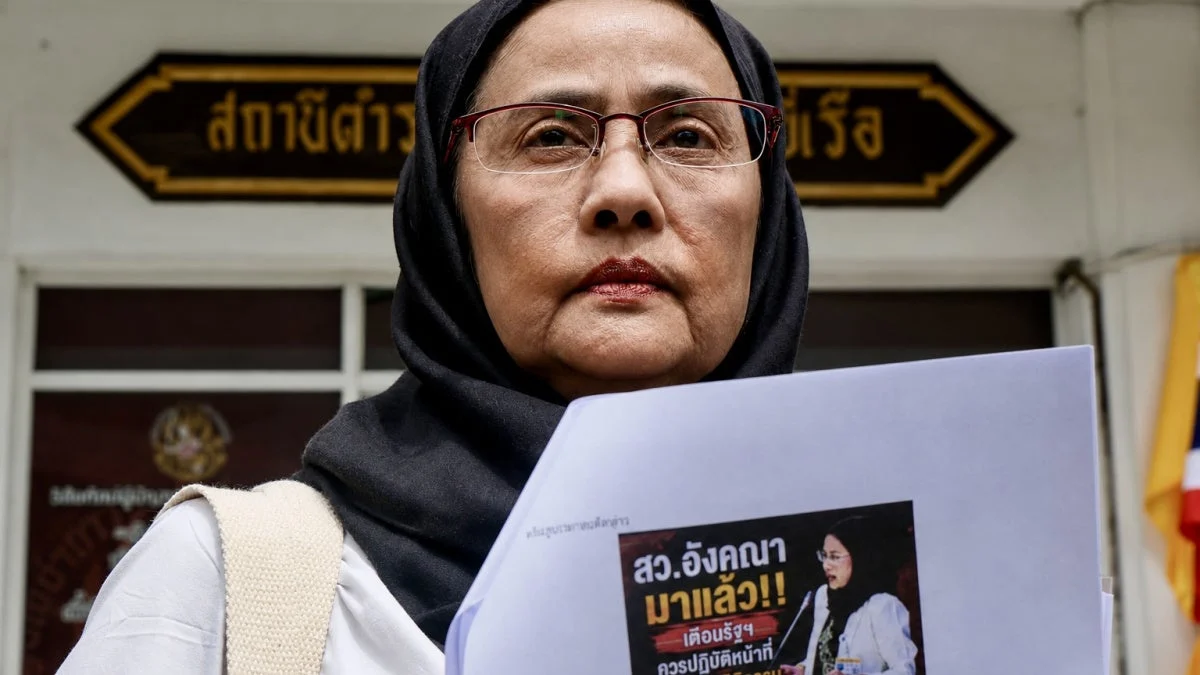
Human Rights Watch Urges Thai Authorities to Protect Lawmakers and Activists Facing Online Death Threats and Disinformation Campaigns
The Thai government is under increasing international pressure to provide immediate and effective protection for prominent members of parliament and human rights defenders who have become targets of a coordinated campaign of online death threats and state-linked disinformation. Human Rights Watch (HRW) issued an urgent appeal on July 31, 2026, calling for the administration of Prime Minister Anutin Charnvirakul to investigate a surge in digital hostility directed at Senator Angkhana Neelapaijit, Member of Parliament Romadon Panjor, and activist Anchana Heemmina. These individuals, all recognized for their advocacy regarding the conflict in Thailand’s restive Deep South, have faced accusations of treason and threats of extrajudicial violence following a recent escalation in insurgent activity in the border provinces.
On July 31, 2026, Angkhana Neelapaijit—a sitting senator and former member of the National Human Rights Commission of Thailand—formally filed a complaint with the Bangkok police. The complaint, lodged under the Computer-Related Crime Act, details a barrage of social media posts that label her as "unpatriotic" and a sympathizer of the Barisan Revolusi Nasional (BRN), the primary separatist group operating in the southern border provinces. According to HRW, the rhetoric has escalated beyond mere defamation, with several posts explicitly calling for her assassination or "forced disappearance." Similar campaigns have targeted Romadon Panjor, a lawmaker from the opposition People’s Party, and Anchana Heemmina, the founder of the Duay Jai human rights group, which provides legal support to victims of torture and detention in the south.
A Climate of Fear in the Deep South
The current wave of online attacks is deeply rooted in the long-standing conflict in Thailand’s southernmost provinces of Pattani, Yala, Narathiwat, and parts of Songkhla. Since the insurgency reignited in January 2004, the region has been characterized by a cycle of violence involving both separatist militants and Thai security forces. For human rights defenders operating in this environment, the line between digital harassment and physical danger is perilously thin.
"The Thai authorities should urgently and impartially investigate online attacks, including death threats, against Angkhana, Anchana, and Romadon, who have been widely recognized for their work defending human rights in Thailand’s deep south," said Elaine Pearson, Asia director at Human Rights Watch. Pearson emphasized that the credibility of Thailand’s commitment to human rights hinges on its ability to hold those responsible for these threats accountable, regardless of whether the perpetrators are private citizens or affiliated with state security apparatuses.
The timing of the current smear campaign appears to be a direct reaction to an insurgent attack in the Ra Ngae district of Narathiwat province on July 22, 2026. That incident resulted in the deaths of five Thai soldiers and injuries to six civilians, sparking a nationalist backlash online. In the aftermath, accounts allegedly linked to the Thai government’s information operations (IO) began circulating disinformation, attempting to link human rights advocates to the perpetrators of the violence. This tactic, often referred to as "doxxing" or "red-tagging," seeks to delegitimize activists by painting them as enemies of the state.
Chronology of State-Linked Harassment and Violence
The history of threats against these specific individuals is long and documented, reflecting a broader pattern of repression against those who challenge the military’s narrative in the Deep South.
- March 2004: Human rights lawyer Somchai Neelapaijit, the husband of Senator Angkhana, was abducted from a street in Bangkok. His disappearance occurred shortly after he accused police of torturing Muslim suspects. Despite substantial evidence implicating police officers, his body has never been found, and no one has been held accountable for his murder.
- November 2025: United Nations human rights experts expressed formal alarm over renewed harassment and death threats against Angkhana Neelapaijit and Sunai Phasuk, a senior adviser for Human Rights Watch. These threats followed their public commentary on potential violations of international humanitarian law during border skirmishes.
- April 2026: An assassination attempt was made on Kamonsak Leewamoh, a Muslim Member of Parliament and a prominent rights lawyer in Narathiwat. Although arrest warrants were eventually issued for three former military personnel, the case remains a stark reminder of the physical risks faced by those in the political opposition.
- June 2026: In a landmark ruling, the Court of Appeal ordered the Internal Security Operations Command (ISOC) to pay compensation to Angkhana and Anchana for damages caused by state-sponsored smear campaigns. The court found that the security agency had been involved in online operations designed to tarnish their reputations.
- July 22, 2026: A deadly insurgent ambush in Narathiwat serves as the catalyst for the current surge in online vitriol and death threats.
- July 31, 2026: Angkhana Neelapaijit files a formal police complaint in Bangkok, prompting HRW to issue its global call for protection.
The Role of Information Operations and State Accountability
A central concern raised by Human Rights Watch and other civil society organizations is the role of state-sponsored "Information Operations" (IOs). Research by organizations such as the Citizen Lab has previously highlighted how Thai authorities utilize online platforms to suppress dissent and harass activists. These operations often involve the use of bot networks and anonymous accounts to amplify hate speech and disseminate false information.
In the case of Angkhana, Anchana, and Romadon, the online attacks are not merely the work of "internet trolls" but appear to be a systematic effort to silence voices that call for accountability in the southern conflict. By labeling these figures as "BRN sympathizers," the campaigns create a social environment where violence against them might be viewed as "justified" by certain segments of the public.
The June 2026 court ruling against ISOC was a significant legal victory, as it officially acknowledged the state’s role in digital harassment. However, HRW argues that financial compensation is insufficient if the underlying behavior continues unchecked. The organization insists that the Computer-Related Crime Act, which is often used by the government to prosecute activists for "spreading false information," must instead be used to prosecute those who use digital platforms to incite violence and issue death threats against public servants and rights defenders.
Supporting Data: The Human Cost of the Southern Conflict
To understand the severity of the threats, one must look at the data surrounding the Deep South conflict. Since 2004, more than 7,500 people have been killed and over 13,000 injured in the provinces of Pattani, Yala, and Narathiwat. The region remains under various forms of emergency legislation, including the Emergency Decree and the Internal Security Act, which grant security forces broad powers and provide them with significant immunity from prosecution.
Human rights organizations have documented hundreds of cases of arbitrary detention, torture, and extrajudicial killings in the region. When MPs like Romadon Panjor or activists like Anchana Heemmina raise these issues in Parliament or in the media, they are directly challenging the power structures that have governed the south for over two decades. The transition to a civilian-led government under Prime Minister Anutin was expected to bring reform, but the persistence of these attacks suggests that the security apparatus remains largely autonomous.
International Implications and Thailand’s Reputation
The timing of these threats is particularly sensitive for Thailand’s international standing. In 2025, Thailand successfully campaigned for a seat on the United Nations Human Rights Council (UNHRC). As a member of the council, Thailand is expected to "uphold the highest standards in the protection and promotion of human rights."
The failure to protect its own lawmakers and citizens from death threats—especially those linked to state agencies—directly contradicts these international obligations. Human rights experts warn that if the Anutin administration does not take decisive action, Thailand’s position on the UNHRC could be undermined.
"Thailand should show the world that it has earned its UN Human Rights Council membership," said Elaine Pearson. "Concerned governments and UN agencies should press Prime Minister Anutin to hold accountable those who threaten or attack human rights defenders."
Analysis: The Future of Dissent in Thailand
The escalation of online threats into the realm of physical danger represents a critical juncture for Thai democracy. If members of the Senate and the House of Representatives cannot perform their duties or advocate for their constituents without fearing for their lives, the legislative branch’s ability to provide oversight of the executive and the military is effectively neutralized.
For the human rights community, the targeting of Angkhana, Anchana, and Romadon is seen as a "test case" for the current government. If the police investigation into the July 31 complaint fails to identify the perpetrators or if the government continues to allow ISOC-linked accounts to operate with impunity, it will send a chilling message to all civil society actors in the country.
The broader implication is that digital space in Thailand is becoming increasingly weaponized. While the government has historically used legal tools like the lèse-majesté law to curb political dissent, the use of anonymous, violent online campaigns represents a more shadow-like form of repression. It allows for the intimidation of activists while providing the state with a layer of "plausible deniability."
Conclusion and Recommendations
Human Rights Watch has called for a multi-pronged approach to address the crisis. First, the Royal Thai Police must conduct a swift, transparent, and independent investigation into the sources of the death threats. Second, the government must issue a clear public statement condemning violence against human rights defenders and affirming their role in a democratic society. Finally, there must be a structural review of how state security agencies interact with social media, ensuring that taxpayer-funded resources are not being used to harass civilians.
As Thailand navigates its role on the global stage as a member of the UN Human Rights Council, the eyes of the international community remain on Bangkok. The safety of Angkhana Neelapaijit, Romadon Panjor, and Anchana Heemmina is no longer just a domestic issue; it is a barometer for the health of human rights and the rule of law in Southeast Asia.

Related Posts
Human Rights Watch Calls for Investigation into Death of Detainee Following Removal from Najaf Hospital by Iraqi Drug Police
Human Rights Watch Urges UN Security Council to Extend Lebanon Peacekeeping Mission Amid Escalating Conflict and Humanitarian Crisis