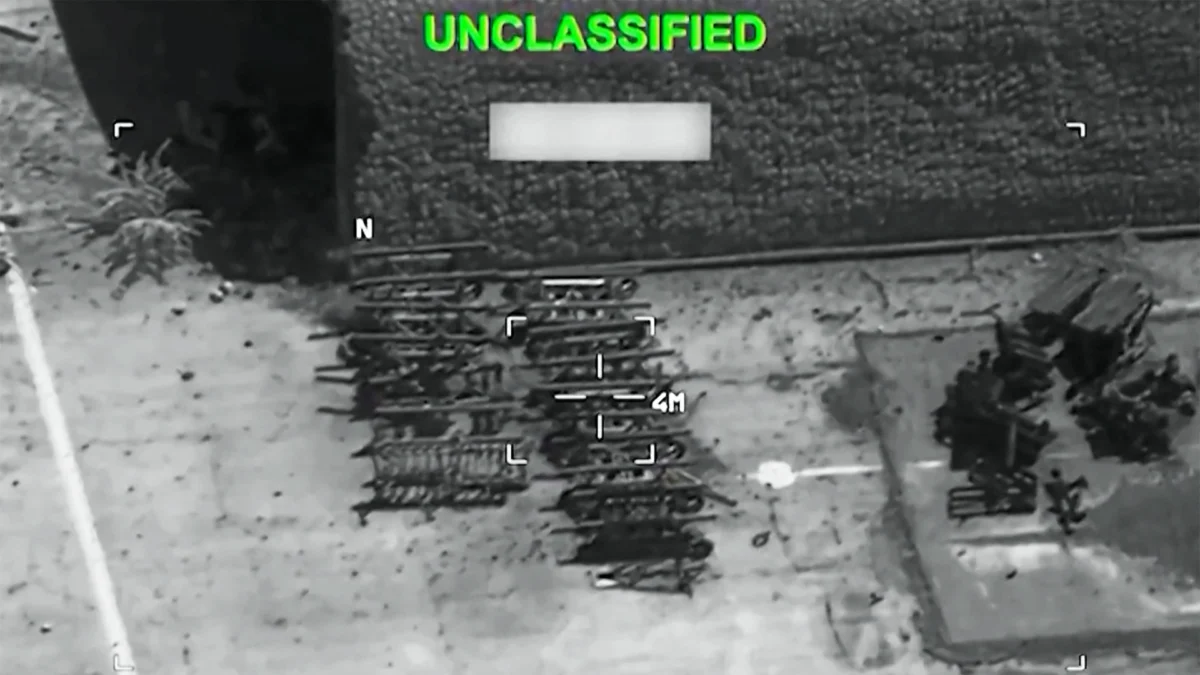
Houthi Forces Claim Red Sea Strikes on Saudi Oil Tankers Amid Escalating US-Iran Conflict, Sparking Global Maritime Security Fears
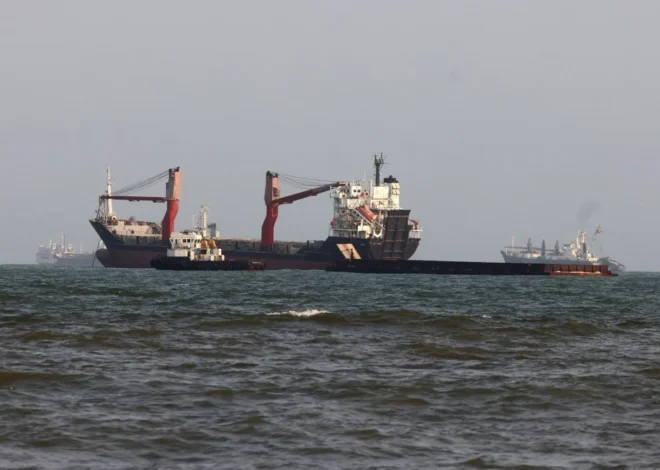
Yemen’s Houthi rebels claimed responsibility for missile and drone attacks on two Saudi oil tankers in the vital Red Sea shipping lane early on July 23, 2026, a significant escalation that followed their declaration of a maritime embargo on the kingdom. The audacious assault, occurring amidst a broader and increasingly volatile conflict between the United States and Iran, has sent immediate ripples through international energy markets and amplified concerns over the security of critical global maritime chokepoints. This incident marks a dangerous new phase in regional hostilities, intertwining the long-standing Houthi-Saudi conflict with the wider geopolitical struggle engulfing the Middle East.
The alleged strikes, which Houthi military spokesmen described as successful operations targeting Saudi economic lifelines, underscore the group’s continued capacity to project power beyond Yemen’s borders and its willingness to exploit regional instability. While Saudi Arabia and its allies have yet to confirm the full extent of the damage or the precise nature of the vessels involved, the Houthi announcement alone was sufficient to trigger a sharp spike in crude oil futures and prompt urgent calls for de-escalation from international bodies. The Red Sea, a narrow waterway connecting the Indian Ocean to the Mediterranean via the Suez Canal, is one of the world’s busiest shipping lanes, handling an estimated 12% of global trade and roughly 6.2 million barrels of oil daily. Any disruption here has immediate and far-reaching economic consequences.
Context: A Region on Edge – The US-Iran War
The Houthi assault did not occur in a vacuum but is directly contextualized by the ongoing, undeclared "US war with Iran." This conflict, which has been simmering for years but escalated sharply in late 2025 and early 2026, has seen a series of tit-for-tat actions, including cyberattacks, proxy confrontations across the Levant and Persian Gulf, and limited but significant direct military engagements. The United States, backed by a coalition of regional partners, has been engaged in efforts to curb Iran’s nuclear program, ballistic missile development, and its extensive network of regional proxies. Iran, in response, has vowed to resist what it perceives as foreign intervention and has leveraged its alliances, including with the Houthis in Yemen, to exert pressure on its adversaries.
The "US war with Iran" has manifested as a multi-domain conflict. US and allied naval forces have increased their presence in the Persian Gulf and Arabian Sea, conducting freedom of navigation operations and interdicting suspected Iranian weapons shipments. Concurrently, targeted cyberattacks have disrupted critical infrastructure in both nations, and proxy groups have intensified their activities. In early 2026, several key oil installations in the Persian Gulf region experienced drone and missile attacks, widely attributed to Iranian-backed entities, leading to temporary production halts and a global energy scare. The current climate is one of extreme tension, where any localized incident risks igniting a broader, catastrophic confrontation. The Red Sea, far from being a peripheral arena, has become a secondary but strategically crucial front in this larger geopolitical chess game, particularly for states like Saudi Arabia, which view Houthi actions as direct extensions of Iranian influence.
The Houthi Maritime Embargo and Strategic Calculus
Days prior to the alleged attacks, the Houthi movement, officially known as Ansar Allah, issued a stark declaration of a "maritime embargo" on Saudi Arabia. This unprecedented move, communicated through their official media channels, stated that any Saudi-flagged or Saudi-linked vessels transiting Houthi-controlled waters in the Red Sea would be considered legitimate military targets. Houthi military spokesman Yahya Saree had warned of "painful responses" to continued Saudi-led coalition operations in Yemen, framing the embargo as a retaliatory measure designed to force an end to the nearly decade-long conflict that has devastated Yemen.
Analysts suggest the Houthi declaration and subsequent attacks are a calculated risk, aimed at leveraging the regional chaos generated by the US-Iran conflict. By targeting Saudi economic interests in a critical global waterway, the Houthis seek to raise the stakes, disrupt global energy supplies, and draw international attention to the Yemeni crisis, potentially forcing a re-evaluation of Saudi-led military campaigns. Their access to the Red Sea, particularly the Bab el-Mandeb strait – a narrow maritime chokepoint between Yemen and Djibouti – grants them significant strategic leverage. For years, the Houthis have demonstrated capabilities to deploy anti-ship missiles, explosive-laden drone boats, and naval mines, posing a persistent threat to commercial and military shipping in the area. Previous incidents, though less severe, included attacks on Saudi naval vessels and attempts to target commercial shipping, showcasing their evolving naval warfare doctrine.
The Red Sea: A Global Economic Artery Under Threat
The Red Sea, and specifically the Bab el-Mandeb strait, is a linchpin of global commerce. Approximately one-third of the world’s container traffic and a significant portion of global oil and gas shipments pass through this narrow passage en route to or from the Suez Canal. Any sustained threat to shipping in this area not only drives up insurance premiums and reroutes vessels, adding significant time and cost to voyages, but also injects profound uncertainty into global supply chains.
The alleged Houthi attacks on Saudi oil tankers immediately raised fears of a repeat of previous maritime security crises. In 2019, attacks on oil tankers in the Gulf of Oman and Saudi oil facilities, widely attributed to Iran, caused a temporary but significant surge in oil prices and underscored the vulnerability of maritime trade to regional conflicts. The current incident, occurring within the context of an open US-Iran conflict, elevates these concerns substantially. Shipping companies and maritime security analysts are now evaluating contingency plans, including potential diversions around the Cape of Good Hope, a much longer and more expensive route that would ripple through global consumer prices.
Immediate Reactions and International Condemnations
Following the Houthi claim, initial reactions were swift and largely condemnatory. Saudi Arabia has yet to issue a detailed official statement confirming the attacks or the extent of any damage. However, unofficial sources within the Saudi government, speaking on condition of anonymity, denounced the actions as "maritime terrorism" and a "blatant violation of international law," vowing a robust response. The Saudi-led coalition in Yemen, which has been battling the Houthis since 2015, is expected to intensify its air and naval operations in response to this escalation.

From Washington, a spokesperson for the US State Department condemned the alleged attacks, stating they "further destabilize a region already grappling with immense challenges" and called on all parties to "de-escalate and respect freedom of navigation." US Central Command (CENTCOM) reportedly put its naval assets in the region on heightened alert, emphasizing its commitment to ensuring the security of international waterways. The incident undoubtedly complicates US efforts to manage the broader conflict with Iran, as it introduces another volatile element into an already combustible environment.
Iran’s response, predictably, was more ambiguous. While official Iranian spokesmen did not directly acknowledge or endorse the Houthi actions, state-affiliated media highlighted the attacks as a "natural consequence" of the Saudi-led blockade on Yemen. This narrative aligns with Iran’s long-standing strategy of supporting proxy groups while maintaining plausible deniability regarding their specific actions.
International bodies also weighed in. The United Nations Secretary-General issued a statement expressing "deep concern" over the reports and urged "maximum restraint" to prevent a wider conflagration. The International Maritime Organization (IMO) called for an immediate investigation and reiterated the importance of upholding international conventions on maritime safety and security. Major shipping associations advised vessels transiting the Red Sea to exercise extreme caution, enhance security protocols, and consider additional protective measures.
Economic and Geopolitical Implications
The ramifications of these alleged attacks are multifaceted. Economically, the immediate impact was felt in global oil markets. Brent crude futures surged by over 4% in early trading, crossing the $95 per barrel mark, driven by fears of supply disruptions from the Middle East. Energy analysts warned that sustained threats to Red Sea shipping could push prices well into triple digits, exacerbating inflationary pressures globally and potentially tipping fragile economies into recession. Shipping insurance premiums for vessels transiting the Red Sea are expected to skyrocket, making trade more expensive and potentially rerouting traffic.
Geopolitically, the Houthi actions further complicate the already intricate web of alliances and antagonisms in the Middle East. They demonstrate the Houthis’ capacity to act as a significant spoiler, potentially drawing more regional and international actors into the Yemeni conflict. For Saudi Arabia, the attacks represent a direct challenge to its national security and economic stability, demanding a forceful response. For the United States, it underscores the difficulty of containing regional conflicts when dealing with non-state actors operating within the shadow of a larger strategic rivalry with Iran.
Moreover, the incident raises critical questions about the effectiveness of existing maritime security frameworks and the challenges of policing vast international waters against asymmetric threats. While naval patrols by international coalitions exist in the region, the sheer volume of traffic and the evolving nature of drone and missile technology make comprehensive protection a formidable task.
Historical Precedents and Escalation Risks
The targeting of oil tankers in strategic waterways carries heavy historical weight. The "Tanker War" phase of the Iran-Iraq War in the 1980s saw hundreds of commercial vessels attacked, highlighting the devastating impact of such tactics on global commerce and stability. While the scale of the current incident is far smaller, its context – a full-blown "US war with Iran" – gives it a unique and alarming resonance.
There is a significant risk of escalation. Saudi Arabia, supported by the US, is unlikely to tolerate repeated attacks on its vital shipping without a robust military response. This could include targeted strikes against Houthi naval capabilities, missile launch sites, or command and control centers, potentially drawing the US more directly into the Yemeni conflict. Such an escalation would further destabilize Yemen, exacerbate its already dire humanitarian crisis, and risk an even wider regional conflict involving other proxies and state actors.
The Future of Maritime Security and Regional Stability
The alleged Houthi attacks on Saudi oil tankers serve as a stark reminder of the interconnectedness of regional conflicts and global economic stability. They highlight the enduring vulnerability of critical maritime chokepoints to both state and non-state actors willing to employ unconventional warfare tactics. As the US-Iran conflict continues to unfold, and as groups like the Houthis seek to leverage this broader instability for their own objectives, the Red Sea is poised to remain a flashpoint.
The international community faces an urgent challenge: to de-escalate tensions in the Red Sea, protect vital shipping lanes, and address the root causes of the Yemeni conflict, all while navigating the complexities of the overarching US-Iran confrontation. Failure to do so risks not only further economic disruption but also the very real possibility of a cascading series of events that could plunge the entire Middle East, and by extension the global economy, into an even deeper crisis. The incident on July 23, 2026, is not merely an isolated attack but a critical indicator of the perilous trajectory of regional affairs.

Related Posts
Over 150 Israeli Settlers Storm Al-Aqsa Compound and Perform Prayers, Violating Status Quo Under Police Protection.
UN Report Highlights Over 900 Obstacles Hampering West Bank Aid Amid Escalating Humanitarian Crisis