‘Hate,’ ‘Stupidity’: Rep. Bacon Slams Citizen Opposition to Visa Workforce Bill
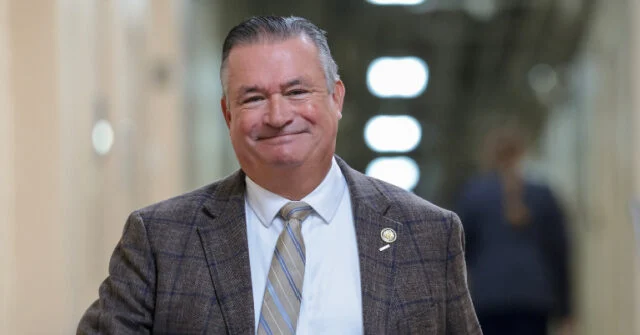
Retiring Republican Representative Don Bacon of Nebraska has ignited controversy by asserting that citizens opposing his support for a bill aimed at expanding cheap labor in the rural economy are motivated by "hate" and "stupidity." These remarks come as a significant number of his GOP colleagues are quietly withdrawing their backing from the proposed legislation, underscoring a deepening schism within the party on immigration and labor policy. The bill, known as the Securing America’s Workforce Act (SAWA), seeks to massively expand the H-2A agricultural visa program and offer a pathway to legal status for many undocumented workers currently in the United States, a move that critics contend would depress wages and displace American workers.
The Genesis of the Controversy: Bacon’s Provocative Statements
On July 22, in a series of social media posts that quickly drew national attention, Rep. Bacon articulated his frustration with the opposition to SAWA. "What polling shows us is that approx 35% HATE all immigrants… And they’re loud," Bacon stated, implying that a substantial segment of the American populace holds an irrational animosity towards immigrants. He followed this with an equally pointed declaration: "It’s time we stand up to stupidity," a direct response to criticisms leveled against the "pro-investor" bill by a former top official from President Donald Trump’s first administration. These statements cast a harsh light on the motivations of those who disagree with his policy stance, framing their concerns not as legitimate economic or social anxieties, but as base emotional reactions or intellectual deficiencies.
Bacon, whose congressional district encompasses the Democratic-leaning city of Omaha and includes numerous businesses reliant on migrant labor, such as large meatpacking facilities, has long been a proponent of policies that facilitate mass migration. His voting record and public statements have consistently supported the influx of various migrant groups, including Afghans, Indians, and most recently, Haitians under Temporary Protected Status (TPS). He frequently cites "workforce shortages" and the concerns of local business leaders, including the Omaha Chamber of Commerce, as justifications for his positions. For instance, in an April 15 post, he argued against removing TPS status for Haitians, stating it "would cost 350,000 workers their ability to work at a time when we’re already facing serious workforce shortages," and that he doesn’t "see the goodness of deporting people who are here legally, working, and contributing to our country."
Furthermore, Bacon has attempted to frame his pro-migration stance as ethically superior, asserting that "Most Americans want a more reasonable and decent policy [and] A Christian policy is more balanced." This appeal to moral and religious principles aims to elevate his position above mere political or economic calculations, yet it starkly contrasts with growing public sentiment and the evolving Republican platform on immigration.
Understanding the Securing America’s Workforce Act (SAWA)
At the heart of this debate is the Securing America’s Workforce Act (SAWA), introduced by Pennsylvania Republican Representative Glen Thompson. The bill proposes a significant overhaul of agricultural labor regulations, primarily through two key mechanisms:
- Massive Expansion of the H-2A Visa Program: The H-2A program allows agricultural employers to bring foreign nationals to the U.S. to fill temporary agricultural jobs if there are not enough U.S. workers available. While intended to address seasonal labor shortages, critics argue that its expansion, particularly without robust safeguards, can lead to wage suppression for domestic workers, exploitation of H-2A visa holders, and a disincentive for agricultural businesses to invest in labor-saving technologies or improve working conditions. SAWA aims to significantly increase the number of these wage-capped workers available to the rural economy.
- Pathway to Legal Status for Undocumented Agricultural Workers: A contentious provision of SAWA would allow many undocumented immigrants currently working in U.S. food companies to gain legal status. Proponents argue this would stabilize the agricultural workforce and bring millions out of the shadows. Opponents, however, view this as a form of "amnesty" that rewards illegal immigration and further incentivizes future unauthorized crossings, while also undermining existing immigration laws and border security efforts.
The agricultural industry has long relied on a flexible and often low-cost labor supply, with a significant portion of the workforce being foreign-born, many of whom are undocumented. This reliance has fueled a perennial debate between those advocating for more robust enforcement and those seeking comprehensive immigration reform that addresses the realities of the agricultural labor market. SAWA represents an attempt to bridge this divide, albeit in a manner that has proven deeply divisive.
The Deepening Cracks: Republican Withdrawals and Mounting Opposition
Despite the perceived benefits for certain agricultural sectors, SAWA has faced significant internal opposition within the Republican Party. So far, four out of the 47 GOP members who initially co-sponsored the bill have publicly announced their withdrawal of support: Representative Mike Flood of Nebraska, Representative Tim Moore of North Carolina, Brian Jack of Georgia, and Mark Messmer of Indiana. This growing defection signals a broader discomfort within the party regarding the bill’s implications, particularly concerning immigration enforcement and the potential impact on American jobs.
Representative Mike Flood’s statement regarding his withdrawal encapsulates the concerns driving this shift. "Concerns from constituents, conservative leaders and Nebraska ag producers have made clear that provisions in the Securing America’s Workforce Act are not the right way to uphold our immigration laws," Flood told Nebraska Public Media News. He further emphasized his commitment to the previous administration’s policies: "I’m listening, and at a moment when our border is finally secure thanks to President Trump’s leadership, I’m not willing to move forward on anything that could risk our progress." Flood’s remarks highlight the powerful influence of constituent feedback and conservative advocacy groups, as well as the enduring legacy of Trump’s immigration policies within the GOP. His reference to border security, in particular, points to a fundamental conflict between policies that facilitate guest worker programs and the party’s broader emphasis on border enforcement.
Immigration advocacy groups have been vocal in their opposition, casting SAWA as a detrimental policy for American workers. Rosemary Jenks, founder of the Immigration Accountability Project, sharply criticized the bill, stating, "This is about replacing entire segments of American [agriculture workforce] with foreign serf labor." Jenks argues that the expansion of a wage-capped H-2A program and the legalization of existing undocumented workers would lead to a significant loss of rural jobs and spending power, ultimately causing an "out-migration of young Americans" and wrecking local businesses, including those represented by Chambers of Commerce. The term "serf labor" is particularly loaded, suggesting a system where workers are tied to their employers under conditions that offer little mobility or upward economic potential, thereby undermining fundamental labor rights and fair competition.
William Gheen, president of ALIPAC (Americans for Legal Immigration PAC), a grassroots pro-American group, echoed these concerns, telling Breitbart News that he believes many Republican lawmakers co-sponsoring HR 9535 (the House version of SAWA) are "unaware of the Amnesty provisions in the bill and have not thought out the long-term impacts of changing America’s existing immigration laws to accommodate illegal migrants and their employers." Gheen asserted that the bill "would undermine America’s existing laws, border security, and mass deportation efforts by caving to big agriculture and meat packing lobby interests and selling American workers and taxpayers out once again for the illegal labor lobby." His statement points to a perceived disconnect between the stated goals of the bill and its practical implications, suggesting that powerful industry lobbies are driving legislation at the expense of national interests and worker welfare.
Economic Implications: Wages, Technology, and Rural Futures
The debate around SAWA is inextricably linked to broader economic trends and the future of the American workforce, particularly in agriculture and related industries like meatpacking. For years, these sectors have navigated complex labor challenges, often relying on a readily available pool of low-wage workers. The previous administration under President Joe Biden, through its policies regarding legalized refugees, quasi-legal parolees, and a more lenient approach to undocumented migrants, inadvertently provided a supply of labor that many meatpacking companies utilized to "hold down wage costs and to avoid investments in labor-saving technology." This dynamic created a system where the incentive to innovate or offer competitive wages was diminished by the availability of cheaper labor.
However, the landscape began to shift significantly under President Donald Trump’s low-migration policies. The stricter enforcement and reduced influx of new migrants compelled industries to re-evaluate their labor strategies. This pressure has started to manifest in tangible ways, forcing companies to raise wages and divert profits into technology and worker benefits. A notable example is the June 2025 report from KNLVradio.com, detailing a "Groundbreaking Union Contract" signed by a major JBS meatpacking firm in Iowa. This agreement brought substantial gains for 26,000 meatpacking workers across the U.S., including pay raises, paid sick leave, and a pension plan. Thelma Cruz, a JBS Pork plant worker in Marshalltown, Iowa, expressed her excitement about the pension, highlighting the life-changing impact of such benefits on working families.
This shift underscores a fundamental choice facing industries: continue to rely on a low-wage, high-turnover migrant workforce, or invest in a higher-wage, more skilled, and technologically advanced domestic labor force. The bill defended by Bacon, by expanding the H-2A program and offering legal status, would allow meatpackers and agricultural businesses to revert to the former model, potentially sidestepping the need to hire more Americans or invest in labor-saving technologies. Such technologies, including robotics and automation, hold the promise of increasing efficiency, improving working conditions, and ultimately leading to higher wages for American workers, thereby boosting overall economic prosperity in rural communities. Trump himself has articulated a vision favoring "high-wage automation over low-wage migration," stating, "We have to get efficient… we’ll probably add to [the existing workforce] through robotically—it’s going to be robotically. Then, somebody is going to have to make the robots [so] the whole thing, it feeds on itself." This alternative vision suggests a path towards economic growth that prioritizes domestic innovation and a higher standard of living for American workers.
Public Opinion and the Evolving Political Landscape
Rep. Bacon’s assertion that "Most Americans want a more reasonable and decent policy" and a "Christian policy is more balanced" when referring to mass migration and guest worker programs stands in stark contrast to numerous public opinion polls. These polls consistently indicate that Americans deeply oppose the corporate use of migrants to undercut wages and inflate housing costs. A significant segment of the electorate, particularly within the Republican base, favors stricter immigration enforcement and policies that prioritize American workers’ wages and job security. This disconnect highlights a growing chasm between the interests of certain business lobbies, which benefit from a flexible and inexpensive labor supply, and the concerns of the general public and many conservative voters.
The political landscape within the GOP has been dramatically reshaped by the "America First" movement, which places a strong emphasis on national sovereignty, border security, and protecting domestic jobs. Lawmakers who support bills perceived as "amnesty" or as facilitating "cheap labor" often find themselves at odds with this powerful faction of their party and its voter base. The withdrawals of several GOP co-sponsors from SAWA reflect this internal tension and the increasing pressure on Republican politicians to align with a more restrictionist immigration stance.
Bacon’s Retirement and the Path Forward
As Rep. Don Bacon prepares for retirement at the end of his term, his controversial defense of SAWA underscores the complex and often contentious nature of immigration and labor policy in the United States. His successor in Nebraska’s 2nd congressional district, GOP candidate Brinker Harding—a real estate agent and investor—offers a glimpse into the future direction. Harding’s platform, while generally light on comprehensive immigration policy, explicitly states, "Deport criminal illegal immigrants who commit violent crimes." This focus aligns more closely with the prevailing sentiment within the post-Trump Republican Party, suggesting a potential shift away from the broader pro-migration advocacy championed by Bacon.
The debate surrounding SAWA is more than just a legislative squabble; it reflects a fundamental reckoning within the Republican Party and the nation as a whole regarding economic priorities, immigration ethics, and the future of American labor. As the country grapples with labor shortages, inflation, and technological advancements, the choices made on bills like SAWA will have profound implications for the economic well-being of rural communities, the wages of American workers, and the overall direction of national immigration policy. The tension between the demands of agribusiness for cheap labor and the desire for higher wages, technological innovation, and secure borders continues to define one of the most pressing policy challenges of our time.

Related Posts

Democratic Candidates Must Moderate to Win General Elections, Says Rep. Greg Stanton
Lisa Demuth Secures Republican Gubernatorial Nomination in Minnesota, Defeating Trump-Endorsed Mike Lindell