
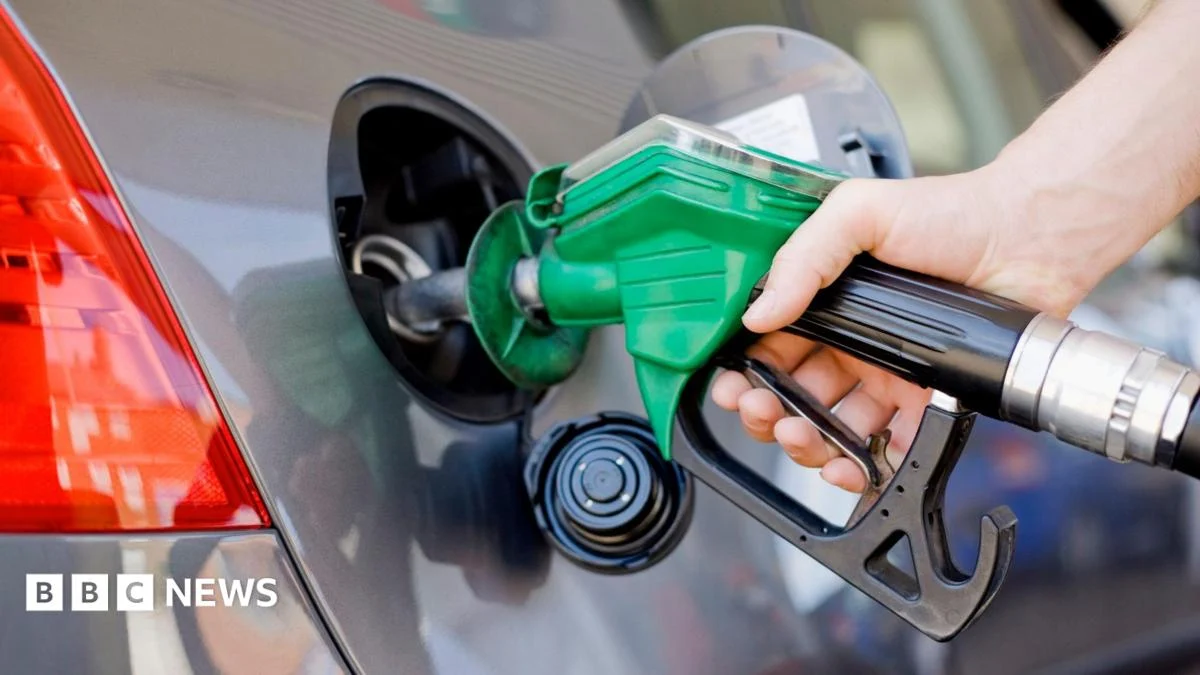
Global Oil Prices Recede as US-Iran De-escalation Hopes Emerge, but Market Volatility Persists Amidst Deep-Rooted Tensions
Global oil markets experienced a significant downturn this week, with Brent crude, the international benchmark, plunging by over 9% to fall below $88 a barrel at one juncture. This sharp reversal from last week’s surge, which saw prices exceed $100, was primarily driven by growing optimism that a temporary cessation of hostilities between the United States and Iran could pave the way for a diplomatic resolution to the simmering conflict. The recent de-escalation, marked by a second consecutive night without reported attacks, has offered a glimmer of hope for stability in the volatile Middle East, easing immediate concerns over global energy supply disruptions.
The Volatile Arc of Conflict and Oil Prices
The journey of oil prices over the past several months has been a direct reflection of the escalating and de-escalating tensions in the Persian Gulf. Prior to the full-scale outbreak of the Iran war, global oil prices hovered around a relatively stable $70 a barrel. This equilibrium was shattered when the conflict erupted, leading to a de facto closure of the Strait of Hormuz. This critical maritime choke point, through which approximately 20% of the world’s total petroleum liquids and a significant portion of its liquefied natural gas (LNG) pass daily, became impassable for commercial shipping due to military operations and heightened security risks. The immediate consequence was a dramatic spike in oil prices, reflecting fears of a catastrophic disruption to global energy supplies. Traders and analysts braced for a protracted period of elevated prices, with some speculating that Brent could even breach $120 a barrel if the conflict intensified.
A brief period of respite emerged in June when both Iran and the United States signed a memorandum of understanding (MoU), signaling a mutual commitment to halt military operations and facilitate the reopening of the Strait of Hormuz. This diplomatic breakthrough provided a temporary balm to the anxious markets, causing oil prices to recede almost immediately to pre-war levels of around $70 a barrel. The global economy, already grappling with inflationary pressures, breathed a collective sigh of relief, anticipating a return to more predictable energy costs.
However, this fragile ceasefire proved short-lived. The collapse of the agreement earlier this month reignited profound fears over global energy supplies. The resurgence of hostilities, coupled with renewed rhetoric from both Washington and Tehran, sent shockwaves through the market. Last week, Brent crude surged back above $100 a barrel, a threshold not seen since May, underscoring the deep sensitivity of oil prices to geopolitical instability in the region. Adding to these concerns were reports of Houthi militia in Yemen targeting oil tankers in the Red Sea. This development was particularly alarming as the Red Sea route had increasingly been utilized by Saudi Arabia as an alternative export pathway to bypass the Strait of Hormuz, effectively creating a secondary choke point and compounding the vulnerability of global shipping lanes.
A Moment of Pause: Diplomacy Takes Center Stage
The current downturn in oil prices follows explicit statements from both sides indicating a pause in hostilities. The US ambassador to the United Nations confirmed that attacks on Iran had been halted for a second consecutive night, explicitly stating the intention was "to give talks some space." This diplomatic gesture was reciprocated by Tehran, with an Iranian army spokesperson announcing on Sunday that Iran had also ceased its "retaliatory" attacks in the region. This synchronized de-escalation has been interpreted by markets as a cautious step towards potential negotiation, offering a much-needed reprieve from the cycle of tit-for-tat military actions that had characterized the conflict.
Broader Geopolitical Context and Historical Tensions
The roots of the current US-Iran conflict are deeply embedded in decades of complex geopolitical dynamics, punctuated by periods of intense animosity and fleeting attempts at reconciliation. Central to the recent escalation has been the status of Iran’s nuclear program and the 2015 Joint Comprehensive Plan of Action (JCPOA), commonly known as the Iran nuclear deal. The US withdrawal from the JCPOA in 2018 under the previous administration, followed by the re-imposition of stringent sanctions, significantly heightened tensions. Iran, in response, gradually scaled back its commitments under the deal, leading to an increase in its uranium enrichment activities.
The current conflict, while having immediate triggers related to specific incidents, is also a manifestation of a broader proxy struggle for regional influence. Both the US and Iran support various non-state actors and governments across the Middle East, leading to a complex web of rivalries in Iraq, Syria, Yemen, and Lebanon. The strategic importance of the Persian Gulf and the Strait of Hormuz cannot be overstated, not only for oil transit but also as a vital commercial artery for global trade. Any disruption in this region has immediate and far-reaching economic consequences, making stability a paramount concern for major global powers. The international community, including the United Nations and various European powers, has consistently called for de-escalation and diplomatic engagement to prevent the conflict from spiraling into a wider regional conflagration.
Market Sentiment and Expert Analysis
Despite the sharp fall in crude prices, market sentiment remains overtly cautious. Susannah Streeter, chief investment strategist at Wealth Club, encapsulated this prevailing mood, stating that markets are "remaining cautious given the twists and turns during this conflict." Her assessment highlights the inherent volatility and unpredictability of the situation. While the immediate threat has receded, the underlying issues that fueled the conflict remain unresolved. Streeter further elaborated, "there is still significant uncertainty baked into these prices and a reticence about whether negotiations will lead to a lasting breakthrough." This perspective underscores that the current price correction is largely a reaction to a temporary pause rather than a fundamental shift in the geopolitical landscape. Many analysts believe that a substantial "geopolitical risk premium" still inflates oil prices, reflecting the market’s assessment of potential future disruptions. For instance, before the latest de-escalation, some estimates placed this risk premium at $10-15 per barrel, an amount that could quickly re-enter the price if tensions reignite.
Energy market watchers are also closely monitoring the actions of major oil producers, particularly OPEC+. While OPEC+ has largely maintained its production quotas, a prolonged conflict or a significant supply disruption could pressure the cartel to increase output to stabilize prices, though its capacity for substantial additional supply is debated. The International Energy Agency (IEA) has repeatedly warned about the fragility of global energy markets and the need for diversified supply chains and strategic petroleum reserves to mitigate the impact of such shocks.
Economic Fallout and Central Bank Dilemmas
The impact of the US-Iran conflict on oil prices has had a pervasive and detrimental effect on global economies, primarily by driving up the cost of essential fuels like petrol and diesel. This surge in energy costs has a cascade of knock-on effects across various sectors. Businesses, particularly those in transportation, manufacturing, and agriculture, face higher operational expenses. These increased costs are often passed on to consumers in the form of higher prices for goods and services, leading to an upward spiral in the overall rate of inflation. For instance, a sustained $10 increase in oil prices is often correlated with a 0.1-0.2 percentage point increase in global inflation over the subsequent year, a significant burden for households already struggling with a cost-of-living crisis.
The specter of persistent high inflation presents a significant challenge for central banks worldwide. Their primary mandate is to maintain price stability, and rising inflation often prompts them to consider increasing interest rates. Higher interest rates are a tool to cool down an overheating economy by making borrowing more expensive, thereby reducing consumer spending and business investment. However, this approach carries the risk of slowing economic growth, potentially even tipping economies into recession.
In June, the European Central Bank (ECB) opted to raise its key interest rate for the eurozone for the first time in nearly three years, explicitly citing the conflict as a factor "generating inflation pressures." This move signaled the seriousness with which central banks view the economic fallout from geopolitical events. Similarly, in the United Kingdom, before the Iran war began, there were widespread expectations that the Bank of England (BoE) would initiate rate cuts this year to stimulate a sluggish economy. However, those expectations have been completely overturned. Financial markets are now not only predicting no cuts but are actively forecasting a rate rise towards the end of the year, reflecting the persistent inflationary pressures exacerbated by energy costs. The Bank of England is scheduled to hold its latest interest rate-setting meeting this week, where it is widely anticipated to keep its key rate unchanged at 3.75%, opting for a cautious wait-and-see approach amidst the global economic uncertainty.
Looking Ahead: The Path to Resolution
The current pause in hostilities, while welcomed, represents a fragile window of opportunity. The history of US-Iran relations is replete with moments of de-escalation followed by renewed tensions. For a lasting resolution, comprehensive diplomatic engagement will be required, addressing not only immediate military actions but also the underlying grievances and strategic concerns of both nations. This would likely involve complex negotiations regarding Iran’s nuclear program, regional security arrangements, and the lifting of sanctions.
The global community, including the United Nations and key regional players, will undoubtedly play a crucial role in facilitating dialogue and ensuring adherence to any potential agreements. For the global economy, the stakes remain incredibly high. A sustained period of stability in the Persian Gulf would not only alleviate inflationary pressures and provide relief to consumers and businesses but also foster greater predictability in global energy markets. Conversely, a renewed escalation could plunge the world into another period of intense economic uncertainty, making the current diplomatic overtures all the more critical. The coming weeks will be pivotal in determining whether this fragile pause evolves into a more durable path towards peace or if it merely serves as a temporary lull before the next storm.

Related Posts
Zambia on Edge: Opposition Leader Arrested Amid Allegations of Insurrection Plot and Election Tensions
Rescuers search for survivors of powerful Indonesia earthquake

