Former Israeli Security Advisor Advocates for Perpetual Devastation of Gaza, Citing Strategic Interests
A former head of Israel’s National Security Council, retired Major General Giora Eiland, has publicly called for the Gaza Strip to remain in a state of devastation for decades, asserting that such a prolonged destruction aligns with Israeli interests. Speaking to Israel’s 103FM radio station on Sunday, Eiland articulated a vision where Palestinian despair and widespread destruction are not merely consequences of conflict but desirable strategic outcomes, particularly in the aftermath of what the original source describes as Israel’s "genocide" in the enclave.
General Eiland’s remarks centered on the premise that any reconstruction efforts in Gaza would be antithetical to Israel’s security objectives. "Israel has no interest in Gaza being rebuilt; it is better for us that it be destroyed for generations to come," Eiland stated unequivocally. He further elaborated on this viewpoint, adding, "The greater the despair in Gaza and the greater the destruction, and the greater the monument to what they did on October 7, years to come, that is good." These statements, delivered by a figure with significant past influence in Israeli security policy, have drawn considerable attention, underscoring a hardline perspective within certain Israeli circles regarding the future of the besieged Palestinian territory.
The Context of Unprecedented Devastation
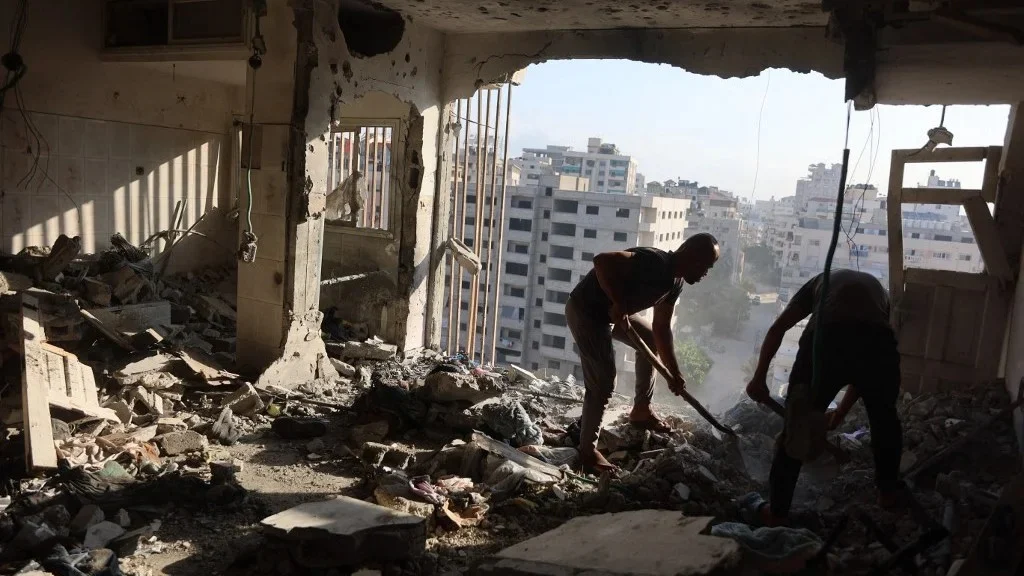
General Eiland’s comments come amidst a conflict that has brought unprecedented levels of destruction and human suffering to the Gaza Strip. The current military operation, launched by Israel following the October 7, 2023, attacks by Hamas, has transformed vast swathes of Gaza into uninhabitable ruins. Prior to this latest escalation, Gaza, a narrow strip of land home to over 2.3 million Palestinians, had already been under an Israeli and Egyptian blockade since 2007. This blockade severely restricted the movement of goods and people, stifling economic development and rendering the territory largely dependent on international aid. The United Nations and numerous humanitarian organizations had long described Gaza as an "open-air prison," with a collapsing infrastructure, high unemployment rates, and a population struggling with chronic poverty and food insecurity.
The October 7 attacks saw Hamas militants cross into southern Israel, killing approximately 1,200 people, mostly civilians, and taking over 240 hostages. Israel’s response, dubbed "Operation Iron Swords," aimed at dismantling Hamas’s military and governance capabilities and ensuring Israel’s long-term security. However, the scale and intensity of the subsequent military campaign have led to a catastrophic humanitarian crisis.
A Chronology of Catastrophe: Gaza Since October 7
The events since October 7 have unfolded rapidly, marking a brutal chapter in the long-standing Israeli-Palestinian conflict:
- October 7, 2023: Hamas launches a multi-pronged attack on southern Israel, resulting in significant casualties and the abduction of hostages.
- October 8, 2023 onwards: Israel initiates intensive airstrikes across the Gaza Strip, declaring a "complete siege" and cutting off electricity, water, fuel, and food supplies.
- Late October 2023: Israeli ground forces begin a full-scale invasion of northern Gaza, urging residents to evacuate south. This leads to mass displacement.
- November 2023: Intense urban warfare unfolds in Gaza City. Hospitals, including Al-Shifa, come under immense pressure and military operations.
- November 24-December 1, 2023: A temporary humanitarian truce is agreed upon, facilitating the exchange of some hostages for Palestinian prisoners and allowing limited aid into Gaza.
- December 2023 onwards: Fighting intensifies across the entire Gaza Strip, including Khan Younis in the south. The humanitarian situation deteriorates rapidly, with warnings of famine and disease.
- January 2024: The International Court of Justice (ICJ) begins hearings on South Africa’s case accusing Israel of genocide in Gaza, issuing provisional measures calling on Israel to prevent acts of genocide.
- February 2024: Israeli military operations expand towards Rafah, where over 1.5 million displaced Palestinians are sheltering, raising international alarm about a potential humanitarian catastrophe.
- March-April 2024: Reports of widespread hunger and starvation emerge, particularly in northern Gaza. International pressure for a ceasefire and increased aid access mounts.
- May 2024: Israeli forces enter Rafah, leading to renewed displacement and exacerbating the humanitarian crisis.
- Current Period: The conflict continues with no clear end in sight, and discussions about Gaza’s post-war future, or "day after," remain contentious and unresolved.
The Unprecedented Scale of Destruction
The data illustrating the devastation in Gaza paints a grim picture, far exceeding the impact of previous conflicts. According to reports from the United Nations Office for the Coordination of Humanitarian Affairs (OCHA), the Palestinian Central Bureau of Statistics (PCBS), and other humanitarian organizations:
- Housing: An estimated 70-80% of all housing units in Gaza have been damaged or completely destroyed. This translates to hundreds of thousands of homes rendered uninhabitable, leaving over 1.7 million people, or nearly 75% of the population, internally displaced, many multiple times over. Entire neighborhoods, particularly in northern Gaza and Khan Younis, have been flattened.
- Infrastructure: Critical civilian infrastructure has been decimated. Over 70% of Gaza’s healthcare facilities are non-functional or partially functional, lacking essential supplies, electricity, and staff. Schools, universities, bakeries, water purification plants, and sewage systems have been severely damaged or destroyed, leading to acute shortages of clean water, sanitation, and education. Agricultural land has been ravaged, impacting food security.
- Casualties: As of recent reports, the Palestinian Ministry of Health in Gaza has reported over 37,000 Palestinians killed, with a significant proportion being women and children. Thousands more are missing, presumed dead under the rubble. On the Israeli side, over 1,200 people were killed in the initial October 7 attacks, and hundreds of Israeli soldiers have been killed in subsequent ground operations.
- Humanitarian Crisis: The situation is dire, with the UN warning of an imminent famine, particularly in northern Gaza. Access to food, water, medicine, and fuel is severely restricted. Diseases are spreading rapidly due to overcrowding, poor sanitation, and lack of medical care. Humanitarian aid efforts are constantly hampered by logistical challenges, security concerns, and border crossing restrictions.
International Law and Humanitarian Obligations

General Eiland’s statements raise significant concerns under international law, particularly the Geneva Conventions and principles governing armed conflict and occupation. As an occupying power, Israel has obligations to ensure the welfare of the civilian population in Gaza, including facilitating access to humanitarian aid and, in post-conflict scenarios, cooperating with reconstruction efforts. Intentionally seeking to perpetuate destruction and despair could be interpreted as a violation of these duties and potentially constitute collective punishment, which is prohibited under international humanitarian law.
The concept of preventing reconstruction to create a "monument to what they did on October 7" also clashes with the fundamental principles of proportionality and distinction in warfare, which require military actions to differentiate between combatants and civilians and to avoid excessive harm to civilian populations and infrastructure. Furthermore, such an approach would contradict the spirit of resolutions from the UN Security Council and General Assembly, which have repeatedly called for humanitarian aid, protection of civilians, and long-term solutions that address the root causes of the conflict.
The ongoing ICJ case, initiated by South Africa, accusing Israel of genocide in Gaza, adds another layer of legal scrutiny. While Eiland’s statements are those of an individual, albeit a prominent former official, they contribute to a broader narrative that critics argue could be used as evidence of intent to destroy the Palestinian population in Gaza, in whole or in part, a key element of the crime of genocide.
Reactions and Broader Implications
While General Eiland’s comments reflect a hawkish viewpoint present within parts of the Israeli security establishment and public, they are likely to elicit strong condemnation from various quarters:
- Palestinian Officials and Civil Society: For Palestinians, such statements would likely be perceived as further evidence of an Israeli intent to dispossess and subjugate them, deepening mistrust and despair. It would likely fuel sentiments of resistance and reinforce the belief that Israel seeks to make life in Gaza unbearable, thus compelling mass displacement.
- International Humanitarian Organizations: Groups like the UN, Doctors Without Borders, Oxfam, and others would undoubtedly decry such a policy as inhumane and illegal. They would reiterate calls for immediate humanitarian assistance, protection of civilians, and a commitment to reconstruction.
- International Community and Diplomatic Bodies: Many nations, particularly those advocating for a two-state solution or adherence to international law, would likely view Eiland’s comments as inflammatory and counterproductive to peace efforts. Such a stance would undermine any prospects for regional stability and make it harder to garner international support for Israel’s long-term security.
- Within Israel: While some hardliners might endorse Eiland’s perspective, others within Israel, including those concerned about the country’s international standing, the long-term implications for its security, or the moral cost of such policies, might express reservations or outright opposition. There is an ongoing debate within Israel about the "day after" in Gaza, with various proposals ranging from international administration to a renewed Israeli military presence, but few openly advocating for perpetual devastation without any form of governance or reconstruction.
The implications of a policy seeking perpetual destruction in Gaza are far-reaching. It would:
- Exacerbate Humanitarian Crisis: Without reconstruction, Gaza would remain a humanitarian catastrophe, leading to ongoing suffering, disease, and potentially mass exodus.
- Fuel Regional Instability: Such an outcome would likely breed resentment, radicalization, and further conflict, undermining any efforts towards a lasting peace in the Middle East. It would be seen as a victory for extremism and a defeat for moderation.
- Undermine International Law and Order: A deliberate policy of non-reconstruction and perpetual despair would set a dangerous precedent, challenging the foundational principles of international humanitarian law and the responsibilities of states in conflict.
- Complicate Future Peace Prospects: Any viable path towards a two-state solution or a dignified future for Palestinians would be rendered impossible if Gaza remains a desolate wasteland. It would make reconciliation and coexistence seem utterly unattainable.
The "Day After" and the Path Forward
The question of Gaza’s future, often referred to as "the day after," remains one of the most intractable challenges of the current conflict. General Eiland’s vision represents one extreme end of a complex spectrum of possibilities, many of which are deeply problematic.
For Gaza to move beyond the current crisis, several critical steps would be required: a sustained ceasefire, unimpeded humanitarian access, massive international reconstruction efforts, and a credible political process to establish legitimate governance. The estimated cost of rebuilding Gaza is staggering, potentially running into hundreds of billions of dollars and taking decades, even under optimal conditions. Donor conferences would be necessary, but international donors would likely be hesitant to invest without assurances of long-term stability and a clear political horizon.
The future governance of Gaza is another major sticking point. Options debated include a return of the Palestinian Authority, an international transitional administration, or even a regional Arab force. However, none of these options have garnered widespread consensus, and Israel’s stated security concerns remain paramount in its strategic calculus.
Ultimately, the call for Gaza to remain "destroyed for generations" reflects a deeply cynical and potentially self-defeating strategy. While it may satisfy a desire for punitive retribution among some, it offers no sustainable solution to the underlying conflict and instead promises only a cycle of perpetual violence, despair, and regional instability. The international community largely recognizes that a durable peace requires not only security for all but also dignity and the prospect of a viable future for Palestinians, including the right to rebuild and thrive.

Related Posts

Over 150 Israeli Settlers Storm Al-Aqsa Compound and Perform Prayers, Violating Status Quo Under Police Protection.
UN Report Highlights Over 900 Obstacles Hampering West Bank Aid Amid Escalating Humanitarian Crisis