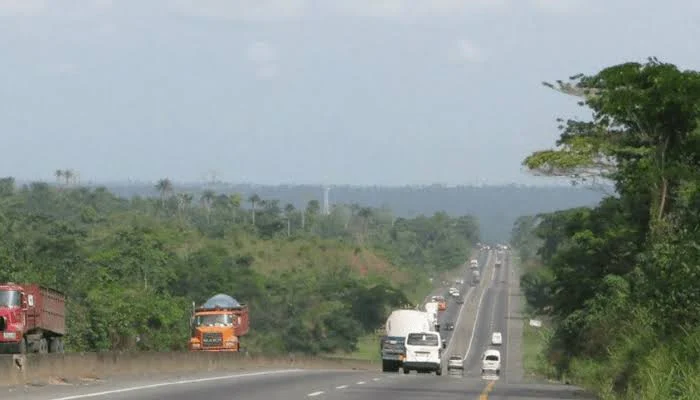
FG begins assessment of flood-affected sections on Benin-Sagamu Expressway
The Federal Ministry of Works has officially commenced a comprehensive engineering assessment of the Benin-Sagamu Expressway, a critical artery of Nigeria’s national transportation network, following devastating floods triggered by recent torrential rainfall. The inspection, which focused on the volatile Ore corridor in the Odigbo Local Government Area of Ondo State, aims to identify structural vulnerabilities and develop sustainable mitigation strategies to safeguard one of the country’s busiest commercial routes.
Minister of Works, Dave Umahi, represented by the Federal Controller of Works in Ondo State, Engr. Olajide Hussein, confirmed that the ministry has mobilized technical teams to conduct hydraulic evaluations. This proactive stance comes as the nation grapples with the escalating impact of climate change, which has manifested in record-breaking precipitation levels and subsequent infrastructure damage across several states.
Identified Critical Zones Along the Expressway
During the site inspection, the ministry pinpointed three specific "danger zones" that have become hotspots for flooding. These locations represent significant bottlenecks that have historically struggled to manage high-volume storm runoff. The identified segments include:
- Agofure Section (Km 100): A low-lying area prone to rapid accumulation of water, which frequently results in the submersion of the carriageway.
- Adolak Junction (Km 107): Located in the immediate vicinity of the Ore Flyover Bridge, this section suffers from inadequate drainage discharge, causing water to back up onto the road surface.
- Agric Section (Km 117): A stretch where the current culvert capacity has proven insufficient to handle the velocity of water during peak rainy seasons.
These segments are not merely points of inconvenience; they are critical transit links for goods and services moving between the South-South, South-East, and South-West regions of Nigeria. The inability of these sections to withstand climate-induced weather events poses a severe risk to the logistical stability of the nation’s supply chains.
Chronology of Recent Infrastructure Strain
The current crisis on the Benin-Sagamu Expressway is part of a broader trend of infrastructure distress observed throughout the 2026 rainy season. Over the past several weeks, the intensity of rainfall in the southwestern corridor has surpassed historical averages. By mid-August, commuters began reporting significant delays and hazardous driving conditions, prompting calls for government intervention.
In early August, reports of stranded motorists and heavy cargo vehicles stuck in mud or flooded sections began circulating on social media, highlighting the precarious state of the road. By the second week of August, the Ministry of Works initiated a rapid response reconnaissance, leading to this week’s formal technical evaluation. This timeline reflects a shift in government strategy from reactive patching to a more systemic, data-driven approach to infrastructure management.
Technical Scope: Addressing Hydraulic Deficiencies
The Federal Ministry of Works has signaled that it is moving beyond temporary surface repairs. According to official briefings, the technical evaluation currently underway focuses on three primary objectives: hydraulic assessment, drainage capacity enhancement, and structural reinforcement.
The ministry’s engineers are investigating the existing culverts and drainage channels to determine if they are structurally sound or if they have been compromised by siltation and debris accumulation. Minister Umahi noted that the "resizing of cross-culverts" is a potential requirement. Many of the drainage structures on the older sections of the expressway were designed decades ago and are no longer sufficient to handle the volume of runoff generated by modern, extreme weather events.
Desilting of blocked channels is another immediate priority. Over time, the accumulation of waste and sediment in drainage systems has significantly reduced their carrying capacity. By clearing these blockages, the ministry hopes to restore the flow of water away from the road surface, thereby preventing the waterlogging that leads to asphalt deterioration.
The Broader Context: Climate Change and Infrastructure
The challenges facing the Benin-Sagamu Expressway are symptomatic of a larger national struggle to adapt public infrastructure to the realities of climate change. Nigeria has seen an increase in the frequency and intensity of flash flooding, a phenomenon that climatologists attribute to rising atmospheric temperatures and shifting precipitation patterns.
Infrastructure experts have long argued that Nigeria’s road designs need to be "climate-proofed." This involves shifting from traditional engineering standards to designs that account for higher flood return periods. The current intervention on the Benin-Sagamu road is a test case for whether the ministry can successfully integrate these climate-resilient engineering standards into existing, high-traffic infrastructure without requiring full-scale road reconstruction, which would be financially prohibitive.
Economic Implications for National Logistics
The Benin-Sagamu Expressway is arguably the most vital logistical corridor in the country. It serves as the primary route for petroleum products, food items, and industrial raw materials moving from the ports and oil-producing regions to the commercial hubs of Lagos and the northern hinterlands.
When this road is disrupted, the economic ripple effects are instantaneous. Delays at the Ore corridor lead to increased operational costs for transport companies, spoilage of perishable agricultural products, and spikes in the price of consumer goods in urban centers. For the manufacturing sector, which relies on "just-in-time" supply chains, a breakdown in the integrity of this highway can lead to production halts.
Consequently, the urgency behind the ministry’s assessment is not merely about road maintenance; it is a matter of national economic security. The government’s commitment to "uninterrupted passage" is essential for maintaining investor confidence and ensuring that the logistical costs of doing business in Nigeria do not become untenable.
Official Responses and Stakeholder Expectations
While the Ministry of Works has assured the public of a swift resolution, road users and transport unions remain cautiously optimistic. Stakeholders have emphasized that the government must ensure the proposed interventions are durable. Frequent emergency repairs that require lane closures often exacerbate traffic congestion, leading to further economic losses.
"We welcome the ministry’s presence on the road," said a representative from a local transport union. "However, what we need is a permanent solution. Every time the rain falls heavily, we fear for our drivers and our cargo. We hope this assessment leads to actual construction work that can withstand the next season."
In his statement, Minister Umahi expressed sympathy for the motorists and local residents who have borne the brunt of the recent flooding. He reaffirmed that the government is taking all necessary technical steps to enhance drainage capacity. He also emphasized that the ministry is exploring long-term maintenance contracts that would ensure constant monitoring of these high-risk areas, rather than waiting for crises to trigger interventions.
Future Outlook and Sustainability
Looking forward, the Federal Ministry of Works is under pressure to harmonize its road maintenance strategy with the federal government’s broader economic objectives. As the ministry continues its technical evaluation, the results will likely inform the allocation of capital for the 2027 fiscal year.
The current situation serves as a stark reminder of the vulnerability of Nigeria’s road network. As the country continues to urbanize and the population increases, the demand on infrastructure will only intensify. The shift toward evidence-based, data-driven maintenance—utilizing hydraulic modeling and climate-risk assessments—is a necessary evolution for the ministry.
In the short term, motorists are advised to exercise caution when traversing the Ore corridor, particularly during heavy rainfall, as the ministry begins the process of implementing its proactive solutions. The federal government’s commitment to safety and stability is expected to be tested in the coming months as the rainy season continues to impact the landscape. The success of this initiative will be measured not just by the completion of the assessment, but by the tangible improvement in the highway’s resilience against the inevitable weather challenges of the future.