Explosion Reported Near Tanker Off Oman Amid Escalating Regional Tensions in the War on Iran
The United Kingdom Maritime Trade Operations (UKMTO) reported an explosion in close proximity to a commercial tanker approximately 20 nautical miles northeast of Oman’s strategically vital port city of Khasab in the early hours of August 3, 2026, marking a fresh escalation in the volatile "War on Iran" that has gripped the Middle East. The incident, which occurred around 00:57 BST, saw the master of the unnamed vessel indicating that an explosion was heard, though thankfully, the tanker and its crew were subsequently reported safe and unharmed. This event adds another layer of anxiety to an already fraught maritime environment, where global shipping routes converge with geopolitical flashpoints, and underscores the pervasive threat to international commerce as the regional conflict intensifies. The report comes amidst a backdrop of widespread instability, including intense Israeli strikes in Gaza City on August 2, 2026, which claimed Palestinian lives and further highlighted the multi-front nature of the ongoing regional conflagration.
The Incident Details
According to the UKMTO advisory issued on August 3, 2026, at 00:57 BST, the command received a report from a vessel operating in the Gulf of Oman. The vessel’s master reported hearing a distinct explosion nearby, causing immediate concern for the safety of the crew and the integrity of the tanker. The precise nature of the explosion – whether from a projectile, a mine, or another source – was not immediately clarified by the UKMTO. While the vessel and its personnel were confirmed safe, the incident prompted immediate alerts across maritime security channels, warning other shipping traffic in the area to exercise extreme caution. The location, northeast of Khasab, places the incident in a critical waterway adjacent to the Strait of Hormuz, through which a significant portion of the world’s oil supply transits daily. This particular stretch of water has been a recurring hotspot for maritime incidents in recent years, often attributed to or occurring amidst heightened tensions involving Iran and its proxies. The immediate aftermath involved naval assets from international coalitions increasing their surveillance and readiness in the vicinity, though no direct claims of responsibility or specific details regarding the source of the explosion were available at the time of reporting.
Background: A Region on Edge
The reported explosion is not an isolated event but rather a symptom of a deeply destabilized region embroiled in what has been termed the "War on Iran." This overarching conflict, which escalated significantly in late 2025 and early 2026, encompasses a complex web of geopolitical rivalries, proxy confrontations, and direct military engagements across multiple fronts.
The "War on Iran" Context
The "War on Iran" refers to a comprehensive and multifaceted conflict that developed from years of simmering tensions over Iran’s nuclear program, its regional influence through proxy groups, and its stance against perceived adversaries such as Israel and the United States. By 2026, diplomatic efforts had largely collapsed, replaced by a cycle of retaliatory actions. Key triggers for the full-scale conflict included a series of cyberattacks targeting critical infrastructure in both Iran and its rivals, alleged direct missile strikes on oil facilities in the Gulf, and an intensification of naval confrontations in the Red Sea and Gulf of Oman involving Iranian-backed groups and international maritime forces. The conflict is characterized not just by direct military clashes but also by economic warfare, cyber warfare, and a dangerous expansion of proxy engagements that span from Yemen to Lebanon and now, acutely, to the critical shipping lanes. The broader implications of this conflict are global, threatening energy security, international trade, and the stability of the entire Middle East.
Strategic Importance of the Gulf
The Gulf of Oman and the Strait of Hormuz represent arguably the most critical chokepoint for global energy supplies. Approximately 20% of the world’s total petroleum liquids consumption, and about one-third of the world’s liquefied natural gas (LNG), transits through the Strait of Hormuz annually. Any disruption in this narrow passage, which is just 21 nautical miles wide at its narrowest point, sends immediate shockwaves through international markets. The recent incident near Khasab, while not directly in the Strait, is close enough to raise significant alarms about the safety of navigation in the broader region. The sheer volume of traffic – often over 17 million barrels of oil per day – makes these waters a prime target during periods of conflict, enabling actors to exert pressure on adversaries and influence global economics. The security of these waterways is therefore a paramount concern for major global powers, leading to the deployment of multinational naval presences aimed at deterring aggression and protecting commercial shipping.
UKMTO’s Crucial Role
The UKMTO, based in Dubai, plays an indispensable role in maintaining maritime situational awareness in the highly volatile region. It acts as a primary liaison between military forces and commercial shipping, providing vital information on security threats and incidents. Its advisories, such as the one issued on August 3, are critical for ship operators to assess risks and adjust their routes or security protocols. The organization’s ability to quickly disseminate information helps to mitigate risks to vessels and crews, allowing for informed decision-making in a dynamic threat environment. In the context of the "War on Iran," UKMTO’s role has become even more critical, serving as an early warning system for potential attacks and ensuring that commercial shipping can continue to operate with the best available intelligence, even as the risk profile in the region continues to elevate.
Chronology of Escalation
The explosion near Khasab is merely the latest in a series of alarming events that have characterized the regional conflict leading up to August 2026. Understanding the broader timeline helps contextualize the current precarious situation.
Pre-Conflict Tensions
Years of diplomatic deadlock over Iran’s nuclear enrichment program, coupled with persistent regional proxy conflicts in Yemen, Syria, and Iraq, laid the groundwork for the current "War on Iran." By late 2024 and early 2025, a series of tit-for-tat attacks between Iranian-backed militias and regional adversaries, including direct clashes in the Red Sea involving drones and missiles targeting shipping, significantly raised the stakes. International efforts to revive the Joint Comprehensive Plan of Action (JCPOA) had definitively failed, leading to Iran accelerating its nuclear activities and further isolating itself.
Key Milestones in the War
The official onset of the "War on Iran" is often marked by a large-scale cyberattack in October 2025 that crippled critical infrastructure across several Gulf states, followed by retaliatory missile strikes attributed to Iran on military bases in the region. This triggered an open declaration of hostilities and a rapid increase in military deployments by various international actors. January 2026 saw significant air skirmishes over contested territories, and by March, naval forces were actively engaged in escort missions and anti-piracy/anti-drone operations in the Red Sea and Gulf of Oman. Economic sanctions against Iran were intensified to unprecedented levels, but also met with Iranian threats to disrupt oil flows through the Strait of Hormuz.
Recent Maritime Events
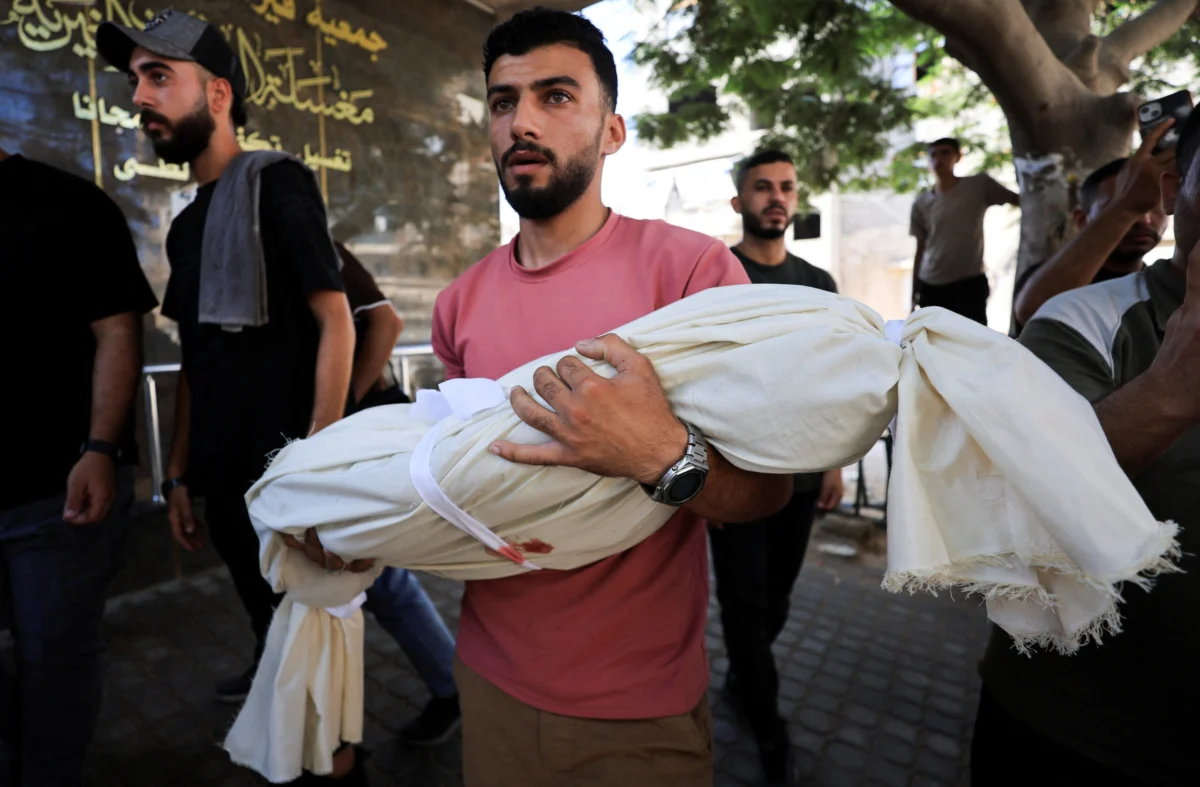
The months leading up to August 2026 have seen a worrying uptick in maritime incidents. In June 2026, two commercial vessels sustained damage from suspected limpet mines in the Gulf of Oman, with no claims of responsibility. July saw several instances of drones approaching tankers, prompting defensive actions by escorting naval vessels. The August 3 explosion follows a pattern of such events, designed either to disrupt trade, demonstrate capability, or provoke a response. Concurrently, the humanitarian situation in the region has deteriorated sharply. The tragic events in Gaza City on August 2, 2026, where Israeli strikes resulted in Palestinian fatalities, as depicted by the image of a mourner, underscore the interconnectedness of these regional conflicts. The escalation in the Israeli-Palestinian conflict, often viewed as a proxy arena, further fuels the broader regional instability, creating a multi-front conflict zone with severe human consequences.

International Reactions and Calls for Calm
The international community has reacted to the ongoing conflict and the latest maritime incident with a mixture of alarm and urgent calls for de-escalation, though concrete steps toward peace remain elusive.
Naval Presence and Alerts
In response to the persistent threats, a robust multinational naval presence, primarily led by the United States Fifth Fleet and supported by European and other allied navies, continues to patrol the vital waterways. Following the Khasab explosion, these forces undoubtedly elevated their alert levels, increasing surveillance flights and deploying fast response vessels to monitor the area. Naval commanders have reiterated their commitment to ensuring freedom of navigation and protecting international shipping, even as the operational risks continue to mount. Advisories to commercial vessels now routinely include recommendations for increased vigilance, enhanced security measures, and strict adherence to established transit corridors.
Diplomatic Overtures and Stalemate
Diplomatic efforts to de-escalate the "War on Iran" have largely been ineffectual. The United Nations Security Council has convened numerous emergency sessions, issuing condemnations of attacks and appeals for restraint, but deep divisions among permanent members have hampered any unified or decisive action. Regional powers, while expressing concern, remain largely entrenched in their positions, with mutual accusations of aggression dominating discourse. Mediators from neutral nations have attempted to broker ceasefires and initiate dialogue, but the level of mistrust and the intensity of the fighting have so far rendered these efforts futile. The Khasab incident further complicates any potential path to diplomacy, as it creates new grievances and reinforces the cycle of accusation and retaliation.
Economic Ramifications and Global Impact
The "War on Iran" and incidents like the Khasab explosion have profound and far-reaching economic consequences, not only for the region but for the global economy.
Oil Market Volatility
The most immediate impact is on global oil markets. News of maritime incidents in key shipping lanes instantly triggers spikes in crude oil prices. Futures markets reacted sharply to the UKMTO report, with Brent crude nearing $110 a barrel, reflecting fears of supply disruptions. Analysts warn that prolonged instability or any significant damage to a major oil tanker could send prices significantly higher, potentially triggering a global recession. Insurance premiums for vessels operating in the Gulf have already skyrocketed, adding substantial costs to shipping and ultimately passed on to consumers. Many shipping companies are now considering longer, more expensive alternative routes, such as around the Cape of Good Hope, further increasing costs and transit times for goods.
Supply Chain Vulnerabilities
Beyond oil, the broader conflict poses a severe threat to global supply chains. The Middle East is a vital transit point for numerous goods, and any major disruption could lead to shortages and price increases across various sectors. The reliance on just-in-time delivery models means that even minor delays can cascade into significant economic problems. Businesses are increasingly scrutinizing their supply chain resilience, exploring diversification strategies, and bracing for prolonged periods of uncertainty and higher operational costs. The Khasab incident serves as a stark reminder of the fragility of these global linkages in the face of persistent geopolitical conflict.
The Broader Humanitarian Toll
While the maritime incident highlights the economic and strategic dimensions of the conflict, the human cost of the "War on Iran" and its interconnected conflicts remains devastatingly high, as painfully illustrated by events beyond the immediate scope of the explosion.
Civilian Impact in Gaza and Beyond
The image from Gaza City on August 2, 2026, depicting a mourner carrying the body of a Palestinian killed in Israeli strikes, is a poignant reminder of the widespread suffering. This particular incident, occurring just hours before the Khasab explosion, underscores how the "War on Iran" is not confined to naval skirmishes or direct state-on-state confrontation. It manifests through intensified proxy conflicts, humanitarian crises, and civilian casualties across the region. In Gaza, years of blockade and recurrent conflict have left infrastructure shattered and medical systems overwhelmed. The latest wave of Israeli strikes, whether directly linked to the broader "War on Iran" or an independent escalation of the Israeli-Palestinian conflict, adds to an already dire humanitarian situation. Millions across Yemen, Syria, and now potentially Iran and its neighbors, face displacement, food insecurity, and lack of access to basic services. Aid organizations struggle to provide assistance amidst ongoing hostilities, and the international community faces immense pressure to address the spiraling human catastrophe that unfolds alongside the geopolitical chess game.
Outlook and Future Security Challenges
The explosion near Khasab, while not causing direct casualties or significant damage to the vessel, is a grim indicator of the current trajectory of the "War on Iran." It signals a persistent and evolving threat to maritime security and global trade. The immediate outlook suggests continued high alert levels in the Gulf of Oman, with naval forces maintaining an increased presence and vigilance. The international shipping industry will likely implement further stringent security protocols, potentially including armed guards and revised transit routes.
Looking ahead, the primary security challenges include preventing further escalation that could lead to direct naval confrontations, mitigating the risk of environmental disaster from damaged tankers, and finding viable pathways to de-escalation amidst deep-seated animosities. The interconnectedness of regional conflicts, as evidenced by the concurrent events in Gaza, means that a resolution to the "War on Iran" would require addressing multiple flashpoints simultaneously. Without a concerted and effective international diplomatic effort, coupled with a genuine commitment from all parties to de-escalate, incidents like the Khasab explosion are likely to become more frequent, further entrenching the region in a cycle of violence and instability with profound global ramifications. The safety of the seas, the flow of vital energy supplies, and indeed, the lives of millions, hang precariously in the balance.

Related Posts
Over 150 Israeli Settlers Storm Al-Aqsa Compound and Perform Prayers, Violating Status Quo Under Police Protection.
UN Report Highlights Over 900 Obstacles Hampering West Bank Aid Amid Escalating Humanitarian Crisis