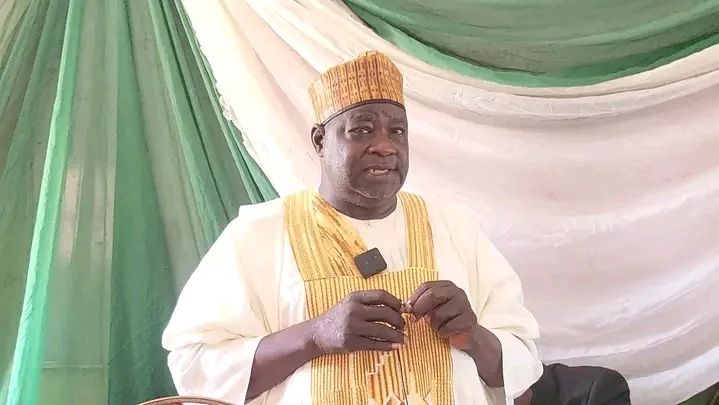
Ex-Bauchi Rep Aminu Danmaliki dumps APC for PRP to reshape Northern political landscape
In a significant political realignment ahead of the 2027 general elections, Aminu Danmaliki, a veteran lawmaker and former member of the House of Representatives representing the Bauchi Federal Constituency, has officially defected from the ruling All Progressives Congress to the Peoples Redemption Party. The announcement, delivered during a press briefing on Saturday, marks a departure for a politician whose career has spanned over two decades, signaling a tactical pivot within the Bauchi State political ecosystem.
The defection, which Danmaliki characterized as a move driven by ideological alignment rather than political expediency, carries weight due to his extensive background in both public service and the private sector. Having served as a commissioner, a federal legislator, and the President of the Bauchi Chamber of Commerce, Industry, Mines and Agriculture (BACCIMA), Danmaliki brings a wealth of institutional experience to the PRP—a party historically rooted in the radical, pro-masses ideology of the late Aminu Kano.
A Chronology of Public Service and Political Trajectory
Aminu Danmaliki’s political journey began in earnest around 2003, a pivotal era in Nigeria’s burgeoning democracy. His career has been marked by a transition through various roles that bridge the gap between media, commerce, and governance.
- 2003–2007: Early political mobilization and engagement in Bauchi State grassroots politics.
- 2007–2011: Tenure as a member of the House of Representatives, where he focused on legislative advocacy for Northern development.
- Mid-2010s: Pivot to the private sector, serving as the President of the Bauchi Chamber of Commerce, Industry, Mines and Agriculture, where he championed the economic interests of local entrepreneurs.
- 2015–2026: Active membership in the All Progressives Congress, contributing to the party’s consolidation in Northern Nigeria.
- August 2026: Formal resignation from the APC and subsequent enrollment into the Peoples Redemption Party, citing a need for a platform more attuned to the "plight of the ordinary Nigerian."
The Economic Context of the Defection
Danmaliki’s departure from the ruling party is framed within the broader context of Nigeria’s current economic climate. With inflation rates in Nigeria frequently oscillating at record highs and the cost of basic commodities—specifically food and fuel—placing immense pressure on the average household, political figures are increasingly distancing themselves from the incumbent administration’s policies.
Economic data from the National Bureau of Statistics has consistently highlighted the struggle of the Northern region, where poverty indices remain significantly higher than the national average. In Bauchi State, where agriculture is the primary occupation, the lack of infrastructure and the rising cost of inputs like fertilizer and transport have hindered productivity. Danmaliki’s rhetoric during his defection speech echoed these grievances, specifically pointing to "hunger, unemployment, poor healthcare, and a lack of educational opportunities" as the primary drivers of his dissatisfaction with the status quo.
Ideological Shift: Embracing the Peoples Redemption Party
The PRP, often referred to as the party of the "Talakawa" (the commoners), has historically positioned itself as an alternative to the mainstream political parties that dominate the Nigerian landscape. For Danmaliki, the PRP represents a return to "principled leadership."
Analysts note that the PRP’s emphasis on social justice and accountability provides a convenient platform for politicians seeking to rebrand themselves as pro-masses reformers. By aligning with the PRP, Danmaliki is attempting to tap into a growing sentiment of disenchantment among the Northern electorate, who have increasingly expressed frustration with traditional political elites.
"Today is not simply about changing political parties," Danmaliki stated during his briefing. "It is about choosing principles over convenience. It is about choosing conviction over comfort. It is about choosing the people over power."
Strategic Implications for the 2027 Bauchi Governorship Race
The most immediate consequence of Danmaliki’s move is the boost it provides to the gubernatorial ambitions of Senator Shehu Buba. Danmaliki has explicitly declared his support for Buba, describing him as a leader with the courage and vision required to transform Bauchi State.
Bauchi, a state with significant agricultural and mineral wealth, has long been criticized for failing to translate its potential into tangible development. Danmaliki argued that the state’s resources have been mismanaged due to inconsistent policies. By pledging his political networks and decades of experience to the PRP, he aims to turn the party into a formidable challenger against the ruling party in the upcoming 2027 election cycle.
Political observers suggest that the success of this alliance will depend on the ability of the PRP to mobilize the youth and rural voters who feel alienated by the current governance model. If Danmaliki can leverage his influence among traders, artisans, and traditional leaders, he could alter the electoral arithmetic in Bauchi significantly.
Official Responses and Political Reactions
While the APC in Bauchi State has not yet issued a formal rebuttal to Danmaliki’s departure, internal party dynamics suggest that such exits are viewed with caution. Losing a veteran politician with a background in the Chamber of Commerce is a blow to the party’s credibility regarding economic management.
Conversely, supporters of the PRP have welcomed the move, viewing it as a validation of the party’s growing influence. The party leadership is expected to utilize Danmaliki’s profile to bolster their membership drive, particularly among the middle-class professional demographic that has traditionally been wary of radical political platforms.
Broader Impact and Future Outlook
The defection of Aminu Danmaliki is indicative of a wider trend in Nigerian politics where incumbents and former officeholders are reassessing their party loyalties in the face of public discontent. As the 2027 general elections approach, the political landscape is likely to see further shifts as candidates search for platforms that offer the best chance of electoral victory.
The focus now shifts to how the PRP will structure its campaign. With Danmaliki’s call for "issue-based campaigns" rather than "divisive politics," the party is setting the stage for a narrative that prioritizes education, healthcare, and rural development. However, transforming these ideals into electoral success requires more than rhetoric; it requires the mobilization of resources and the ability to articulate a clear, actionable policy roadmap for the citizens of Bauchi.
For the Nigerian electorate, the entry of experienced technocrats like Danmaliki into opposition parties serves as a reminder that the 2027 race is likely to be highly competitive. As the political maneuvering continues, the emphasis remains on whether these realignments will truly lead to the "people-centred governance" that the former lawmaker advocates or if they are merely a reshuffling of the same political class.
In the coming months, all eyes will be on the activities of the PRP in Northern Nigeria. If the party can successfully integrate Danmaliki’s grassroots network with the leadership vision of candidates like Senator Shehu Buba, the political hierarchy in Bauchi State may face its most significant challenge in recent years. The test for Danmaliki will be to prove that his commitment to the "Talakawa" is a lasting ideological transformation rather than a temporary strategic realignment.