Environmental Advocates Challenge Kenyan Government Over Proposed Dangote Oil Refinery in Lamu Citing Ecological Risks and Economic Obsolescence
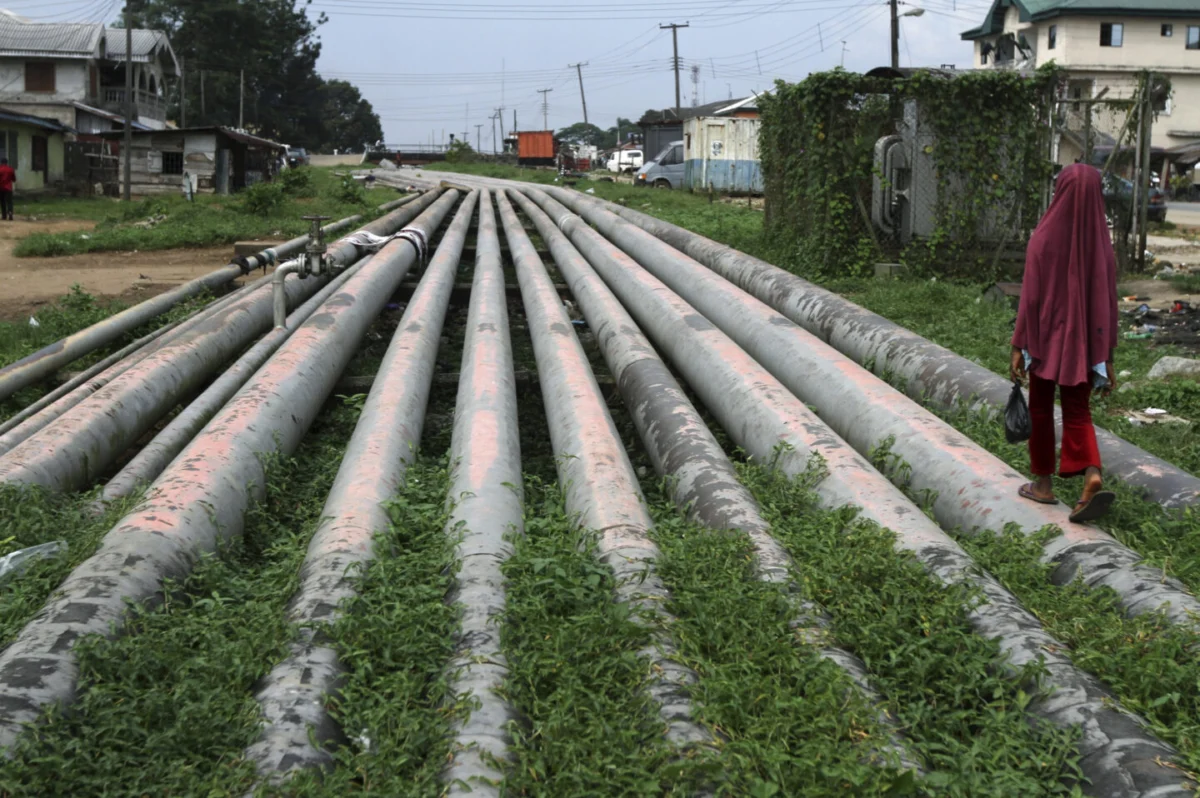
The Kenyan government is facing intensifying pressure from climate and environmental advocacy groups to rescind its support for a proposed 700,000-barrel-per-day oil refinery spearheaded by Aliko Dangote, Africa’s wealthiest industrialist. The project, slated for development in the ecologically sensitive Lamu County on Kenya’s northern coast, has become a flashpoint for the debate over Africa’s industrial future versus its commitment to a green energy transition. If completed, the facility would represent the largest refining project in East Africa, fundamentally altering the region’s energy infrastructure and its relationship with global petroleum markets. However, the proposal has drawn sharp criticism from experts who argue that the project is an environmental liability and an economic gamble that ignores the rapid shift toward renewable energy across the continent.
The refinery is intended to serve as a cornerstone of East Africa’s energy security, providing refined petroleum products not only to Kenya but also to neighboring landlocked nations including Uganda, Rwanda, and potentially parts of Tanzania and the Democratic Republic of Congo. At a projected capacity of 700,000 barrels per day, the facility would dwarf existing regional infrastructure and mirror the scale of Dangote’s massive refinery complex in Lekki, Nigeria. Proponents of the project argue that it will drastically reduce the region’s reliance on expensive fuel imports from the Middle East and Europe, thereby stabilizing local currencies and lowering the cost of living. Yet, for environmentalists and local community leaders, the cost of this perceived security is too high, threatening a UNESCO World Heritage site and a delicate marine ecosystem that supports thousands of traditional livelihoods.
The Strategic Vision and the LAPSSET Corridor
The proposed refinery is inextricably linked to the Lamu Port-South Sudan-Ethiopia-Transport (LAPSSET) Corridor, Kenya’s most ambitious infrastructure project since independence. LAPSSET aims to create a new transport artery connecting the Kenyan coast to its northern neighbors through a network of ports, railways, highways, and pipelines. The refinery in Lamu was originally envisioned as a way to process crude oil discovered in Kenya’s Turkana region and potentially oil from South Sudan and Uganda.
Aliko Dangote’s involvement has breathed new life into the refining component of LAPSSET. The Nigerian billionaire, who recently commissioned a $19 billion refinery in Lagos, brings both the capital and the technical expertise required for a project of this magnitude. Reports suggest the project could take approximately three years to construct, with a financing model that may include a combination of private equity, corporate bonds, and an Initial Public Offering (IPO) by 2026. For the Kenyan government, the refinery represents a massive influx of Foreign Direct Investment (FDI) and a chance to position the country as the industrial hub of the East African Community (EAC).
Ecological Sensitivity of the Lamu Archipelago
Lamu County is widely regarded as one of the most ecologically and culturally significant regions in East Africa. The Lamu Archipelago is home to vast mangrove forests, which serve as critical carbon sinks and breeding grounds for diverse marine life. The region’s coral reefs and seagrass beds support a thriving artisanal fishing industry that has sustained the local Bajuni and Swahili communities for centuries.
Environmentalists warn that the construction and operation of a 700,000-barrel-per-day refinery would involve extensive dredging, the destruction of mangrove covers, and the risk of catastrophic oil spills in a region with limited emergency response capabilities. Furthermore, the thermal pollution from cooling water discharge and the atmospheric emissions of sulfur dioxide and nitrogen oxides could devastate the local air quality and marine biodiversity. Organizations such as Power Shift Africa have pointed out that the project sits in direct opposition to Kenya’s international commitments under the Paris Agreement, which seeks to limit global warming by reducing reliance on fossil fuels.
Economic Viability and the "Stranded Asset" Risk
Beyond the environmental concerns, a significant portion of the opposition is rooted in economic analysis. Mohamed Adow, director of the Nairobi-based think-tank Power Shift Africa, has labeled the government’s support for the refinery as an "extraordinary act of environmental recklessness and economic short-sightedness." The primary concern is the risk of the refinery becoming a "stranded asset"—an expensive industrial facility that becomes obsolete before it can pay off its investment due to shifts in technology and policy.
The global energy landscape is changing at an unprecedented pace. In Kenya, the transport sector is the largest consumer of refined petroleum. However, the country is also a leader in the adoption of electric mobility in Africa. Companies like BasiGo and Roam are already deploying electric buses and motorcycles across Nairobi, supported by a national power grid that is more than 90% renewable, primarily sourced from geothermal, wind, and hydroelectric power. Critics argue that by the time the Dangote refinery is fully operational, the demand for petrol and diesel may be in a state of permanent decline as electric vehicle (EV) infrastructure expands.
Chronology of Kenya’s Refining Ambitions
The path to the current proposal has been marked by decades of shifting priorities and industrial setbacks:
- 1963–2013: Kenya relied on the Kenya Petroleum Refineries Limited (KPRL) in Mombasa. However, the facility became increasingly inefficient and was eventually shut down as a refinery, transitioning into a storage facility.
- 2012: The LAPSSET Corridor project is officially launched, including plans for a refinery in Lamu to process Turkana oil.
- 2019: Kenya exports its first batch of crude oil under the Early Oil Pilot Scheme (EOPS), highlighting the need for local processing or a long-distance pipeline.
- 2021–2023: Plans for a coal-fired power plant in Lamu are successfully blocked by environmental activists and court rulings, signaling a shift in the legal and social tolerance for high-emission projects in the region.
- 2024: Discussions intensify regarding Aliko Dangote’s interest in the Lamu refinery, with the Kenyan government seeking to fast-track industrialization to address a burgeoning debt crisis and fuel price volatility.
Regional Reactions and Geopolitical Implications
The proposed refinery is not merely a Kenyan concern; it has profound implications for the East African Community. Uganda, which is currently developing its own oil fields in the Lake Albert rift basin, has struggled with the logistics of the East African Crude Oil Pipeline (EACOP). A massive refinery in Lamu could potentially offer an alternative or a supplement to Uganda’s own planned refinery in Hoima.
However, neighboring countries are also diversifying. Tanzania has made significant strides in natural gas, while Ethiopia is investing heavily in hydroelectric power to fuel its industrial parks. The regional market for refined oil is currently a captive one, but as these nations integrate and prioritize green energy to meet international climate funding requirements, the long-term demand for a 700,000-barrel-per-day output remains a subject of intense debate among regional economists.
Official Responses and Government Justification
The Kenyan Ministry of Energy and Petroleum has consistently maintained that fossil fuels will remain a necessary "bridge" energy source for the medium term. Government officials argue that industrialization requires reliable, high-density energy that renewables alone cannot yet provide for heavy manufacturing. They contend that the Dangote refinery will create thousands of jobs, stimulate the local economy in Lamu, and provide the fiscal space necessary for the government to invest in further green initiatives.
The government also emphasizes that modern refineries utilize "Carbon Capture and Storage" (CCS) technologies and more efficient processing methods than older plants. They argue that by refining oil locally, Kenya reduces the carbon footprint associated with shipping crude oil halfway around the world and then re-importing the refined products.
Analysis of Implications: A Crossroads for Kenya
The conflict over the Lamu refinery encapsulates the "Green vs. Growth" dilemma facing many developing nations. On one hand, Kenya has a legitimate need to reduce its trade deficit, which is heavily weighted by fuel imports. On the other hand, the country has branded itself as a "Green Energy Superpower," hosting the inaugural Africa Climate Summit in 2023 and championing the Nairobi Declaration.
Investing in a massive oil refinery at this juncture could signal a pivot away from that green leadership. If the project proceeds, it may face years of litigation from environmental groups, similar to the legal battles that halted the Lamu coal plant. Furthermore, international financiers are increasingly wary of funding large-scale fossil fuel projects, which might force the project to rely on more expensive private capital or sovereign guarantees that could further strain Kenya’s economy.
The decision on the Lamu refinery will ultimately serve as a litmus test for the Kenyan government’s priorities. It will determine whether the nation chooses to double down on the industrial models of the 20th century or if it will pivot toward an infrastructure that anticipates the electrified, low-carbon economy of the future. As the three-year construction window looms, the window for dialogue between the state, the billionaire investor, and the environmental guardians of the coast is narrowing.

Related Posts
Constitutional Court of South Africa Bars Shell Oil Exploration in Landmark Victory for Environmental and Community Rights
The Battle for Saldanha Bay: South Africa’s Ambitious Ocean Economy Strategy Faces Legal and Environmental Reckoning