Emmanuel Macron warns Europe must achieve strategic autonomy as transatlantic tensions with the United States persist beyond the Trump presidency
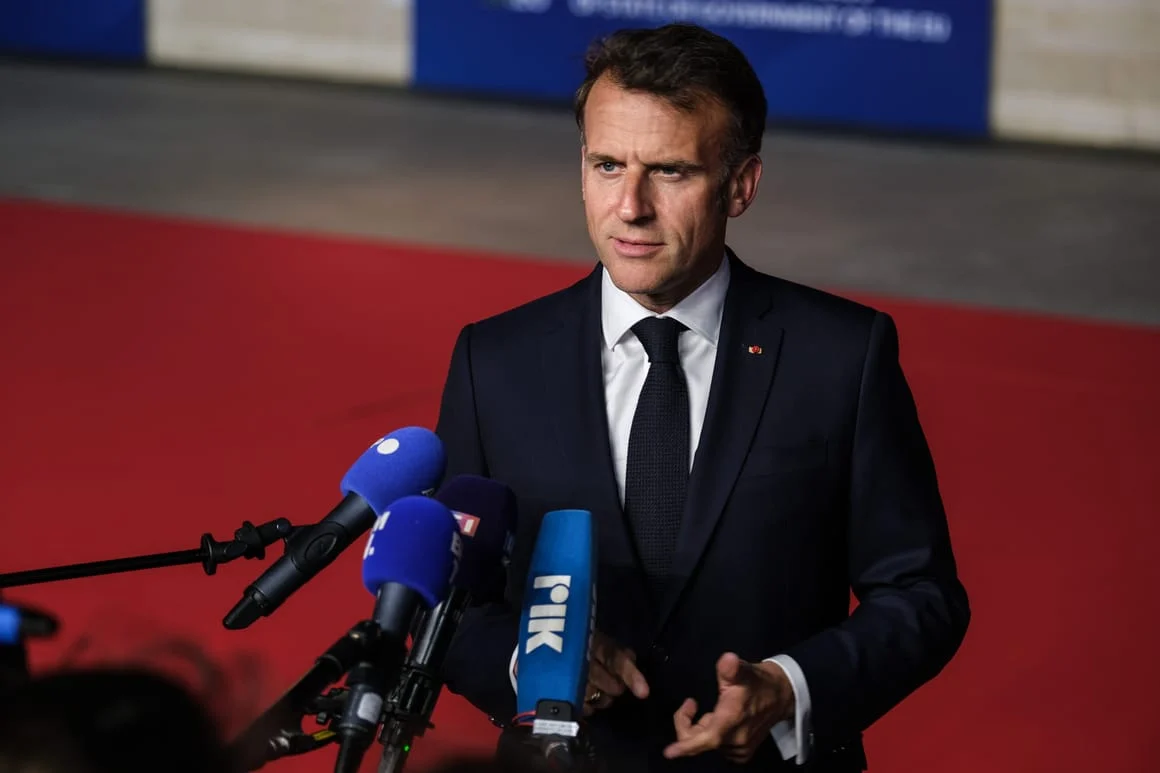
In a stark assessment of the current geopolitical landscape, French President Emmanuel Macron has issued a clarion call for the European Union to accelerate its pursuit of strategic autonomy. Speaking during an event in Athens on April 24, 2026, alongside Greek Prime Minister Kyriakos Mitsotakis, Macron articulated a vision for a more assertive Europe, suggesting that the continent currently finds itself squeezed between the competing interests of the United States, China, and Russia.
The President’s remarks, delivered following an informal European Council summit in Cyprus, underscore a growing consensus among some European leaders that the era of relying solely on the American security umbrella is effectively drawing to a close. Macron emphasized that the current international environment is characterized by a "unique moment" where the major global powers are collectively acting in opposition to European interests, necessitating a fundamental shift in how the bloc approaches defense, trade, and diplomacy.
The Shift in Transatlantic Relations
For decades, the bedrock of European stability has been the transatlantic alliance, codified through NATO and nurtured by decades of shared economic and security interests. However, President Macron noted that the current friction with Washington is not merely a byproduct of the current administration under President Donald Trump, but rather a reflection of a deeper, long-term historical trend in American foreign policy.
"We can engage with the U.S. on some issues, and that still makes a lot of sense because of our common values and historical bonds," Macron told the audience in Athens. "But I really believe that this U.S. approach—one that prioritizes national interests over multilateral consensus—will last."
This perspective marks a notable evolution in European diplomatic rhetoric. During President Trump’s first term in office (2017–2021), many European leaders viewed the administration’s "America First" policies as a temporary aberration—a political anomaly that would eventually be corrected by subsequent U.S. leadership. Macron acknowledged that this optimistic assessment blinded many European capitals to the reality that the U.S. political establishment has undergone a structural transformation regarding its role in global affairs.
"Now, a lot of colleagues are more lucid," Macron observed. "After so many years, we have come to the realization that we must react. We must act as Europeans, to be more united, to defend our own interests. This is the right direction."
Chronology of European Strategic Anxiety
The timeline of European disillusionment with the status quo is marked by several key inflection points that have bolstered Macron’s calls for "European sovereignty":
- 2017–2021: The first Trump presidency sees the U.S. impose steel and aluminum tariffs on EU imports, withdraw from the Iran Nuclear Deal (JCPOA), and cast doubt on the relevance of NATO, forcing European leaders to consider the possibility of a post-American security architecture.
- 2022–2024: The invasion of Ukraine creates a period of forced unity within the transatlantic alliance, but also exposes critical gaps in Europe’s industrial base, particularly regarding ammunition production and energy security.
- 2025: Political shifts in the United States, coupled with renewed protectionist rhetoric from Washington, accelerate discussions in Brussels regarding "strategic autonomy."
- April 2026: Informal EU summit in Cyprus confirms that European leaders are increasingly looking toward intra-bloc defense cooperation as a hedge against unpredictable external partners.
Supporting Data: The Case for Autonomy
The urgency of Macron’s warning is supported by shifting economic and military data. As of early 2026, the European Union faces significant trade pressures from China’s aggressive manufacturing output and Russia’s continued efforts to destabilize Eastern Europe through hybrid warfare.
Recent defense expenditure reports from the European Defence Agency (EDA) indicate that while EU member states have increased their collective military spending, the bloc remains heavily dependent on U.S. supply chains for high-end defense technology. Furthermore, the European Commission’s 2026 economic forecast suggests that the EU’s share of global GDP is continuing a slow decline, trailing both the U.S. and China, largely due to high energy costs and a lack of unified industrial strategy across the 27 member states.

The move toward greater defense integration, exemplified by the upcoming renewal of the France-Greece security pact, is an attempt to mitigate these systemic vulnerabilities. The pact, first signed in 2021, acts as a template for what Macron hopes will be a wider network of bilateral and multilateral agreements that reduce dependence on third-party powers.
The France-Greece Security Pact: A Model for Cooperation
The diplomatic visit to Athens served as a tangible follow-up to the summit in Cyprus. On Saturday, April 25, 2026, France and Greece are scheduled to sign an updated version of their bilateral security pact. The 2021 agreement, which was prompted by a desire for increased security in the Eastern Mediterranean, included a mutual defense clause—a commitment that if either country were the victim of armed aggression on its territory, the other would provide assistance.
The new five-year extension is expected to be more expansive than its predecessor. Sources close to the French delegation suggest the update will incorporate:
- Enhanced Industrial Cooperation: Further commitments to joint naval and aerospace manufacturing.
- Civil Protection and Crisis Management: A framework for responding to climate-driven disasters and hybrid threats, including cyber-attacks and disinformation campaigns.
- Economic Policy Alignment: A coordinated approach to industrial policy within the EU, designed to protect sensitive technologies from foreign acquisition.
Broader Implications for the European Union
The implications of President Macron’s "wake up" call extend far beyond the bilateral relationship between Paris and Athens. The sentiment expressed by the French leader reflects a broader, internal debate within the EU between those who advocate for "strategic autonomy"—the ability to act independently of the U.S.—and those who remain committed to the traditional Atlanticist security framework.
Critics of the autonomy strategy argue that any attempt to pivot away from the United States risks weakening the cohesion of NATO and potentially encouraging further Russian aggression in the Baltic and Balkan regions. Conversely, proponents argue that the U.S. is increasingly focused on the Indo-Pacific region, and that Europe is being relegated to a secondary priority, regardless of which party occupies the White House.
The reality, as outlined by Macron, is that the EU is no longer a passive observer of global power dynamics. As Washington, Beijing, and Moscow pursue their respective objectives, the European Union finds itself in a precarious position. The bloc’s response will likely determine its relevance in the latter half of the 2020s.
Expert Reaction and Future Outlook
Political analysts in Brussels have noted that Macron’s rhetoric is intended to push other member states, particularly those traditionally hesitant to embrace French-led initiatives, toward a more unified defense posture. While Germany and Poland have historically favored a stronger NATO focus, the persistence of political instability in Washington is slowly shifting the needle.
"Macron is essentially trying to create a ‘European pillar’ within the global order," says one senior policy analyst. "Whether this succeeds depends on whether the EU can reconcile its internal economic differences—such as fiscal policy and trade protections—with the necessity of a unified foreign policy."
As the European Council prepares for upcoming summits, the themes of self-reliance and strategic sovereignty are expected to dominate the agenda. The challenge remains whether the disparate interests of 27 nations can be synthesized into a coherent, proactive strategy that allows the European Union to hold its own in a world where, as Macron stated, the traditional power brokers are increasingly indifferent—or hostile—to the European project.
For now, the renewal of the pact with Greece serves as a microcosm of this ambition: a commitment to local strength, mutual defense, and the belief that in an uncertain world, the most reliable partner for a European nation is another European nation.