
Deadly School Shooting in Kahramanmaras Claims Nine Lives, Wounds Thirteen in Southern Turkey
Kahramanmaras, Turkey – A wave of shock and grief has engulfed Turkey following a devastating school shooting at Ayser Calik Secondary School in the southeastern province of Kahramanmaras, which resulted in the deaths of at least eight students and one teacher. Interior Minister Mustafa Cifci confirmed the tragic toll, adding that thirteen others sustained injuries, with six individuals reportedly in critical condition, battling for their lives in local hospitals. The attacker, believed to be a teenager, was also killed during the incident, according to local governor Mukerren Unluer, bringing the immediate crisis to a grim conclusion but leaving a profound scar on the community and the nation.
The horrific events unfolded on Wednesday, April 15, 2026, casting a pall over the educational institutions of Turkey and raising urgent questions about school safety and the proliferation of firearms. This latest tragedy follows closely on the heels of another violent incident just a day prior, where an ex-student opened fire at a high school in the south of the country, injuring sixteen people before taking his own life. The consecutive nature of these attacks has ignited a national conversation about the roots of such violence and the measures necessary to prevent future occurrences.
The Unfolding Horror at Ayser Calik Secondary School
The morning at Ayser Calik Secondary School began like any other, with students and teachers engaged in their daily routines, unaware of the terror that was about to shatter their peace. According to preliminary reports from Turkish media, the assailant, a teenager whose identity has not yet been fully disclosed, entered two classrooms armed with an alarming arsenal: five guns and seven magazines. The sheer volume of weaponry suggests premeditation and a chilling intent to inflict widespread harm. Governor Unluer alleged that the firearms belonged to the attacker’s father, a former police officer, a detail that has led to the father’s detention by authorities as part of the ongoing investigation.
Eyewitness accounts paint a harrowing picture of chaos and desperation. The sound of intense gunfire reverberated through the school corridors, sparking immediate panic. Students, teachers, and staff scrambled for safety, some attempting to barricade themselves in classrooms, while others sought any possible escape route. In a desperate bid for survival, video footage verified by the BBC captured individuals appearing to jump from first-floor windows, fleeing the premises in terror. This imagery, widely circulated, underscored the extreme fear that gripped the school during the attack.
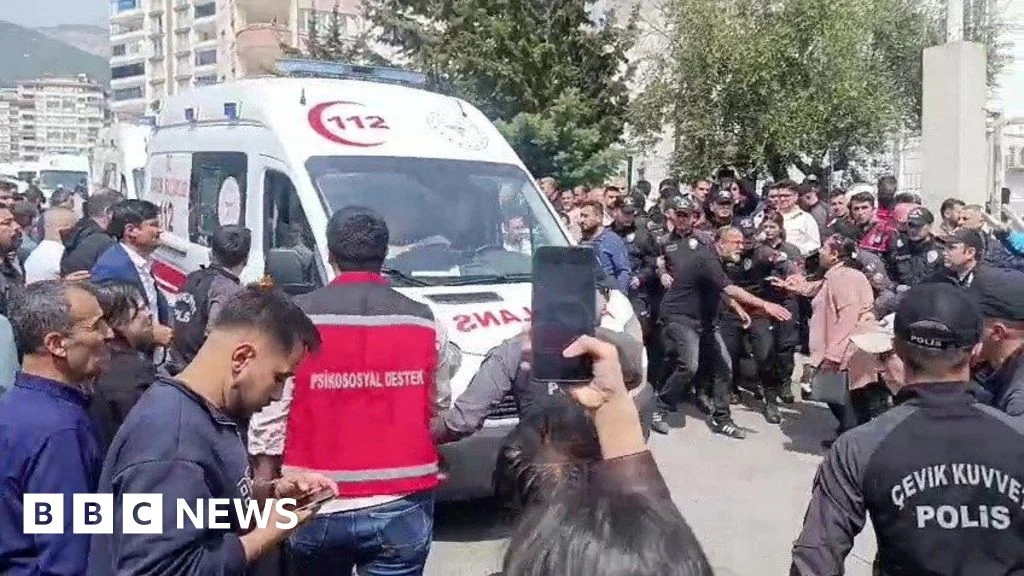
Emergency services, including ambulances and numerous police units, descended upon the scene rapidly. The area surrounding the school was quickly cordoned off, transforming the vibrant educational hub into a site of frantic rescue operations and forensic investigation. Tearful parents, having received the devastating news, rushed to the school, their faces etched with anguish and desperate hope for their children’s safety. The scene outside was a maelstrom of raw emotion – the wails of sirens mingling with the distraught cries of families, creating an atmosphere of profound sorrow and confusion. Medical personnel worked tirelessly to triage the wounded, transporting those in critical condition to nearby hospitals, where medical teams were placed on high alert.
Official Response and Deepening Investigation
Interior Minister Mustafa Cifci, addressing the media from Kahramanmaras, expressed his profound sorrow over the incident and reiterated the government’s commitment to a thorough investigation. "This is a dark day for our nation," Minister Cifci stated, "We mourn the innocent lives lost and pray for the swift recovery of the injured. No stone will be left unturned in understanding how this tragedy occurred and who is responsible." He confirmed the casualty figures and the critical status of several wounded, highlighting the ongoing efforts of emergency services and healthcare professionals.
Local governor Mukerren Unluer provided further details regarding the attacker, confirming his death during the incident and the allegation concerning the origin of the weapons. The detention of the attacker’s father has opened a new avenue in the investigation, focusing on gun storage regulations, responsible firearm ownership, and potential liabilities. Authorities are meticulously examining the attacker’s background, social media activity, and any possible grievances or motives that might have driven him to commit such an atrocity. The motive of Wednesday’s attack remains unknown, adding another layer of complexity to the already challenging task of comprehending and preventing such violence. Investigators are keen to determine if there were any signs of distress, bullying, or ideological influence that could have precipitated the assault.
President Recep Tayyip Erdogan also conveyed his condolences, posting on X (formerly Twitter): "My heartfelt wishes for a speedy recovery to our children, our families, and our teachers affected by this terrible event. The nation stands united in grief and resolve." His message underscored the national impact of the tragedy and the collective mourning gripping Turkey.
A Troubling Pattern: Consecutive School Shootings
The Kahramanmaras shooting has sent a chilling message across Turkey, particularly because it occurred merely a day after another school shooting incident in the southern region. On Tuesday, April 14, an ex-student opened fire at a high school, injuring sixteen people before turning the gun on himself. While the specific details and motives of the two attacks may differ, their close proximity in time and geographical region has sparked intense alarm among the public and policymakers alike.
Turkey, historically, has experienced a relatively lower incidence of mass school shootings compared to some Western nations. Gun control laws, while not as stringent as in some European countries, are generally considered stricter than in the United States. Private gun ownership is permitted with a license, but regulations typically focus on hunting rifles and self-defense weapons, with stricter controls on high-capacity firearms. The alleged use of an ex-police officer’s weapons in the Kahramanmaras incident highlights a potential vulnerability in gun storage and access, even within regulated environments.
The sudden surge of such violence within a 24-hour period points to an emerging and deeply worrying trend. This is not merely an isolated incident but potentially a signal of broader societal challenges. Experts in criminology and sociology are likely to examine whether these events are coincidental, or if they reflect underlying issues such as increased social pressures, mental health crises among youth, or the dangerous influence of online content. The fact that both attackers were linked to the respective educational institutions – one an ex-student, the other a current student – suggests a potential nexus between individual grievances, access to firearms, and the school environment.
Broader Impact and Implications for Turkish Society
The immediate aftermath of the Kahramanmaras shooting will undoubtedly involve a period of national mourning and intense introspection. Beyond the immediate grief, the incidents are expected to trigger a comprehensive re-evaluation of school security protocols across the country. Discussions will likely encompass physical security measures such as reinforced entry points, surveillance systems, and the presence of security personnel. However, the focus will also need to extend to preventative measures, including early intervention programs for students exhibiting signs of distress, enhanced mental health support services within schools, and awareness campaigns for parents and educators to identify warning signs.
The role of social media and online communities in potentially radicalizing or influencing vulnerable individuals is another area that warrants examination. While no specific links have been established for these particular incidents, global trends show an increasing concern over the spread of violent ideologies and the glorification of violence in certain online spaces.
Furthermore, the incidents will inevitably reignite debates surrounding gun control laws in Turkey. Even if current laws are deemed adequate by some, the fact that firearms, especially those allegedly belonging to a former law enforcement officer, were used in such a devastating manner will prompt scrutiny into safe storage practices, background checks, and the monitoring of licensed firearm owners. The public discourse will likely demand stricter accountability for individuals whose weapons fall into the wrong hands, particularly those used in crimes against children.
The psychological impact on the youth of Turkey cannot be overstated. Students and teachers across the nation will grapple with increased anxiety and fear, transforming schools from sanctuaries of learning into potential sites of danger. Providing adequate psychological support to the survivors, witnesses, and the entire school community in Kahramanmaras will be paramount for their long-term recovery. This extends beyond immediate crisis counseling to sustained mental health services to help individuals process trauma and rebuild a sense of security.
In the coming weeks and months, Turkish authorities, educators, parents, and community leaders will face the immense challenge of not only healing from these wounds but also implementing robust, multi-faceted strategies to prevent such tragedies from ever recurring. The consecutive school shootings in southern Turkey serve as a stark reminder of the complex and evolving nature of violence in contemporary society, demanding a comprehensive and collaborative response from all segments of the nation. The memory of the nine lives lost at Ayser Calik Secondary School will undoubtedly fuel the resolve to ensure that no other family has to endure such an unimaginable loss.

Related Posts
Zambia on Edge: Opposition Leader Arrested Amid Allegations of Insurrection Plot and Election Tensions
Rescuers search for survivors of powerful Indonesia earthquake

