
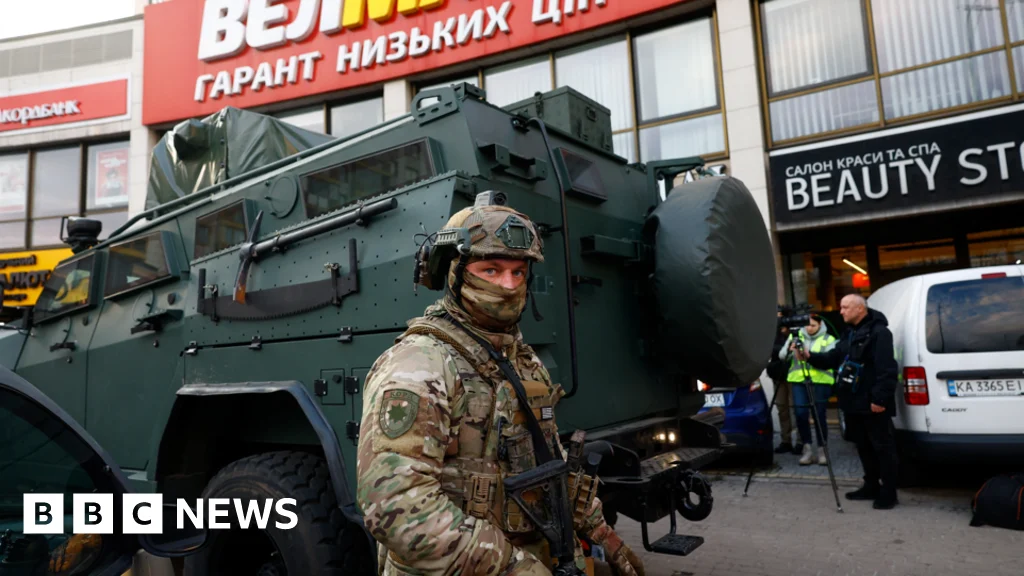
Deadly Rampage in Kyiv’s Holosiivskyi District Leaves Six Dead, Fourteen Injured as Gunman Engages Police in Supermarket Hostage Standoff
A tranquil Saturday in Kyiv’s southern Holosiivskyi district was shattered by an unprecedented act of violence, leaving at least six people dead and fourteen injured, including a 12-year-old boy. The incident unfolded as a lone gunman initiated a shooting spree on a residential street before barricading himself inside a local supermarket, taking several individuals hostage. Ukrainian authorities have confirmed the assailant was ultimately "eliminated" by law enforcement following a tense standoff and a fatal escalation. This rare internal security crisis in the capital, which has become accustomed to external threats from ongoing warfare, has sent shockwaves through the community, prompting urgent investigations into the attacker’s motive and the circumstances surrounding his access to an automatic weapon.
Unfolding Horror in a Kyiv Neighborhood
The violent episode began on Saturday morning, disrupting the peace of Holosiivskyi, a densely populated residential and commercial area known for its green spaces and vibrant community life. Eyewitnesses reported a man opening fire indiscriminately on passersby on a street, causing immediate panic and chaos. The initial volley of gunfire claimed the lives of four individuals directly on the street, painting a grim picture of sudden, unprovoked aggression. The attacker then moved swiftly, entering a nearby supermarket where he seized an unspecified number of shoppers and staff, transforming a routine shopping trip into a terrifying hostage situation.
Ukrainian Interior Minister Ihor Klymenko provided initial details, confirming the unfolding tragedy and the swift response of police forces. He described the gunman as a local resident, whose motives remained entirely unclear at the time of the incident’s resolution. The minister highlighted the chaotic nature of the assailant’s actions, which complicated efforts to understand his demands, if any. The immediate priority for law enforcement was to contain the threat, secure the area, and ensure the safety of any remaining civilians, both inside and outside the supermarket.
A Detailed Chronology of the Attack
The timeline of the tragic events unfolded rapidly, marked by escalating violence and a methodical police response:
- Pre-dawn/Early Morning: According to statements from President Volodymyr Zelenskyy, the assailant began his destructive path by setting fire to his own apartment before embarking on the shooting spree. The exact timing and reasons for this initial act of arson are part of the ongoing investigation, but it signals a premeditated and deeply disturbed state of mind.
- Morning — Street Shooting: The gunman emerged onto a street in the Holosiivskyi district, armed with an automatic weapon, and began firing indiscriminately at people. This initial assault resulted in the deaths of four individuals and injuries to several others, including the 12-year-old boy. The suddenness and brutality of the attack left no time for escape for many victims.
- Transition to Hostage Crisis: Following the street shootings, the assailant proceeded to a nearby supermarket. He forced his way in, taking several individuals hostage. The exact number of hostages initially taken has not been definitively stated, but it was clear that the situation had escalated from an active shooter scenario to a hostage crisis.
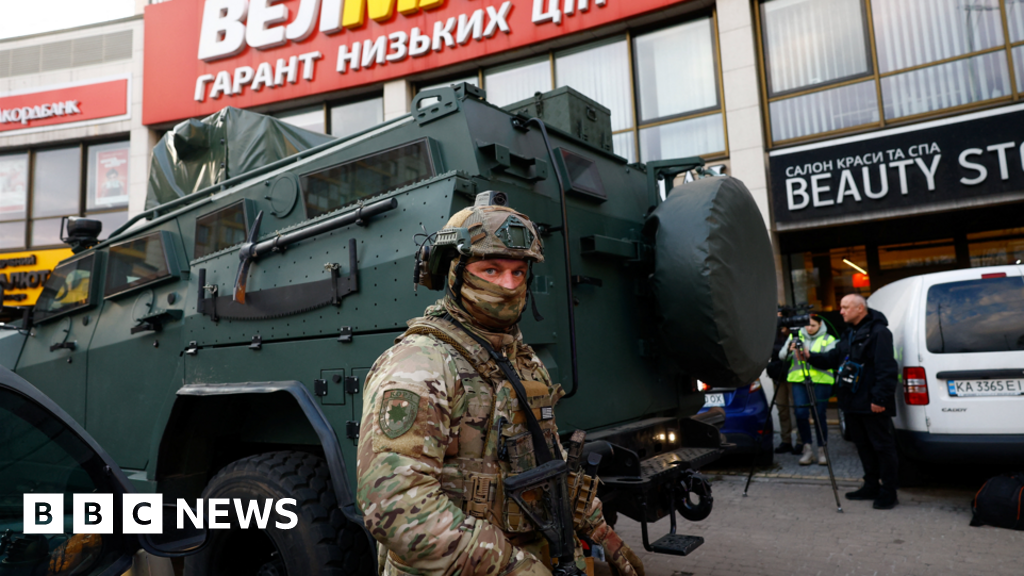
- Police Deployment and Containment: Upon receiving emergency calls, Kyiv police and special forces units were rapidly deployed to the Holosiivskyi district. A perimeter was established around the supermarket, isolating the threat and preventing further civilian casualties. Emergency medical services were also on standby.
- Negotiation Attempts: Interior Minister Klymenko confirmed that police negotiators engaged the gunman for approximately 40 minutes while he was inside the supermarket. These attempts aimed to de-escalate the situation, understand his demands, and secure the release of the hostages. However, the attacker displayed "chaotic" behavior and made no coherent demands, frustrating negotiation efforts. Police even offered to provide tourniquets for an injured hostage, an offer the gunman refused.
- Fatal Escalation: During the standoff, the assailant tragically killed one of the hostages inside the supermarket. This critical development forced a re-evaluation of the police strategy. Given the immediate threat to life and the gunman’s refusal to cooperate or allow medical aid, the decision was made to neutralize the threat.
- Police Operation and Resolution: Special forces units, acting on the order to "eliminate" the gunman, stormed the supermarket. In a subsequent shoot-out, the assailant was killed. Following the successful operation, four remaining hostages were safely freed, though undoubtedly traumatized by the ordeal.
- Post-Incident Response: Emergency services immediately moved in to assist the injured and secure the scene. A large-scale investigation was launched by the Ukrainian Prosecutor General’s office to gather evidence, identify victims, and piece together the full sequence of events.
The Toll: Victims and Survivors
The indiscriminate nature of the attack resulted in a devastating human cost. Ukrainian President Volodymyr Zelenskyy confirmed a total of six fatalities directly attributable to the incident. Four individuals were killed on the street during the initial shooting spree. A woman, believed to be around 30 years old, succumbed to her injuries later in hospital, despite efforts to save her life. The sixth fatality was one of the hostages, brutally murdered by the assailant inside the supermarket during the standoff.
Beyond the fatalities, at least fourteen people sustained injuries, ranging in severity. Among the injured was a 12-year-old boy, whose presence among the victims underscores the tragic and indiscriminate nature of the violence. The physical wounds sustained by the survivors are compounded by the profound psychological trauma of witnessing or experiencing such a horrific event. Many will require extensive medical and psychological support to recover from the ordeal. The swift response of emergency medical personnel on the scene and at nearby hospitals was crucial in stabilizing the injured and providing critical care, undoubtedly preventing a higher casualty count.
The Assailant: Unraveling a Troubling Profile
Ukraine’s Prosecutor General, Ruslan Kravchenko, identified the shooter as a 58-year-old man, stating he was originally from Moscow, the capital of Russia. This detail immediately sparked broader questions given the ongoing conflict between Ukraine and Russia, though officials have been careful to avoid immediate speculation about political motives. Further details from President Zelenskyy revealed that the man had resided in Ukraine’s eastern Donetsk region "for a long time." The Donetsk region has been a focal point of conflict since 2014, with significant portions under Russian occupation and control by Kremlin-backed separatists. The attacker’s prolonged presence in such a volatile, war-affected area adds a complex layer to his background.
Crucially, the weapon used by the assailant – an automatic firearm – was officially registered. This fact has immediately prompted an additional line of inquiry by investigators: how was a man with such a seemingly troubled profile, who would eventually engage in a deadly rampage and arson, granted a permit for such a powerful weapon? The investigation will meticulously examine the process of weapon registration and licensing, looking for any breaches or oversights that might have contributed to this tragedy. While his motive remains officially "unclear," the combination of setting fire to his apartment, his "chaotic" behavior during negotiations, and the indiscriminate violence suggests potential severe mental health issues, a personal grievance, or a yet-to-be-discovered extremist ideology. Authorities are exploring all avenues, emphasizing that no stone will be left unturned in understanding the root causes of this deadly incident.
Decisive Police Action and Negotiation Breakdown
The police response to the evolving crisis was swift and coordinated, reflecting established protocols for active shooter and hostage situations. Upon arrival, law enforcement prioritized containing the threat and protecting civilians. Interior Minister Ihor Klymenko provided crucial insights into the challenging negotiation phase. Police negotiators attempted to establish communication with the gunman for approximately 40 minutes, seeking to understand his intentions and demands. However, the assailant’s behavior was described as "chaotic," and he made no specific demands, rendering traditional negotiation tactics largely ineffective.
A particularly harrowing detail emerged when the gunman refused requests to allow medical personnel to provide aid to an injured hostage inside the supermarket. This intransigence, coupled with the attacker’s unpredictable violence, escalated the gravity of the situation. The decision to "eliminate" the gunman was not taken lightly, but became a necessary and tragic imperative after he murdered one of the hostages. This command was issued to protect the lives of the remaining hostages and prevent further bloodshed. The subsequent police operation, involving special forces, was executed with precision, culminating in the neutralization of the threat and the safe rescue of the four surviving hostages. The professionalism and bravery of the Ukrainian police and special forces in a high-stakes, life-threatening scenario have been widely commended.
Official Condemnations and Calls for Justice
The leadership of Ukraine swiftly condemned the heinous act and expressed profound condolences to the victims and their families. President Volodymyr Zelenskyy, in addition to providing critical details about the attacker’s background, underscored the nation’s resolve to bring justice to the victims. His statements emphasized the rarity of such internal acts of violence in Kyiv, a city more accustomed to external military aggression. Prosecutor General Ruslan Kravchenko immediately launched a full criminal investigation, promising a thorough and transparent process to ascertain all facts, identify culpability, and prosecute any accessory circumstances, such as potential irregularities in weapon licensing.
Officials across various government departments echoed these sentiments, highlighting the commitment to supporting the victims’ families and ensuring public safety. The Ministry of Internal Affairs initiated an internal review of the police response to analyze its effectiveness and identify any lessons learned for future crisis management. The swift and decisive action of law enforcement, while tragic in its necessity, was uniformly praised as having prevented potentially greater loss of life.
Broader Implications: Internal Security Amidst Wartime Stress
This incident, while seemingly isolated, carries broader implications for internal security in Ukraine, particularly against the backdrop of the ongoing full-scale war with Russia. Kyiv, despite being a frequent target of missile and drone attacks, has largely maintained internal order, with violent crime rates often lower than in other large European capitals. The nature of this attack—a lone gunman engaging in a spree shooting and hostage-taking—is a stark departure from the typical wartime threats the city faces.
The event inevitably raises questions about the psychological toll of prolonged conflict on individuals, even those seemingly removed from the front lines. While there is no direct evidence linking the attacker’s actions to the war, his long-term residence in the conflict-ridden Donetsk region introduces a layer of complexity. The stress, trauma, and societal upheaval caused by war can exacerbate underlying mental health issues or even contribute to radicalization in vulnerable individuals. Investigators will undoubtedly consider these broader societal factors, alongside individual psychological assessments, as they seek to understand the gunman’s motivations.
The Question of Firearms and Mental Health
The fact that the assailant’s automatic weapon was "officially registered" is a significant detail that has brought Ukraine’s gun control laws under scrutiny. While the country has strict regulations regarding firearm ownership, the ongoing war has undeniably led to an increase in weapons circulating, both legally and illegally. The investigation into how this specific permit was issued, and whether all protocols were followed, will be critical. It highlights the delicate balance between allowing citizens self-defense capabilities in a war zone and preventing firearms from falling into the wrong hands or being used by individuals with severe psychological instabilities.
Furthermore, the attacker’s actions – setting fire to his own apartment, exhibiting "chaotic" behavior, and making no demands – strongly suggest a severe mental health crisis. This incident serves as a grim reminder of the importance of robust mental health support systems, especially in societies experiencing prolonged conflict. Early identification and intervention for individuals struggling with mental health issues could be crucial in preventing similar tragedies. The Ukrainian government, already grappling with the immense mental health challenges posed by the war, may face renewed calls to enhance these services.
Kyiv’s Resilience Under Dual Threats
The people of Kyiv have demonstrated extraordinary resilience throughout the full-scale invasion, enduring constant threats from aerial bombardments and maintaining a semblance of normalcy amidst adversity. This internal attack, however, presents a different kind of challenge. It tests the city’s internal security mechanisms and the psychological fortitude of its residents in a new way. While the immediate threat was neutralized, the underlying questions regarding the attacker’s motive, the ease of access to firearms, and the potential for similar isolated incidents will linger.
The community in Holosiivskyi district and across Kyiv will undoubtedly rally to support the victims and their families. The incident serves as a somber reminder that even as Ukraine battles an external aggressor, vigilance against internal threats and societal vulnerabilities remains paramount. The ongoing investigations are expected to provide further clarity, not only on the specifics of this tragedy but also on broader measures that may need to be taken to enhance security and public well-being in a nation under duress.

Related Posts
Zambia on Edge: Opposition Leader Arrested Amid Allegations of Insurrection Plot and Election Tensions
Rescuers search for survivors of powerful Indonesia earthquake

