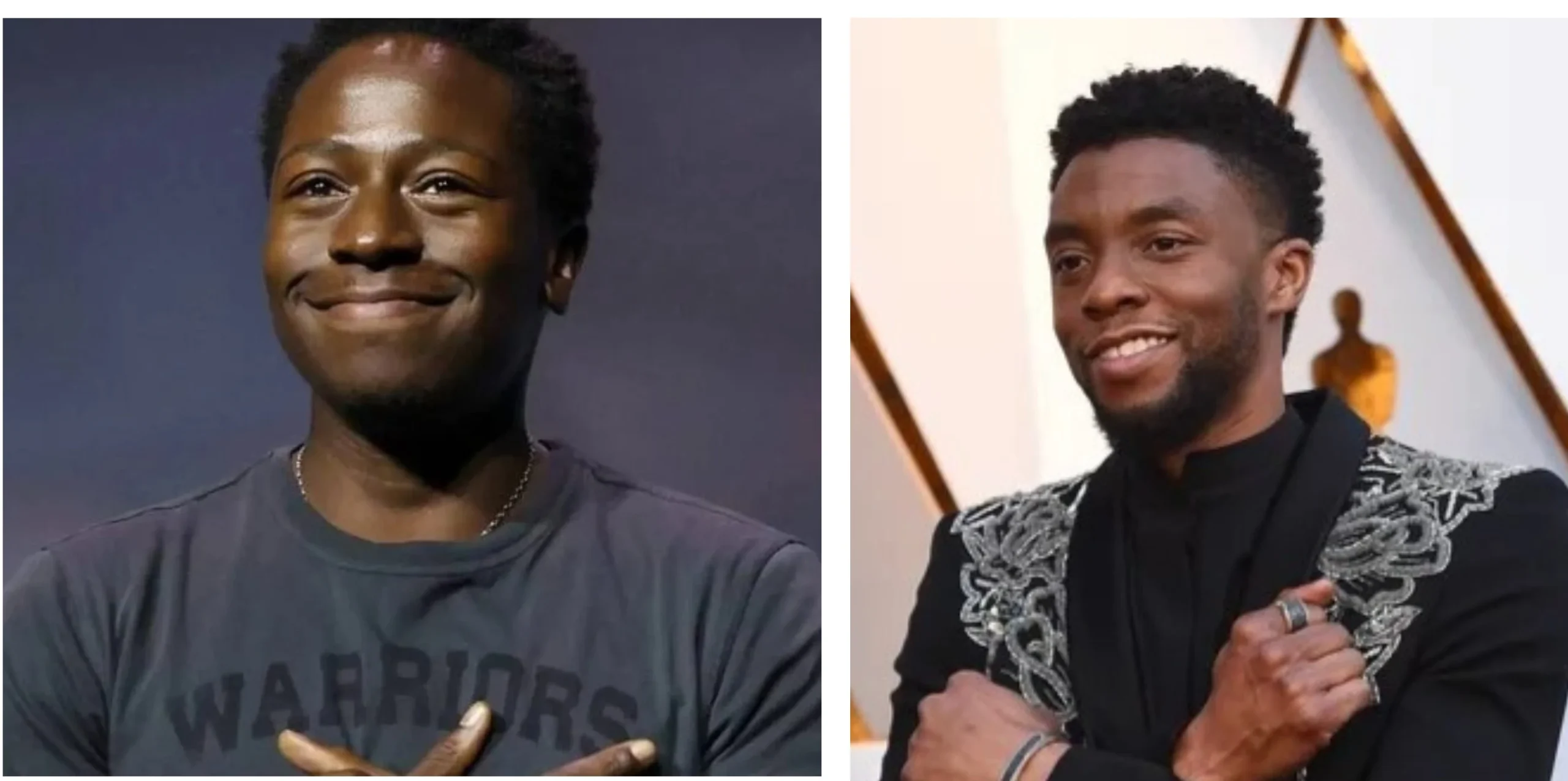
David Jonsson named new Black Panther six years after Boseman’s death
The Marvel Cinematic Universe is entering a new era of Wakandan history, as Marvel Studios officially announced that British actor David Jonsson will headline the third installment of the blockbuster franchise. During the highly anticipated Saturday panel at San Diego Comic-Con’s Hall H, studio executives confirmed that Jonsson will step into the mantle of the Black Panther, portraying an older version of Prince T’Challa II—affectionately known as Toussaint—the son of the late Chadwick Boseman’s iconic character and Nakia. This casting decision marks a pivotal moment for the studio, which has navigated the emotional and narrative complexities of the franchise since the tragic passing of Boseman in 2020. Alongside the casting news, it was revealed that Black Panther 3 is scheduled for a worldwide theatrical release on December 15, 2028.
A New Chapter for the Wakandan Throne
The introduction of Jonsson, 32, as the adult Prince T’Challa II serves as the narrative bridge between the established history of the franchise and its future. First introduced as a young child in the emotional post-credits sequence of 2022’s Black Panther: Wakanda Forever, the character’s return as a central protagonist signifies a coming-of-age story that will likely explore the weight of his father’s legacy.
Jonsson’s selection follows a period of critical acclaim for the actor, whose career has been defined by a diverse range of performances. He rose to prominence through the hit BBC and HBO series Industry, where he displayed a commanding screen presence, and later captivated audiences in the critically lauded film Rye Lane. His recent performances in the science-fiction horror entry Alien: Romulus and the dramatic project The Long Walk have further solidified his reputation as one of the most versatile actors of his generation. By casting a rising star with a deep foundation in both television drama and high-stakes genre filmmaking, Marvel appears to be positioning the third film to maintain the gravitas and cultural significance that defined the first two chapters of the series.
Chronology of a Legacy
The journey to this announcement has been marked by profound transition. Following is a timeline of the key events that have shaped the Black Panther franchise:
- February 2018: The original Black Panther is released, grossing $1.34 billion globally. It becomes a cultural phenomenon and the first superhero film to receive a Best Picture nomination at the Academy Awards.
- August 2020: Chadwick Boseman passes away at age 43 due to complications from colon cancer. His private battle with the disease had been kept secret from the public and his collaborators at Marvel Studios.
- November 2022: Black Panther: Wakanda Forever debuts, serving as both a sequel and a tribute to Boseman. The film sees Letitia Wright’s Shuri assume the mantle of the Black Panther.
- March 2023: Angela Bassett receives an Academy Award nomination for Best Supporting Actress for her role as Queen Ramonda, marking the first time a performer has been recognized by the Academy for an MCU role.
- July 2026: Marvel Studios officially confirms the development of Black Panther 3 and the casting of David Jonsson at San Diego Comic-Con.
Strategic Shifts and Narrative Continuity
The decision to focus on T’Challa’s son rather than recasting the original T’Challa was a deliberate choice by Marvel Studios. Following Boseman’s death, the production team faced the monumental challenge of moving the story forward while honoring the actor’s unique contribution to the role.
In Wakanda Forever, the studio opted to let Shuri (Letitia Wright) evolve into the protector of Wakanda, a decision that allowed the narrative to process grief in real-time. With Black Panther 3, the focus shifts to the next generation. According to studio insiders, the film will explore the intersection of tradition and modernity, as T’Challa II grapples with the expectations of his royal lineage and the shadow of his father’s accomplishments.
The production will see the return of director Ryan Coogler, whose stewardship has been central to the franchise’s success. Joining Jonsson and the returning Letitia Wright (Shuri) and Winston Duke (M’Baku) is industry titan Denzel Washington. While his specific role remains under wraps, his inclusion is viewed as a significant coup for the franchise, signaling Marvel’s intent to maintain the high caliber of dramatic acting that the series is known for.

Economic and Cultural Implications
The Black Panther franchise is more than a commercial asset; it is a cornerstone of modern cinema’s approach to representation. The original 2018 film shattered the myth that films with predominantly Black casts would not perform well in international markets. With its $1.3 billion haul, it proved that global audiences were hungry for diverse storytelling.
The economic pressure on Black Panther 3 is substantial. Marvel Studios has experienced a period of fluctuating performance at the box office, making the return of a reliable, high-performing franchise vital to their long-term strategy. The choice of a 2028 release date suggests a long development cycle, allowing for extensive pre-production to ensure that the transition to a new lead actor is handled with the appropriate level of care and precision.
From an industry perspective, Jonsson’s casting is a major test. Stepping into a role that is inextricably linked to the late Chadwick Boseman is a daunting task for any actor. However, by choosing a character who is biologically related to the original T’Challa, the writers have created a narrative pathway that acknowledges the past without attempting to replicate it. This strategy allows the franchise to evolve organically.
Official Stance and Industry Response
While Marvel Studios has kept the finer plot details of the upcoming film confidential, the atmosphere at the Hall H panel suggested a sense of renewal. Fans and industry analysts have largely praised the decision to promote a new character from within the established mythology.
"The mantle of the Black Panther is not just a suit or a superpower; it is a symbol of duty that spans generations," noted one industry consultant during the post-announcement analysis. "By moving to T’Challa II, Marvel is honoring the lineage that Boseman established while ensuring that the character of the Black Panther remains a dynamic force in the MCU for years to come."
The inclusion of Denzel Washington further serves to ground the film in a legacy of excellence. For a studio that has sometimes been criticized for prioritizing spectacle over character, the combination of Coogler’s direction and a cast featuring both seasoned legends and emerging talents like Jonsson suggests a return to the character-driven depth that made the first Black Panther a landmark in cinema history.
Looking Toward 2028
As the industry turns its eyes toward the December 2028 release, the focus will remain on how the film balances the weight of its history with the necessity of growth. The challenges are clear: the film must serve as a compelling sequel, a satisfying conclusion to the trilogy, and a launching pad for the future of the MCU.
David Jonsson enters this arena not as a replacement for a lost icon, but as the successor to a legacy. As production gears up, the global audience will be watching to see how the next chapter of Wakanda is written. For now, the announcement has provided a clear, emotional, and commercially sound direction for one of the most successful superhero franchises in history, setting the stage for what is expected to be one of the most significant cinematic events of the decade.