
China’s animal lovers take fight against abuse offline and overseas
The graphic footage, depicting the brutal torture and death of a mother dog named Wang Wang and her offspring, quickly ignited a firestorm of public condemnation across Chinese social media platforms. However, what distinguished this incident from typical censorship episodes in China was the unusual dilemma it presented to authorities: a clash between public demand for justice and the state’s stated concern for the juvenile offenders involved. This pivotal event has since escalated into a sustained, multi-faceted protest, challenging the boundaries of internet control, highlighting the absence of comprehensive animal cruelty laws, and even spurring international advocacy efforts.
The Horrific Incident and Immediate Public Reaction
The distressing videos first surfaced online at the end of June, originating from Jieyang city in Guangdong province. The footage graphically showed four boys, all reportedly under the age of 14, assaulting three puppies with sticks before dousing their mother, Wang Wang, with flammable liquid and setting her alight. Chillingly, the boys were captured on video laughing as the dog burned to death. The visceral nature of the content had an immediate and profound impact, triggering an outpouring of shock, grief, and incandescent anger across China’s tightly controlled internet. Users expressed a profound sense of sorrow for the animals and revulsion at the perpetrators’ actions, leading to a massive surge in online discussion and calls for accountability.
Beijing’s Censorship Machine and the Juvenile Justice Conundrum
China’s Communist Party regime is renowned for its stringent control over media and the internet, primarily to suppress criticism of the state and manage public anger that could potentially destabilize social order. In this specific instance, however, the authorities’ response diverged from their typical playbook. Instead of merely quashing dissent, they invoked the age of the boys as a primary justification for their intervention. An official statement urged the public "not to disseminate related information, to reject cyberbullying, and to work together to create a good environment for the growth of minors." This directive underscored a deliberate attempt to protect the identities and future prospects of the young offenders, aligning with principles often found in juvenile justice systems globally.
Jieyang authorities confirmed that the boys would not face criminal charges due to their age, a standard practice in many legal systems for minors under a certain age threshold. Instead, they announced that the boys would be sent to a "specialised school," though further details regarding the nature or duration of this placement were not elaborated upon. This decision, while legally consistent with juvenile protection statutes, further fueled public frustration, as many perceived it as an inadequate response to such a heinous act. The reports suggesting that the boys filmed themselves and uploaded the video online, though unconfirmed by police, only added to the public’s outrage and demands for greater transparency and justice.
Censors subsequently attempted to block the disturbing video clips and associated discussions to protect the boys’ identities. However, despite these efforts, snippets of the video, some reportedly showing the boys’ faces, continued to circulate. This raised concerns about the potential for other children to be wrongly identified and subjected to cyberbullying, a risk that authorities explicitly cited in their appeals for restraint. The struggle to contain the information highlights a significant challenge for China’s censorship apparatus when confronted with morally charged issues that resonate deeply with a broad segment of the populace.
The Unstoppable Outcry: A Test of Digital Control
Far from quelling the outrage, the censorship efforts and official appeals for restraint seemed only to intensify the public’s determination. What began as online condemnation quickly transformed into a sustained movement. Three weeks after the incident, posts related to Wang Wang and the puppies continued to draw thousands of comments across social media platforms like Weibo, WeChat, and Douyin. The discussions were replete with expressions of shock, anger, and sorrow, but also a persistent and unified demand for the implementation of comprehensive animal cruelty laws, which China currently lacks.
The digital battleground saw keywords such as "Wang Wang" and "animal protection" trending, only to gradually disappear as censors worked to scrub content. Users reported experiencing restrictions on their ability to share posts, a common tactic employed to limit the viral spread of sensitive information. Even celebrity endorsements, including those from prominent Chinese actor Du Jiang and Taiwanese actress Joe Chen, who had publicly called for stronger animal protection laws, reportedly vanished from social media, though it remains unclear whether these were removed by the celebrities themselves or by state censors.
This episode became a poignant demonstration of the evolving dynamics between state control and citizen activism in China. Unlike many politically sensitive topics, the moral imperative behind animal welfare transcended typical boundaries, galvanizing a diverse segment of society. As one online comment on Weibo powerfully articulated, "Constantly speaking up does not mean disturbing social order. [We’re doing this] to let more people see it and realise it’s such an important thing that we do not mistreat animals." This sentiment reflects a growing social consciousness and a refusal to be silenced on an issue perceived as fundamental to societal ethics.
Why This Issue Galvanized Such Pushback
The widespread and persistent nature of the outcry over Wang Wang is particularly noteworthy, given China’s tightly controlled information environment. While countless sensitive issues are routinely censored, this specific case struck a nerve in an unprecedented way. Part of the reason lies in its being the latest in a string of highly publicized animal abuse cases that have made headlines recently, building a cumulative sense of urgency among animal lovers. However, the raw and disturbing nature of the footage, depicting such extreme cruelty against vulnerable animals, had a uniquely visceral impact that resonated deeply with the public’s moral sensibilities.
For many, the incident transcended mere animal welfare; it touched upon broader questions of empathy, justice, and the moral fabric of society. As PL, an animal lover from eastern China, told BBC Chinese, she found the footage "affecting in a particularly severe way." This emotional resonance, coupled with the perceived inadequacy of the official response, created a potent catalyst for collective action. The incident also exposed a legal vacuum, where acts of extreme animal cruelty are often not criminalized and are, at best, treated as property damage. This lack of legal recourse further fueled the public’s frustration and their demand for legislative reform.
Internationalization of Advocacy: Bypassing Domestic Barriers
Facing domestic censorship and a perceived lack of official accountability, Chinese animal lovers began to turn to international platforms and advocates to amplify their message. This strategic move aimed to bypass national restrictions and exert external pressure, leveraging global awareness to achieve domestic change. The International Organization for Animal Protection, based in Italy, reported receiving over 100 reports from individuals worldwide, urging the organization to intervene and seek more information from Chinese authorities.
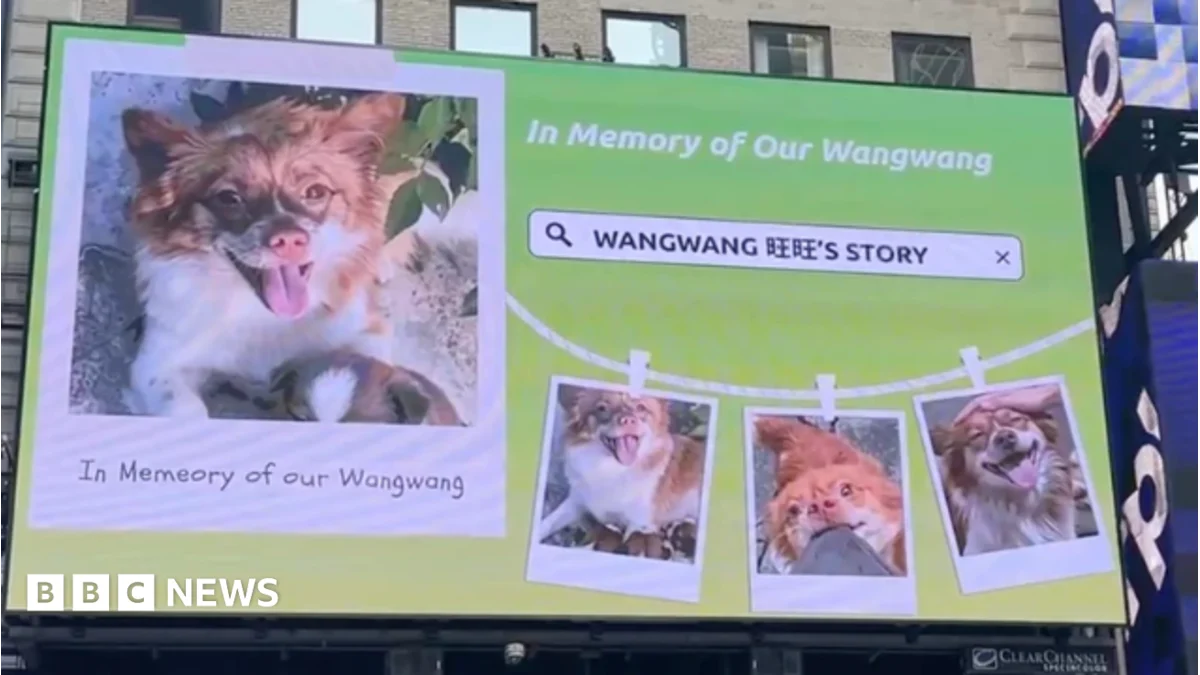
The campaign quickly gained global visibility. In New York City’s Times Square, one of the world’s busiest pedestrian intersections, photographs of Wang Wang appeared on a gigantic digital screen every 35 minutes. One poignant caption read: "She was loved. She wanted to live. She should still be here." Similar billboards were erected on a building near Taipei 101, an iconic skyscraper in Taiwan, featuring a picture of Wang Wang nursing her puppies with the caption: "This planet is their home too. Justice for Wang Wang."
CK, a Taiwanese woman who personally funded the Taipei billboard at a cost of NT$30,000 (approximately $930), expressed her hope that such efforts could foster "a sense of unity." She emphasized the importance of collective action, stating, "It makes everyone feel like we’re speaking out together on this issue, rather than airing our individual opinions online." CK further expanded her advocacy by setting up accounts on platforms like Reddit and X (formerly Twitter) to share the animals’ plight, stressing, "The world needs to know about the cruelty these dogs have been subject to." Another Taiwanese woman, Elara, utilized AI to translate a summary of the incident into more than 10 languages, including Japanese, Portuguese, and Russian, ensuring its wide circulation online. Residents in Hong Kong and Macau also contributed, raising funds to place posters on buses and trains, further demonstrating the regional and international reach of the movement.
Domestic Advocacy Continues: Creative Resistance and Roadblocks
Within mainland China, despite ongoing censorship, the debate persisted, with much of the conversation explicitly centered around creating awareness and demanding laws against animal cruelty. The resilience and creativity of domestic advocates were evident in various forms of protest. During a domestic football game in Dalian on a Saturday, a striking cartoon of Wang Wang and her puppies was displayed on a huge screen before the match, bearing the message: "Every life deserves respect and kindness," subtly yet powerfully reaching a large public audience.
Homegrown businesses also joined the cause. Beauty brand Amortals and streetwear label Wah Yan Ching Nin placed advertisements outside shopping malls across the country, calling for an end to animal abuse. Stickers and car decals featuring Wang Wang and her puppies were even made available for sale on China’s largest e-commerce platform, Taobao, turning symbols of remembrance into tools for advocacy.
However, these domestic efforts were not without their challenges. Wan Jia Li, a mall in the city of Changsha, reportedly received instructions to remove billboards featuring Wang Wang. An employee in the mall’s management team told the BBC, "We can’t do animal-protection billboards anymore… My boss told me so. I’m not sure if the notice came from the government, or why we have been asked to take them down." This incident highlights the subtle yet pervasive nature of state influence, where directives can be relayed indirectly, creating an environment of self-censorship and uncertainty regarding the precise source of restrictions.
Despite these roadblocks, the online rallying continued unabated. Comments on Weibo such as "Let’s keep posting. Don’t let the heat of discussion cool down" reflected the unwavering determination of activists to maintain momentum and ensure the issue remained in the public consciousness.
Broader Implications and the Path Forward
The Wang Wang incident and its aftermath carry significant implications for China’s social, legal, and internet governance landscapes.
1. The Juvenile Justice Paradox: The case has ignited a fierce debate within China about the balance between protecting juvenile offenders and ensuring accountability for heinous acts. While international norms often prioritize rehabilitation for minors, the extreme nature of the cruelty involved in this incident has led many to question whether the current legal framework adequately addresses such behaviors. It challenges the authorities to consider how to deter similar acts while still adhering to principles of juvenile justice, potentially leading to discussions about alternative interventions or specialized educational programs that instill empathy and responsibility.
2. Limits of Censorship: This incident serves as a compelling example of the limitations of even China’s sophisticated censorship apparatus. When public outrage is widespread, deeply moral, and sustained, and especially when it is amplified by international efforts, it becomes increasingly difficult for the state to completely suppress the narrative. The persistence of discussions, the creative ways in which activists circumvented restrictions, and the global reach of the campaign demonstrate that outright deletion often fuels further determination, leading to a cat-and-mouse game between authorities and citizens.
3. The Persistent Call for Legislation: The most tangible demand emerging from this crisis is the urgent need for comprehensive animal cruelty laws. The current legal vacuum, which often treats animals merely as property, leaves perpetrators largely unpunished for acts of extreme cruelty. This incident could serve as a powerful catalyst for legislative reform, pushing the government to enact specific laws that criminalize animal abuse, establish penalties, and provide a framework for animal protection.
4. Evolving Social Values and Animal Welfare: The widespread public reaction to Wang Wang’s plight underscores a significant shift in Chinese societal values. A growing segment of the population, particularly among younger generations and urban dwellers, is increasingly advocating for animal welfare and rights, moving beyond traditional utilitarian views of animals. This evolving social consciousness is a powerful force that will likely continue to shape public discourse and policy demands in the years to come.
5. Global Interconnectedness and Advocacy: The successful internationalization of the Wang Wang protest highlights the increasing interconnectedness of global civil society. International platforms and advocacy groups can provide crucial avenues for domestic concerns to gain traction when national channels are restricted. This model of cross-border activism could become a more prevalent strategy for Chinese citizens seeking to influence domestic policy on sensitive issues.
As the discussions continue to simmer online and offline, the Wang Wang incident stands as a potent symbol of a society grappling with profound moral questions, testing the boundaries of state control, and demanding a more compassionate and just future for all living beings. Whether this sustained outcry will ultimately translate into concrete legislative change or simply remain a powerful expression of collective grief and anger remains to be seen, but its impact on public discourse is undeniable.

Related Posts
Zambia on Edge: Opposition Leader Arrested Amid Allegations of Insurrection Plot and Election Tensions

Rescuers search for survivors of powerful Indonesia earthquake

