Canada Expands Armored Fleet with 2 Billion Dollar Contract and Establishes GDLS-Canada as Strategic Industrial Partner
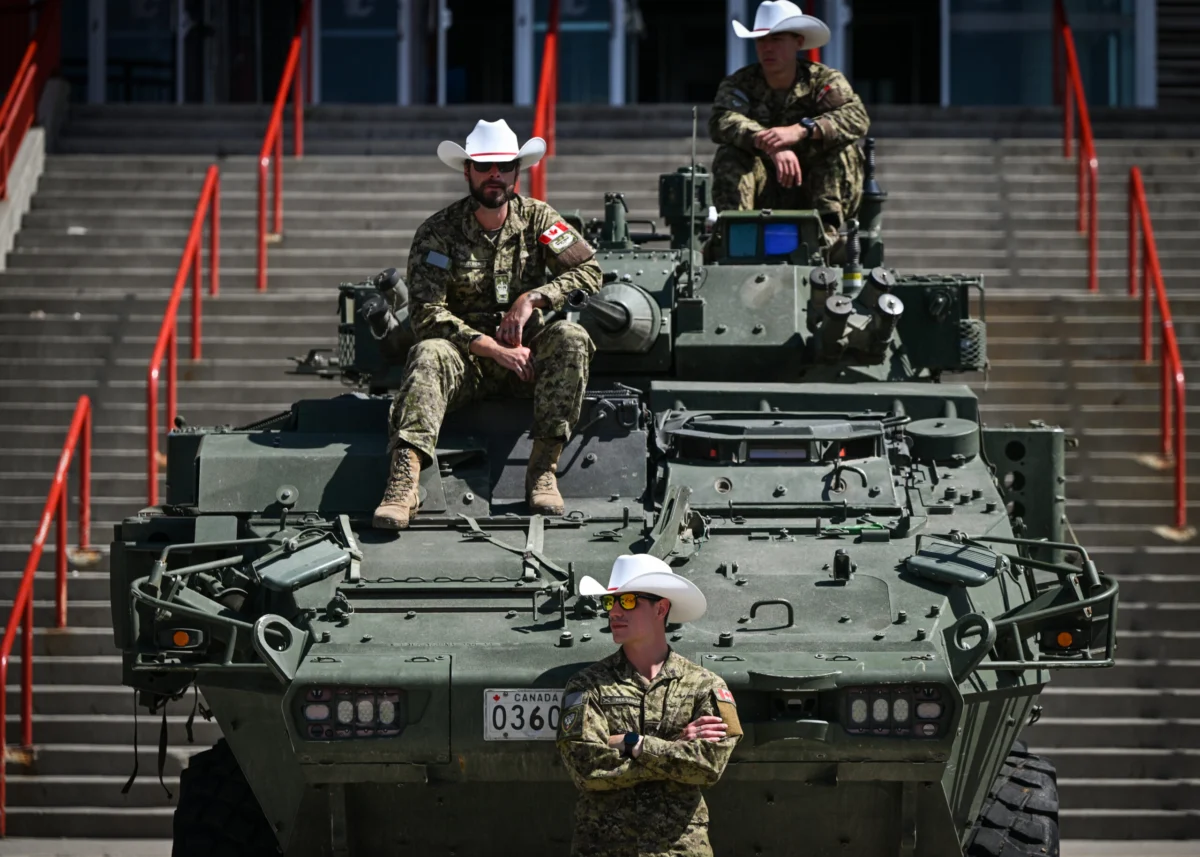
The Government of Canada has announced a significant expansion of its land combat capabilities through a nearly $2 billion CAN ($1.4 billion USD) contract for the procurement of 190 additional Armored Combat Support Vehicles (ACSVs). The agreement, awarded to General Dynamics Land Systems-Canada (GDLS-Canada), represents a cornerstone of the nation’s newly unveiled Defence Industrial Strategy, aimed at fostering domestic manufacturing and reducing reliance on foreign defense suppliers. Announced by Prime Minister Mark Carney on July 16, 2025, during a visit to the GDLS-Canada manufacturing facility in London, Ontario, the deal also includes the production of 35 additional armored vehicles specifically destined for Ukraine to assist in its ongoing defense efforts.
This procurement marks a pivotal moment for the Canadian Army, which will see its wheeled light armored combat support fleet grow from 360 vehicles to 550. The investment follows a period of heightened geopolitical tension and a strategic pivot in Canadian defense policy, prioritizing "sovereign capabilities" in response to shifting trade dynamics within North America. By designating GDLS-Canada as its first official "strategic partner" under the new framework, the Canadian government is signaling a long-term commitment to the domestic defense industrial base.
Evolution of the Armored Combat Support Vehicle Program
The ACSV program is built upon the proven Light Armored Vehicle (LAV) 6.0 platform, a highly mobile 8×8 wheeled vehicle that has become the backbone of the Canadian Army’s mechanized infantry. The initial contract for the ACSV fleet was signed in August 2019, covering 360 vehicles intended to replace the aging fleet of M113 Tracked Personnel Carriers and Bison Light Armored Vehicles. With those initial units now fully delivered and operational, the new order for 190 vehicles ensures a modernized, standardized fleet for the coming decades.
The LAV 6.0 platform is renowned for its enhanced protection systems, including a double-V hull designed to mitigate the impact of improvised explosive devices (IEDs) and landmines. By utilizing a common chassis across multiple roles, the Canadian Army significantly reduces its logistical footprint. This commonality streamlines maintenance, simplifies the supply chain for spare parts, and reduces the training burden on technicians and operators who are already familiar with the LAV 6.0 architecture.
The 190 new vehicles will be delivered in eight specialized variants, ensuring that combat support elements have the same level of mobility and protection as the front-line infantry they support. These variants include:
- Ambulance: Outfitted for the rapid evacuation and treatment of casualties under armor.
- Command Post: Equipped with advanced communications suites to serve as mobile headquarters.
- Troop/Cargo Carrier: Designed for the secure transport of personnel and essential supplies.
- Electronic Warfare: Integrated with specialized sensors and jamming equipment.
- Maintenance and Recovery: Featuring heavy-duty winches and cranes to recover disabled vehicles.
- Mobile Repair Team: A workshop on wheels for forward-deployed technical support.
- Fitter/Cargo: Specialized for mechanical repair and spare parts transport.
- Engineer: Equipped with tools for obstacle clearance and field fortification.
Strategic Partnership and the Defence Industrial Strategy
The announcement serves as the formal launch of the Carney government’s Defence Industrial Strategy. This policy framework is designed to transform the relationship between the Canadian Armed Forces (CAF) and the domestic defense industry. By naming GDLS-Canada as a strategic partner, the government is moving away from ad-hoc procurement toward a more integrated, "anchor customer" model.
Under this framework, GDLS-Canada and future strategic partners must commit to specific criteria:
- Domestic Research and Development: Investing in Canadian-led innovation to ensure technology remains sovereign.
- Workforce Development: Committing to hiring and training Canadian workers, particularly in high-skilled manufacturing and engineering sectors.
- Supply Chain Integration: Expanding the use of domestic sub-contractors. Prime Minister Carney noted that the production of armored vehicles at the London plant currently involves a network of more than 600 Canadian suppliers, a number the government hopes to see grow.
In exchange for these commitments, the federal government has pledged to accelerate procurement approval processes and actively support these companies in securing export contracts with allied nations. The philosophy, as summarized by the Prime Minister, is a reciprocal one: "When Canadian companies build for Canada, Canada will build with them."
Geopolitical Catalysts: The Shift Toward Sovereignty
The timing of this $2 billion investment and the broader industrial strategy is inextricably linked to the volatile trade environment of 2025. Following the imposition of significant tariffs and economic threats by U.S. President Donald Trump, the Canadian government has sought to insulate its national security interests from external political pressures.

The rhetoric from Washington, which included suggestions that Canada’s economic survival might depend on closer political integration or even statehood, prompted a fundamental re-evaluation of Canada’s procurement habits. Historically, approximately 75% of Canada’s defense capital spending has been directed toward U.S.-based manufacturers. Prime Minister Carney’s statement on June 9, 2025, that Canada "should no longer send three-quarters of our defense capital spending to America," set the stage for this week’s announcement.
While GDLS-Canada is a subsidiary of the American-owned General Dynamics Corporation, the strategic partnership focuses on the "Canadian-ness" of the London operations. The government’s approach allows for collaboration with foreign-owned firms provided they maintain a substantial, self-sustaining industrial footprint within Canada that contributes to the nation’s "sovereign capability."
Support for Ukraine and International Obligations
A critical component of the new contract is the provision of 35 ACSVs for Ukraine. This brings the total number of such vehicles donated by Canada to 124, following the 89 units previously dispatched to assist Kyiv. These vehicles have proven essential on the Ukrainian battlefield, offering a balance of protection and off-road mobility that allows Ukrainian forces to conduct medical evacuations and logistics missions in high-threat environments.
Furthermore, the ACSV fleet is a vital part of Canada’s commitment to NATO. The vehicles are currently deployed with the Canadian-led NATO Multinational Brigade in Latvia. As Canada works to scale up its presence in the Baltics from a battle group to a full brigade, the arrival of modernized combat support vehicles is essential for maintaining operational readiness on NATO’s eastern flank.
Industrial and Economic Impact
The economic implications for the region of Southwestern Ontario are substantial. GDLS-Canada is one of the largest employers in London, and the $2 billion infusion provides long-term stability for thousands of high-tech manufacturing jobs. Dave Haggerty, Vice President and General Manager of GDLS-Canada, emphasized the company’s pride in supporting the Canadian soldier while strengthening the domestic industrial base.
"Our team takes great pride in the opportunity to provide Canadian soldiers with the advanced combat vehicle platforms and support they need to succeed," Haggerty said. He noted that the agreement would allow the company to continue investing in a skilled workforce and advanced manufacturing technologies that have applications beyond the defense sector.
Industry analysts suggest that this "strategic partner" model could soon be extended to other sectors, including shipbuilding and aerospace. With Canada currently looking to modernize its submarine fleet and expand its presence in the Arctic through new icebreakers, the GDLS-Canada deal serves as a template for future large-scale procurements.
Timeline and Future Milestones
The delivery of the 190 new vehicles is expected to take place over the next four years, with production beginning immediately at the London facility.
- 2019–2024: Completion of the initial 360 ACSV order.
- July 2025: Announcement of the $2 billion expansion and Strategic Partnership.
- Late 2025: Expected commencement of deliveries for the 35 vehicles destined for Ukraine.
- 2026–2029: Phased delivery of the 190 vehicles to the Canadian Army, with integration into units across the country and in Latvia.
Conclusion: A New Era for Canadian Defense
The acquisition of 190 additional armored combat support vehicles is more than a simple equipment purchase; it is a declaration of economic and strategic intent. By leveraging the LAV 6.0 platform, the Canadian Army gains a more robust and uniform fleet, while the federal government utilizes the contract to anchor a new era of domestic industrial policy.
As Canada navigates a complicated relationship with its southern neighbor and fulfills its obligations to international allies like Ukraine and NATO, the emphasis on "sovereign capability" is likely to define the nation’s defense posture for years to come. The success of the GDLS-Canada partnership will be closely watched as a litmus test for whether Canada can successfully transition to a more self-reliant defense procurement model in an increasingly uncertain global landscape.

Related Posts
Pentagon Forges Landmark Seven-Year Agreements with Boeing and RTX to Accelerate Standard Missile-3 Production and Stabilize Defense Supply Chains
Boeing Unveils Ultra Low-Cost Seeker to Enhance Missile Inventory and Combat Cost Challenges in Modern Warfare