
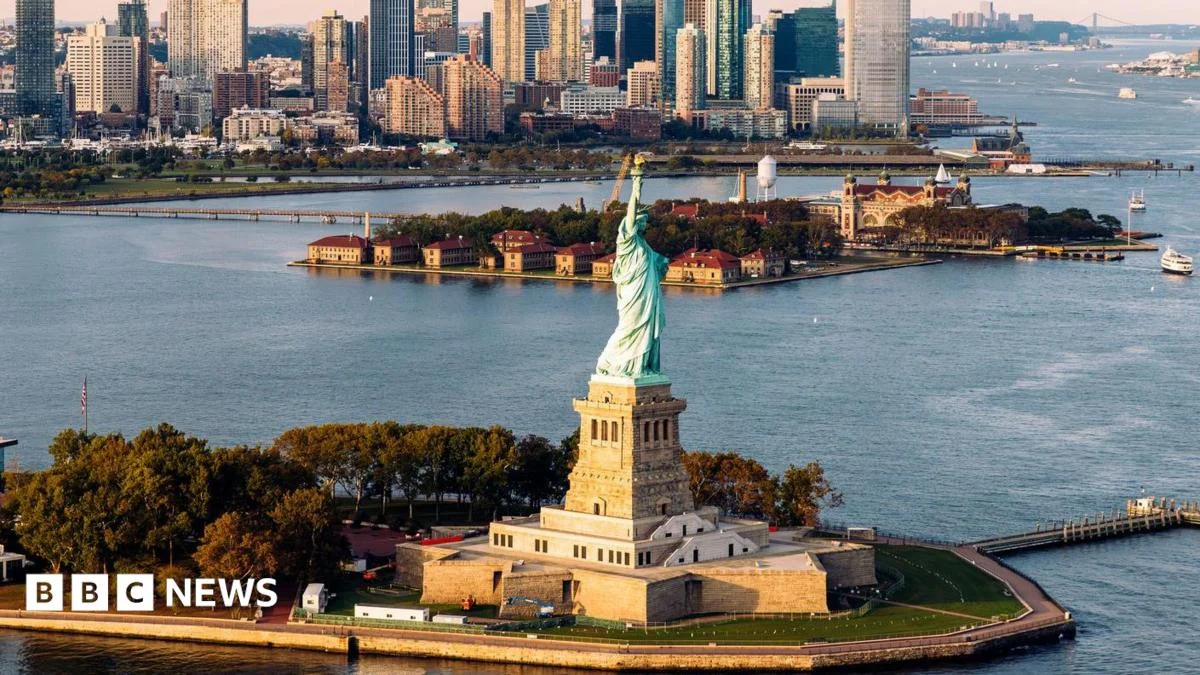
Boat Operator Charged with Reckless Endangerment After Tragic Capsizing Near Statue of Liberty Claims Lives of Woman and Infant in New York Harbor.
The serenity of a late Saturday evening on New York Harbor was shattered by a tragic maritime incident when a recreational vessel capsized near the iconic Statue of Liberty, resulting in the heartbreaking deaths of a 27-year-old woman and a five-month-old infant. In the wake of this devastating event, authorities have moved swiftly, arresting the boat’s operator and charging him with reckless endangerment, New York police confirmed. The incident, which prompted a massive multi-agency search and rescue operation, has cast a somber light on boating safety and the critical dangers associated with unregulated maritime operations in one of the world’s busiest waterways.
The Tragic Incident Unfolds: A Detailed Chronology
The distress call reached emergency services at approximately 10:25 PM local time (03:25 BST) on Saturday, reporting an overturned vessel in the waters adjacent to Liberty Island. The timing, late in the evening with diminished visibility, compounded the inherent challenges of a marine emergency. The initial reports indicated multiple individuals were in the water, clinging to debris or attempting to swim in the cold, dark harbor.
Crucially, before the official rescue armada could fully mobilize and reach the scene, a "Good Samaritan" vessel operating nearby responded to the unfolding crisis. This quick-thinking private boat played a pivotal role in the immediate aftermath, managing to pull 12 survivors from the treacherous waters. Their swift, selfless actions undoubtedly prevented further loss of life and underscored the critical importance of maritime community vigilance.
Upon the arrival of the unified command, which included assets from the U.S. Coast Guard (USCG), the New York Police Department (NYPD) Harbor Unit, the Fire Department of New York (FDNY) Marine Division, and Emergency Medical Services (EMS), a large-scale search and rescue operation was immediately launched. The joint effort involved an impressive array of resources: two Coast Guard boats, four fire department boats, two police boats, and a police helicopter. The coordinated response illuminated the dark waters of the harbor, with searchlights sweeping for any signs of the missing. Rescuers faced the formidable task of navigating a chaotic scene, battling against currents and the urgency of locating individuals in potentially hypothermic conditions.
Despite the exhaustive efforts, the search ultimately led to a tragic discovery. New York police divers located a 27-year-old woman and a five-month-old girl. Both were unresponsive and immediately transported to a nearby hospital. Despite the best efforts of medical personnel, they were pronounced dead shortly after arrival, bringing a profound sense of grief and urgency to the ongoing investigation. The identities of the deceased and the other passengers have not yet been publicly released, respecting the privacy of the families during this difficult time. All 12 survivors rescued earlier are reported to be in stable condition, a testament to the rapid response of the initial rescuers.
The Operator Arrested and Charged
In the immediate aftermath of the tragedy, investigators began piecing together the circumstances that led to the vessel’s capsizing. Focus quickly turned to the individual responsible for operating the boat. On Sunday, authorities announced the arrest of the boat’s operator, identified as a 46-year-old resident of Manhattan. He now faces serious charges related to the incident.
The New York Police Department has charged the operator with 13 counts of reckless endangerment. This specific charge, under New York law, typically applies when an individual’s actions create a substantial risk of serious physical injury or death to another person. Given that 14 individuals were aboard the capsized vessel (including the operator), with 13 individuals requiring rescue or tragically perishing, the 13 counts reflect the number of people whose lives were placed at risk by the operator’s alleged actions. Each count carries significant legal implications, potentially leading to imprisonment if convicted, depending on the specifics of the case and the severity of the endangerment proven in court. The investigation into the operator’s conduct, including any potential impairment or disregard for safety protocols, remains a central focus for law enforcement.
The Shadow of Illegal Charters: A Growing Concern
Beyond the immediate charges, a parallel and critical aspect of the investigation involves the potential that the vessel was operating as an illegal charter. The U.S. Coast Guard, which holds primary jurisdiction over maritime safety and commercial vessel operations, is actively scrutinizing this possibility.
An "illegal charter" refers to any passenger-for-hire vessel operation that lacks the mandatory credentials, proper safety equipment, and a valid certificate of inspection issued by the Coast Guard. These regulations are not mere bureaucratic hurdles; they are fundamental safeguards designed to protect passengers. Legitimate commercial charter vessels undergo rigorous inspections to ensure structural integrity, proper maintenance of engines and navigation systems, and the presence of essential safety gear such as life jackets for every passenger, fire extinguishers, and communication devices. Furthermore, operators of legal charters must possess specific licenses, demonstrating their proficiency, knowledge of maritime law, and understanding of emergency procedures.
The dangers posed by illegal charters are multifaceted and severe. Operators of such vessels often lack the necessary training and licensing, meaning they may be ill-equipped to handle emergencies, adverse weather conditions, or navigate complex waterways safely. Without official inspections, vessels may be overloaded beyond their safe capacity, have poorly maintained equipment, or entirely lack critical safety gear. In the event of an emergency, the absence of proper life jackets or trained crew can quickly turn a minor incident into a catastrophe, as tragically demonstrated in this capsizing.
The issue of illegal charters is not new to New York Harbor or other popular boating destinations. Authorities have continually warned the public about the risks of booking excursions through unverified sources. The allure of cheaper prices or greater flexibility often masks the perilous absence of regulatory oversight. In recent years, the USCG has intensified its efforts to crack down on these illicit operations, conducting patrols, inspections, and public awareness campaigns. Incidents like the one near Liberty Island serve as stark and painful reminders of why these regulations exist and why adherence to them is paramount for public safety on the water.
A Massive Search and Rescue Operation
The scale of the search and rescue operation highlights the inherent dangers of the maritime environment, particularly at night, and the commitment of emergency services to human life. The coordinated effort involved a formidable array of resources and highly trained personnel. Two Coast Guard boats, specifically designed for search and rescue missions, were deployed, equipped with advanced navigation and communication systems. The FDNY Marine Division contributed four specialized fire department boats, capable of rapid response and equipped for both rescue and firefighting on water. The NYPD Harbor Unit brought two police boats, leveraging their extensive knowledge of the local waterways and criminal investigation capabilities. Overhead, a police helicopter provided crucial aerial support, using thermal imaging and powerful spotlights to scan the dark waters for any signs of the missing.
The collaboration between these agencies, each with its unique capabilities, was essential. The USCG, as the lead federal agency for maritime search and rescue, coordinated the overall effort, while local agencies provided invaluable on-the-ground (or rather, on-the-water) support. Captain Doreen McCarthy of the USCG commended the efforts, stating, "We are extremely grateful for the heroic, swift actions of our partner agencies and Good Samaritan vessel who assisted in rescuing survivors from the water." This praise underscores the challenging conditions and the dedication of all involved. The rescue environment itself was complex: the currents in New York Harbor can be strong and unpredictable, the water temperature, even in late summer, can lead to hypothermia, and the vastness of the harbor makes locating individuals without precise coordinates a formidable challenge.
Broader Context: Boating Safety in New York Harbor
New York Harbor is a vibrant, complex ecosystem of maritime activity, hosting everything from massive commercial container ships and ferries to sightseeing vessels and recreational boats. Its iconic landmarks, like the Statue of Liberty and Ellis Island, make it a popular destination for tourists and local boaters alike. However, this popularity comes with inherent risks, demanding strict adherence to safety regulations and responsible operating practices.
Recreational boating accidents, while often less publicized than other forms of transportation incidents, can be deadly. Data from the USCG consistently points to operator inattention, improper lookout, inexperience, excessive speed, and alcohol use as leading contributing factors in boating accidents nationwide. Furthermore, failing to carry sufficient life jackets for all passengers is a recurrent issue in fatal capsizing incidents. In crowded waterways like New York Harbor, the confluence of varied vessel types, strong currents, and potential wakes from larger ships adds layers of navigational complexity.
This incident serves as a stark reminder of several critical boating safety principles:
- Life Jackets: Ensuring everyone on board, especially children and non-swimmers, wears a properly fitted life jacket is the single most important safety measure.
- Capacity Limits: Adhering strictly to the manufacturer’s stated capacity limits for both passengers and weight prevents overloading, which can destabilize a vessel.
- Operator Competence: Operators must be properly licensed, trained, and familiar with the vessel and the waterway. Boating under the influence of alcohol or drugs is illegal and extremely dangerous.
- Weather Awareness: Checking weather forecasts and sea conditions before and during an outing is crucial, as conditions can change rapidly.
- Vessel Maintenance: Regular inspection and maintenance of the boat, including engines, safety equipment, and navigation lights, are essential.
The incident near Liberty Island underscores that even in familiar waters, vigilance and adherence to safety protocols are non-negotiable.
Implications and Moving Forward
The tragic capsizing and subsequent arrest of the boat operator will undoubtedly have significant implications. Legally, the operator faces a challenging path, with the 13 counts of reckless endangerment carrying severe penalties. The ongoing investigation by both the NYPD and the USCG will meticulously examine every aspect of the incident, from the vessel’s condition and maintenance records to the operator’s qualifications, actions leading up to the capsizing, and whether alcohol or other factors were involved. If the vessel is confirmed to have been an illegal charter, additional federal charges could be brought, further increasing the legal repercussions.
Beyond the immediate legal ramifications, this tragedy will likely prompt renewed scrutiny of recreational and charter boat operations in New York Harbor. Authorities may intensify patrols and inspections, particularly targeting uncertified "for-hire" vessels. There will undoubtedly be renewed public awareness campaigns, urging individuals to verify the legitimacy of any charter service they use, ensuring they are licensed, insured, and compliant with all safety regulations.
For the families of the deceased woman and infant, the path forward is one of profound grief and loss. Their tragedy highlights the devastating consequences when safety is compromised on the water. For the survivors, the psychological impact of witnessing such an event and struggling for survival will be significant, requiring support and care.
As the investigation continues, the focus remains on uncovering the full truth behind this tragic incident. The commitment of law enforcement and maritime safety agencies is to ensure justice for the victims and to reinforce the critical importance of safety protocols, aiming to prevent such a heartbreaking loss of life from ever happening again on the iconic waters of New York Harbor.

Related Posts

Zambia on Edge: Opposition Leader Arrested Amid Allegations of Insurrection Plot and Election Tensions
Rescuers search for survivors of powerful Indonesia earthquake

